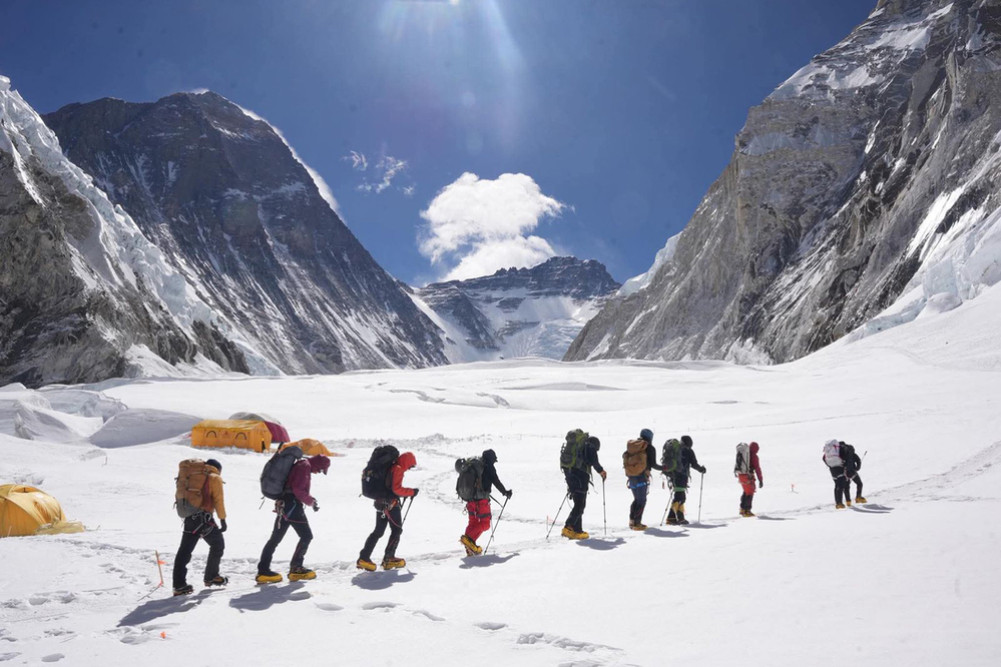
In the 50 years since Japan's Junko Tabei first set foot on the summit of Mount Everest in 1975, hundreds of women have followed in her footsteps. None have returned - those who have made and are making history have taken their final rest in the arms of Mount Everest.
We use Google Cloud Translation Services. Google requires we provide the following disclaimer relating to use of this service:
This service may contain translations powered by Google. Google disclaims all warranties related to the translations, expressed or implied, including any warranties of accuracy, reliability, and any implied warranties of merchantability, fitness for a particular purpose, and noninfringement.
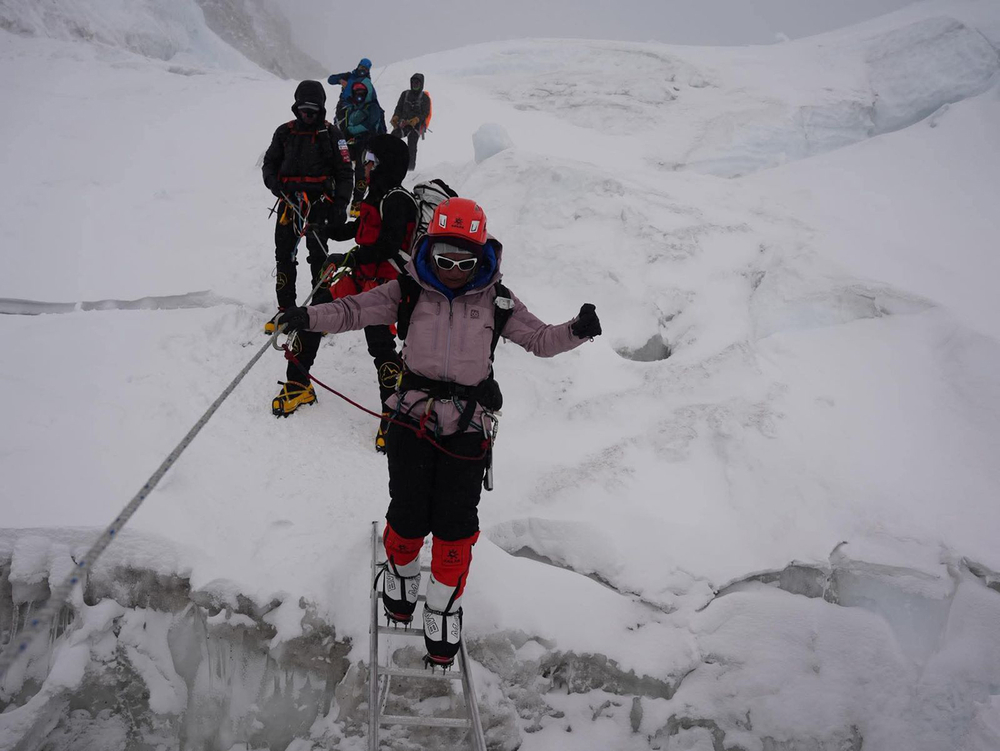
Everest Base Camp. April 29, 2004. Furdiki Sherpa (51) has returned to base camp after three days of training before reaching ‘Camp Three’.
She is not climbing Everest, but Lhotse this time, with the dream of reaching the summit and returning to base camp within 24 hours of walking from base camp and setting a new record.
However, when talking about her climbing career, she talks about her husband’s dreams in the past before her future dreams. ‘My husband was an icefall doctor,’ she recalls. Icefall doctors are experienced Sherpas who build and maintain safe routes for climbers. Furdiki’s husband lost his life while doing so. She says, ‘He really wanted to reach the top of Everest. He had an accident in the Khumbu Icefall. He had a dream, but it didn’t come true.’
Furdiki was 37 years old when her husband Mingma Sherpa died in 2013. She had three daughters. She used to raise some yaks in a village in Solukhumbu and run a hotel. She had never thought about climbing the mountain.
‘I slowly made a plan. We decided to climb Everest together to give hope and encouragement to widowed women that ‘even if we don’t have a husband, we can do something,’ she said.
Furdiki reached the summit along with Nima Doma Sherpa at 5:25 am on May 23, 2019. Nima also lost her husband on Mount Everest. They took a picture showing the banner they carried, which read, ‘We can do it too.’
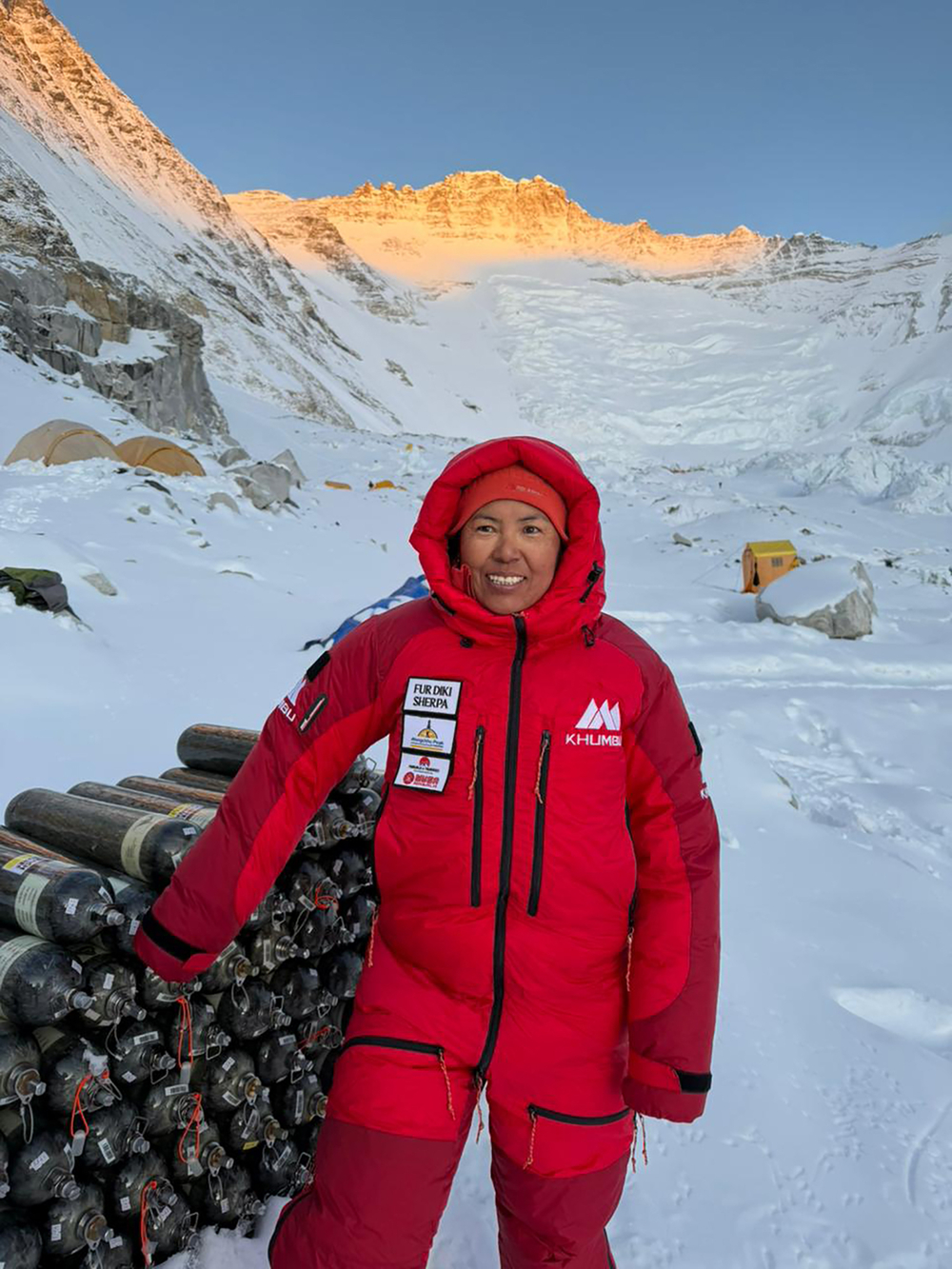 Everest climber Furdiki Sherpa at the base camp. Photo courtesy: Furdiki Sherpa
These four words written on the banner summarize the struggle of women to reach the peak of Everest. Furdiki’s journey is not only her personal one, but also a collective story of women’s success on Everest over the past 50 years. The non-governmental organization Himalayan Database has documented thousands of climbing attempts during this period. The data also shows that the number of female climbers, climbing successes, and the rate of returning alive from there is increasing. However, there are also stories of women in Everest climbing that these statistics can never tell, what kind of mountains of suffering did they climb before climbing the mountain?
When a woman reached the summit for the first time
On May 29, 1953, Tenzing Norgay Sherpa and Edmund Hillary reached the peak of Mount Everest for the first time. Shortly after, Janakavi Dharmaraj Thapa wrote a song - Hamro Tenzing Sherpale chadyo Himal Chuchura. That song is still played today.
It took another 22 years for a woman to reach the same peak. On May 16, 1975, Junko Tabei (35) from Japan reached the summit of Mount Everest. Just two weeks before that, she had fainted after being hit by an avalanche, and the tent she was sitting in was crushed. But she got up and continued. 11 days after Tabei set foot, Fantog from China reached the summit from the north.
That year, 31 women attempted to climb Everest, only two of whom succeeded, less than 10 percent. At the same time, the success rate for men on Everest was more than 20 percent. Twice as many men succeeded as women. Today, the success rate is almost the same. However, the number of female climbers is still very low - only one in every 10 climbers.
Even after Tabei's climb, the peak of Everest was still far away for Nepali women, another 18 years away. Pasang Lhamu Sherpa received a 'permit' to climb Everest on her third attempt. On April 22, 1993, Pasang Lhamu (30) reached the summit. She was the first Nepali woman to reach it. However, she did not return alive. She died on the same day at 8,750 meters while descending. The accident added another void to the Nepali women's Everest expedition, lasting seven years.
On May 18, 2000, Lhakpa Sherpa reached the summit of Everest. That moment was special for Nepali women, as she became the first Nepali woman to reach the summit and return alive. In the 25 years since Tabei set foot on the mountain, more than four dozen foreign women had successfully climbed and returned, but no Nepali woman had achieved that feat. Lhakpa broke that void.
The next day, Pemba Doma Sherpa from her group reached the summit and returned safely. These climbs were part of the 'Millennium Nepali Women Everest Expedition'. At that time, Ang Tshering Sherpa was with the Mountaineering Association. ‘More than 50 foreign women had already summited and returned,’ said Ang Tshering. He said the expedition was conceived because there is no living Nepali woman who has climbed Mount Everest.
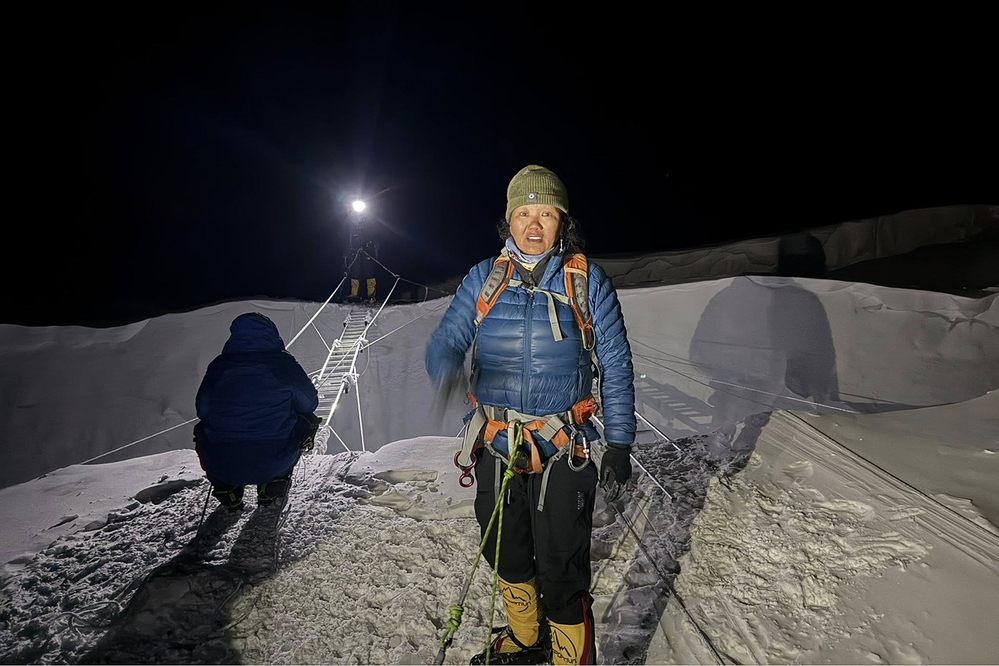 Lhakpa Sherpa has reached Everest for the 11th time. Photo: From Lhakpa Sherpa’s Facebook
Ang Tshering has been involved in mountaineering since the age of 11, working as a porter with her father and uncle. Now 74, she still remembers the preparation phase of that first successful women’s ascent at 26.
‘A group of five women was formed, Sujata Koirala was made the president, Girija Babu was the protector,’ he said, ‘Lhakpa climbed, and the next year she set the record for women to climb twice.’ That record was broken by a foreign woman. We got sponsors and sent Lhakpa up again. That record was broken again, she climbed again. After the fifth time, her record has not been broken till date.’
Since then, Lhakpa has been setting one record after another. Currently living in the US, she set a record of 10 most ascents by a woman in 2022. She is currently at base camp for her 11th ascent.
While Lhakpa and Pemba were climbing like this, Maya Sherpa was starting her career as a trekking guide.
‘I started trekking guiding in 2001,’ Maya said, ‘My clients were mostly girls.’ They always asked, when will you climb the mountain? Faced with such questions repeatedly, she decided to climb it in 2003. But not Everest, but Ama Dablam, after which she climbed Cho Yu.
‘Both those mountains are among the most difficult,’ Maya, who is currently the president of the Everest Climbing Association, recalls the old days, ‘After climbing those mountains, it was like preparing for Everest, and I climbed Everest in 2006. In 2007, I also climbed from the north (China) side.’ Until then, only 5 Nepali women had climbed it. Since then, she has been climbing other mountains higher than 8,000 meters.
Looking at the last 25 years of mountain climbing, Maya finds that the participation of women is increasing.
‘Women are increasing compared to before. "We haven't reached the level of men yet," she said. "Earlier, there was a perception that women can't climb, and that reaching the top would be a pain. They didn't encourage them. Now that's changing." Maya said that opportunities and the money needed to climb are still major challenges for women who want to make mountaineering a career.
2008. A meaningful year for Nepali women's mountaineering. The 'Inclusive Everest Climbing Team' was formed under the leadership of Sushmita Maskey. Ten Nepalis, including Usha Bista, Shaili Basnet, Chunu Shrestha, Maya Gurung, Asha Kumari Singh, Nima Doma Sherpa, Pema Doma Sherpa, Pujna Acharya and Nawangphuti Sherpa, reached the summit of Mount Everest on May 22-24, 2008. After that, this group continued its campaign to climb the highest peaks of the seven continents of the world. That campaign was completed in 2014. Since then, Nepali women's climbing of Everest and other mountains has been increasing rapidly.
'Now the idea that women can do it, should do it, should show it has grown and as they do so, they become successful,' says Mingma Sherpa, the first Nepali climber to climb all the mountains above 8,000 meters. 'Earlier, women were only kept in the household, now the concept that women are equal to men is growing.' Mingma is currently the president of Seven Summit Treks.
New records
Dawa Yangjum Sherpa started working as a trekking guide. At first, she didn't get any work. 'This is a boy's job, you have no scope,' everyone used to say. 'But, I was not going to stop.' I had no other options, this was the only job I could do,” says Dawa. “I didn’t want to live like other girls in the village and just behave like a housewife.”
In 2012, she joined a climbing team as an assistant. “I was taken to do heavy lifting, rope fixing, etc. At that time, I was the only girl working as a porter,” Dawa recalled her Himalayan journey that began 14 years ago.
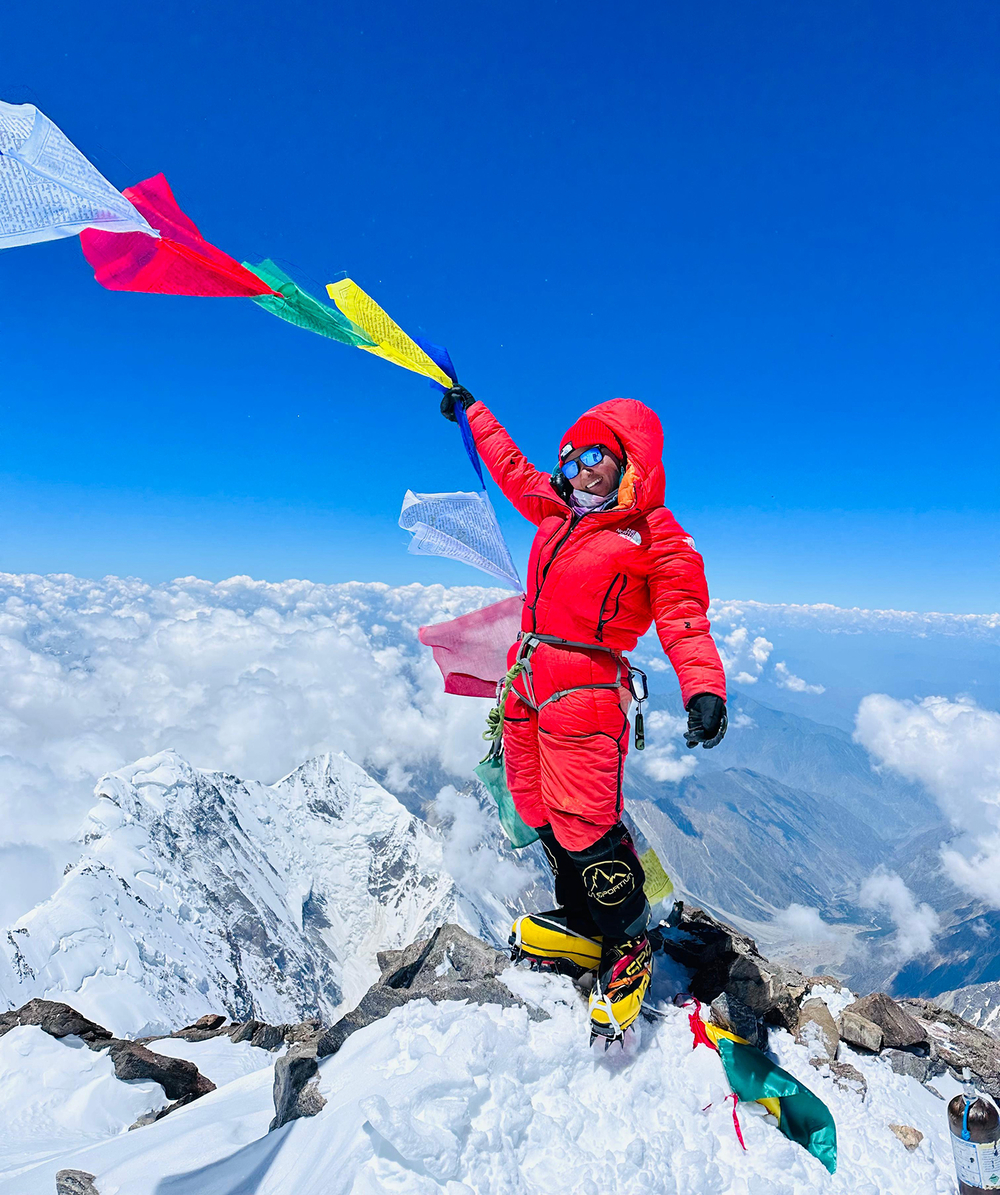 Dawa Yangjum Sherpa on the summit of Nanga Parbat (Pakistan) in 2023. Photo courtesy: Dawa Yangjum Sherpa
The ‘Himalayan Database’, started by American journalist Elizabeth Halley, who made Nepal her home, and later continued by a non-profit organization, contains records of climbers since 1921. Since then, in the 26,384 attempts to climb Everest in the 104 years up to spring last year (this number is for each attempt, the actual number of climbers may be slightly lower as some climbers have attempted more than once), Dawa is one of the few women who reached the summit of Everest as a porter rather than as a climber or guide. In this field where mostly male ‘Sherpas’ work (8,637 people have attempted the climb as assistant porters so far), only 6 women, including Dawa, have climbed Everest as workers.
Dawa’s mountaineering, which began in this way, has changed sky and earth in the last 14 years. In the meantime, she has set the record of being the first woman to climb all 14 mountains above 8,000 meters in the world. She is ‘sponsored’ by world-famous brands such as The North Face and Rolex. She is also the first female Asian mountain guide. She said that she is currently participating in campaigns to encourage women to climb and to provide information about the effects of climate change.
 Photojournalist Purnima Shrestha is attempting to climb Mount Everest for the sixth time. Photo courtesy: Purnima Shrestha
Gorkha-based photojournalist Purnima Shrestha is also currently at the base camp. She started climbing mountains while doing journalism and reached the summit of Mount Everest for the first time in 2018. She did not stop there, in 2024 she set a record of climbing Mount Everest three times in a single season (13 days).
‘Reaching the summit is only half the success,’ she says, who is currently on her sixth climb. ‘When I return from the mountains, I realize that I have life, that I am alive.’ It always makes me happy. I don't get this feeling anywhere else.'
Similarly, the fastest female record (24 hours 26 minutes) for completing the journey from Base Camp to Everest Summit to Base Camp is also in the name of Nepali Phunzo Zhangmu Lama. In addition to such personal records, many other areas of women's climbing have been seen in the last five decades. Analyzing the data from the Himalayan Database, an encouraging indicator of progress comes to the surface: women are starting to appear safer in the mountains than before.
Climbing on the rise, 'survival rate' improving
In the five years since women first climbed Everest, only one out of every 10 women who attempted to climb it succeeded, while two out of the same number of men did. Now the success rate has increased many times. In the five years after 2020, seven women and eight men will succeed in the same number of attempts to climb. Ang Tshering Sherpa, former president of the Mountaineering Association, says that this success is due to increasing access to technology, information and modern equipment needed for daily use during climbing. He said that with the increase in professional climbing, people who can afford to pay and have received training are being attracted.
Not a single woman died on Everest in the Baisakh-Jesht season last year. Out of 112 women who attempted to reach the summit, 85 succeeded. When examining similar numbers over the last 50 years, it is clear that both women and men have gradually become safer on Everest. However, there has been a significant decrease in the death rate for women.
When examining data from the Himalayan Database, while the rate of attempts and successes on Everest has increased significantly, the death rate has also decreased significantly. In 1975-80, 40 men died for every 1,000 men attempting to climb, compared to 25 women.
The mortality rate for both men and women has fallen to less than 1 percent in the last decade, but about five times more men are dying than women. That is, for every 1,000 attempts, about 10 men die, compared to two women.
One major reason for this is that the Sherpas who do the very risky preparation work on Everest are almost all men. Of the 348 people who died on Everest by the end of the 2025 season, more than a quarter (96) were Sherpas who went as workers. Three people have already died this year.
Another reason is that the number of women climbers is still only about 10 percent. In the last 50 years, out of the 23,320 male climbers who have climbed Mount Everest, only 2,252 were women. That is, the number of female climbers is much lower than that of men. High-altitude medicine physician Buddha Basnyat says that there are such ‘factors’ in the lower mortality rate (when comparing the number of women and men who attempt the climb in proportion to gender) among women.
According to the International Mountaineering and Climbing Federation, most deaths in the mountains are due to altitude-related health problems. And, these conditions are more common in men. However, the federation’s medical commission has stated that it has not been able to pinpoint a concrete biological cause. It has pointed out that some everyday practical, social and cultural reasons may be responsible for such deaths. For example, women prefer to climb mountains in groups, do not usually do solo expeditions, and are quick to turn back when the weather deteriorates. However, the website says, ‘All these are not proven facts.’
Himalayan Database data also shows a picture of women and men deciding to abandon their climbs and turn back in different situations. It seems that women decide to turn back on Everest when their health starts to deteriorate, while most men turn back only after they lose their way.
So far, 14 women have lost their lives on Everest, of which only one from Nepal is Pasang Lhamu Sherpa. The majority of the 14 deceased (8) seem to have died while descending from the summit, like Pasang Lhamu. Pasang had fallen just 99 meters below where she stood on the summit when she gave up her life.
A 50-year study of data shows a contradictory picture. The rate of oxygen use by both men and women has increased over this period. However, oxygen use has been lower for women than for men from the start. In 1975–80, 12 percent of women and 28 percent of men attempted ascents with the help of oxygen, but by 2020–2025, this rate had increased to 74 and 84 percent, respectively. The rate of oxygen use has been increasing in each of the intervening decades, but the gap between men and women has not closed.
Raymond Huey of the University of Washington and researchers from three other American universities studied the impact of climbers' age, gender, experience, and the growing number of people who want to climb Everest on the success and deaths there. The study included only professional climbers (excluding Sherpas). They attributed the success to the increasing reliability of weather forecasts, the increase in the use of oxygen, and the increase in professional climbing expeditions.
The burden of dreams
There are many obstacles in the way of women who want to enter the mountaineering field that such statistics do not show. Furdiki Sherpa says, ‘No matter how good a job they do, there is still a perception that women cannot do it. But, if given the opportunity, they can do anything.’
Furdiki herself is proof of this. After climbing Mount Everest, she felt that she had to increase her skills. She became a guide, trained, and became a trainer. In October last year, she led an all-female climbing team and climbed Himlung (7,126 meters), which also became a record.
Now she is preparing to reach the summit of Lhotse. This time carrying her father's dream. Her husband also had a dream of climbing Everest. However, he too had returned from there after his climbing team members could not climb above the South Col. She fulfilled that dream by climbing Everest 7 years ago. Another dream was that of her father, Ang Nima Sherpa. He was also an icefall doctor and wanted to climb Lhotse, but passed away before he could. 'My father's dream was to climb Lhotse, this time I will fulfill that too,' she says.
Her husband's dream.
Her father's dream.
'And now what?'
'The dream of three daughters,' she said flatly without thinking.
‘Haven’t you seen any dreams for yourself?’
Furdiki, who was on the phone from base camp, hung up the phone after a long silence.