After the Supreme Court gave a mandate to bring out the investigation report of the incident and investigate the accused, the file of the horrific murder case in Rautahat 18 years ago will be revived.
We use Google Cloud Translation Services. Google requires we provide the following disclaimer relating to use of this service:
This service may contain translations powered by Google. Google disclaims all warranties related to the translations, expressed or implied, including any warranties of accuracy, reliability, and any implied warranties of merchantability, fitness for a particular purpose, and noninfringement.
The file of the gruesome murder in Rautahat 18 years ago is going to be revived. 27 people were killed when activists of the then Madheshi Janadhikhar Forum violently attacked a meeting held by Maoists at a rice mill in Gaur. However, the Supreme Court has given a mandate to bring out the investigation report of this incident, which is being drowned in political scandals, and to investigate the accused. Along with this, 130 people will be investigated, including Upendra Yadav, the chairman of the then Forum (currently Jaspa Nepal).
Rupsagar Upadhyay, Rupaiya Khatun, Vikram Patel and the injured Tribhuvan Sah approached the Supreme Court on behalf of the deceased's family saying that the incident was not investigated due to the influence of power and power. The joint bench of Justices Til Prasad Shrestha and Nityanand Pandey has asked to proceed with investigation immediately. Now, according to the complaint filed by the victim and the report of the National Human Rights Commission, the investigation will proceed against them. On 7 March 2063, there was a clash at the rice mill in Gaur when the Forum and the Maoists had organized a program at the same place. In the incident, 27 Maoist activists including 5 women were killed and 42 people were injured. The family of the deceased has received compensation from the state at the rate of 1 million, but the family has approached the Supreme Court saying that there was no investigation and no action was taken against the culprits.
Gaur murder case: 130 people including Upendra Yadav on the "radar" of the investigation (these are the accused)
Madhesh police chief DIG Uma Chaturvedi said that after the order of the Supreme Court, the investigation process will be carried out following the order of the court. I will see how far the district police has progressed the process of the case. We will proceed with the process in accordance with the law,' he said, 'We will proceed with the process as soon as the injunction order comes to the district police.' "It remains to be seen where the process has reached so far, we will start the investigation after the court's order," he said, "we will investigate the truth about what happened." "The path to research has been opened. Now there is hope that we will get justice," he said. He said that when a complaint was filed with the district police demanding action against those involved in the incident, they were initially reluctant and after 51 days on 28 Baisakh 2064, a complaint was registered against 113 people.
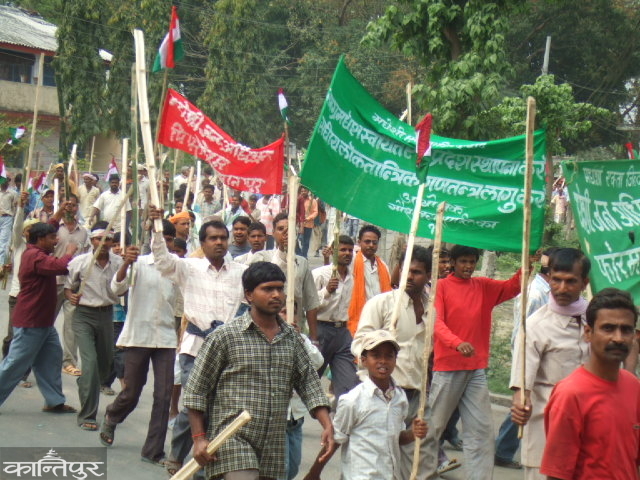
'The complaint was registered but the police kept it as it was, saying that there was no above order,' he said, 'After that, we formed the Gaur Murder Struggle Committee and submitted a memorandum to the district administration every year.' "I heard that the Supreme Court has ordered an investigation, now the culprits should be punished," he said, "This work should be done soon." The longer the investigation is delayed, the more evidence can be destroyed.'
What was the Gaur incident?
On 7 March 2063, the Madhesi People's Rights Forum organized a general meeting at Rice Mills Chowr in Gaur. The Madhesi Rashtriya Mukti Morcha, which is close to the Maoists, also held a program at the same venue. For the program, both sides had built a platform at a distance of 100 meters. The forum had built a stage in the south corner of the ground and the Maoists in the north corner the previous day. Before the
program, when both the parties started campaigning, the locals predicted that there might be a clash. Even though the local administration and the police asked to stop the program at the same place, both the parties did not agree. While the Maoists were in favor of not allowing the forum to hold a meeting, the forum was on the stand of leaving the meeting.
On the morning of the 7th, at 11 a.m., the procession of the forum reached the event venue after circumambulating the city. At 2:00 p.m., the Maoists also started a rally from Nagar Parikrama. Both the parties brought workers from villages for the program. The forum invited leader Upendra Yadav as the chief guest. The Maoist program was led by the then district in-charge Prabhu Sah. But both the leaders did not come to the stage.
Forum activists vandalized and set fire to the stage built for the assembly while the Maoists were touring the city. Just then, the YCL group of Maoists entered the field. After seeing their platform destroyed, they also turned aggressive on the forum workers, which led to a double clash.
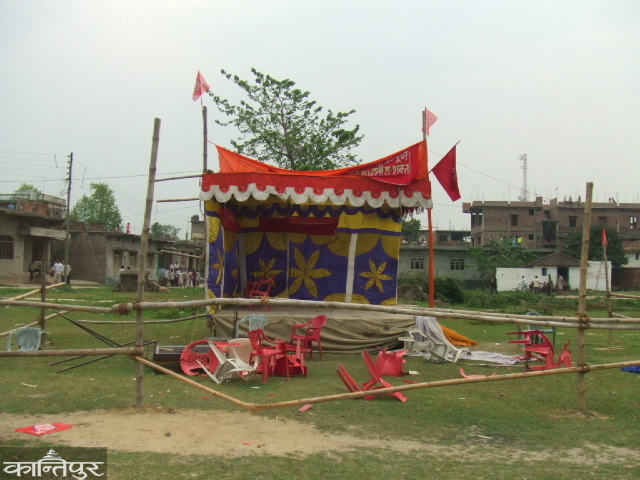
There was also lathi and shooting from both sides. Only 10 policemen were deployed in the Assembly under the command of Sai. When the shooting started, the situation was out of control of the police. The field instantly became a battlefield. While the Maoist workers were fleeing, the forum workers who were waiting for Gowda attacked them by hitting them with a bamboo faratha (pot). The bodies of those killed in the attack were thrown into the drain.
Nepal Red Cross and police teams pulled out most of the bodies from the drain. Forum activists also tried to attack the injured who were immediately brought to Gaur Hospital. The district police also imposed a curfew after the clash continued till late evening. In the incident, 27 Maoist workers including 5 women lost their lives and 42 people were injured.
Yadav, the then president of Madhesi Janadhikhar Forum, has been claiming that the clashes occurred when the locals resisted against the Maoists in the Gaur incident. Prabhu Sah, who led the assembly from the Maoists at the time (currently the president of the Aam Janata Party), has been raising the demand that the cases should be investigated and filed because of the deliberate murders. 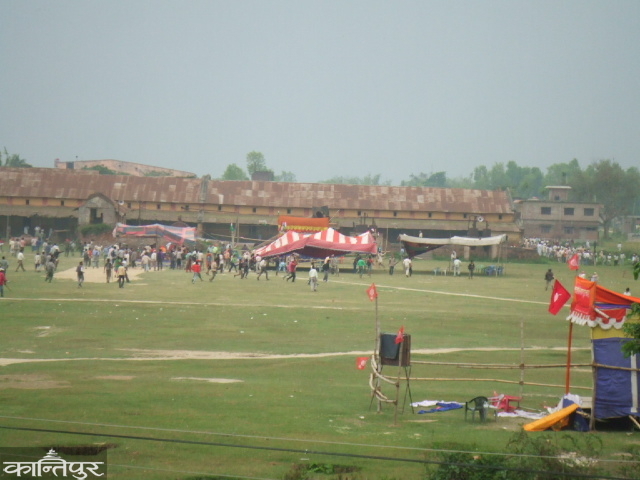
Investigation committee formed under the leadership of a judge, but the report is secret
After the demand for a fair investigation of the Gaur murder case, on 9 March 2063, the government formed a high-level judicial investigation team under the coordination of the then Judge Hariprasad Ghimire of the Appellate Court (currently High), Patan. The team included then Judge Anant Dumre of District Court Jumla, Advocate Tika Bahadur Hamal, then Deputy Inspector General of Police Ramesh Chand Ram Sarbar Dobe was also the head of the National Vigilance Center at that time. Even if the committee prepared the report, it was kept secret without being made public.
Similarly, on 22 December 2079, the National Human Rights Commission published a report investigating the Gaur incident. The commission declared the incident a heinous crime and recommended action against the culprits and compensation to the victim's family. The meeting held on 19 January 2079 of the Commission concluded that the incident was planned, intentional and cruel.
Gaur massacre: Human Rights Commission's report stalled
The Human Rights Commission held that the bitter and vindictive behavior of Madhesi Mukti Morcha and Madhesi Janadhikar Forum, sister organizations of the then CPN-Maoist, were responsible for the incident. "It was seen that the leadership levels of both parties were not completely serious about this behavior," the report of the commission said. In the
incident, the then chairman of the Madhesi People's Rights Forum Yadav and the forum workers of Rautahat and the then general secretary of the Madhesi Mukti Morcha, Prabhu Shah and the former head of the people's government, Vindeshwar Yadav, have not taken any initiative to stop the incident.
Home Ministry's letter but no investigation
On 10 August 2080, the Ministry of Home Affairs sent a letter to the police to investigate the Gaur incident. After the victims demonstrated in Kathmandu demanding action against the culprits, the government asked for an investigation. On July 23, an agreement was reached between the victim and the Ministry of Home Affairs, and based on that, instructions were given to proceed with the action against the culprits. Although the ministry sent a letter, there was no investigation in Rautahat. Then the victims filed a writ in the Supreme Court.
Gaur murder case: 7 files unknown for 18 years
On 30th June 2080, the single bench of the then judge Vishwambhar Prasad Shrestha ordered the summoning of other files from the Human Rights Commission. After that order, on 12 Baisakh 2081, a single bench of Judge Til Prasad Shrestha issued a show cause order. Then for about a year this writ was moving. In the writ, Rautahat Police, Public Prosecutor's Office, Police Headquarters, Ministry of Home Affairs and others were made opponents. On Monday, the Supreme Court issued a mandate in the name of all agencies.
incident details
Stalled investigation
The government has repeatedly made compromises in favor of criminal investigations when the victims raise demands and political events when the forum protests. Despite the reluctance of the government to investigate, the victims and human rights organizations continued to pressurize, demanding 'fair justice'. The National Human Rights Commission has repeatedly instructed the government to conduct an impartial investigation into the incident. However, the police are accused of withholding the file saying 'there is no above order'.
Now the possible impact
After the order of the Supreme Court, there has been a compulsion to proceed with the investigation on this matter. The Supreme Court has not named any particular person. As they asked for a fair investigation on all the accused, 130 people will be investigated including Upendra Yadav, the president of the then Forum (currently Jaspa Nepal). Tribhuwan Sah, the representative of the victim's family, says, "I had to live my life without getting justice. However, after the order of the Supreme Court, at least there is hope that the truth will come out.'



