Fearing the loss of their rule as the British rulers fled India, the Ranas signed a peace and friendship treaty with the Indian government in 1950. Since 75 years, the issue of revitalizing this treaty has always become a political weapon in Nepal.
We use Google Cloud Translation Services. Google requires we provide the following disclaimer relating to use of this service:
This service may contain translations powered by Google. Google disclaims all warranties related to the translations, expressed or implied, including any warranties of accuracy, reliability, and any implied warranties of merchantability, fitness for a particular purpose, and noninfringement.
After independence from the imperialist power British, the morale of Indians was high, there was enthusiasm for freedom. Pandit Jawaharlal Nehru led the Indian government. On the other hand, the escape of the British ruler from India, a traditional friend, had a psychology of fear in the Rana ruler of Nepal.
The Ranas were terrified of the new democratic Indian government after independence. There was widespread doubt about how independent India would behave towards Nepal. After the withdrawal of the British, the independent states were being forcibly merged into the Union of India. There was a fear in Nepal that India would not do the same with Nepal.
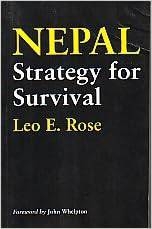 In the book "Nepa Law: Strategy for Survival" published in 1971, author Leo E. Rose wrote the Nepali psychology at that time as follows: The return of the British from India was a bitter pill for the Ranas. Since the time of Jung Bahadur Rana, the government was formed under the leadership of the same party that was dissatisfied with the interfering role played by the Ranas in India's internal politics. The Ranas had already understood that India would have to adapt to the Congress-led government to maintain its rule. Nepal Darbar took many such steps during the period of 1947-50, which were for the effort to ease the relationship with the Government of India .
The announcement of constitutional reforms made by Rana Prime Minister Padmasamsher in the year 2004 was also to show India. On the request of Padmasamsher, India sent three legal experts including Shri Prakash Gupta to Nepal. On the basis of the report given by Sri Prakash, Padmasamsher announced a 'statutory law' on 13th January 2004. Similarly, after the Hyderabad and Kashmir crisis broke out in India, Prime Minister Mohan Shamsher sent 10 platoon soldiers under the leadership of his son Sharad Shamsher for help at the end of June 2005. However, the Nepalese army that reached India returned without firing a single shot. The Indian Army managed to hold the position there. The Nehru-led government had to take military action when Hyderabad and Kashmir were not allowed to join India.
The British army had returned from India. Since Pakistan was divided, a large part of the army also went there . Historian Pramodshamsher Rana has written in his book 'Rana's Reign' that Mohanshamsher proposed to send the Nepalese army immediately to help India, realizing that India needed military assistance at that time.
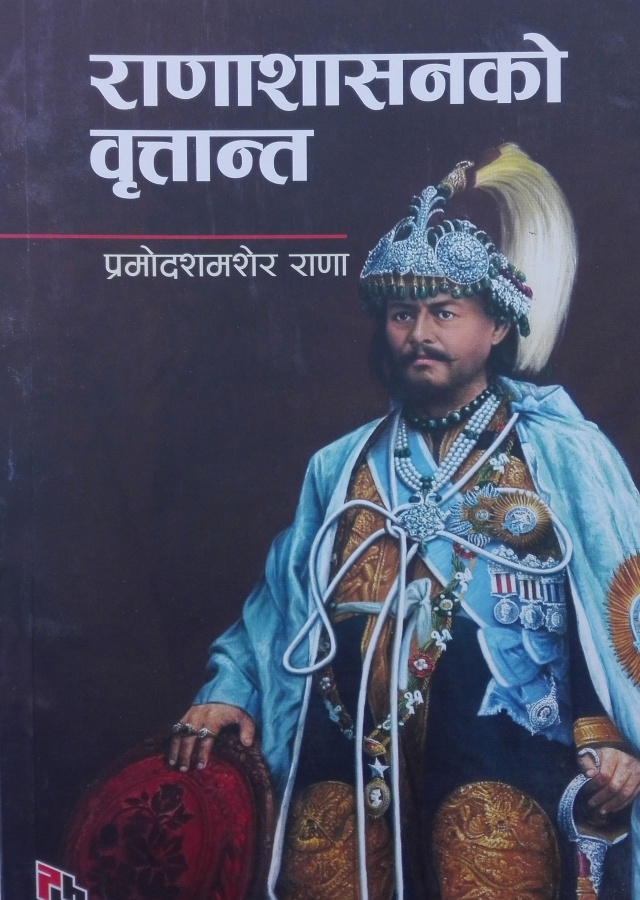 8000 trained troops in 10 battalions were placed in various camps in India. Rana has written in his book - when the burden of the Prime Minister of Nepal came on the shoulders of Mohanshamsher, the political situation of the world was in turmoil. British rule in India was over. A communist government was being established in China. The Nepali National Congress was established in India to overthrow the Rana regime. The Congress workers started agitation in the district. In colleges and schools of Kathmandu, slogans and rallies for the demand of civil rights had already started.
Rana Sarkar's self-reliance and self-strength had weakened. "A government with weak self-strength often tries to stick to foreign demands and such a government is not popular in the country," Sardar Bhim Bahadur Pandey has written in the book "Tyas Bakhatko Nepal", "The situation of the Rana government around 2006/07 was the same." The concern that Chinese communist ideas should not spread in Nepal was seen in India, a democratic country. Nehru called Vijay Shamsher, the director of the Foreign Affairs Department, the son of the Prime Minister of Nepal, to Delhi and expressed his concern. Sardar Pandey, who reached Delhi with Vijay Shamsher in November 2006, has written in the book what Nehru said in the meeting: "Before the People's Republic of China spreads its expansionist policy in Asia, we should improve our economic and political situation". There is not much time now. If Nepal does not take concrete steps towards bringing people's representatives into the government, India will find it difficult to help Nepal later.'' Showing fear of China, India took a foreign policy to attract other neighboring countries including Nepal.
Congressmen who are fighting for the end of the Rana regime and democracy were also telling the Indian establishment that the Communists have started to increase their activities in Nepal. Nepali National Congress Executive President BP Koirala has written a letter to India's Home Minister Sardar Ballabhai Patel and warned that if the Communist power increases in Nepal, it will be a big threat to India as well. Such a letter written by BP from Patna in 1948 has been collected in the basic compilation book of Vishweshwar Prasad Koirala, edited by Pradeep Giri.
Professor Surya Subedi has written in his book 'A Study of Nepal-India Relations' that New India adopted the policy of strengthening the British-era 'Himalayan Border Policy'. For that, India took the policy of keeping the three neighboring countries Nepal, Bhutan and Sikkim within its sphere of influence . Under the same policy, India had signed a peace treaty with all the three countries. India later annexed Sikkim.
Mohanshamsher's visit to India
India wanted to make a treaty with Nepal as soon as possible. For that, Rana sent a message that Pandit Nehru wanted to come to Nepal for discussion with the Prime Minister. But the Ranas were reluctant to invite Nehru to Nepal. "Many Ranajis thought of him as an atom bomb," wrote Sardar Pandey, "Nehru's call made Mr. 3 and instead of sending the Prime Minister of India, the news was sent that Mr. 3 Mohanshamsher would ride to Delhi."
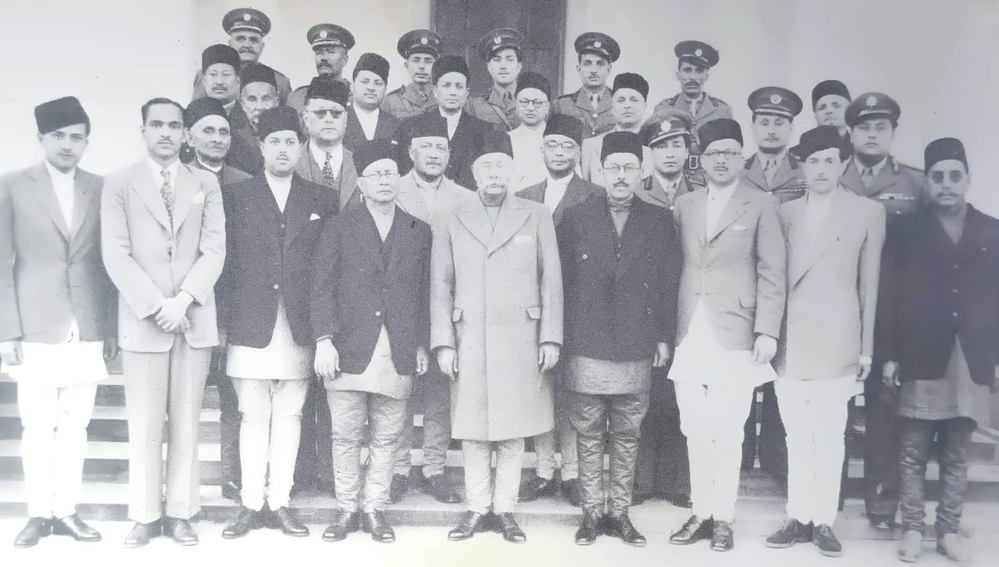
Mohanshamsher sent to India with the condition that 21 gun salute, 200 people on the ride and British-era welcome honors should be received from the new government of India . There was a rule of giving a 19-gun salute to the Prime Minister and 21 to the President. India's Foreign Secretary KP S Menon called Nepal's Ambassador Singh Shamsher to the South Block and asked on what basis he would give a 21-gun salute. But Mohanshamsher is not ready to go to Delhi with a salute of 21 guns and less than 200 men, it is mentioned in the chronicle book of the Rana regime .
"An untimely, unreasonable and unreasonable demand was sent from Mr. 3 Mohan to the new Indian government through the Nepali embassy," Pandey also wrote in the Nepal book of that time, "The Prime Minister of India showed readiness to accept all legitimate and illegitimate requests of the Prime Minister of Nepal. "
India's only goal at that time was a quick meeting with Mohanshamsher and talks for a treaty. It is written in Surya Bahadur Thapa's autobiography 'My nine decades', 'After listening to Mohanshamsher's terms, Nehru said that if things are agreed upon and if he agrees to what he said, he will give 21 why, 30 cannons.' It is mentioned in Thapa's book that Nehru said at that time, 'Jitna chahta hai, utta daag do, kya farak padta hai'.
After the conditions were fulfilled, Prime Minister Mohanshamsher went to Dakshinkali on February 4, 2006 and left Kulekhani for Delhi. His journey to Delhi started from Raxaul station by special train. When he arrived in Delhi on February 7, he received a much better welcome than he expected. High-ranking people were present at the station, including Prime Minister Nehru of India . Pandey, who is part of the tour team, wrote, "The Government of India warmly welcomed Mr. 3 Mohan at the railway station." A 21-gun salute was fired at the station. This time the Prime Minister received a much bigger welcome than when the Prime Minister of Nepal went to Delhi during the time of the British. Sardar Pandey, who understood that "If you welcome the man, the Rana of Nepal will open his heart and work will be done", Sardar Pandey has written.
The next day at 11 o'clock at Trimurti Bhawan, the residence of the Prime Minister of India, the two Prime Ministers had a 90-minute conversation alone. The proposed friendly treaty was discussed . Analyzing the changing situation, Nehru said that the danger of Communist China has increased for both Nepal and India. It was Nehru's suggestion that we should help each other if possible and let the people's representatives participate as soon as possible in the governance system of Nepal. All the ministers of India met the Prime Minister in turn. Various performances of the Indian Air Force were also shown to the Prime Minister. He was flown to the skies of Delhi in an airplane carrying special guests. That was Mohanshamsher's first air flight. On February 15, the Prime Minister was bid farewell with special respect. Like the welcome ceremony, dignitaries including Pandit Nehru reached the railway station to bid farewell.
Failed attempt to reform draft treaty
The treaty of 1950 is the result of Mohanshamsher's visit to India. The Indian ambassador in Nepal, Surjitsinh Mujethia, was not working as expected, so he was replaced without completing his tenure. Nehru sent Chandeshwar Prasad Singh (CPN Singh) of Bihar Sursand with a mandate to negotiate a treaty.
Sardar Pandey writes - He was sent to Nepal, anyway, with the two objectives of making an early treaty between Nepal and India and getting people's representatives into the government. As soon as Mohan Shamsher returned from Delhi, Ambassador Singh handed over the draft of the treaty and increased the pressure for the signing of the treaty quickly. The Rana Durbar was not satisfied with the draft. Mohanshamsher sent a delegation to Delhi to talk to India in order to protect the interests of Nepal and try not to include in the proposed treaty the harmful and unwanted clauses imposed on Nepal during the British period . The delegation was led by Major General Vijayshamsher . Sardar Gunjman Singh, Sardar Narendramani Acharya Dixit and Bhim Bahadur Pandey were in the team . India formed a committee under the leadership of Secretary General Girijashankar Vajpayee. A month after Mohanshamsher's visit to Delhi, the team went to Chait.
Dissatisfied with clauses 2, 5, 6 and 7 in the draft submitted by India, the Nepali delegation demanded changes in it. Participating in the talks in Delhi, Pandey has mentioned in his book that the Nepalese team submitted the revised draft treaty. But Ambassador CPN Singh, who is in the negotiating team from India, was not ready for the amendment. He dominated there. Indian officials said that the proposed 'Peace and Friendship' treaty was not one-sided or unequal but was based on equality. It is said that the things mentioned in Sections 2, 5, 6 and 7 should not be unilateral and should be equally applicable and valid to both governments . According to the Indian officials, the clauses of the draft treaty require both countries to be equally valid.
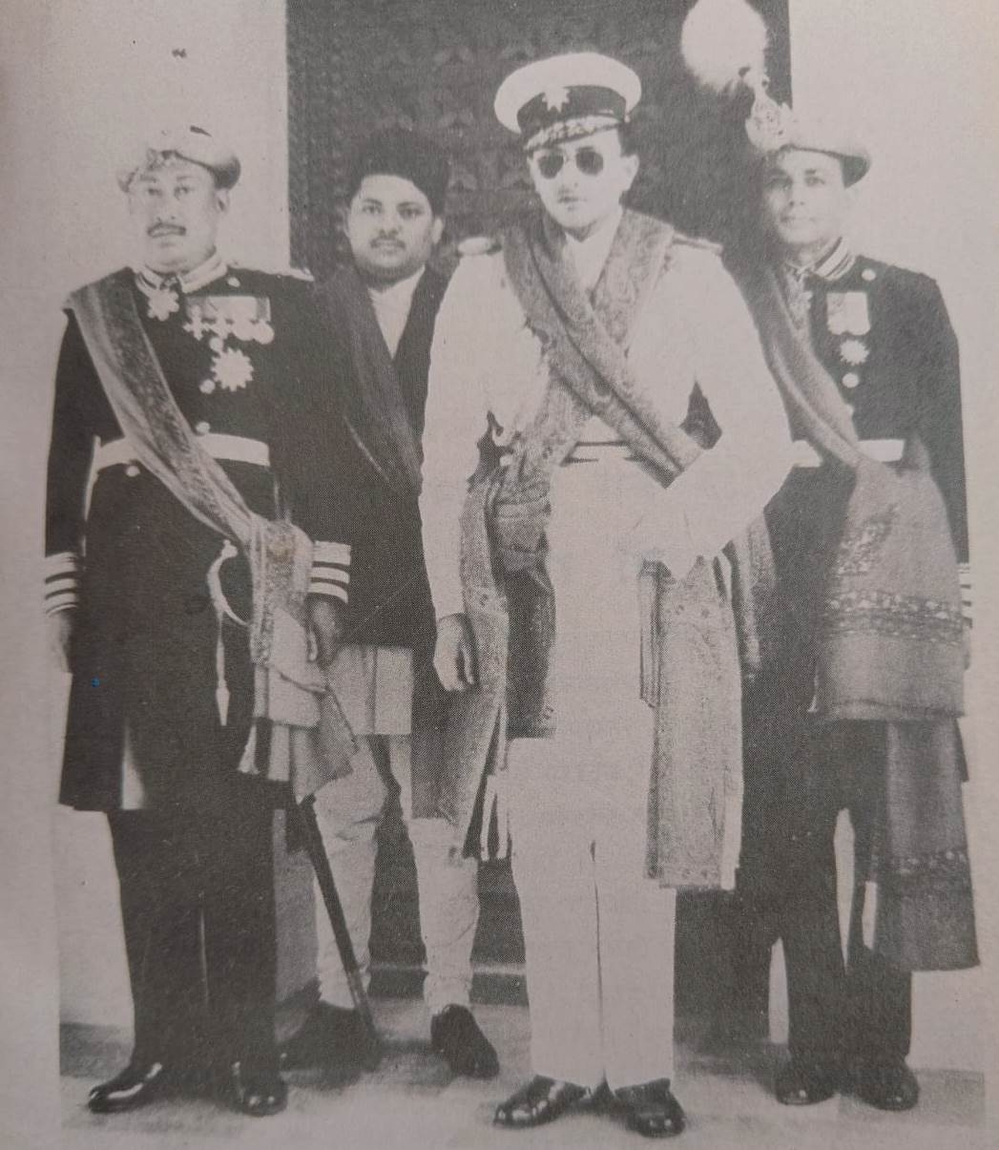
'The leader of the Nepali delegation, Vijay Shamsher, was stuck on the demand for amendments to the draft treaty. Indian Ambassador Singh was of the position that there was no need for amendment," Pandey, who participated in the negotiation team, wrote in the book, "In that situation, Vajpayee, the leader of the Indian delegation, was in religious crisis." To convince the Nepali delegation, the Indian side proposed to exchange a separate letter on the same day as the treaty was signed, clarifying and including many things. The Nepali side was not satisfied with the letter. That increased the discontent among the Indian team. "If the treaty is not completed, the Indian representative started threatening that the consequences will be serious," Pandey mentioned, "There should be a treaty like India said, if it is cut, there will be no treaty". The Nepali delegation was in a religious crisis like a father's face if we don't kill him.
treaty signed
2007 On the day of July 16 (1950 July 31), the peace and friendship treaty was signed between the governments of Nepal and India in Kathmandu. It has been 75 years since the treaty was signed between the two countries. The treaty signing ceremony was held in a grand manner in the gallery hall of Singha Darbar. Prime Minister Shri 3 Mohan Shamsher on behalf of Nepal and Ambassador CPN Singh on behalf of the Government of India signed the treaty.
"The Rana government was happy that there was a treaty with India on the basis of equality and was able to satisfy the Indian government," Pande wrote in the Nepal book of that time. But outside, various things had started . Even within the Rana family there was dissatisfaction with the treaty. The treaty came into dispute from the day it was signed. Former Foreign Minister and Ambassador Bhesh Bahadur Thapa has written in his book 'Rashtra-Pararashtra' that the treaty was signed against the background of pleasing the Indian ruler. He mentioned that since the status of the signatories is not the same, the treaty is automatically unequal.
The Peace and Friendship Treaty of 1950 replaced the 1923 Treaty with the then British government. Even in the New Treaty, the British mindset was seen in the rulers of India. "In the 1923 treaty, the imperialist mentality of the British government has been revealed," former foreign minister Kamal Thapa wrote in the book Blockade and Geopolitics, "The clear intention of the British government to continue the same concept even in independent and democratic India has been reflected in the 1950 treaty with Nepal." He has written - since the day of the treaty, the opposition to it has started in Nepal .
Professor Lokraj Baral, the former Nepalese ambassador to India, says that the Ranas were forced to make a treaty due to the geopolitical situation of having to do what India said 75 years ago. "Mohanshamsher was under pressure from many sides, it was hoped that the treaty with India would alleviate it," he said, "but the Rana regime ended within 9 months of the treaty." He mentioned that India was always affected by the "China factor" and its influence was seen in the treaty made in the British era or
in 1950.
'India's big power is psychology, there is a hidden desire that Nepal should not go beyond our grasp. The China factor has been playing a role in the Nepal-India relationship since history, he said, "We are also responsible for that, we behave aggressively, the things that flow into more emotions and are unnecessarily anti-India continue to make him suspicious."
Unequal treaty, demands for revision
The 1950 treaty is said to be unequal, and since the beginning, there has been a demand for its amendment. The first elected Prime Minister, BP Koirala, Panchayat Chief Minister Kirtinidhi Bista opposed the treaty at the time. In his greeting message given in The Rising Nepal on the occasion of India's Republic Day on 26th January 1969, Bista also proposed a new treaty on the basis of equality saying that the treaty of 1950 is no longer working in the current perspective. After 2046, Nepal has been raising the issue of treaty revision in most of the visits of the Prime Ministers to India.
Former Nepalese Ambassador to India Nilambar Acharya says that completing 75 years of peace and friendship treaty between Nepal and India shows the stability of friendship . However, at the same time, it seems to raise the stability above the time and does not want to modernize the friendship, he said.
'The treaty of 1950 is a product of the situation 75 years ago, the relationship at that time cannot be compared now . The dimensions of relations between the two countries have developed in many fields,' he said, 'there is a need today to strengthen the development of 75 years of friendship and take it to a modern state, but that has not been done.' "The behavior is one thing, the treaty is another. Behavior has been developed long before the treaty," he said, "things raised from behavior could not be renewed through the treaty. Now the question is, whether to give constitutional recognition to the change or not? If you don't give it, the behavior will find the way with difficulty . It has also gone . If it gets treaty recognition, it will bring more warmth to the relationship between the two countries.'
The government of Nepal had submitted its official opinion to the government of India in 2054 for amending the treaty. During the then Foreign Minister Kamal Thapa's visit to India, on August 26, a document containing Nepal's official opinion on the revision of the Nepal-India Treaty of Peace and Friendship of 1950 was handed over. IK Gujral was the Prime Minister of India. However, the document was later not recognized as 'non-paper'.
Similarly,
Enlightened Group (EPG) was announced in January 2072 with the agreement of the Prime Ministers of the two countries. The main objective of the Enlightened Group was to review all past agreements, agreements and arrangements and make recommendations to both governments based on the evolving perspective of the 21st century. The Enlightened Group proposed a new draft report replacing the 1950 treaty. Ex-ambassador Acharya, who is also a member of the Prabuddha group, says that the governments of both countries felt the need to review the treaty and formed the EPG with the consent of the Prime Minister. According to the EPG's mandate, he also gave his suggestions about the 1950 treaty in the report. The 8-member group consisting of intellectuals from both countries prepared its report in June 2075. The
report is stalled because the Indian government does not want to understand it. Another reason for this is the unclear and opportunistic perception of the Nepali leadership about this treaty. In Nepal, this treaty has only become a political weapon. What is the treaty of 1950? The government of Nepal and the government of India, taking into account the ancient relationship that has been happily maintained for many centuries between the two countries, decided to further strengthen and develop that relationship and to make a treaty of friendship between the two countries. Narayan Singh having examined the mutual certificates duly and duly adjudged, the following articles have been approved :
First part:
There will be unshakable peace and friendship between the government of Nepal and the government of India. Both governments agree to mutually accept and respect each other's full sovereignty, territorial integrity and independence.
The peace and friendship treaty of 1950 is not an amendment, it should be repealed: expert

