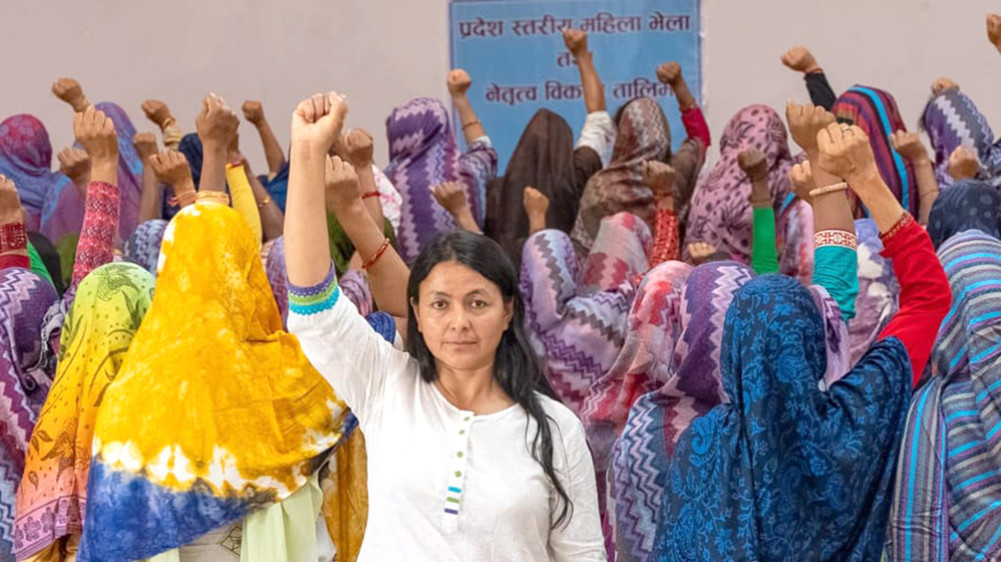
The documentary 'Devi' is a reflection of the social, legal battle that Devis had to fight even after the war, which is also a battle for self-respect and empathy, a battle for social restoration of warriors on another battlefield, who have the courage to speak out against the crimes committed against them and are fighting for justice.
We use Google Cloud Translation Services. Google requires we provide the following disclaimer relating to use of this service:
This service may contain translations powered by Google. Google disclaims all warranties related to the translations, expressed or implied, including any warranties of accuracy, reliability, and any implied warranties of merchantability, fitness for a particular purpose, and noninfringement.
I waited for 15 years thinking that this topic will come up today, someone will raise it. I was also traumatized. If I could speak, I would have raised my voice earlier," says Devi Khadka with tears in her eyes, "Later I looked at those who were in pain and came to a conclusion, if I don't speak, no one will speak."
Right in front of Devi are the then Maoist leaders Baburam Bhattarai and Hisia Yami. In the documentary 'Devi' directed by Suvina Shrestha, the violence experienced by women during the war, the torture they endured and the impact it had on them.
There are more than 3,000 women who were raped by both the security forces and the Maoists in the 'Jan Yuddh'. But, like Devi, they could not raise their voice immediately, nor did they find the cover to stand against it. In this documentary, we can see the legal battle that Devi took forward for the justice of those women who have remained silent for years due to the fear of society, family and honor. The state considered only about 300 people who applied to the Truth and Reconciliation Commission as victims.
However, women suffering from sexual violence, rape, missing women who could not reach the Commission, were not kept in the list of victims. The statute of limitations stopped them. In this documentary, Devi gathers the voices of women like her and insists on revising the law of demarcation for those women. The documentary also shows how the 'goddesses' succeeded in getting this law amended.
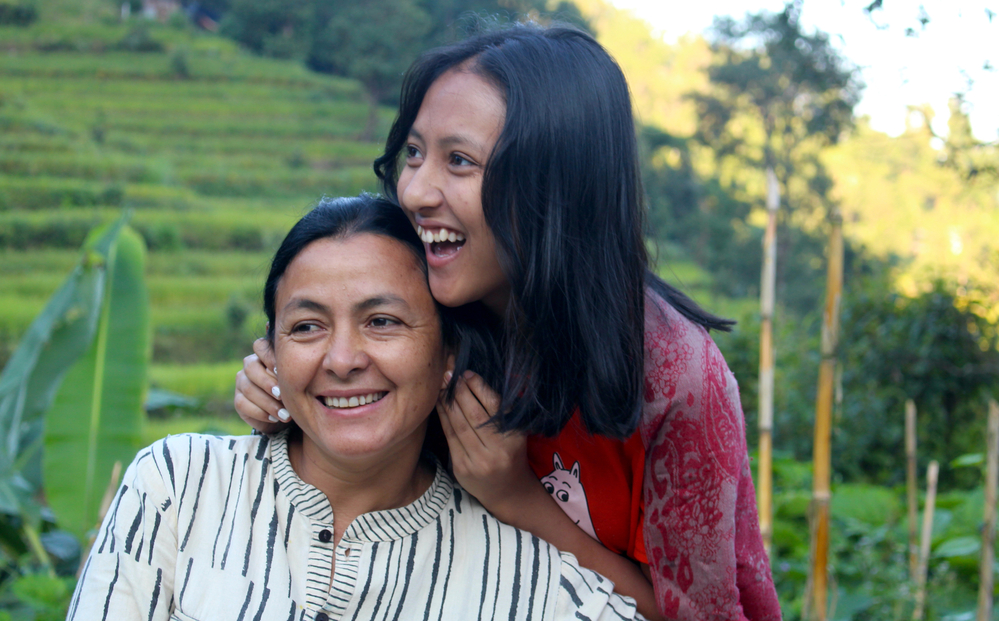 Devi Khadka with her daughter Rosi.
The documentary begins with a scene from Tihar. Where, Devi is having fun with her family. The documentary then follows Devi's journey to justice and gradually explores the dark side of war and the steps taken by Devi towards the light. The Festival of Lights is symbolically depicted in the documentary. The symbolic scene of Tihar conquering the black night of Unsi by lighting a lamp shows how the conflict-affected women have overcome the dark side of the war and turned into a bright journey towards justice. The ending of 'Devi', which started with the excitement of Tihar, also ends with the scene of putting on Saptarangi tika. In about 80 minutes, director Shrestha not only shows how the conflicted goddesses fight or are fighting against demons, but also advocates for justice by delving into their past.
As Devi sets out on a journey to fight for justice against the oppressed like herself, the camera follows the bright light. Most of the time the goddess's journey follows the sunlight. The journey continues towards the light of some source. Whether it is the cloth worn by the goddess of finance or the path held by the goddess, she never ceases to follow the light. This light is also a symbol of the adventure that the goddesses set out to conquer the darkness. These powerful images, sound and visual language adopted by the director to tell the stories of the victims are the powerful part of the documentary 'Devi'. "Devi" who won the Jury Award through Nepal Premiere in "Film South Asia" is currently trying to apply ointment to heal the wounds created by the conflict. The
 documentary sometimes reaches into the past and sometimes returns to the present. Going back to the past includes conflict scenes, where women guerrillas fight with bombs and ammunition, showing the strength, power and courage of women ready to carry guns and ammunition in battle. Every scene shot by Vishnu Kalpit feels sensitive to show the brutality of the conflict. When Devi visits the victims, their identities are concealed by recording their experiences and the pain and torture they endure is exposed through the camera. The scenes of the victim's clenched fists or restless fingers when they speak are shown on the screen, and the justice they await after the peacetime and the in-between is sensed. Their painful experience is heart wrenching. The
sound is also used as sensitively as the depth of trauma they have endured, in 'Devi'. When the scene returns to the present, a different kind of sound is used. Visual and auditory sensing have also been adopted. When Devi begins to meet the victimized character, they present the demonic form of the rapist. The perpetrators have walked in the society with their heads held high,
But the victims are still confused. A character while narrating her pain to the goddess says, “The rapists are the ones who stare with fixed eyes, which makes us feel like they hate us. I had to get justice, we had to be respected in front of this society. But don't be late,' she says.
The story of the tortures, pains and sufferings endured by the goddesses and their constant struggle to rehabilitate the society evokes the story. Many scenes in the documentary make the mind heavy. Devi, who is also the storyteller of the documentary, follows the victim woman who is hiding the heavy weight inside her mind in a veil. They are living a life of social imprisonment while the criminals who raped them are freely walking in the society. This documentary is also the voice of such women, who have been in bondage for years. Who, with the help of the goddess, is trying to take the path of light. There is a glimmer of justice in their eyes. The
documentary 'Devi' is the reality of another war that Devis had to fight after war. A battle of self-esteem and empathy. Another battle for restoration in society is the battle of the warriors on the battlefield. Those who have finally gathered the courage to speak against the crime against them, have found hope. It is the fight of all those goddesses who are leading the struggle for justice by raising their voice for their rights. They are gathering the courage to walk in the society with their heads held high, gathering the weak and discouraged minds hidden in the veil and ready to raise the loud voice of justice. This battle of the goddess is a battle fought on behalf of those women who are on a journey to heal the wounds of patriarchy and war.
A character recounts being left by her husband after finding out she was raped. She is struggling to pay for the education of her growing children and to re-establish herself in the society. Her struggle also shows how the women who have been raped in the conflict have to fight their own battles in the society in 'Devi'. It also shows how many levels the women had to fight when they were raped. Not only do they struggle with 'anxiety' and 'depression', they also have to struggle with their families. Devi's family also said, "You would have died instead of your brother".
Not only the goddess herself, but also the family had to fight the society when she was raped. Not only that, it also shows another complicated relationship of Devi with her daughter. The complexity and sweetness of that relationship also makes this documentary strong. The documentary exposes the painful pain that these women have to fight with from different strata of society. The documentary also shows husbands who steadfastly support the goddess in her fight. They sympathize with their every emotion and support them. The documentary shows in a balanced way not only those who were raped by the government security personnel but also the incidents by the rebel guerrillas. The
'Devi' documentary is also a resistance against gender violence. A voice against sexual violence and abuse against women. A fight for justice is a struggle. It is the battle of goddesses fighting for a free and dignified life without fear, breaking down the walls of injustice, is a loud voice.