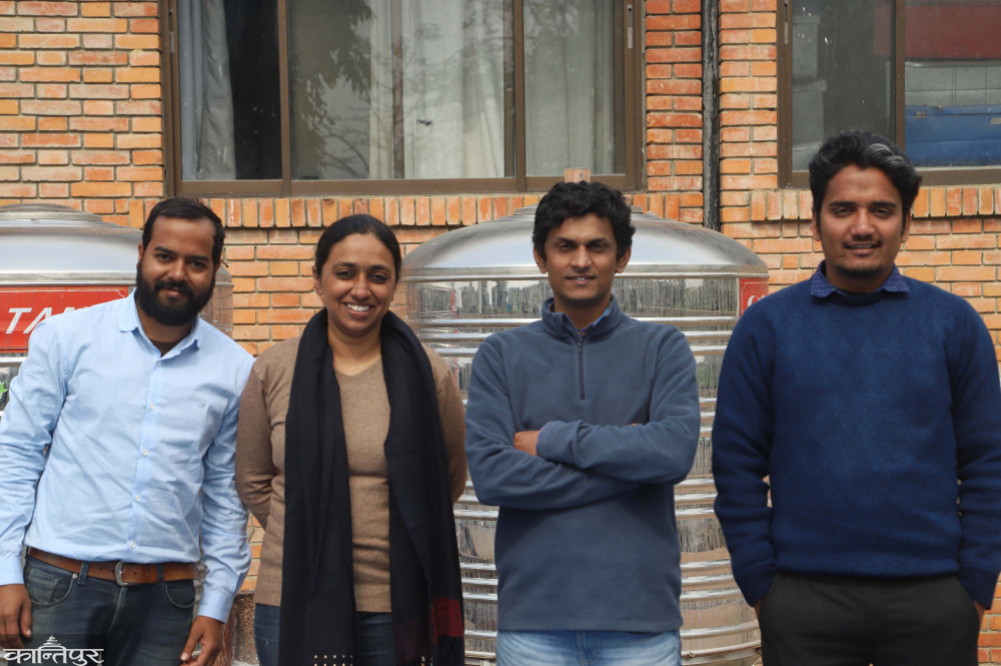
Students studying archeology in India have recently been engaged in studying and researching the cultural heritage of Lumbini, Taulihwa and Tilaurakot. Most of the students who returned to India after their studies say that they miss Nepali local food and Nepalese hospitality.
We use Google Cloud Translation Services. Google requires we provide the following disclaimer relating to use of this service:
This service may contain translations powered by Google. Google disclaims all warranties related to the translations, expressed or implied, including any warranties of accuracy, reliability, and any implied warranties of merchantability, fitness for a particular purpose, and noninfringement.
26-year-old Swati Burma, an undergraduate researcher at The Maharaja Sayajirao University (MSU) in Gujarat, India, is 'missing' Nepal's climate, local people and food. Having completed her graduation and post-graduation from the Vanaras Hindu University, she is currently researching the Paleolithic archeology of Rajasthan at the University of Baroda in Gujarat.
Burma participated in a month-long excavation at Tilaurakot in Kapilvastu last winter. He has a simple nature and is familiar with Nepalese lifestyle as he is a resident of Uttar Pradesh near Dhangadhi in Nepal.
India and Nepal are having a scorching summer at the moment. Swati says that she misses the 'winter season' spent in Tilaurakot. "Nepalese people are special," she said to Kantipur, "the behavior of the villagers and friends there did not feel like a different country." She spoke less and kept smiling and said that she made friends with students who were studying Master's level in Archeology at Lumbini Buddhist and Tribhuvan University of Nepal. "Many people communicate through social media," she said.
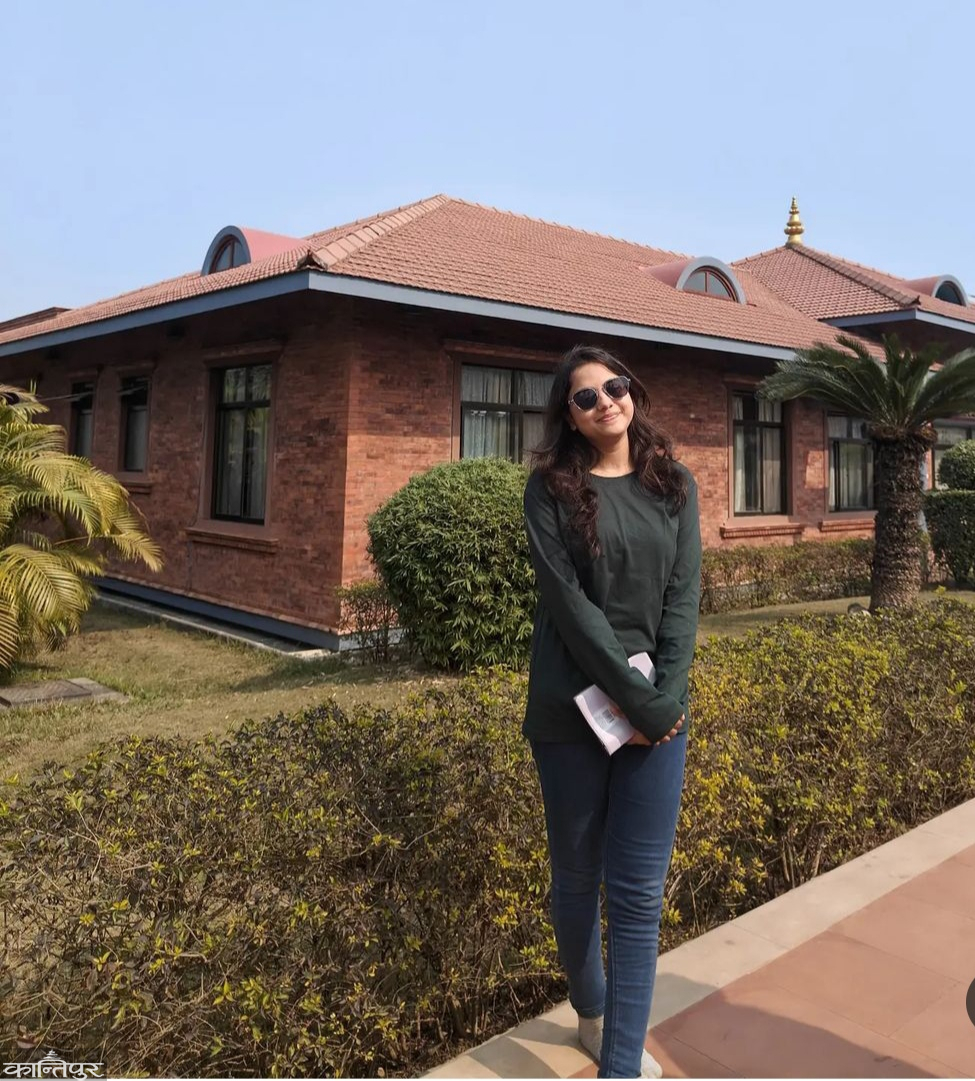 Swati said that she was attracted by the 'local food' available in Tilaurakot and Taulihwa. Panipuri, Chaat, Chatpat are also available in India. What he misses a lot is Jhol. She said that the taste of jhol mahamah did not leave her tongue. He says that during the excavation in Tilaurakot, his practical knowledge was enhanced. She expressed her happiness that she was able to increase her knowledge by working in an organized and protected archaeological site in South Asia. 'I am remembering that cold weather and warmth,' she said, 'I am thinking about when I will be able to go to Nepal again, I am remembering Jhol with my friend.' Pandey is studying at Maharaja Sayajirao University. He has been researching the ancient history of India for two years. Last January he came to Tilaurakot along with other university friends for 'Field School'. Janakpur is about 20 km from his house. His father used to cycle around Janakpur. Since he used to travel around Nepal with his father, he knows about the culture here. Which has made him familiar with Nepal and Nepali people. He is very interested in the sculpture of Nepal. "When you come to Nepal, the atmosphere is like home," he said, "everyone's behavior is pleasing." He participated in the excavations here and visited the Buddhist sites under "Greater Lumbini" in Rupandehi and Kapilvastu. "Tilaurakot is in its natural state," he said, "it is like a village, there are many things to explore."
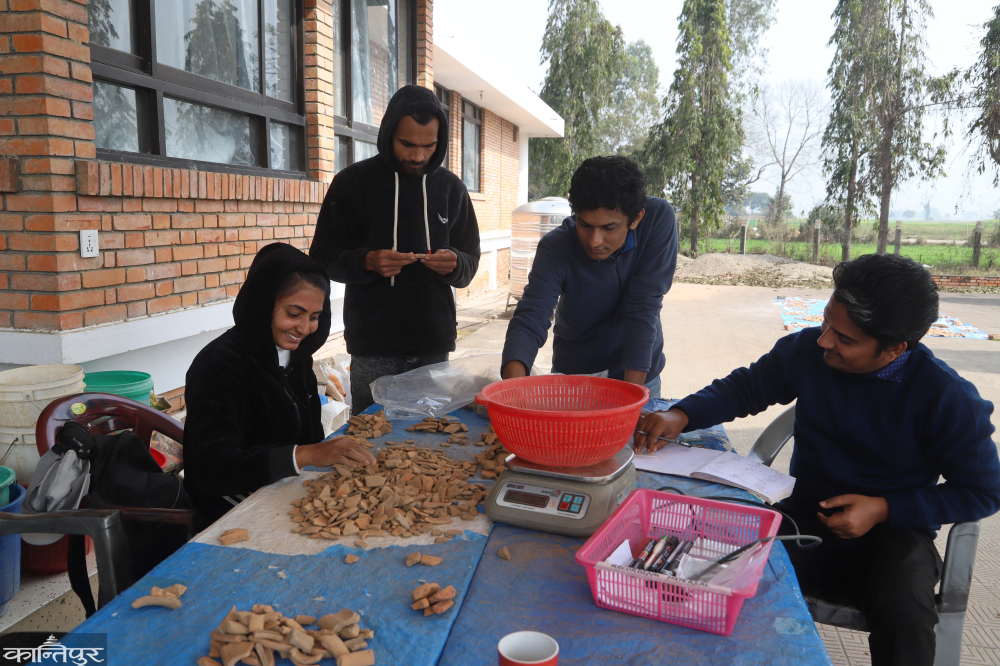 Apart from that, Lumbini's German and Nepal Vihar attracted him. There is no pollution here. After staying here for 24 days, he said that he wanted to stay in Lumbini for a long time. He says that he will come back and spend time in his studies. "In Nepal, archeology is being studied only at the postgraduate level," he said, "it should be taught at the undergraduate level." Looking at the archaeological sites here, he suggested that archeology and its importance should be included in the course from the school level. "This will help to save the known/unknown culture here," he said, "It is also important to inform local residents about archeology and culture." "I had to go back in a hurry," he said, "I'll come back again." Akash is studying the stone technology used by humans in the Paleolithic era. He is currently doing his studies based in Khandakpur area of Dakshin Vihar. "It is important to understand your culture," he said, "it is a matter of saving this culture and giving it to future generations." What Akash misses the most is the local food. He said that he remembers the taste of service and jhol mahamah.
A dozen students, archaeologists and professors came from India. They came from different universities and offices. They did not know each other. They became close after coming here. Among them, 28-year-old Sri Samarth was honest and bubbly. A final year researcher at MSU, he was born in Belagavi district of Karnataka but grew up in Baroda, Gujarat. He has been living in Baroda for 24 years and completed his graduation and post graduation in archaeology. He worked as a director at the Archaeological Museum in Gujarat for one and a half years. After leaving the government job, he started studying the ancient ceramics found in the north-western states of India.
In this process, he has studied ceramics by reaching various places in Jammu Kashmir, Punjab, Haryana, West Uttar Pradesh, Rajasthan, Gujarat and Sindh province of Pakistan. "I came to Nepal for the first time last winter," he said, "this time he was selected from the university." He was born in South India and had a blank mind when he came here. "The people here are friendly," he said, "Culturally it's like India." He participated in the Tilaurakot excavation and was attracted by the archaeological sites here. He was greatly impressed by the Mayadevi temple at Lumbini. "Wherever you go, there is a heritage site," he said, "the cooperation of the local residents was also good." In such areas, experts come/go from home/abroad. However, he said that since the local people will protect the heritage forever, their role should be appreciated. He also has not forgotten the local food. "I remember the jhol mahmah, samosa, pakoda, chaat very much," he said, "and I also remember the intimacy of the people there."
34-year-old Nilima Vasudevan, a final-year student at MSU, is shy. Many called her 'Didi'. A resident of Kerala, South India, she completed her graduation from there. Graduated from Madras University. After working with the Indian Archaeological Society for two years, she worked as a guest lecturer at Northhill University, Meghalaya. Then she went to Baroda to study Vidyavaridhi. Currently, she is studying the Neolithic culture of Meghalaya. During this period, Store Jar of Meghalaya has completed the project. She came to Nepal with her university classmates last winter and said that the residents and students of Nepal are friendly and helpful.
Addicted to tea to ward off cold, she is being chased by the taste of samosas and pakodas found in the bushes of Ramghat near Tilaurakot. She says that she remembers eating a lot of junk food while spending 24 days in a hotel in the capital Taulihwa. During a visit to the Greater Lumbini region, she purchased Alloka cloth and woolen hats in Lumbini. "I miss Churpi," she said. "For us archeology students, there is a mine of heritage in Kapilvastu and Lumbini," she said, "I will come once with my family."