In the festival, which will last till Sunday, there will be cultural bazagaza, bhajankirtan and Nepali currency from the Lichchavik period, information about the rituals from birth to death in Newari culture from Nepal's first clay heaters.
We use Google Cloud Translation Services. Google requires we provide the following disclaimer relating to use of this service:
This service may contain translations powered by Google. Google disclaims all warranties related to the translations, expressed or implied, including any warranties of accuracy, reliability, and any implied warranties of merchantability, fitness for a particular purpose, and noninfringement.
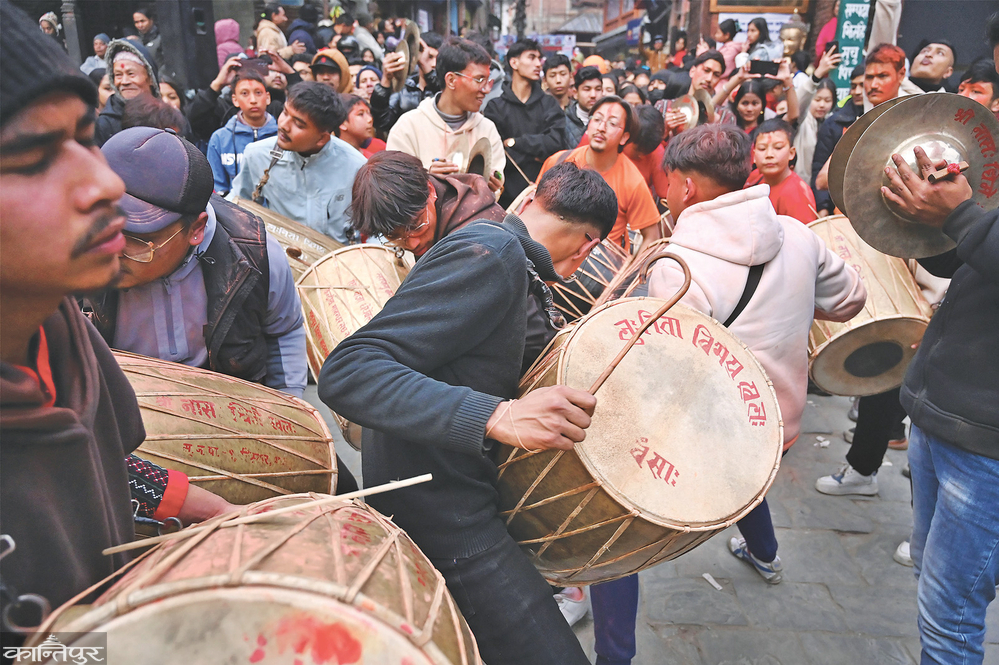
On the occasion of Janaipurnima in Madhyapur Thimima of Bhaktapur, the 4-day 'Salcha Naach' had not been held for 8 years. Some foreigners who were supposed to participate in the dance. As some people were not interested, they were trying to bring it back into operation.
On the occasion of the Madhyapur festival, the youth have brought the dance back into operation. In the dance, Premlal Bhasima, Dilkrishna Bhasima and others accompanied by playing 'Ponga' instruments and Chandra Bhasima, Rasul Bhasima and Chris Bhasima played 'Khi' instruments. The dance and instrumental training was given by Gurus Bikulal Bhasima and Kancha Bhasima after a month.
Premlal said, 'The festival has brought awareness to the importance of art and culture to the youth who are addicted to digital and social media.' Now they are planning to continue the 'Salcha Naach' every Janaipurnima.
Harichandra Prajapati is performing at the festival by making earthenware using a 300-year-old Malla period stone chakha (wheel) preserved by his son. His father made pottery. Harichandra made ceramic vessels in it in a modern way. He says that now these ceramic works are exported to Germany, Australia, Japan, UK and other countries. Harichandra believes that the
festival has helped to make the plan to establish Madhyapur Thimi as a ceramics hub a success. "Such a festival should be organized every year," he said. In Balkumari area of Madhyapur Thimiko, Gedaguri, Chapacho tol, earthenware, Nagesh vegetables, Bode curd and rice, Tigni tol Chiura are famous.
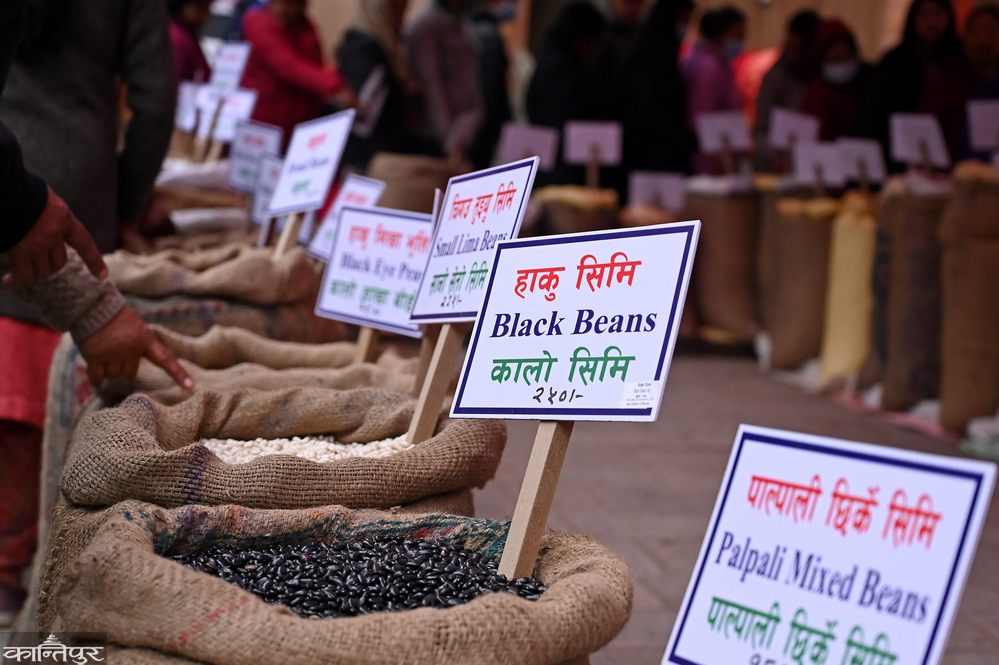
Even now the local people are embracing the ancestral profession of their respective areas. Aiming at the festival, a team including local Suban Kayastha has put 64 types of vegetables on display in Balkumari temple area.
Gedaguri of Madhyapur Thimi is sent to Asan, Patan Mangalbazar, Sankhu, Thankot and other areas of Kathmandu. 'Soybean comes from Sindhuli, big banana from Sindhupalchok market, Geda mas from Melamchi, black bodi from Bahrbise,' Harichandra said, 'Recently, the local production has started to decrease as young people have gone abroad to bring it from outside the valley.' He said the festival will inspire the youth to grow local products across the country. Uttamraj Shrestha, the owner of a local knife shop, said that the festival helped to promote local products along with business. "The festival also paid attention to the repair of dilapidated monasteries, conservation and cleanliness of ponds and other heritage," he said.
Bhoj has a special significance in the Newar community. During the rites from birth to chariot-riding and death, separate dishes should be served. An organization named Osla Nepal has put 25 types of Newa feasts on display to show the religious and cultural importance of Newa feasts. Similarly, Pulukisi Jatra, Lokeshwar Jatra along with Biska Jatra held on Baisakh 1 and 2 in Madhyapur Festival are also shown, while Mahakali dance, Indra Apsara, Mayur, Ashtamatrika, Jogi Pyankha, Nagcha, Rajkumar, Lakhe etc. dances are also on display.
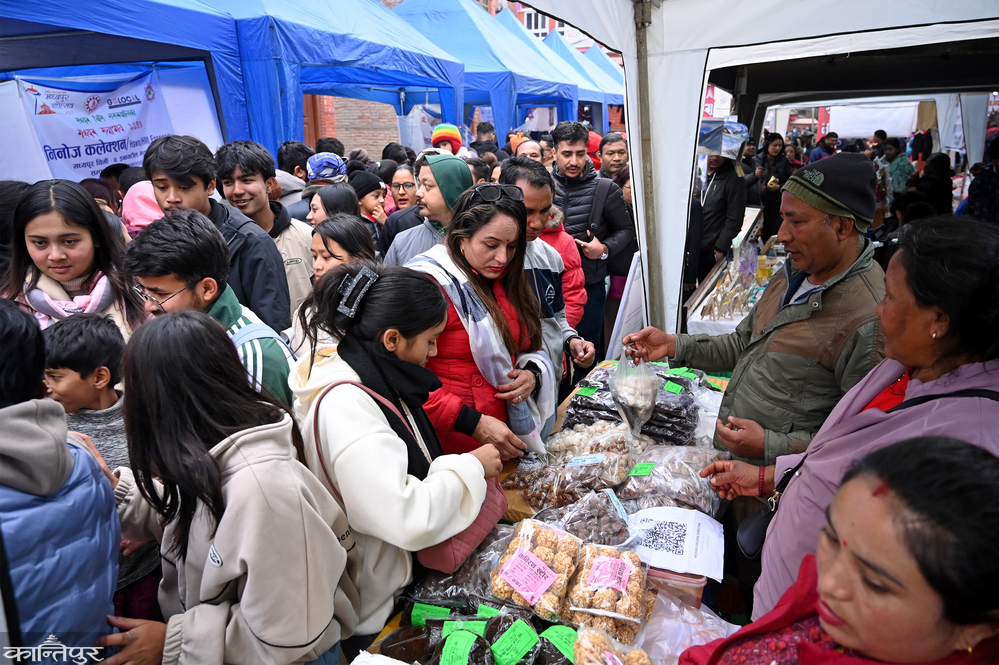
Cultural instruments include Gulla Baja, Ghintang Ghisin, Dhime Baja, Nayo Khin Baja, Nau Baja, Flute Instrument, Dafa Bhajan, Kirtan Bhajan, Gyanmala Bhajan, Nitya Bhajan, Ramayana Bhajan, Hari Bhajan. Similarly, Nepali currency and coins from the Lichchavi period to the present, about 5 feet high clay sukunda, Nepal's first clay heater, gold window in Nagesh, also informed about the rituals from birth to death in Newari culture.
Most people think that Kumari is only in Basantpur, Patan and Bhaktapur palaces. However, to inform that Madhyapur Thimi also had a palace during the Malla period and here too there is a royal virgin, a virgin and a 103-year-old senior citizen have been decorated on the throne in the Gunakirti Mahavihar courtyard. Those who come to observe the
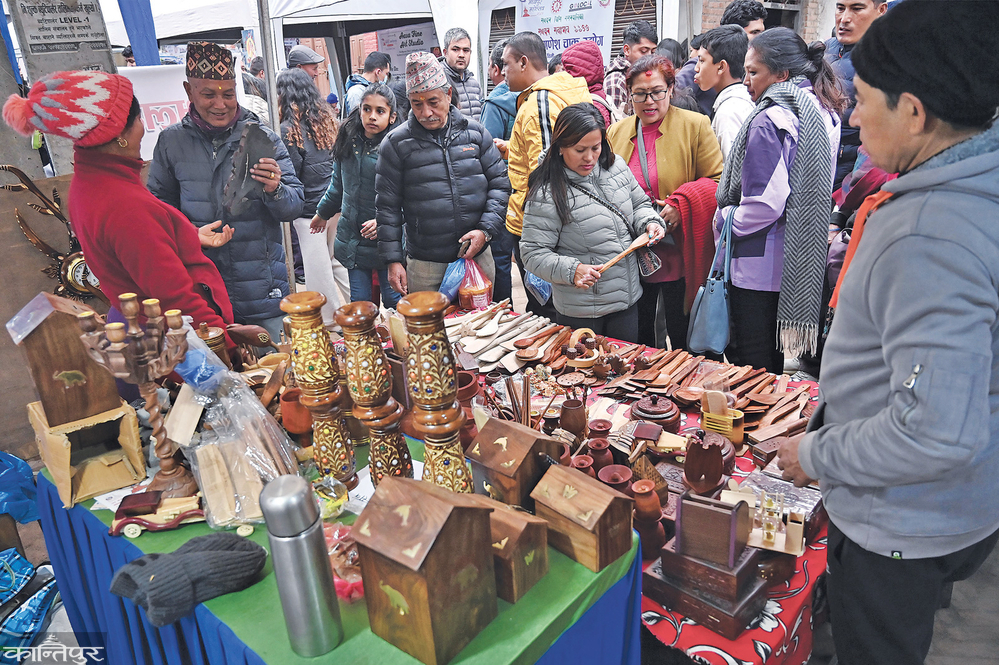
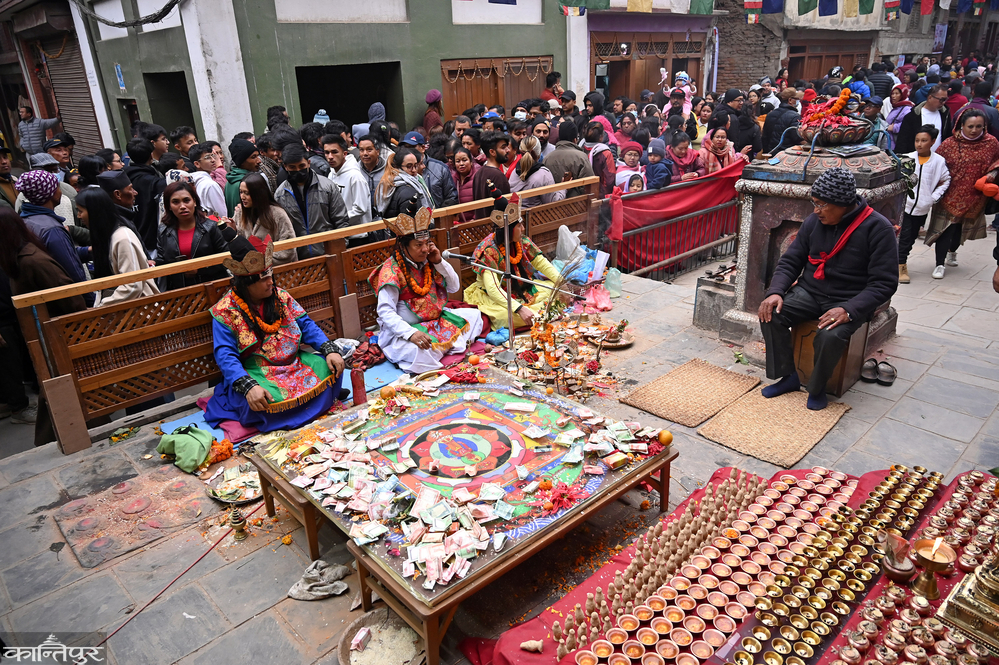
festival are welcomed by making a gate made of earthenware. The shield and sword of Malla period, which are exhibited during Dasain, are also on display. Exhibition of Newari rituals and costumes, sculptures, pottery, educational, book exhibition and food stalls are also held. Among the other attractions of the festival, Buddha's Astudhatu was also put on display at Buddha Vihar in Nagesh and Pati Vihar in Chapacho tol.
The tongue-piercing Jatra icon has a lot of selfie-takers to take photos with. Manikrishna Shrestha, a resident of Kathmandu who came to observe the festival, said that the festival made it easy for those who study about local art culture and profession. "It can be seen at one time during the festival celebrated here throughout the year," he said. Information centers and health camps have also been arranged to provide information about the
festival. With the aim of bringing foreign tourists targeting the festival, the organizer said that 120 guides were given a sightseeing tour of Madhyapur in collaboration with the Tourist Guide Association of Nepal. According to
organizers, 42 local youths have been trained to make it easier for those who come to observe the festival. Surendra Shrestha, coordinator of the main festival committee and head of Madhyapur Thimi municipality, said that the festival was organized to make tourism a partner of local development and to make the economy more dynamic by connecting local heritage with employment and income.
'Most people do not know about Madhyapur Thimi being a medieval city full of tangible and intangible cultural heritage,' he said, 'We believe that the festival will make Madhyapur known as a tourist destination.' He said that there is a plan to make tourism and half day package in Madhyapur Thimima.

