Just as all religions have their own holy places and shrines, Lumbini is the most important place for Buddhists. Lumbini is also a major destination for peace diplomacy, with prayers and programs held daily praying for world peace.
We use Google Cloud Translation Services. Google requires we provide the following disclaimer relating to use of this service:
This service may contain translations powered by Google. Google disclaims all warranties related to the translations, expressed or implied, including any warranties of accuracy, reliability, and any implied warranties of merchantability, fitness for a particular purpose, and noninfringement.
बुद्ध दर्शन आजको जटिल, तीव्र र अस्थिर विश्वमा झन् प्रासंगिक हुँदै गएको छ । प्रविधिको तीव्र विकास, उपभोक्तावाद, मानसिक तनाव, युद्ध, वातावरणीय संकट र मानवीय मूल्यहरूको ह्रासबीच बुद्धका शिक्षाहरूले आजको मानवतालाई दिशानिर्देश गर्ने क्षमता राख्छन् । आजको सन्दर्भमा बुद्धको महिमाबारे कोसेलीले तयार पारेकाे विशेष प्याकेज।
The birthplace of Buddha in the Lumbini Cultural Municipality of Rupandehi is bustling with tourists throughout the year. Be it the cold winter or the torrential rains of Asar-Shawan. Buddhists and tourists from different countries are seen wandering from the Peace Lamp of Lumbini, which calls for peace, to the Mayadevi Temple in the sacred garden area.
The Lumbini area, which is always crowded every day, is especially crowded with visitors during any festival or occasion. On the first day of 2083, Lumbini was crowded with people worshipping and wandering. According to the Lumbini Development Fund, 30,000 tourists came on the first day of the New Year. Most of them came to enjoy the peace and picturesque atmosphere of Lumbini on New Year's Day.
Lumbini Hotel Association President Leelamani Sharma Lumbini, along with its spiritual sites, has become a must-visit destination for domestic tourists once a year. Many people come to learn about the archaeological and historical significance of this area and to worship. ‘Lumbini, along with its sacred garden, is a source of world peace,’ he said. ‘Not only Buddhists but people of all castes, religions and cultures are coming to Lumbini for the peace felt in Lumbini.’
Just as all religions have their own holy places and religious sites, Lumbini is the most important place for Buddhists. Lumbini is also a major destination for peace diplomacy. Prayers and programs are held here every day, wishing for world peace. He said that by creating a spiritual environment along with promoting the archaeological aspects of Lumbini, more tourists can be attracted. On the occasion of Buddha Jayanti on Friday, Lumbini has become full of Buddhists from home and abroad. Buddhist gurus, lamas, monks and nuns and devotees of Buddhism have come to Lumbini to visit and worship the Mayadevi Temple in Lumbini, which was decorated for Buddha Jayanti. ‘Naturally, Lumbini is crowded on the day of Buddha Jayanti,’ said Chairman Sharma, ‘In addition, there is a rush of tourists on public holidays.’ He said that the number of visitors from abroad has also increased during Buddha Jayanti.
Just as all religions have their own holy places and religious sites, Lumbini is the most important place for Buddhists. Lumbini is also a major destination for peace diplomacy. Prayers and programs are held here every day, wishing for world peace. From heads of state who have come to participate in an international program in the capital Kathmandu to representatives of diplomatic missions, Lumbini has been visited.
Apart from this, the number of citizens coming from different countries is remarkable . According to the information department of the Lumbini Development Fund, in 2024, 759,990 Nepali tourists visited, while 3889 Indians and 111,433 tourists from third countries visited . In 2025, 729,100 Nepalis, 269,187 Indians and 140,969 tourists from third countries visited . In 2024, citizens from 77 countries visited Lumbini. In 2025, citizens from 76 countries visited Lumbini.
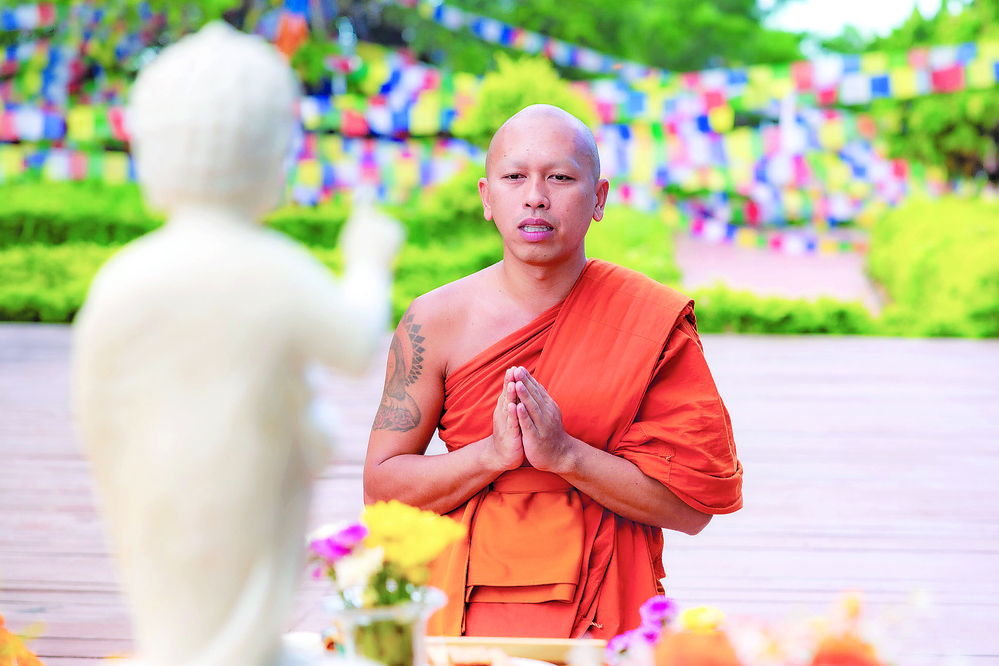
Whatever name is given to Lumbini, the birthplace of Buddha, it is the same . Buddhists and followers come to make pilgrimages . Well-wishers and well-wishers come to get the energy of peace and harmony . Those who visit think that only the Mayadevi Temple and the pillar built by Emperor Ashoka are here . The reality is not like that . This is a small world of diverse Buddhist culture. That is, it is a 'Mini Buddha World'. The structures of temples, monasteries and monasteries from different countries are fascinating here. So far, tourists have returned after seeing the physical things. Locals believe that if Buddhist philosophy can be explained, tourists from all over the world will flock to Lumbini.
Every year, important people from the world are also visiting Lumbini. In 2024, Rebecca Ground from Australia, Tamurat Takehito from Japan, Narayan Manandhar, who works in the diplomatic and technical mission of UNESCO, and Eric Falt, Director of UNESCO South Asia, came from the United Nations. High-ranking monks and government officials from Thailand, Sri Lanka, Myanmar and Vietnam also visited Lumbini.
According to senior archaeologist Basant Bidari, Lumbini was rediscovered on December 1, 1896, while archaeologists under the then East India Company were searching for information from Chinese travelers. When Lumbini was discovered, one or two pilgrims started coming. ‘Initially, they started coming to Lumbini with their own food, blankets, and bedding,’ says Bidari. ‘At that time, transportation was not easy. They would spend a long time searching and wandering.’
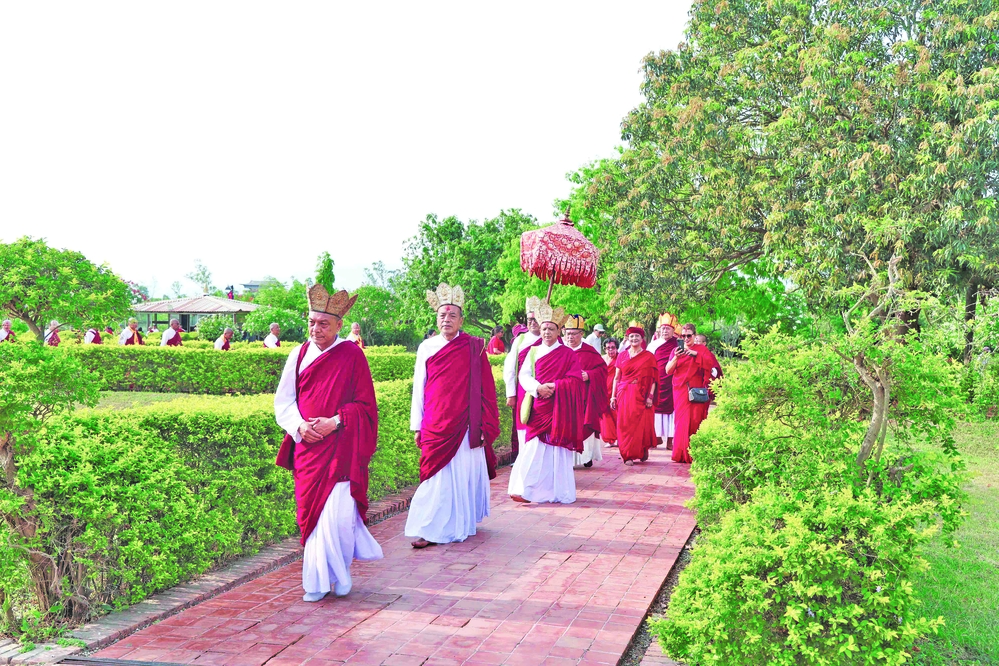
For a long time, there was no accommodation in Lumbini. Even if tourists came, they had to find their own accommodation. Lodges did not open in Lumbini until 1982. According to him, a Buddha Hotel with 4 rooms and two dormitories was opened in Padaria in 1985. ‘That was the first guest house in Lumbini,’ he said, ‘that too was built for the residence of high-ranking persons.’
Currently, more than 80 hotels and restaurants are operating in Lumbini, including 4 star hotels. Archaeologist Bidari informed that Lumbini’s national/international branding started 40 years ago. In the Mahaparinirvana Sutra of the Digganikaya of Buddhism, it is mentioned that Gautam Buddha, when he was on his deathbed, told his followers that they should visit four important places in their lifetime.
Lumbini currently has monasteries and temples representing 38 different countries. There are statues, paintings and various exhibitions reflecting the art and culture of the respective countries in these monasteries. He said that they should visit Lumbini, the place where he was born, Bodh Gaya, where he attained enlightenment, Sarnath, where he first preached, and Kushinagar, where he attained Mahaparinirvana. The ‘Buddha Circuit’ has been created by connecting these places mentioned by Buddha. Most Buddhists visit three places in India and come to Lumbini. ‘Buddha had already ‘branded’ Lumbini before he died,’ said Gyanin Rai, senior director of the Lumbini Development Fund. ‘Now we just need to spread the message of Buddha all over the world.’
There are many archaeological sites in the Lumbini area. Many places connected to Buddha are yet to be preserved and developed. Lumbini is the birthplace of Buddha that has been developed so far. There are many monasteries and temples as attractions. The Great Lotus Stupa of Germany in the western area of Lumbini is attractive. Cleanliness, greenery and colorful flowers make the environment attractive. The life of Buddha is displayed there through statues. From Buddha’s conception to Mahaparinirvana, one can see. There are attractive artworks and paintings.
Lumbini currently has monasteries and temples representing 38 different countries. There are statues, paintings and various exhibitions reflecting the art and culture of the respective countries in these monasteries.
In 1956, the late King Mahendra initiated the development of Lumbini by building roads, monasteries and dharamshalas. In 1967, the Secretary-General of the United Nations, Utthana, visited Lumbini. Seeing the pathetic condition of such an important site, he made the development of Lumbini an international issue. In 1970, the International Committee for the Development of Lumbini was formed at the call of the United Nations. In the same year, Japanese architect Kenzo Tange was appointed to prepare the master plan for Lumbini. In 1978, the Government of Nepal approved his master plan. The work on the master plan is still ongoing. In 1985, the Lumbini Development Fund was formed. Since 1993, monasteries and temples have been built here. Then development work began to appear. Lumbini was listed as a World Heritage Site in 1997.

