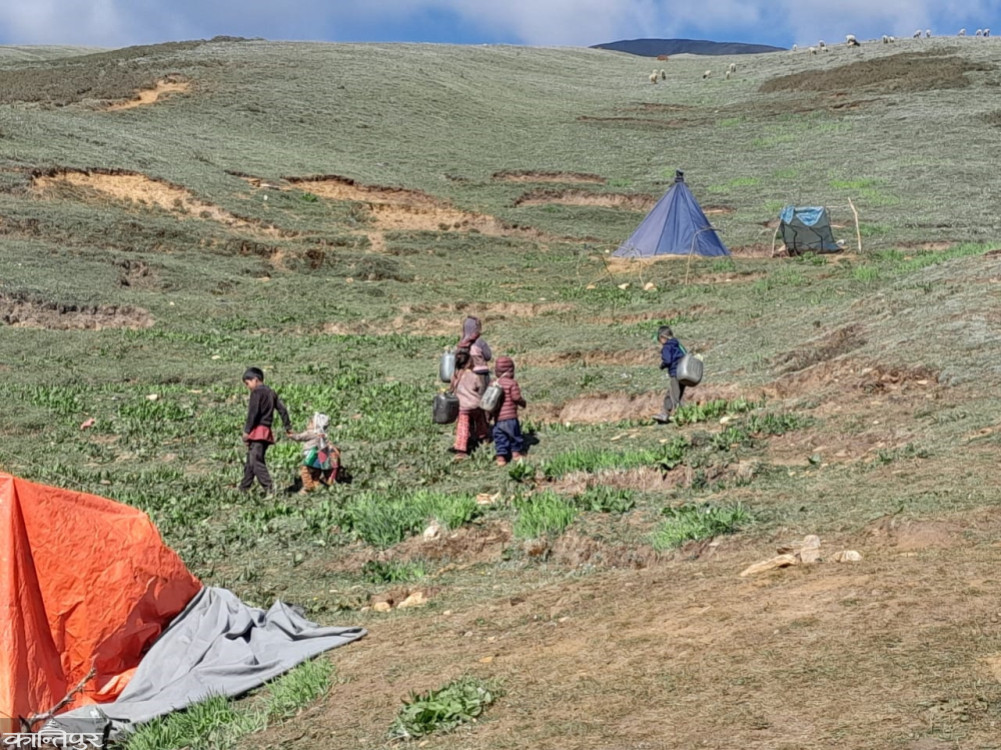
Those who reached Patan after a difficult journey to collect yarcha are forced to die due to falls, slips in snow and illness.
We use Google Cloud Translation Services. Google requires we provide the following disclaimer relating to use of this service:
This service may contain translations powered by Google. Google disclaims all warranties related to the translations, expressed or implied, including any warranties of accuracy, reliability, and any implied warranties of merchantability, fitness for a particular purpose, and noninfringement.
Sur Bahadur Budha of Barekot rural municipality-1 of Jajarkot, who left his job in India after his house was destroyed by the earthquake, is currently struggling to cope with the family. In order to avoid financial crisis, he along with his wife Shobhakala and 2 sons went to Naure Patan of Dolpa to collect donations in the second week of June.
His family got only 120 yarchagumbu in 15 days, spending about 50,000 rupees on food and household items. "When we searched all day, we could not find a single yarcha, not even a single yarcha was found," said Sur Bahadur sadly. In Patan, he returned after selling yarcha for 600 to 800 rupees per head. At this time, after the house was destroyed by the earthquake, Pakho has not even been able to build a roof for himself and a barn for cattle.
Sur Bahadur's neighbor Dharnidhar Budha's family of 3 also earned only 80,000 this time by selling yarcha. He said, "I couldn't go to India because I needed the price of the house to settle the government process, and I went to Patan to pay for the house," he said His family, who went with his wife and son, could pick only 130 yarchas. "In Patan, it's like we've run out of yarcha, it will take all day to get 5/7 of them," he said, "even the price has fallen."
In Patan of Karnali, one has to take a big risk. But most of the compilers could not find the original as expected this time. Bal Bahadur Budha of Tripurasundari-3 in Dolpa said that the yarcha, which was sold at Rs 1,000 per head last year, could not go above Rs 800 this year. "Let's not talk about the sorrows of going there. When we reach Patan, we have to walk overnight in Bhirpahara, risking our lives, risking our lives, taking risks such as getting sick, falling from the bhir and getting sick," he said. We stayed in Patan for at least a month and a half, this year we had no choice but to return within 2 weeks.' This year, 4 kgs of Yarchagumbu were released through Division One and 64 kgs through Nikunj. According to Mun Bahadur Rawat, head of the Division Forest Office, traders did not get very good prices this year. According to him, this year, China organized a 15-day trade fair at the Moringa border crossing between Nepal and China. "There was information that the seller sold up to 2.8 lakhs per kilogram," he said, "In the Nepalese market, the price was not more than 17 to 2.2 lakhs."
According to Mun Bahadur, the production of Yarcha has decreased due to lack of sufficient rainfall, reduction in fertility due to human activities, and the effects of climate change. According to him, last year, 9 kg of yarcha was collected from the national forests of Dolpa and 67 kg from the park area. This year, the park has collected a revenue of Rs 1 crore 25 lakh from the Yarcha collector. Similarly, Division One has also raised a revenue of about 35 lakh rupees. This year, 7,474 people went to park areas and about 5,000 people went to government-protected forests to collect yarcha. Conservation officer of the park, Vishwababu Shrestha, said that the production of Yarcha has decreased by about 100 kg due to the low production of Yarcha this year. According to the data of the Division Forest Office, about 46 kg of yarcha was collected in the Patans of Mugu this year.
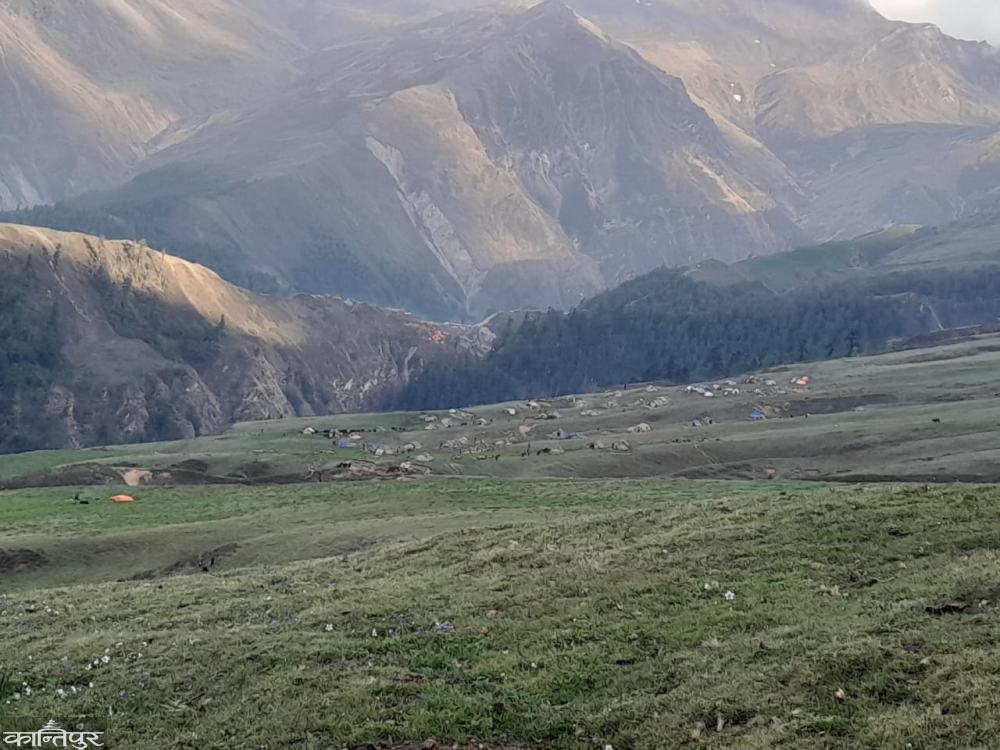
Parbal Lama, a businessman of Charkatangsong in Dolpa, said that the price of yarcha is constantly decreasing. According to him, yarcha, which was sold at Rs 27 lakh per kg last year, has hardly been sold at Rs 22 lakh this year. Before Corona, he sold yarcha at 32 lakh rupees per kg. "If you could sell it directly in China, you would get a higher price, the traders who come to Kathmandu are forced to pay as much as they can," he said, "Recently, high quality yarcha has stopped being found, the price is constantly decreasing due to the yarcha that has not been potted."
This year many compilers returned from Patan in a short time as Yarcha compiler died due to cold. According to the Karnali State Police Office, 8 collectors died in Dolpa and 6 in Mugu this year. 6 people including 22-year-old Jamuna Bista of Bishtagaon, Gotamkot, Athabiskot Municipality-4 in Rukum West, 29-year-old Mun Bahadur Budha of Shobhagaon, 21-year-old Soban Budha of Kamphagaon and 24-year-old Raj Bahadur Saud of Chaya Nathrara Municipality-12 in Mugu lost their lives. 43 people who had gone to Mugu and Patan in Dolpa to collect yarcha were rescued while about 100 collectors fell ill. According to the data of the office, 39 people lost their lives during the collection of Yarsa during the period of 3 years. "When going to Patan, most of the places are steep and dangerous, in places where the road is not even normal, you have to walk holding small butyan and grass, even in that, many people die when they fall down," said SP Vinod Sharma of the state police office, "It is a difficult journey. Those who have reached Patan are also forced to die due to falling in the lake, slipping in the snow and getting sick.'
This year, about 114 kilos of yarcha were exported in Karnali, according to the data of the state forest directorate. Whereas last year 305 and 411 kg of yarcha were produced in the previous year. Similarly, according to the data of the directorate, 1 thousand 214 kg of yarcha was released in 2075/76 before the corona epidemic. 'Due to the corona epidemic, it has affected the reproduction process,' said botanist Kamal Sharma, 'the production is decreasing every year, and the collectors and traders are also forced to face the problem of the market.' The production of herbs is decreasing due to overgrowth, deforestation, effects of climate change, fire etc. Due to lack of arable land, lack of irrigation in the available land, lack of other occupations, lack of any source of income, the residents of hilly and Himalayan regions are forced to go to Patan every year in search of food.
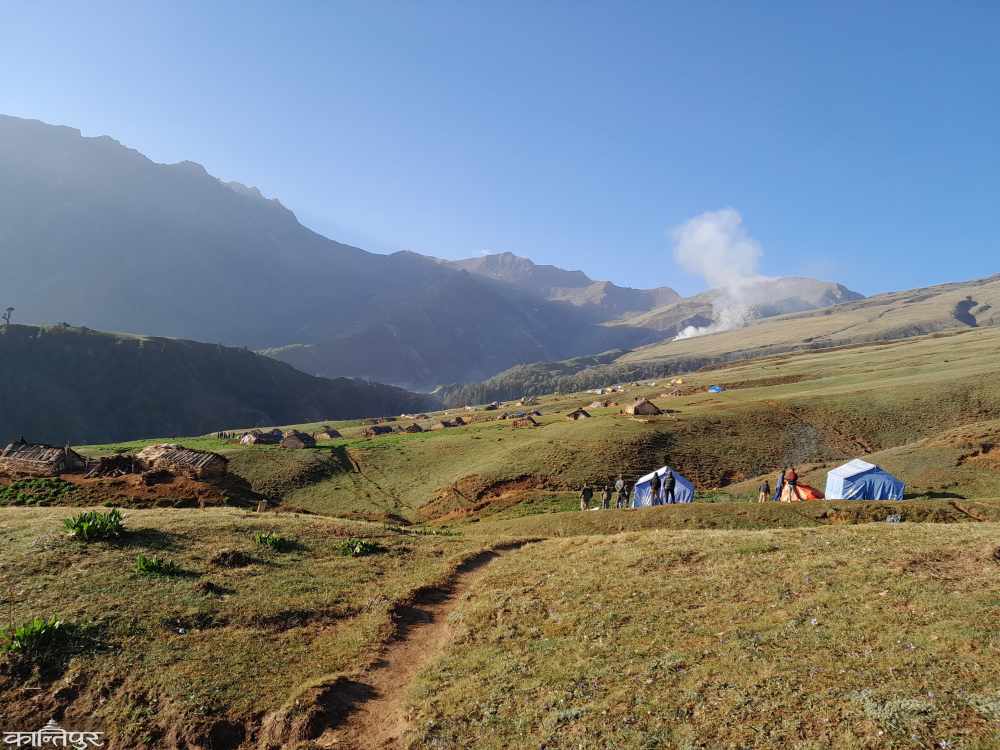
Before the corona epidemic in Mugu, traders used to go to the Nakchenangla border crossing and sell yarcha to Chinese traders. But since the border closed by China due to Corona is still not open, traders complain that they have to sell the yarcha after taking it to Kathmandu. "It would have been faster to cross the border, and it would have been easier to bargain with the Chinese traders," said Karma Tamang, a businessman from Karmarong About 3 kilos of yarcha have been delivered to Kathmandu by air.
Chhiringkapne Lama, chairman of Mugumkarmarong rural municipality in Mugu, said that even the manuscripts collected by some collectors last year were not sold. He says that the local traders could not sell yarcha last year because the Chinese border was not opened and traders from there did not come. According to him, Yarcha is found in small Koiki, Big Koiki, Rimar, Tanke and other areas of the municipality. He said that this year, about 7,000 collectors have collected yarchas in the Patans of Mugamkarmarong. According to him, 69 lakh 52 thousand rupees revenue has been collected from the collector. Minister of Industry, Tourism, Forest and Environment of Karnali Province, Suresh Adhikari said that work is being done to make the collection of yarcha systematic, low-risk and with appropriate marketing.
Export of 80 million 19 lakhs in July alone
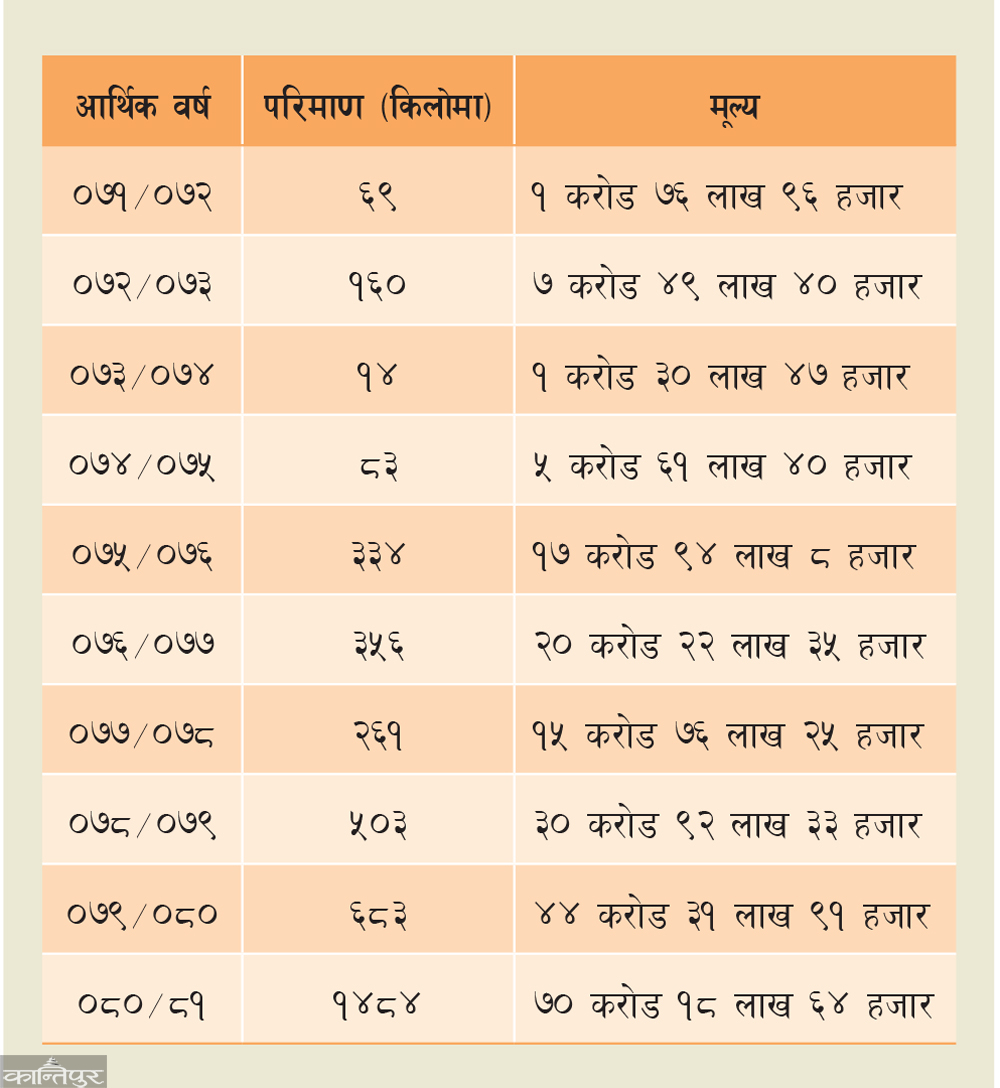
In the first month of the current financial year, 204 kg of yarcha worth 80 million 1940 thousand rupees has been exported. In July alone, Yarcha was exported to Cambodia, China, Hong Kong, Malaysia, Singapore, USA and Vietnam. According to the data of the customs department, 114 kg of yarcha worth 29.9941 thousand rupees was exported to China, while 60 kg of yarcha worth 398.92 thousand rupees was exported to Hong Kong. The least amount of yarcha worth Rs 5 lakh 35 thousand was exported to Malaysia. Yarcha is found in the Himalayan Patan region of Manang, Mustang, Bajhang, Darchula, Humla, Jumla, Rukum and other districts of the country.
In the last financial year, 1484 kilos of yarcha worth 700 million 1864 thousand rupees were exported. Last year too, 663 kg of yarcha worth 253 million 87 thousand rupees was exported to China. Last year, Yarcha was exported to China, Hong Kong, Taiwan, Singapore, America, UK, Vietnam, Cambodia, Austria, Australia, Czech Republic, France, Greece and other countries.