Tea 'Sundarpani' produced by 'Gorkha Tea Estate' which started in 1998 with about 500 plants in Fikkal is now being exported to more than 90 cities in Germany including Finland, Japan, Russia and America and has recently started going to the Chinese market as well.
We use Google Cloud Translation Services. Google requires we provide the following disclaimer relating to use of this service:
This service may contain translations powered by Google. Google disclaims all warranties related to the translations, expressed or implied, including any warranties of accuracy, reliability, and any implied warranties of merchantability, fitness for a particular purpose, and noninfringement.
In 1983, Uday Chapagai of Jhapa Bhadrapur visited Germany for the first time at the invitation of the Consul General of Germany, Marvoc Busak. During his two-month long stay in Germany, he not only toured the city, but also looked at the industry and economic sector there with interest.
Marvok advised him to stay in Germany. However, he did not agree. Instead, he escaped by saying that he would visit from time to time. At that time, it was easy to move around because Nepalis did not need an entry permit to go to Germany. Marvok said, "If you don't live in Germany, what can you do to connect Nepal and Germany?"
Uday started planning to keep the bilateral relations fresh through some business. After returning to Nepal, he started working in a leather shoe factory in Bansbari. Together they started sending animal skins to Germany. However, the skin he sent failed the test. "The demand for cow and goat skins is high in Germany, I sent buffalo skins," he said, "I shrugged my hands off saying that this would not be a business."
While going to Germany, Uday also met German businessman Thomas Holz. Then in the 1980s, Hols also came to visit Ilam. Elam's climate and green tea enticed Uday to do the trick. Then he started planning to deliver Nepali tea to Germany. However, at that time, the task of sending Nepali tea to Germany was not less challenging. Holes laughed at Uday's host.
Holes returned to Germany with a promise to continue buying Nepalese tea. In the 1990s, Nepali Orthodox tea reached the German market for the first time. After that, Uday continued to export tea to Germany.
In the beginning, Holes bought orthodox tea produced by Chia Bikas Nigam. Later he started buying through Udaya. Even now he is buying Nepalese tea and selling it in Germany. "I sent tea from here to Germany for the first time through Jogwani-Kolkata port," said Uday. He started 'Nepal Small Tea Producers Limited' in 1994 in partnership with some friends as the demand for tea increased in Germany. Produced from 1995, exported tea until 1998.
In 1998, he purchased about 500 ropani of land in Fikkal and started tea cultivation as a sole proprietorship. Which he developed as 'Gorkha Tea Estate'. The tea produced from that garden was named 'Sundarpani'. The same Sunderpani is now sold in more than 90 cities in Germany.
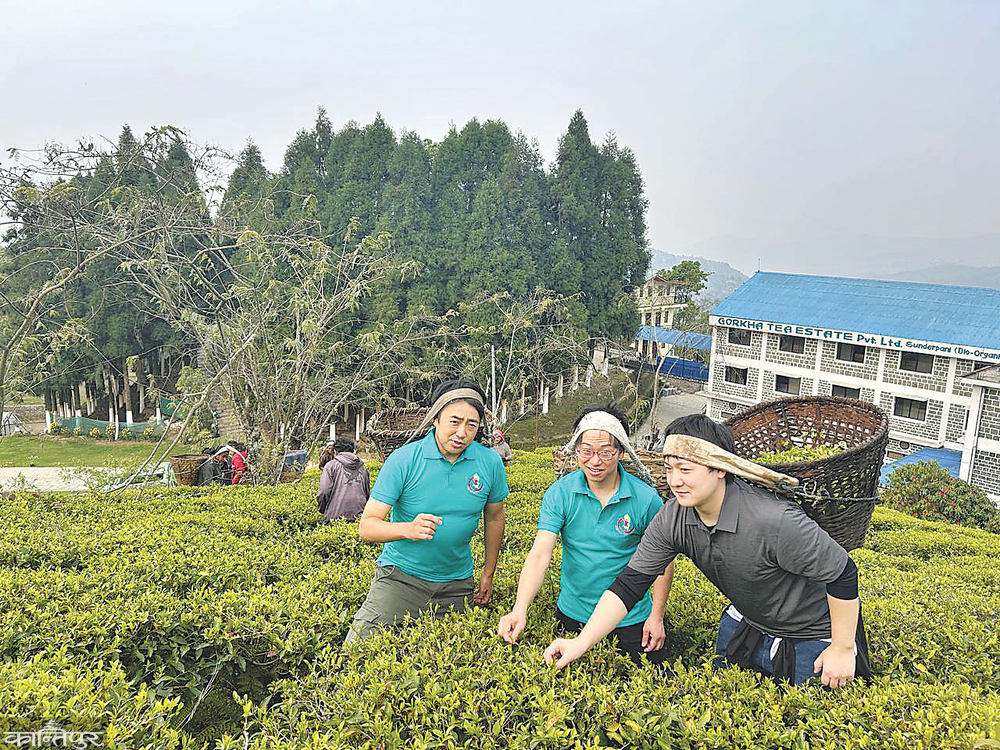
also goes to Finland, Japan, Russia and America. Recently this tea has started to be exported to China. Darjeeling tea was planted by the British. They also searched the market. Hence the Darjeeling brand for tea became known all over the world. However, Chapagai's experience is that it is extremely difficult to recognize Nepali tea in the international market.
There were about 87 tea gardens in Darjeeling. Currently some are closed. Some are still being produced. The tea plant grown by the British is two hundred years old. From which the organic taste of tea is slowly disappearing. Darjeeling is also struggling to save its reputation. At that time Darjeeling tea was in demand from all over the world. Now the Darjeeling brand is declining.
'The geography and climate of Nepal and Darjeeling are the same,' says Chapagain, 'the taste of tea is also the same.' Recently, foreigners have been drinking Elam's tea as sweeter than Darjeeling's. We have Virginland. Darjeeling has a 200 year old plant. We have a young plant. "We make tea by picking only two leaves and one needle," says Chapagain.
Sundarpani tea is completely organic. For which Chapagai bought 35 cows to the farmer. Made a neat shed. Started to make the farmers fully organic. Along with this he also started Tea Tourism. Meanwhile, home stays were also made.
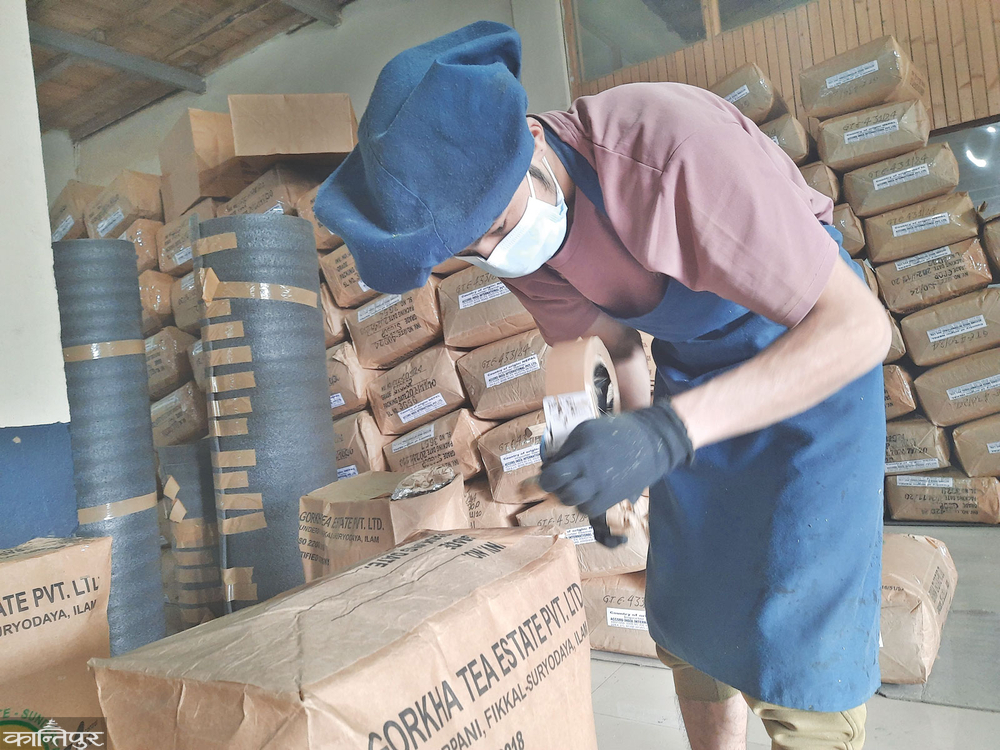
After IMO gave the organic certificate, he started exporting tea to Germany. "Nepali tea got a good recognition in Germany," he adds, "our tea is now being sold for up to 200 euros per kg."
The production cost of organic tea is higher than other teas. However, he is continuing to give international recognition to Nepali tea. According to him, the government should invest in the promotion of Nepalese tea through economic diplomacy.
It is necessary for the government to encourage farmers to produce tea according to the taste of tea connoisseurs from countries like America, Europe, China, and Japan. Nepali tea farmers have the ability to make tea accordingly.
Currently, tea is being cultivated in 17 districts in more than 20,000 hectares. 7 million kg of orthodox tea is being produced. He claims that the tea can be artistically prepared in different flavors and sold all over the world. As if more than half a dozen flavors of tea prepared from the same garden are being exported abroad. Green tea classic, light and bride, white tea, Gorkha classic, golden tea, second flush type, red yak and other flavored teas are exported abroad.
Chapagai says that the government should encourage farmers and entrepreneurs who produce organic tea and export it to third countries. "In this way, 10 percent cash subsidy should be given to those who produce and export tea," Chapagain said, "But the tea farmers and entrepreneurs can get relief." However, it was also opposed saying that equal subsidy is not suitable for both businessmen with high and low production costs. "But, even that is not available," Chapagai complains, "The government has not removed it from the policy, nor have we received it."
Gorkha Tea Estate produces about 80,000 kg of tea annually. Lip grade is 100% German export. Broken tea goes to Finland, Japan. "The number of days required by Germany is not over yet. It is also going to America,' Chapagain added, 'Russia, China has just started.' It is planned to send 35 thousand kg this year. Foreigner seeks fully organic, quality and community produce. Recently, there is an acute shortage of workers in the tea industry. However, more than 300 workers have got direct employment.
"The biggest problem is that the tea picking workers left the tree," he said. The next tea container will reach Germany by sea via Kolkata. "Earlier, the export cost of a container of tea was 2300 dollars," said Chapagain, "now we have to pay 6 thousand dollars to send it." Gorkha Tea Estate has been bringing in more than 70 million foreign currency annually from tea exports.
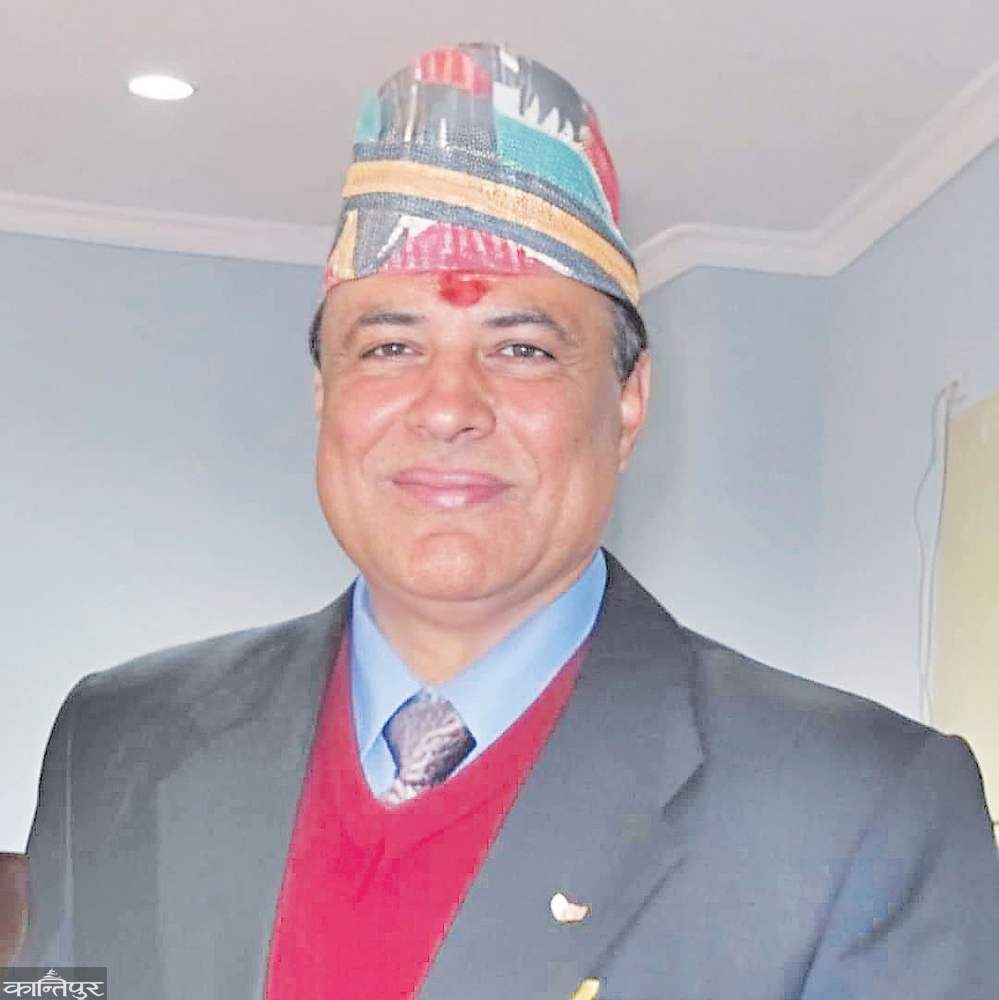 intellectual brand
Buddhiwal Rai has been working at the Gorkha Tea Estate in Fikkal, Eelam for a decade. The delicious and special type of orthodox tea prepared by the efforts of the same intellectuals is being sold in different cities of Germany.
In the name of 'Nepal Buddhiwal's Best', the connoisseurs of more than 90 small towns in Germany are enjoying the sour taste of Buddhiwal's tea. Buddhiwal has been active in the tea sector for the past two and a half decades. He honed his skills after becoming a manager at the Gorkha Tea Estate. Which gave him energy to prepare delicious tea.
Gorkha Tea Estate has been exporting 'Sundarpani' brand of Nepali Orthodox tea to countries like Germany, Japan, Finland, Russia and America for a long time. Among them, Buddhiwal tea is also being sold.
In 2018, when Uday Chapagai, the owner of Gorkha Tea Estate, visited Germany, he was surprised to see that tea was being sold under the name of Rai by creating a separate brand. "I was surprised to see that a special type of tea is being made and sold under the name of Buddhiwal among the teas we exported," Chapagai shared his experience, "This is a great honor for Nepali tea by Germany."
It was from Chapagai that Buddhiwal also got the news of the sale of tea under his name. After hearing that, he felt happy as well as amused. "For me, this is beyond imagination," says Buddhiwal, "I was very proud to see Germany honoring my hard work."
Gorkha Tea Estate sends tea picked at various stages to countries including Germany. The tea being sold in the name of Buddhivala is a bit special. It is harvested in the months of March and April and sent directly by air. Which is known as 'Aeroplane T' in Germany. The fact that Nepali tea is becoming popular in Germany is a great proof of the quality and potential of the tea industry.
A different process is followed right from picking to preparation of this special type of tea. Therefore, this Nepali tea is being sold at a high price in different cities of Germany. "Nepali tea is being sold at a rate of 200 euros (about 29 thousand rupees) per kg," said Chapagain, "this is a matter of pride for us." is happening Buddhiwal's Best is the same quality tea. "A lot of effort and attention should be paid to the production process of this tea, from picking to preparation," said Buddhiwal.
Germany imports tea from all over the world. However, the tea made by Buddhiwal's hard work has become special and popular. "This success has made a significant contribution to the recognition of the Nepali tea industry at the international level," says Budhiwal.