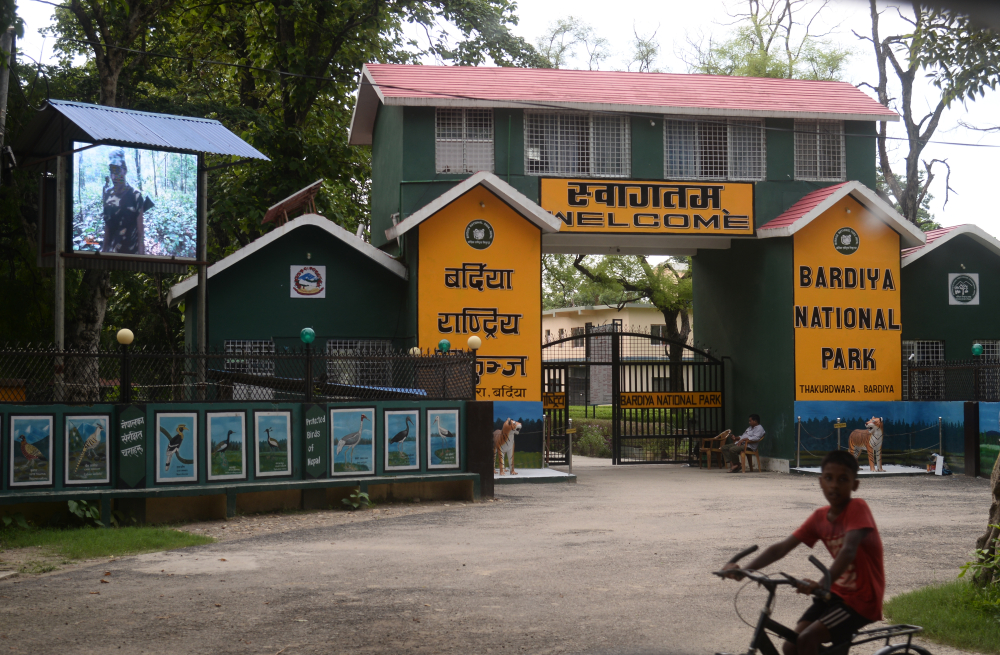
Human-wildlife relationships are often interpreted as adversarial. The rivalry between these two parties is also seen in practical terms. The human-tiger relationship is also developing in the same way. But in order to preserve their existence on earth, it is necessary to develop coexistence between these two aspects. Which is also indispensable for the earth's ecological system (ecosystem).
We use Google Cloud Translation Services. Google requires we provide the following disclaimer relating to use of this service:
This service may contain translations powered by Google. Google disclaims all warranties related to the translations, expressed or implied, including any warranties of accuracy, reliability, and any implied warranties of merchantability, fitness for a particular purpose, and noninfringement.
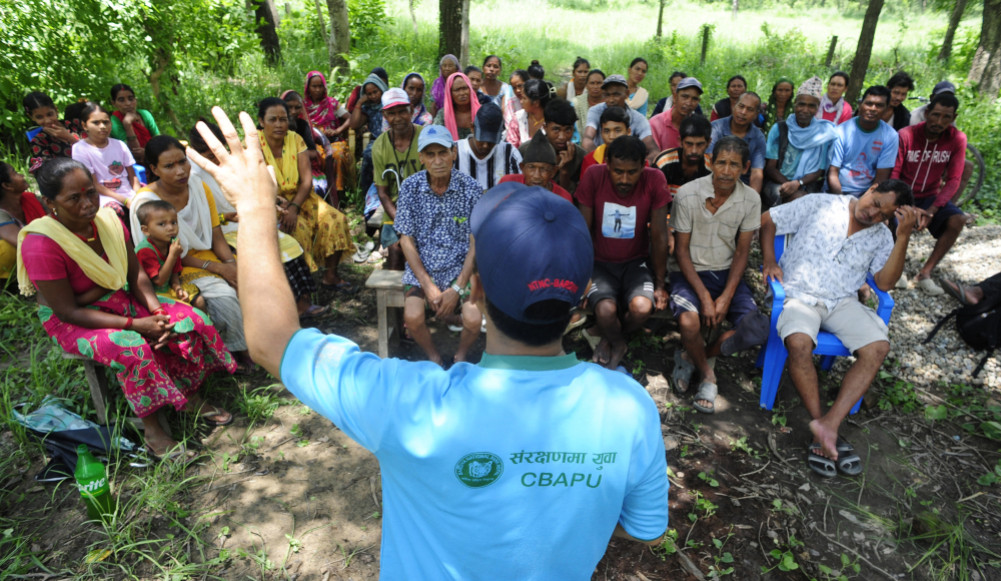
Have you seen this tiger or barber? It's okay if you've seen it. If you haven't seen it, it's okay. I am going to talk to you today about how it is possible for tigers and humans to live together,' Kamal Khadka, a young guardian of the 'Behavior Change Campaign' started in Bardia from November 2021, told the people of Barbardia Municipality-8 Auri about tigers. He was teaching by showing photos.
There are 19 youths running a behavior change campaign in Bardia. One of them is 35-year-old Khadka. Showing a photograph of a tiger to more than 50 locals (from children to the elderly) gathered in the 'buffer zone' area of Sompur forest in Auri, he added, 'Look, our lives are connected with the forest. We cannot survive without forests. These tigers and other animals in the wild are not like humans. They don't change their style. So we humans have to change our daily activities. And, not to fight with other animals including tigers, they should live together in coexistence. We need to develop ourselves in the same way. We need to change our behavior.'
After people continue to die due to tiger attacks in Bardia and Banke, the National Nature Conservation Fund (NTNC) has started a behavior change campaign from 2021 to sensitize the residents of Banke and Bardia National Parks and Khata Protected Areas and the surrounding buffer zone. 9 local youth are active in Banke's campaign. They are training the locals on human-tiger coexistence and behavior change. Similarly, 5 youths are conducting a campaign in the account protected area of Bardia. The work and activities of the youth can also be seen in Facebook's 'Behavior Change Campaign'.
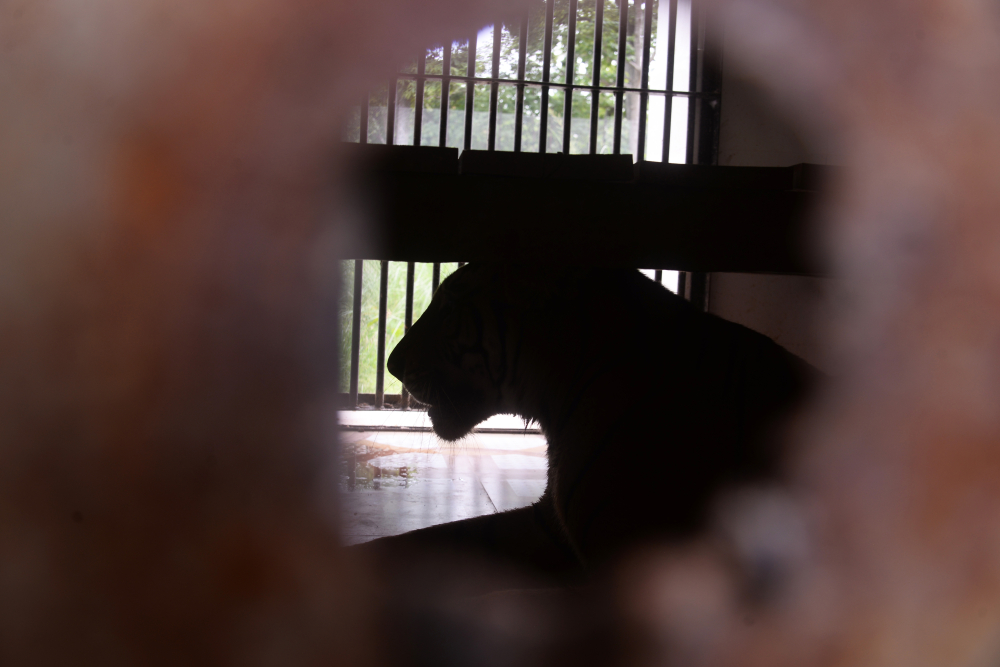
Umesh Paudel, assistant natural resource conservator of NTNC's Bardia National Park, says that the reason for starting the behavior change campaign is to avoid attacks by tigers. "If you look at the statistics, the number of deaths due to tiger attacks increased in 2019 (post-Covid-19) in Banke and Bardia. That year 9 people died and 3 were injured. In 2020, 6 people died and 8 people were injured. In 2021, 13 people died and one person was injured. What it showed was that locals who had gone elsewhere or abroad to work during the Covid epidemic returned home. The number of going to the forest increased and the number of deaths and injuries from tiger attacks also increased, he said.
Guardian assistant Paudel considers that they have started a behavior change campaign with the support of local youth and that it has progressed effectively. He said that in the past 4 years, hundreds of locals have been trained to live in coexistence with tigers and other animals through the campaign. In 2022, 9 people died and 14 were injured due to tiger attacks, 5 people died in 2023 and only one person died in 2024.
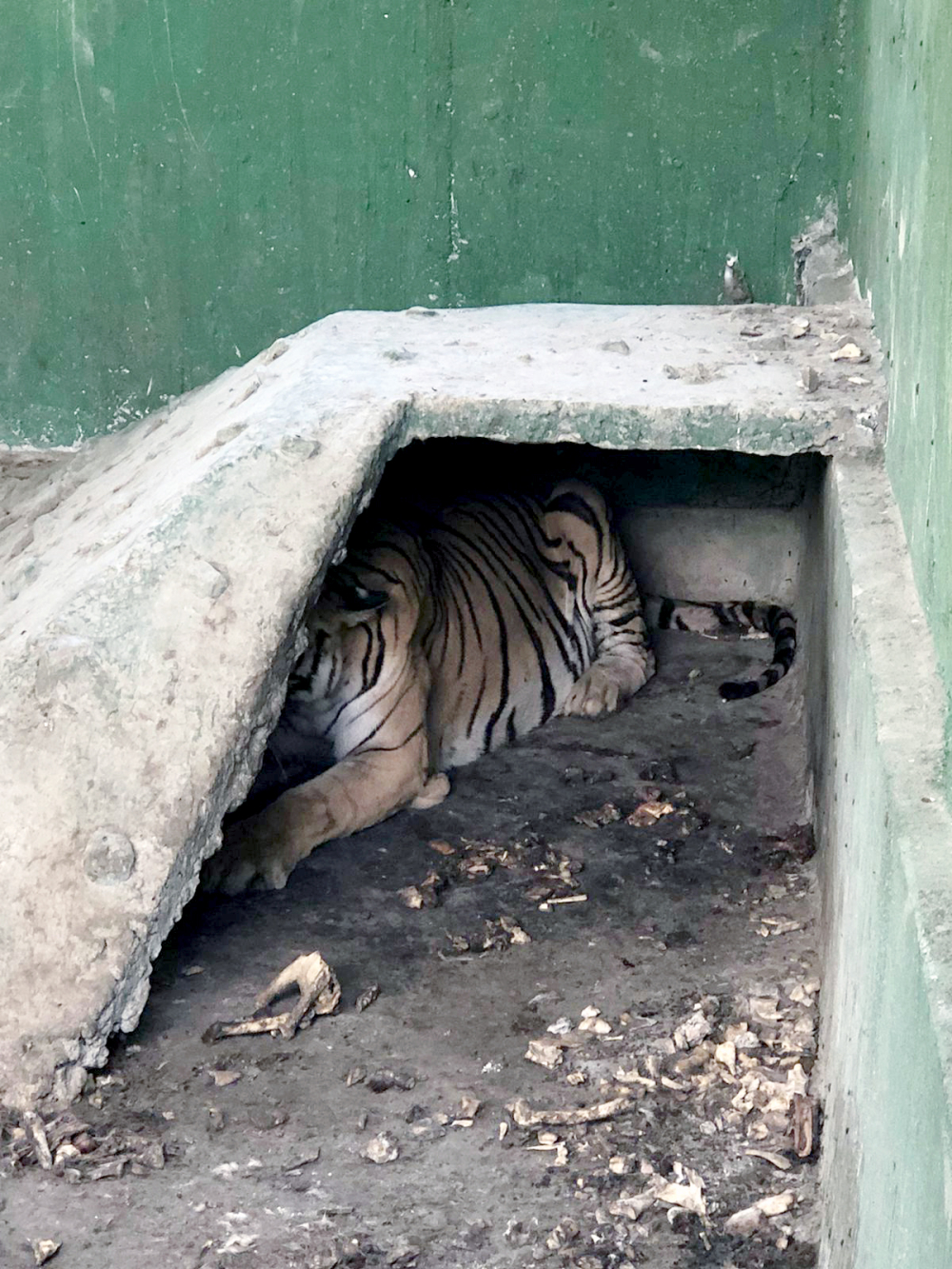
Paudel said, 'It is not that the number of deaths due to tiger attacks has stopped completely, but the behavior change campaign we have started to reduce the incidence is being effective. It has given the message that tigers and humans should coexist. The campaign is giving information about the coexistence between tigers and humans in and around Banke and Bardia, as well as when tigers attack people, how to avoid tigers, how to go to the forest, and how to behave if you meet a tiger. is.
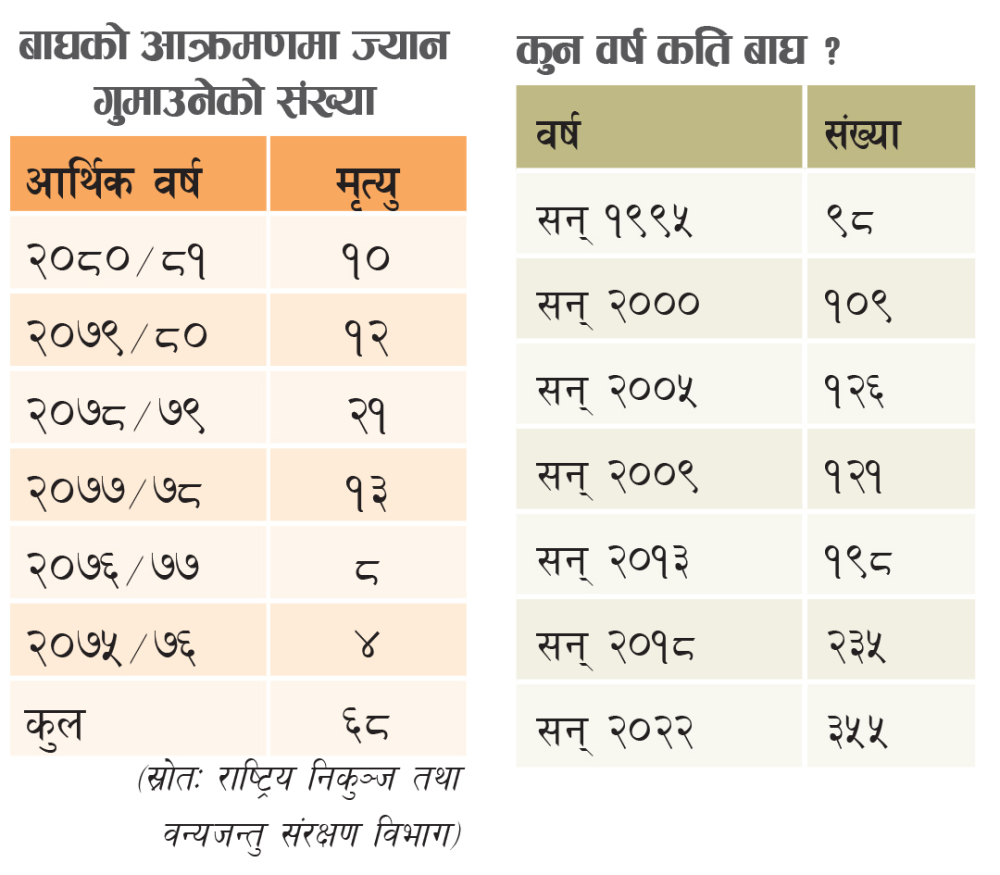
If we look at the data of the last 6 financial years across the country, the number of deaths from tigers has reached 68. According to the Department of National Parks and Wildlife Conservation, 10 people were killed by tiger attacks in the financial year 080/81. Similarly, 12 people died in 079/80, 21 in 078/79, 13 in 077/78, 8 in 076/77 and 4 in 075/76 due to tiger attacks.
After the increase in the number of deaths due to tiger attacks, its management has also become a major challenge. Looking at the central statistics, it looks scary. However, efforts are being made to reduce incidents by making people aware in Banke and Bardia areas, says Ajit Tumbahangfe, conservation officer in the Bardia conservation program. The behavior change campaign program is being very effective. After covid-19, the program has been launched to ensure that tigers and humans can coexist and so far more than 10,000 local residents have benefited from it, he said.
As the number of tigers increases in Nepal, so does its risk. On the one hand, there is enthusiasm for the increase of tigers nationally and internationally, on the other hand, people are still dying from tiger attacks. Behavior change campaigns can be seen as an important bridge to prevent this. Starting from 2064, the local poaching control youth mobilization campaign has been operating in Bardia and then in Banke. Youth who do well in the campaign are also included in the behavior change campaign. One of them is the young patron Khadka.
After Khadka's interaction with the locals, 76-year-old Pradeep Kumar KC responded that such a campaign has benefited the community a lot. He made it clear that by imparting knowledge to the young generation along with him, it will help to avoid future accidents. We have a habit of going to the forest alone, not exercising restraint when entering the forest, and doing things on our own accord. This interaction program has given us the knowledge of how animals and us can live together in the forest, including the tiger. Sita Rani is one of the participants in the program. He is also a tiger victim. Two goats and two goats were killed by a tiger from his house. After the program, she said that Kamal sir's interaction was fruitful and she learned new things. "Now I know what to do when I go to the forest or see a tiger," she said.
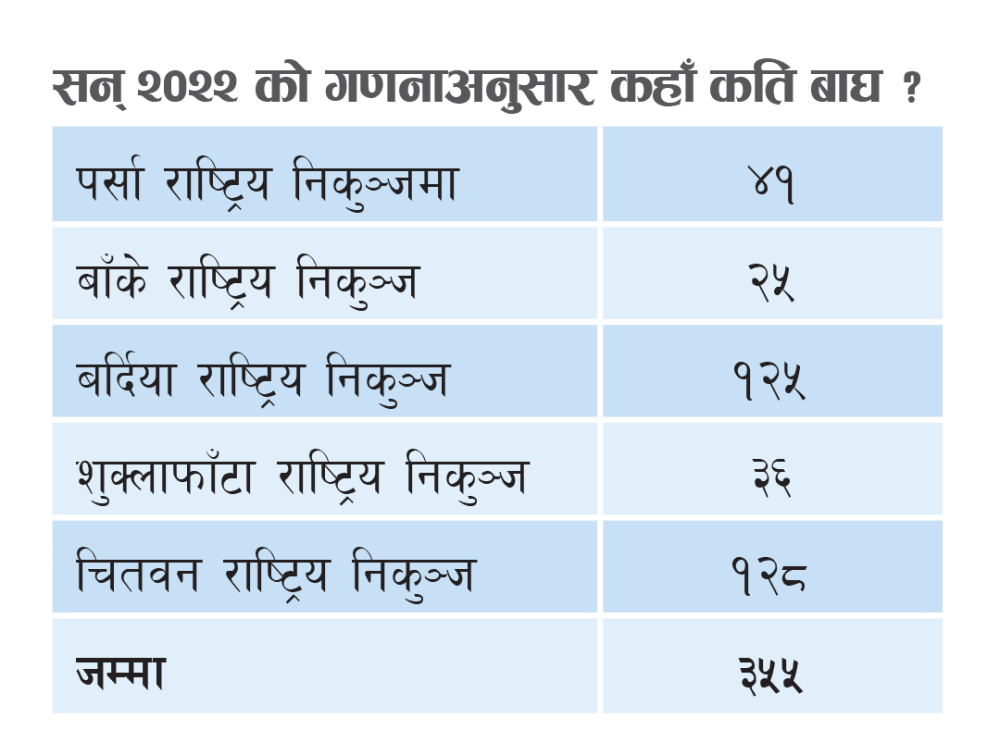
The last tiger count in Nepal was in 2022. Of which there are 41 in Parsa National Park, 25 in Banke National Park, 125 in Bardia National Park, 36 in Shuklaphanta National Park and 128 in Chitwan National Park. National tiger census in Nepal started in 1995. The number of tigers which was 98 at that time has now reached 355. As the number of tigers increases, so does their need for food. If there is no food and water inside the forest, the tiger is forced to go out into the community. Therefore, for the food that tigers need, the National Nature Conservation Fund is working to build grasslands in various places and extract water through solar in some places where there is no water.
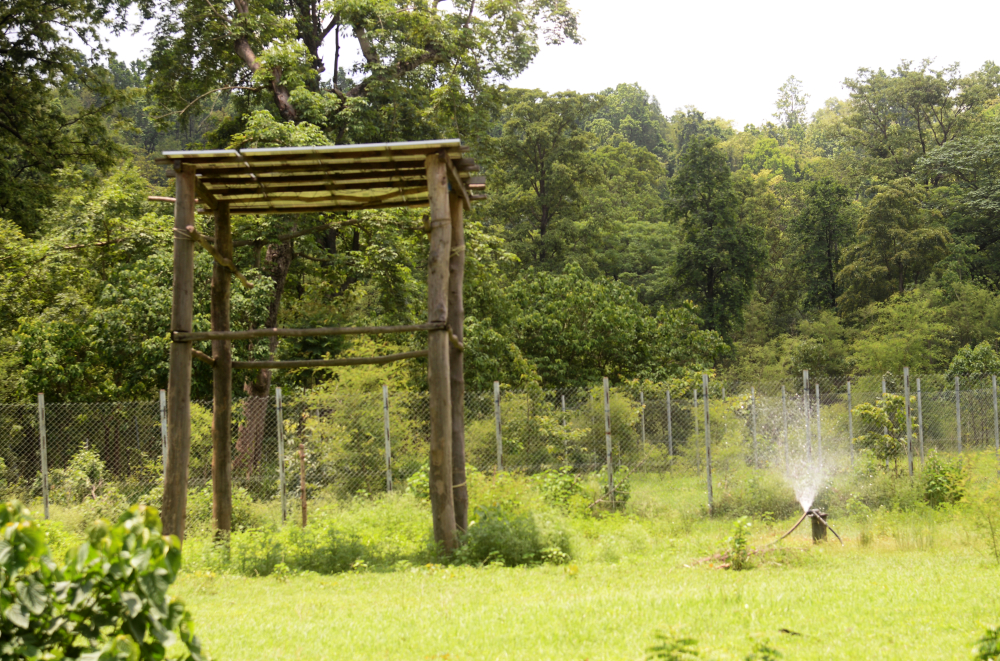
Natural resource conservation assistant Umesh Paudel, who also played a role in the tiger counting program, showed that grasslands have been prepared in the Banke National Park to extract water from the solar system in the dry areas of the forest and make it look natural. What is the relationship between this grassland and the tiger that does not eat grass? He says, 'Food is needed to increase the number of tigers. For example, 50 to 70 forage species such as chital are required in a year. Grassland had to be created to grow that species. If there is no short grass, other animals including chital will not graze. They like moist grass. If it is available within the forest, the animals do not have to go to the community to feed. Tigers also do not enter the community after getting food in the forest.' He said that the employees will be trained on the construction of grasslands, different types of grass that the animals like and how to cut and move them.
Likewise, work is being done to bring the tigers that have moved to different places in Banke and Bardia Parks to the holding center and rehabilitation center. A holding center in Banke houses a tiger that killed a man in Salyan, while a rehabilitation center in Bardia has four tigers. Member-Secretary of National Nature Conservation Fund (NTNC). Naresh Subedi believes that the conflict between tigers and humans can be reduced if the necessary and preferred species of tigers are available in reserves and parks. Then, he claims, only very few tigers will come into conflict. "The National Nature Conservation Fund helps to manage the tigers that may come into conflict with the 'Proactive Monitoring System'," he said, "Our plan is that there should be science-based conservation in Nepal." The conflict between tigers and humans is how to change it into coexistence.'
Since coexistence between humans and tigers is possible, it is necessary to change the behavior of the community and increase the tiger's diet within the forest, he says. Human-wildlife relationships are often interpreted as adversarial. The rivalry between these two parties is also seen in practical terms. The human-tiger relationship is also developing in the same way. However, it is necessary to develop coexistence between these two aspects to preserve their existence on earth. which is also indispensable for the earth's ecological system.