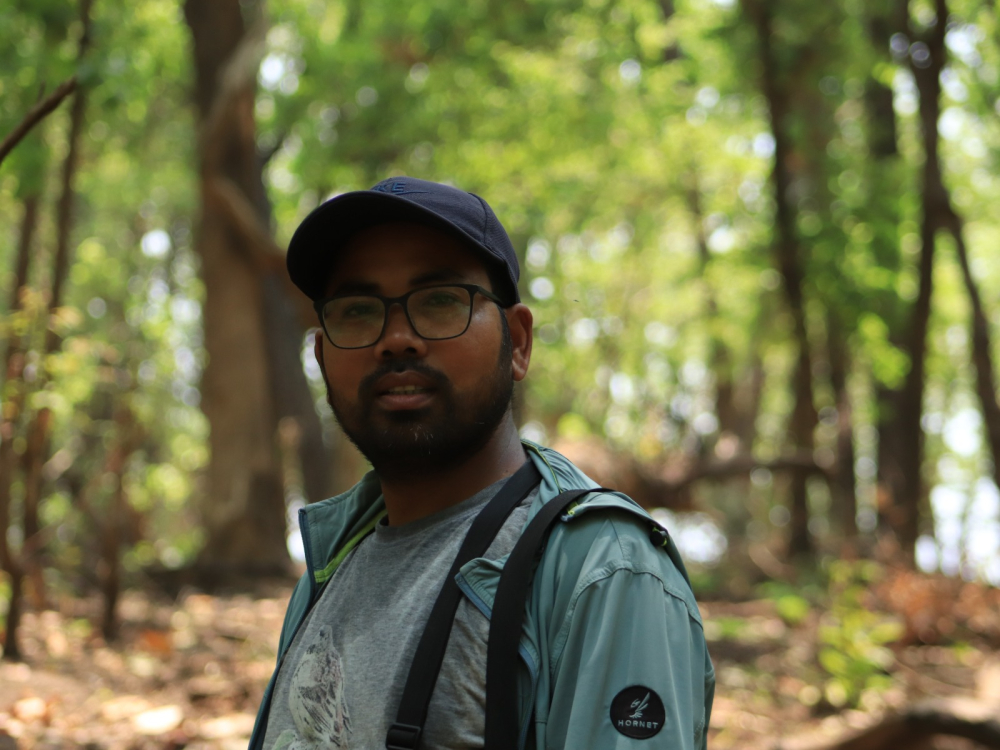
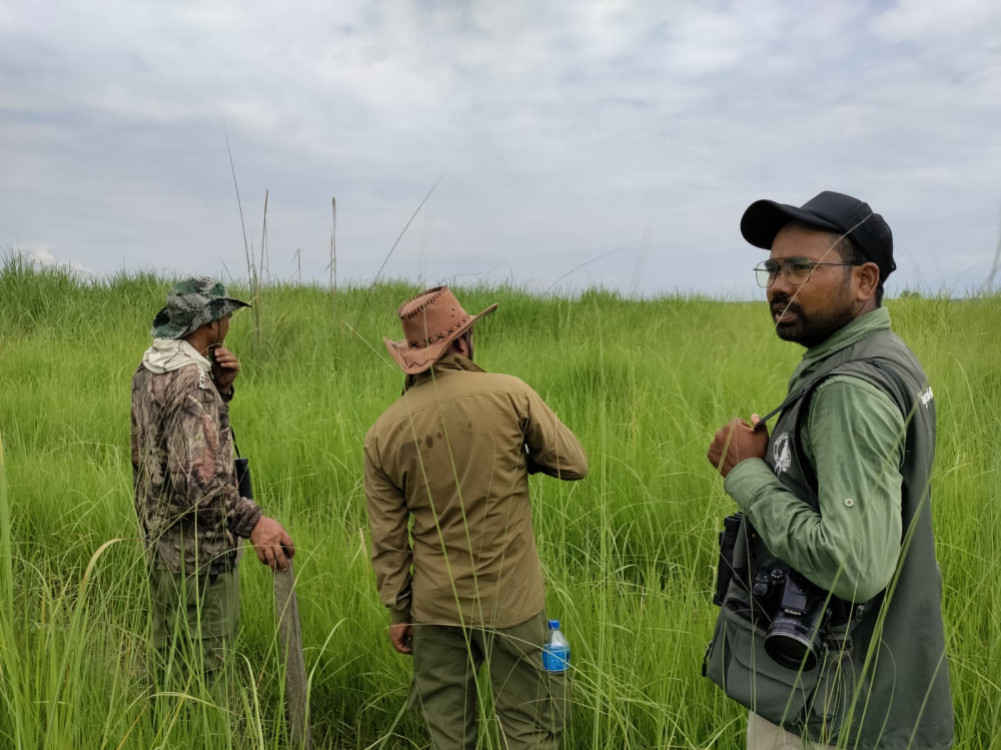
Hirulal Dagoura of Bhajani-6 Kailali, who started conservation through Guleli collection campaign, has now become synonymous with bird conservation and study.
We use Google Cloud Translation Services. Google requires we provide the following disclaimer relating to use of this service:
This service may contain translations powered by Google. Google disclaims all warranties related to the translations, expressed or implied, including any warranties of accuracy, reliability, and any implied warranties of merchantability, fitness for a particular purpose, and noninfringement.
Bhojraj Shrestha was studying in class four. It was then that Eco Club was formed in the school. Till then he had no idea about nature, wild animals and birds. Later, Bhojraj started a campaign to control Guleli for bird protection. Because of this, he is popularly known as 'Guleli Baje' in the village.
Hirulal Dagaura of Bhajani Municipality-6 Mahadeuli of Kailali also joined the campaign. Dagoura, which has been protected by the Guleli collection campaign, has now become synonymous with bird conservation and study.
Dagoura, 38, is a management student. He graduated in management. A post graduate in rural development, his interest is in searching and counting new birds and discovering them from scientific names to local names. Now he has reached all over the country for bird counting and identification. He participates as an expert in every bird counting activity in West Nepal. Other technicians are assigned under his leadership. Working as a field officer in the Bird Conservation Association, he has reached different districts for bird counting.
Dagoura, who joined the Eco Club when he was studying in class 4 at the age of 12, was the first thing he did for bird conservation was the Guleli collection campaign. Not only the collection of shells, but carrying tiffin on a bicycle to schools and spreading awareness about bird conservation is also fresh in his memory. He says that Bhajani, Thapapur, Khailad, Lalbozhi, Sukkhad and Tikapur areas of Kailali have reached every school. "At that time, more than 10,000 shells were collected," says Dagoura, "three thousand are in my record, other friends also collected many more." Along with the shell collection campaign, a conservation club was formed in the village. After that, activities such as cleaning and tree planting started. Cleaning and tree planting were done every Friday. At this time, after connecting with various organizations working on conservation, he started learning about the bird and his curiosity grew.
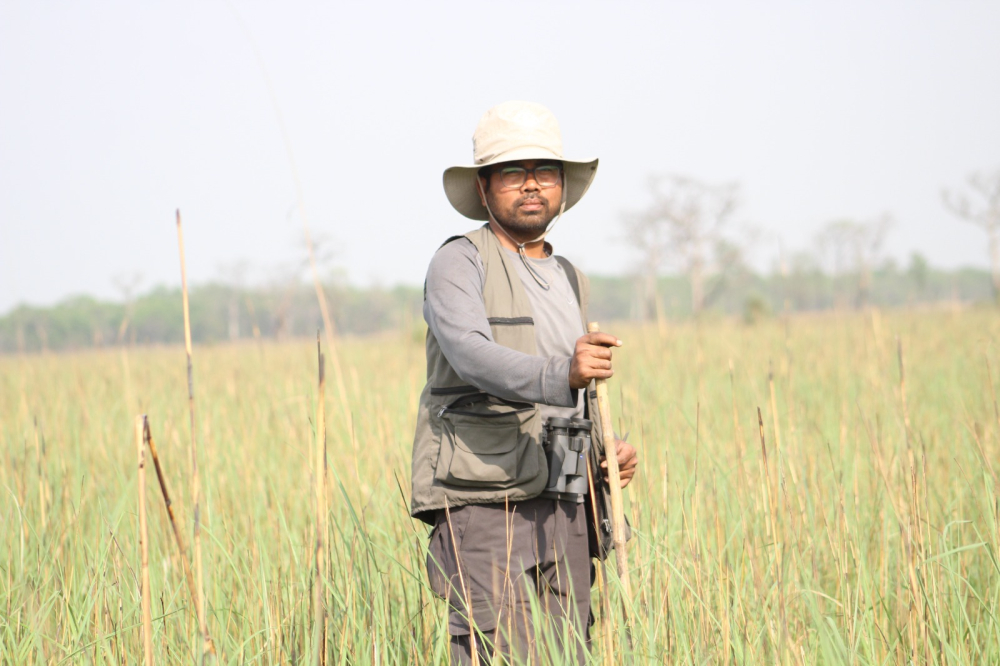
He got to know the bird well in 2004, after meeting ornithologist Hemsagar Baral. At that time, Baral gave a book called (Birds of Nepal) to Dagoura. After seeing that book, it clicked in his mind. He was only interested in conservation, then he also developed a knack for bird recognition. "After watching Birds of Nepal, I also started to recognize birds and write local names," said Dagoura, "I went to Purina lake near home to see birds and started writing local names." Then gradually he joined the bird count. Even when counting birds, at first he used to write the local names of those whose scientific names were not known.
There are 22 lakes around Bhajani and Ghodaghodi area. He has reached all those lakes. But some have been completed. Dagoura says that Purina Lake, which is considered to be the main habitat of the bird, has also disappeared. According to him, 10,000 birds were found in Purana. Even in Ghodaghodi, bird counting has been started regularly since 2013. There are about 2,000 birds here. For bird counting, not only the plains of the Far West, but also reach the hilly districts.
Not only that, he reaches Mustang every year to count and photograph Karyangkurung storks, which travel from Mongolia to China, Tibet, Nepal, and reach Rajasthan, India. As it comes in September-October and returns in March-April, good pictures can be taken then. To cover this opportunity, he spends about a month in Mustang. He has reached Rara, Solukhumbu, Sankhuwasabha, Bhojpur, Okhaldhunga Sunsari, Jhapa and Morang for bird counting and study. He says that he has seen more than 650 species of birds directly.