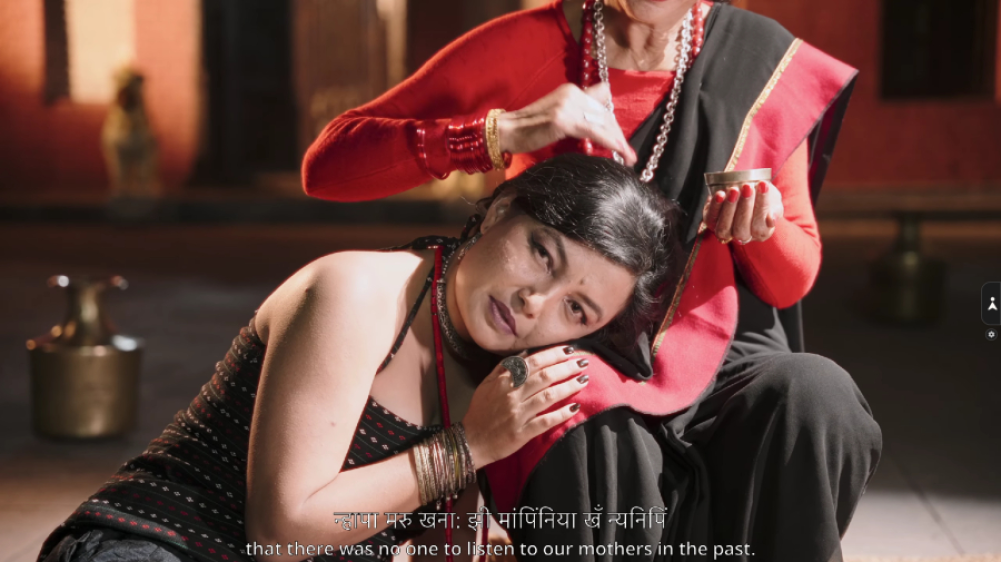
Through rap and spoken word poetry, Ujjwala Maharjan is redefining Newa culture on the one hand, and questioning gender equality and belonging on the other.
We use Google Cloud Translation Services. Google requires we provide the following disclaimer relating to use of this service:
This service may contain translations powered by Google. Google disclaims all warranties related to the translations, expressed or implied, including any warranties of accuracy, reliability, and any implied warranties of merchantability, fitness for a particular purpose, and noninfringement.
'Misa juya athe boyy bane makhu! Apvah juipin misapint chhu jui dhaigu lumanka bi maa la?'
The recently released Newa: rap music video 'Apvah Misa' begins with this dialogue. Poet and artist Ujjwala Maharjan has presented 'spoken word' poetry, her life experiences and Newa: heritage through rhythm and visuals in this song.
In the video, an old woman mocks a little girl who is running by saying 'Apvah juipin misa'. This word is used in society to criticize 'brave' girls who talk a little too much, walk loudly or make their points clear.
Before the music video was released, a performance titled 'Apvah Misa: Marching On' was shown at the Shilpi Theater in Battisputali on March 28. It was a mix of monologue, poetry and music. The song is part of the ‘Apvah Misa’ project.
Directed by Saskiyana Gurung, the video was produced by musician Rahul Giri. It also features Newa folk musician Sarada Dangol. In 2010, Ujjwala co-founded a spoken word poetry group called ‘Word Warriors’.
The foundation of creativity
Ujjwala’s childhood was spent in Mavali, where she was raised by her sister, grandmother and mother. They wanted Ujjwala to learn English and become educated.
‘My sister always inspired me to do creative work. I used to draw, she would praise me,’ Maharjan recalls. She had been interested in poetry since school. She could read the poems in the syllabus before the class started. With the intention of pursuing a creative career, she graduated from Tribhuvan University with a degree in Journalism and English.
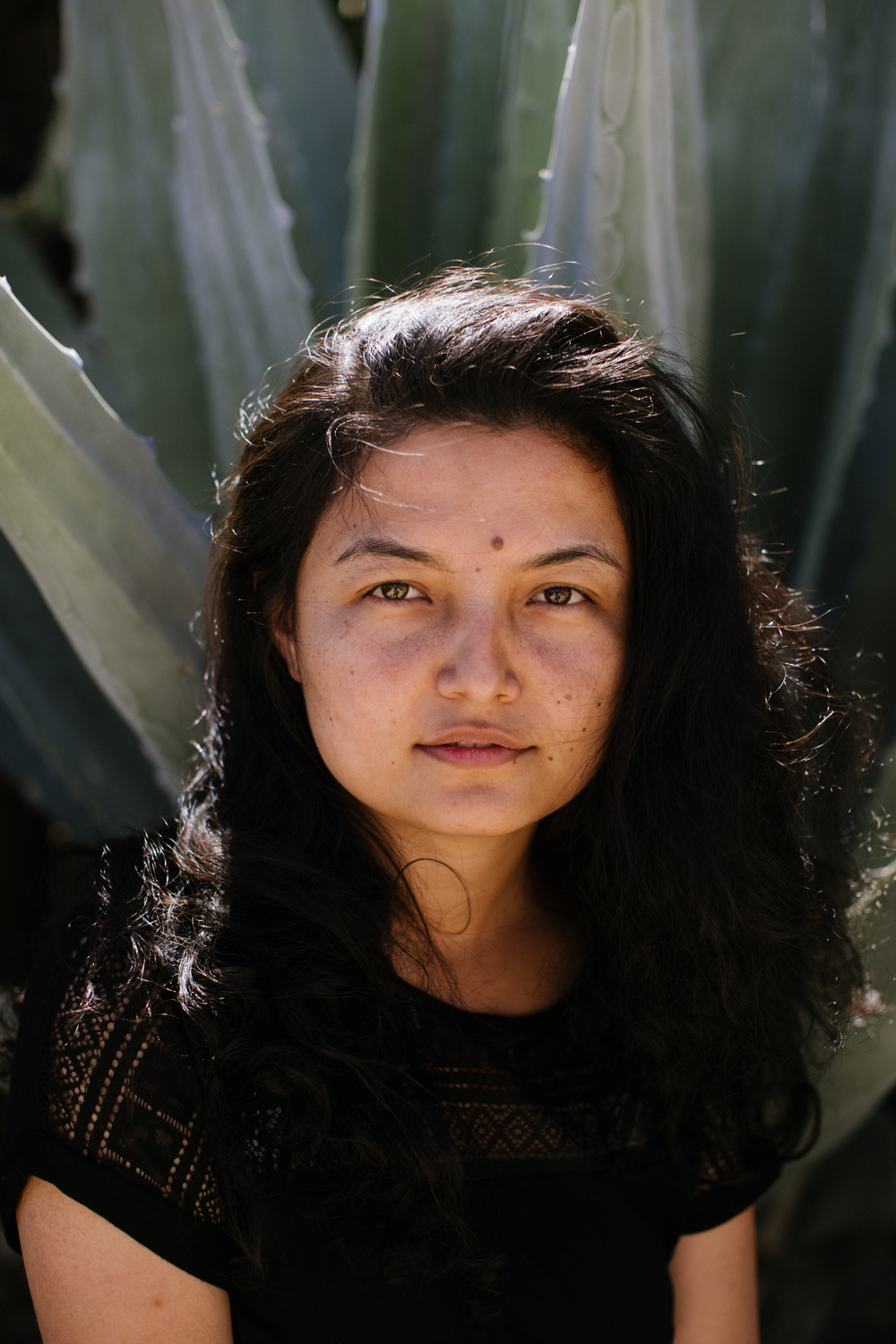 In 2010, she founded the group ‘Word Warriors’. This community became the main energy of her artistic journey. She got the opportunity to understand the power of poetry when she visited various places in Nepal as part of the ‘Right to Speak’ campaign.
Ujjwala, who holds a master’s degree in education from the University of Pennsylvania, got the opportunity to understand rap music while working as a teacher in the US.
This is how ‘Apwa: Misa’ was born?
The seeds of this song were planted in the ‘Eleven:11’ poetry challenge organized by Word Warriors in April 2020.
‘There was a prompt – when did you first realize your gender? At that time, I remembered my grandmother shouting ‘Don’t run like that’ when I was little,” says Maharjan. “It felt very rhythmic when I heard that line in Newari.”
The first part came easily, but it took her time to write the second part. She wanted the song to capture the stories of her grandmother and the struggles women have faced for generations.
The song has a poignant word – ‘thas’ (थाय्से) meaning husband’s house. Through this word, she asks – what is a woman’s real home?
The video shows the transition from the play of little girls to the serious presence of adult women. The first part seems a bit light-hearted, while the second part is a strong counterpoint.
“The scene in the video where we are drinking aila (alcohol) may be controversial for some, but I also wanted to show the scene of women drinking aila, because it is an integral part of Newari culture,” she says.
Challenges and Objectives
She was initially hesitant to write in Newa: Due to the internal hierarchical structure of the community and the linguistic discrimination based on caste, she decided to move forward.
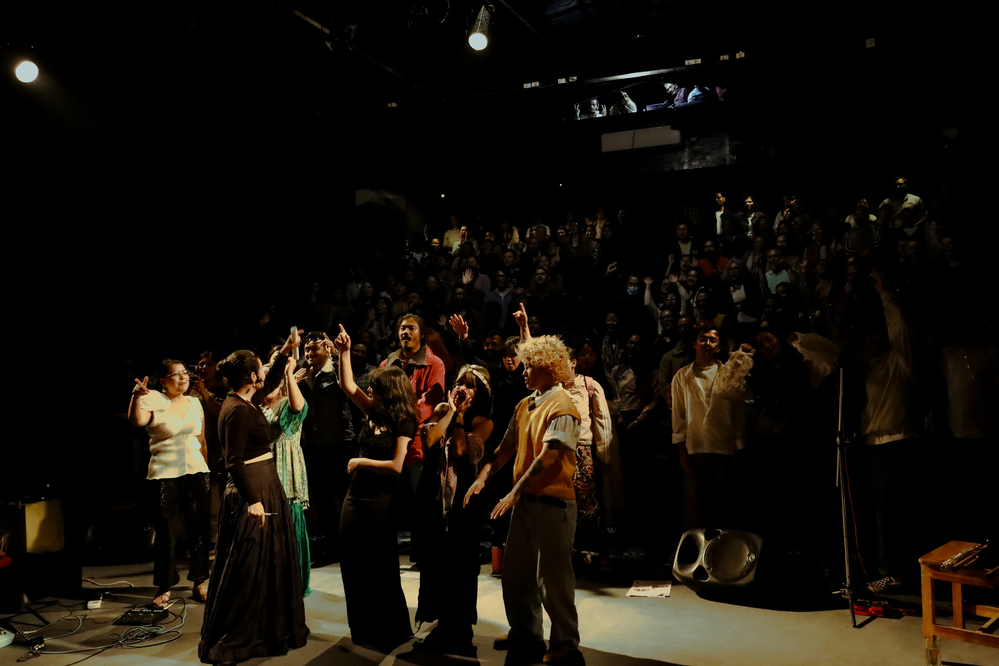 She deliberately chose female and queer collaborators for this project. She says, ‘The male perspective dominates in films and songs. But the number of women in the music-technology sector is very low.’ She has experienced that finding the right person for collaboration took a lot of time and money.
‘Apva: Misa’ represents Newa: culture through the voice of a woman. The song uses khin (a traditional instrument), which has given more depth to the meaning of the word. Although rap is generally considered a male-dominated field, Maharjan has presented it with ‘tenderness’ and ‘femininity’. The scenes of oiling hair and old streets shown in the video illustrate this thought.
The song strongly challenges society's expectations of women regarding silence, anger, desire, and autonomy.