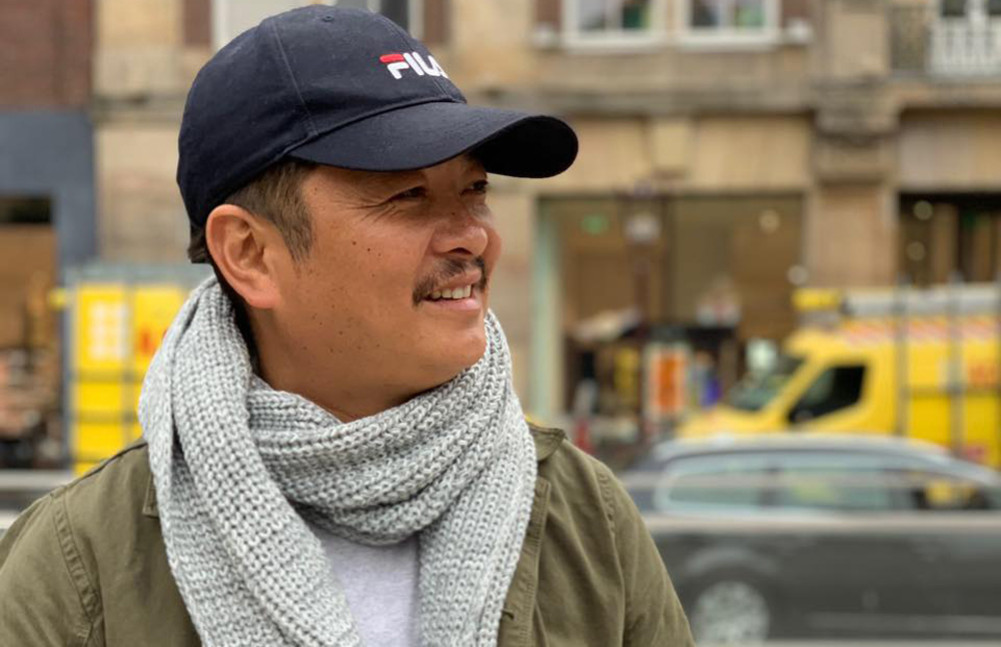
Dayahang Rai has succeeded in making the comment that to become a successful hero, one needs the ability to immerse himself in acting and entertain the audience.
We use Google Cloud Translation Services. Google requires we provide the following disclaimer relating to use of this service:
This service may contain translations powered by Google. Google disclaims all warranties related to the translations, expressed or implied, including any warranties of accuracy, reliability, and any implied warranties of merchantability, fitness for a particular purpose, and noninfringement.
Dayahang Rai. The name is enough. Recently, he is the 'high demand hero' of the Nepali film industry. 18 years ago, Dayahang stepped into the Nepali cinema world with the film 'Anagarik'. After this, his journey became so dynamic that he never looked back. He has been at the peak of acting journey for a long time.
Dayahang, who is busy acting in one movie after another, was born 42 years ago in Bhojpur's Western Bheg Khawa village. He passed his SLC from Khawako Dil Primary School, Pashupati High School and Annapurna High School, Bhojpur, after spending his childhood as a farmer and cattle herder in the village. His film journey began after he entered Kathmandu after studying up to IA at Bhojpur's versatile campus. After 'Anagarik', in 2007 he appeared in a minor role in 'Mero Ekta Sathi Chha' and in 2009 he played the lead role in 'Dasdhunga'. Not only was his performance in the film directed by Manoj Pandit, but he was able to stand up to the usual heroes.
After that, 'Loot', in which he acted, caused even more trouble. He received a lot of praise for his acting. After reaching Kabaddi through Highway, Chhadke, Vadhshala, Sanghuro, Uma, Karkash, Lofar, Dayahang came to be known as 'Kazi Sap' from Rai. It didn't seem like it was busy like this. But now there is work. I have done it,' he said, 'I feel like I am busy now that I have been free for a while.'
Dayahang has acted in more than 60 films and 16 dramas. He has the experience of directing half a dozen plays. Dayahang is still the manager of Mandala Theater. After working in drama Mahabhoj 4 years ago, I am busy in movies. But I will continue going to the theater until I get time," he said. What is the experience in drama and film? Dayahang says, "There is no distance between the audience and the actor in the play, but the distance is long in the film." While working on the
film, Dayahang, who has visited every corner of the country, is happy to understand the diverse Nepalese society. Dayahang, who says that he got a chance to understand Nepali society because of the film, says, "We Nepali people's art of living is very beautiful. "Wherever I go, I enjoy the original way of life and geography."
Dayahang is concerned about the decline in originality due to the development of technology and its misuse. "Technology has increased dependence rather than self-reliance," he says, "rather than how to benefit by using it, it seems that we have more to lose than to gain because we are entangled in technology without meaning."
Dayahang has returned from Rukum East only a few weeks ago after completing the shooting of the movie 'Gharzwaiin' directed by Anil Budha. He says that the original beauty of Rukumpoorva has a sweet experience of being well bound. Appreciating the beautiful nature, the original language and the local art-culture, Dayahang suggests that we should be serious about its preservation and development from now on. It is the choice of the audience which movie to watch. First of all, we had to be able to give a good film," Dayahang said. "For a film, the story is more important than the characters. Little by little we are telling our stories. Let's hope, soon we will be able to do better and focus the audience's attention on domestic films. If there is a strong and funny story, it is not necessary to have famous actors, he emphasizes that original characters who can tell their own stories can also be prepared for acting in the film. But there is a problem of generational transfer among our film actors. Agraja's
We are still wrong about giving Samman and Anuj a place,' he says, 'The new generation also had to come a little bit slower and we also had to guide them in the right way. That's why inter-generational dialogue is necessary.'
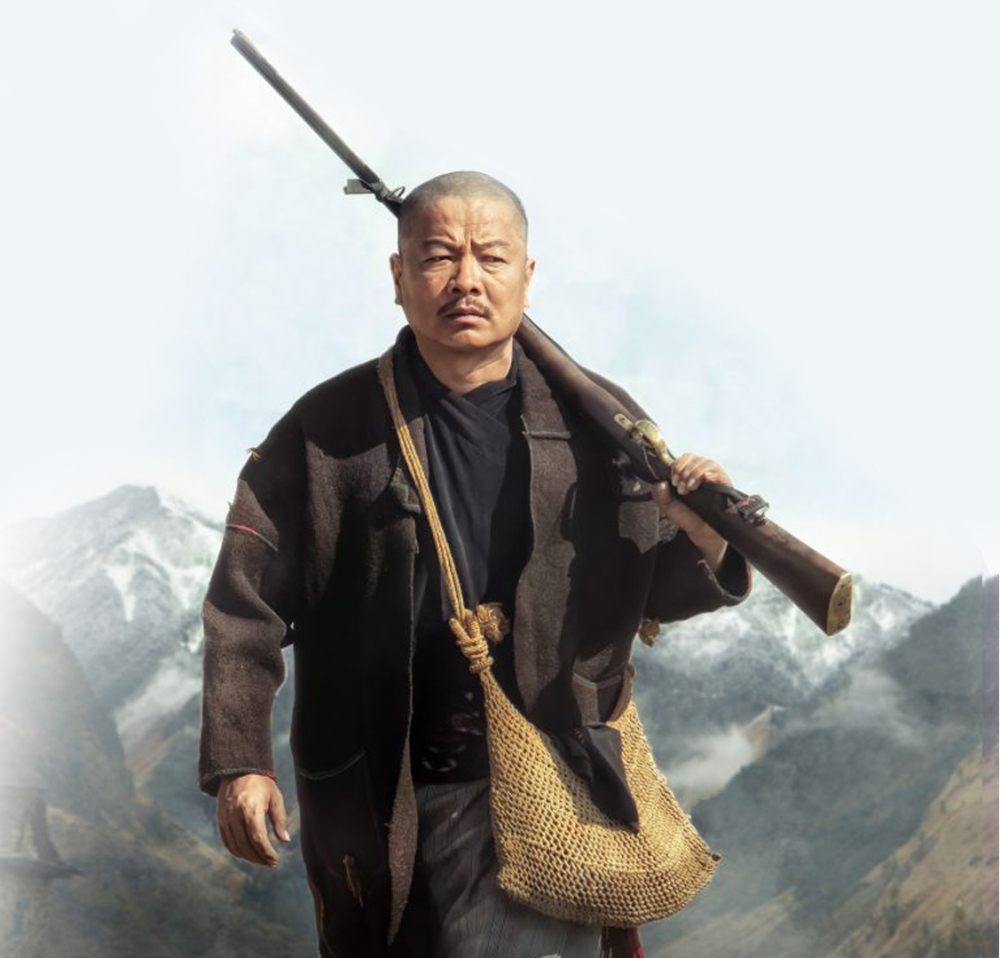
Dayahang strongly disagrees with the trend of trying to be above water by preaching things like 'Nothing happened in Nepal, everything is over, it's only bad here'. He believes that the history of Nepali education and development is not long, so the country has progressed with time. "I have a serious objection to trying to establish the comment that something went wrong and nothing happened," he said, "It is not that nothing has happened in Nepal, but a lot has happened." But to do more, we have to search for possibilities and move on.'
Daihang says that the journey from his first film 'Anagarik' to his latest 'Rangeli' feels like a movie reel. Where have you been, where have you been? Where else are you going to go,' he said, 'not only mine, but whose address is there? That's why he should try to make life easier by playing the role he has got.'
He has succeeded in making a comment that not only physical beauty is needed for a film hero, but the ability to immerse himself in acting and to entertain the audience. Dayahang has not only won the hearts of the audience through acting, but has also helped to strengthen the Nepali film market. Four films starring Dayahang are currently waiting for the release date. From March 30th, 'Degree Maila', from Baisakh 21st, 'Mansara', from May 18th, 'Gaon Ingai Bato' and from June 28th, 'Gharzwaiin' will be on display. After that, films and filmmakers will not leave him. And so does the audience. Acting in many films There is a
and something new to give the audience. Dayahang says with a smile, "If the story demands, I have to do my best and I do."