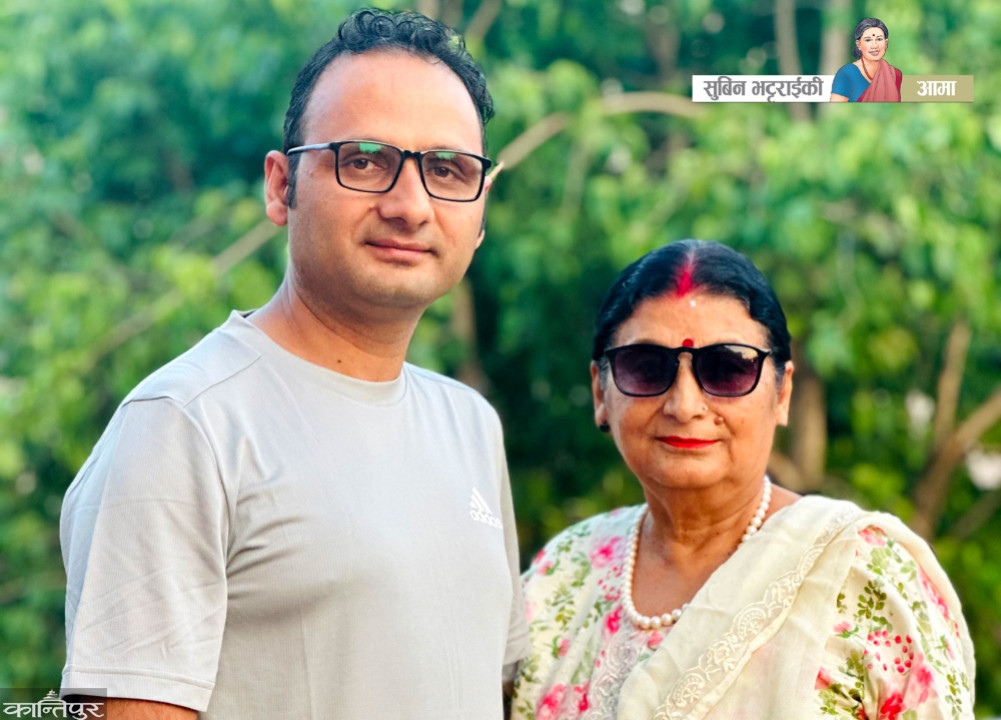
Muna watches Subin's interview on television with great interest. She reads all of Subin's books as soon as they come off the press. She reads every interview, article printed in the magazine without missing a beat, gives a comment of one or two sentences.
We use Google Cloud Translation Services. Google requires we provide the following disclaimer relating to use of this service:
This service may contain translations powered by Google. Google disclaims all warranties related to the translations, expressed or implied, including any warranties of accuracy, reliability, and any implied warranties of merchantability, fitness for a particular purpose, and noninfringement.
The relationship between child and mother does not just move along a simple line, it goes through many emotions and ups and downs. Their relationship journeys are multifaceted. Narrator Subin Bhattarai has seen the mother sometimes soft and sometimes harsh when looking through the eyes of these relationships. He understands that no matter how strong a mother is through many hurdles, collisions and struggles, she is compassionate when it comes to her children.
Maybe because he was ill for a long time, Subin's mother was very worried even when he was an adult - where did his son go? what did you eat Will something bad happen? So was Subin's body, as if it was made of fragile glass that would shatter into pieces with even the slightest touch. He had a very delicate and weak body. That's why his mother Muna Lamsal Bhattarai (66) used to worry terribly when her son fell ill.
The memory of those days still haunts Subin and his mother. At that time, Subin felt that life is like a rubber, which will quickly break. Every moment was covered by a dark cloud of the same tension - the cycle of this life will now end - end. But that didn't happen, Subin rose from that dark day and became a writer. Subin's writing menu includes many popular books. In terms of sales, that book is a bestseller in the Nepali market. Subin is the author of the novels 'Kathaki Patra' (2067), 'Summer Love' (2079), 'Saya' (2071), 'Monsoon' (2073), 'Priya Sufi' (2075), 'Izoria' (2079). Which is enthralling Nepali readers and society. In 'Summer Love', Subin recites the rosy story of love and romance of the past and Saya. This story of love, struggle, tension and finally separation has made a huge youth-line Subin fan.
The debates on the pros and cons of Subin's story content have been making waves in Nepali society for a long time. There are also those who say 'why should you read it' and 'you should not read it'. However, Komal and Ojila continue to address the youth of Nepali society and their joys and sorrows with their stories. Subin's latest novel 'Izoria' is the story of Madhesh, where the love, conflict and hatred of the members of the same family are recorded. 'Izoria' is a Maithili word, which means - 'the light of June'. So far, 'Izoria' has sold 80,000 copies and 'Summer Love' about 100,000 copies, says Subin.
• • •
What were the days of this young writer hanging in those uncontoured and colorless volumes? When SLC was over and college started, Subin bathed in bed. The doctor said - don't even go to the toilet, do complete 'bed rest'. The mother had to bring up the son, who had grown up to be a teenager, like a newborn again. Urinating in bed, taking a bath, applying vinegar while lying on the back because of extreme pain in the joints, rubbing oil or ghee on the skin every day - this process continued for eight/nine months. After a long period of treatment, he finally recovered.
While studying class 12, the bath flared up again. He was bedridden again for the next eight to nine months. After starting the bath, you should not go to the toilet, you should take bed rest. And it will take at least seven to eight months to heal. After the son fell ill, the mother suffered the same fate again. While studying for his master's degree, this disease struck him again. And, for the next eight months, Subin was bedridden again. In Subin's understanding, mothers suffer more from the problems of their children than the pain or suffering. Subin's mind still melts at the memory of that difficult and dark cave. On those days when he was snoring from the bed of Jhyalner, looking at the cloudy clouds in the sky, green scorpions came in his dreams and stung him.
• • •
was very difficult and backward – Khotang. There was no vehicle facility, no airport. It took two/three days to walk from Madhesh to reach home. Miley was born as a daughter in Naula village of Khotang, Subin's mother was Muna. Muna's childhood was spent in a large family. His grandfather had two wives and six children. And there were many nephews and nieces in the uncle's house. Muna went to school but could not read as much as she would have liked, although she was sharp in reading. Bademan's bookcases of 'Mahabharata' and 'Ramayana' and many Upanishads, Vedas and Puranas in her maternal grandmother's house were passed down in her teens. Even today, she leaves Subin's room with a book and completes it in two days. She turns the pages of the newspaper with great interest.
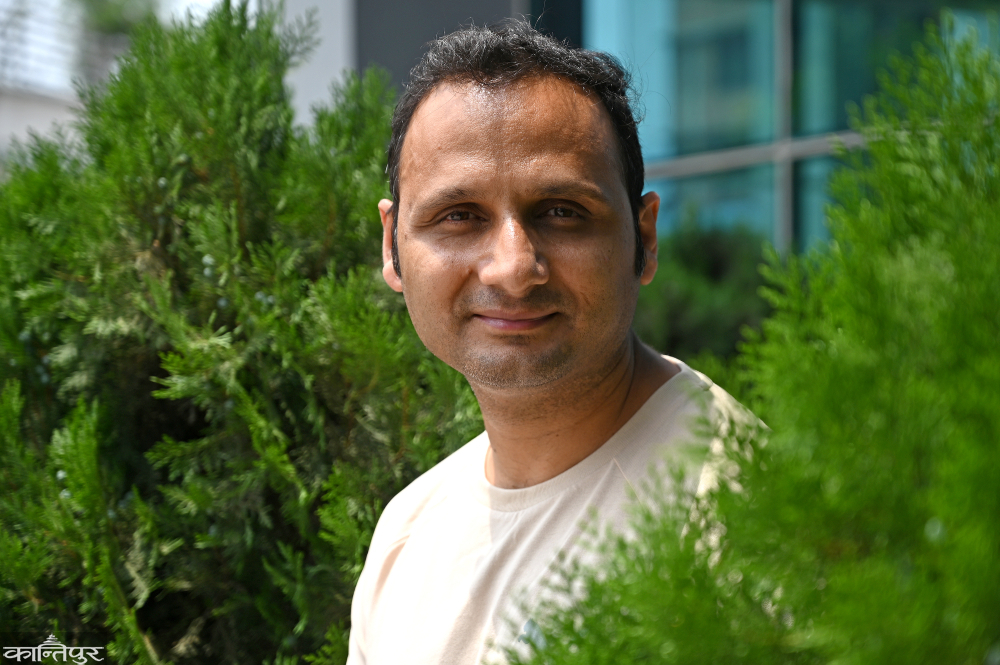
Before even reaching high school, Muna got married in Khotang Bazar (an hour away). Both his paternal grandfather and maternal grandfather had become Pradhanpanch. These two fathers, who had gone through many cycles of friendship and enmity, finally strengthened their relationship by marrying each other's children. And, in this way, Muna was tied, and she hid before reaching the age. She tied a carefree, playful and energetic life with relationships and responsibilities, where going to school, reading was a far-fetched thing, even to pick up a book, she had to hide in a thousand places. She lived a solitary life as a traditional daughter-in-law and gave birth to three children. He had to do everything from getting up at three o'clock in the morning and reaching Pandhera with the gagri, rice-cooking, forest, grass-firewood, weaving-weaving. No matter how young the age may seem, after becoming an 'elder daughter-in-law', a heavy burden of duties and responsibilities piles up. There was no discount anywhere.
Subin's father Shivprasad Bhattarai (70) was a teacher at Bhagwati Mavi in Khotang, he was the only one employed in the whole family. However, the salary went directly to Subin's grandfather. After three children were born, Muna took Subin to Madhesh. Subin's sister and brother stayed with their father in the village for some time. Shiv Prasad also worked at Biratnagar Nursing Campus. After staying in Biratnagar for some time, Subin's parents came to Kathmandu with their children. Subin remembers that a few years before the Panchayat was extinguished, the Minister of State for Supply called his father to Kathmandu to become a PA. Since his father was employed from the beginning, he rarely stayed at home. In the midst of such a tug of time, father's time would have been needed for the children to fill their wallets, but it was filled in a spoon. The guts were far from wet, the bare lips were wet and there was always a sense of unsatisfiedness in the children. This process continued till Shiv Prasad retired.
In the course of his job, Subin's father visited many places including Dipayal, Amelkhaganj, Dhangadhi, Pokhara, Birtamod, Bhairahawa. Therefore, the children were raised entirely by Muna. Spent many years in a rented house in Kathmandu - had to move to more than half a dozen places. In this way, Subin's mother had the guts to carry her three children and walk from place to place carrying broken branches. Subin thinks that because of her love for her children and the many ups and downs of life, the mother had strong courage. How can you wrestle with scarcity? How to run a house even with a small income? Subin remembers that his mother had good practice in all of them. He thinks that raising three children and running the house with his father's single sub-level income was really difficult for his mother. Thinking that ``Bhartheg is going'' in the same difficulty, Muna used to do weaving and sewing-weaving while camping.
In Subin's memory, the mother raised them not only as a mother, but also as a father, in the absence of money and father. They say, 'That's why mother became soft like mothers, even slightly harsh like fathers. He was sensitive to the fact that his children were going astray. He was also interested in all aspects. When Subin was studying in the 9th grade, when he built a house in Kathmandu Kapan, they were freed from the camp life. When the house was closed, the father was in Birtamode. The entire house was built under the leadership and initiative of Muna. Muna used to go to Kapan every day from Dera in Baneshwar. Even though she did not have enough money to raise the foundation, Muna dared to build the house herself. Subin's father was shocked to see his courage. Even though the house was built, the house was borrowed for many years. The situation was so bad that it was difficult to eat vegetables. "However, if the house had not been built amid that shortage, I did not know when it would have been built," says Subin.
• • •
Subin narrates an incident in a psychiatric hospital. At that time, he was probably studying in two classes. Mother used to carefully keep some money in a tin tank for household expenses. There are two hundred rupee notes. From that, Subin stole a whole hundred note and went to school and ate many sweets and also fed them to his friends. Went to a stationery and sporting goods store in Dillibazar, bought a toy gun, and ate. After spending so much, fifty rupees were still left in Goji. When I reached home in the evening, there was a lot of commotion due to the incident of money theft. Everyone saw the gun that Subin carried in his school bag. After that, in the continuous questioning of 'where did it come from', the explanation of 'gifted by a friend' proved to be very weak and he had a good Ramdhulai.
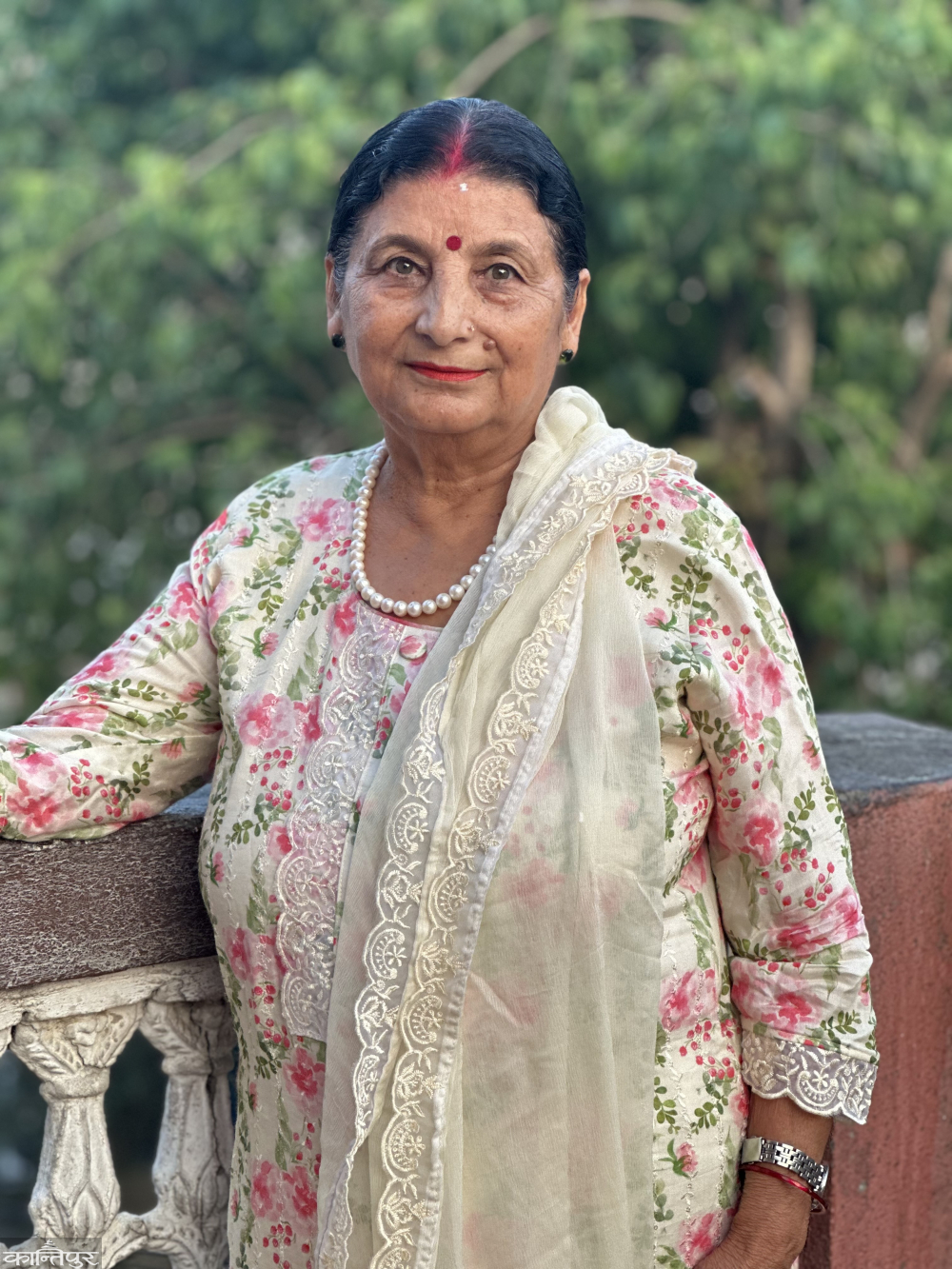
This incident of theft spread to the school. Friends started calling him 'thief'. During his childhood, Subin was very defiant - stealing money, running away to watch movies in the hall during exams, setting fire to the clothes that his mother had just bought, mixing all the kerosene from the bottle and selling only the bottle and eating sweets, drinking the wine that his father had hidden under the bed and throwing it at the guests who came to the house. , going to his father's office and sometimes scolding the employee who is sitting on the chair as 'work thief'!
Everyone was amazed by Subin's actions. My mother used to send her to school after making a paste, when she came back, the white shirt would be brown with mud, two or three stitches would be missing, the pocket would be half torn, there would be some marks on the face, the soles of the shoes would be worn and rubbed on the floor. On the whole Bado Vidrup used to reach home in Hulia. The mother used to be annoyed by her son's behavior every day. At the age of six/seven, Subin used to roam alone all over Kathmandu, Bhaktapur and Lalitpur. There was no money for the children on the bus. "How many times has my son gone missing, almost my name has not been broadcast in radio Nepal's missing child information," says Subin.
Thinking back now, Subin feels that his mother had high expectations for him. He feels that most of his mother's expectations are unfulfilled. "I wish I could fulfill all those expectations and dreams of my mother," Subin thinks, but now it is impossible to say that I will fulfill them in the past. Subin's mother also wished that her son would have become a doctor or an engineer like the common Nepali mothers. If he could not become that too, it was expected that he would have at least become a government officer. Even up to thirty-five nights, his mother hoped that her son would have fought public service. After not doing that, he hoped that he would get a good job somewhere. Subin could not complete even that. Perhaps he was a little chaotic, wanting to flow at his own pace. So he didn't listen to his parents much. They could not carry their dreams in their flow, in their own flight.
• • •
Subin's understanding is that between mothers and children, 'unspoken love is stronger than unspoken'. He thinks that affection should be natural and simple rather than formal and ethical. It is natural for a child to be more disciplined and obedient towards his mother. "Making a symbol of sacrifice, dedication and sacrifice, it is as if mother is not allowed to make mistakes and stray from the path. So many conditions, hopes and images of greatness have adorned the mother so much that she can't even dare to bow her head and look at it,' says Subin.
In Subin's understanding, the relationship between mothers and children is beyond explanation and analysis. "It is not always children who lose their way, parents can also lose their way. However, that path should be self-acceptance, ways of improvement should be sought and forgiveness should also be necessary," says Subin, "This is the beauty of a relationship. There is no need to forcefully affirm its greatness. It is not necessary to wander to find its meaning.'
• • •
Muna watches her son's interview on television very eagerly. As soon as the advanced copy arrived from the press, she read all of Subin's books immediately. She reads every interview, article printed in the magazine without missing a beat, gives a comment of one or two sentences. In the beginning, when Subin was writing love stories, Muna hoped that he would write stories that would be read by everyone instead of writing topics that would be read only by the youth. After starting to write about social issues, the author's son was told by his mother to write about religious deeds and the kind that old people would read!
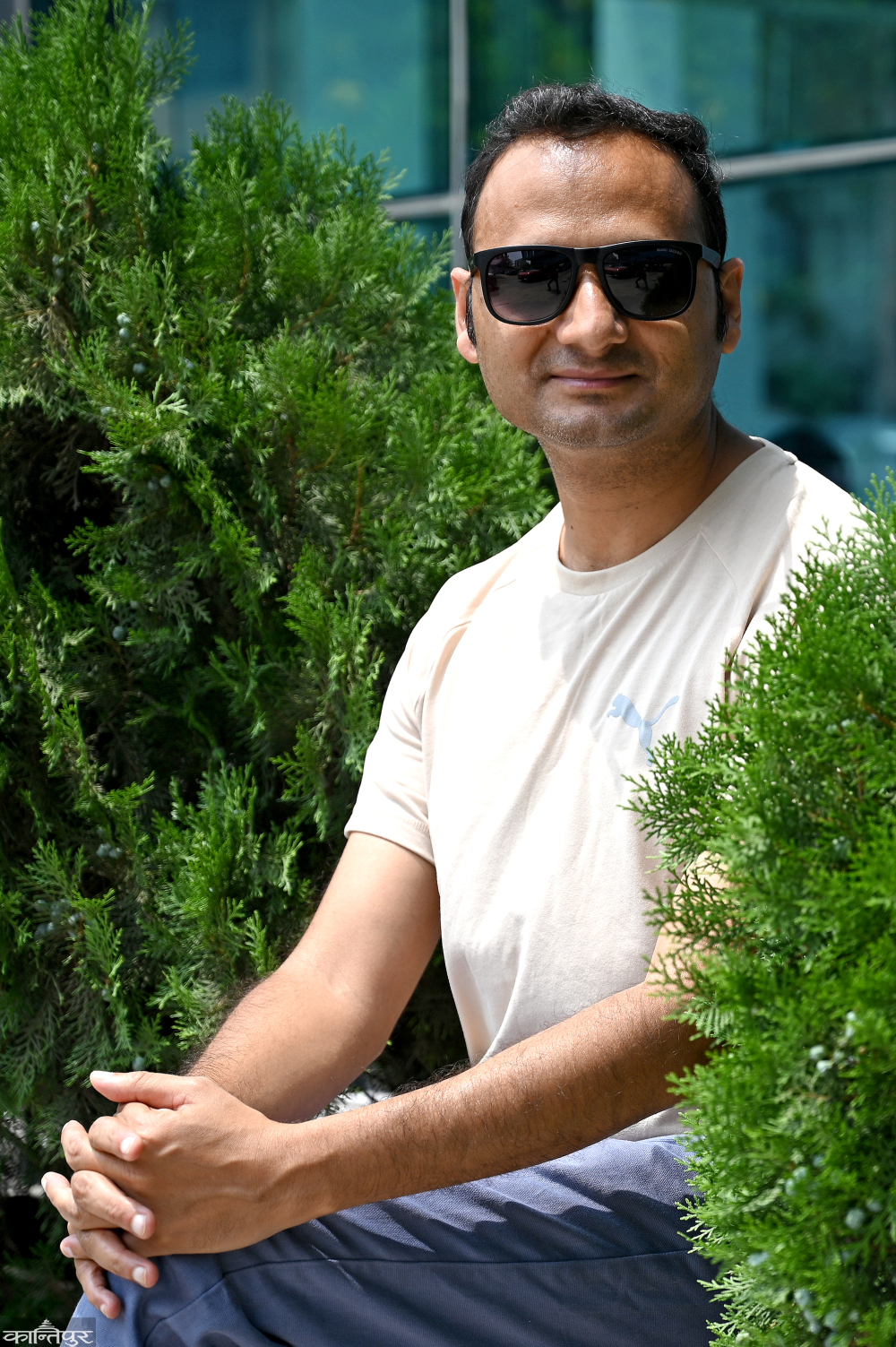
Mother Muna has memories of all colors of Subin. He is also angry with his mother. They are considered to be sloppy on many issues. He has done a lot. I have cried a lot, I have also cried. I am also overwhelmed with love. Many times I have been overcome by guilt,' says Subin, 'mistakes and feelings are mixed with many memories and keep coming to the psyche.'
In the relationship with his mother, such mistakes, jerks, anger and ghurki seem natural and loving to him. Especially emotionless relationships become very artificial. From the beginning of creation, the relationship between mother and child is emotional, even tender. There can be many pains in it, it can also be confusing. There are mistakes and forgiveness, hope and expectation, disappointment and neglect, grunting and pleading, understanding and criticism, respect and trust. Subin's attitude towards mother is clear, "Mother does not always have to be and is not only a symbol of emotion, but more than that, she is a symbol of energy and courage." A mother is everyone's first school of learning - a friend, a mentor and a seer.'
Photos: Angad Dhakal/Kantipur