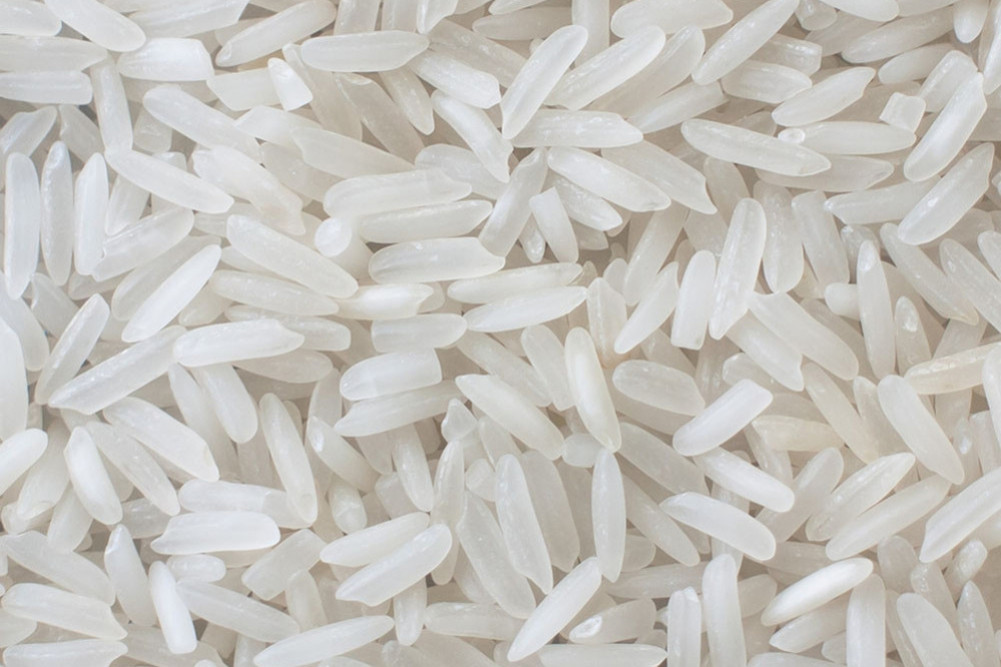
The report states that 83 percent of the rice samples collected for the study were contaminated with pesticides, with 80 percent of the samples containing residues of two or more types of pesticides.
We use Google Cloud Translation Services. Google requires we provide the following disclaimer relating to use of this service:
This service may contain translations powered by Google. Google disclaims all warranties related to the translations, expressed or implied, including any warranties of accuracy, reliability, and any implied warranties of merchantability, fitness for a particular purpose, and noninfringement.
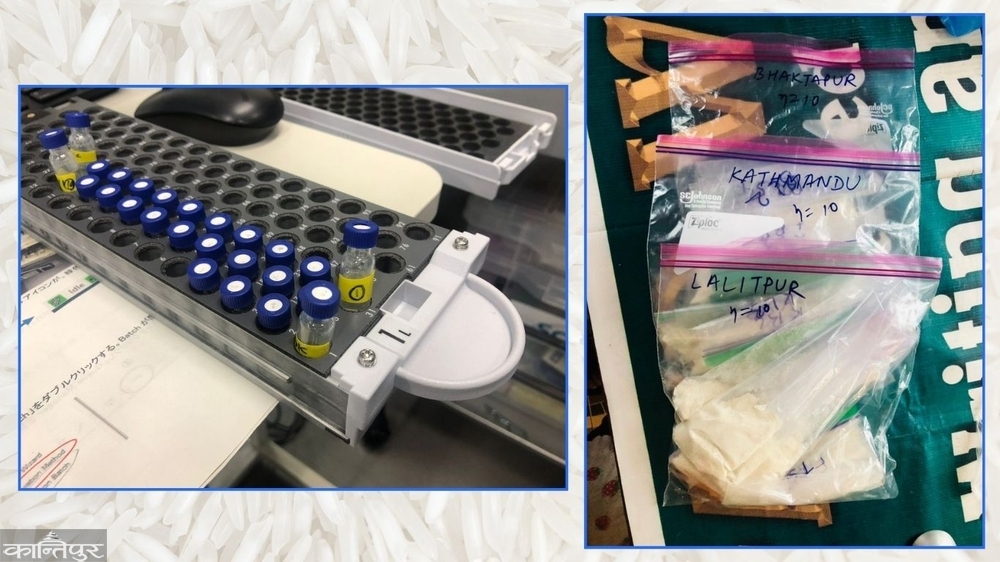
A study has shown that rice consumed in the Kathmandu Valley contains residues of 11 different types of pesticides. The samples tested during the research have also found residues of some banned pesticides including fungicides, insecticides, rodenticides.
More pesticides have been found in rice sold in Kathmandu than in rice sold in Bhaktapur and Lalitpur. Experts say that the amount of pesticides in Basmati rice is double that of non-Basmati rice.
Kathmandu-based ‘Progressive Sustainable Developers Nepal’ and India’s ‘Council of Scientific and Industrial Research-Indian Institute of Toxicology Research’ have recently released a report titled ‘Pesticide Use in Nepal’s Rice and Farmers’ Safety Behavior: Principles of Planned Behavior and Potential Health Risks’.
The report has indicated that the pesticide concentration in rice consumed in three districts of Kathmandu ranges from 5.09 micrograms to 312.54 micrograms per kilogram. The report has been published in the prestigious international academic journal ‘Environment, Development and Sustainability’ of ‘Springer Nature’. The report states that 83 percent of the rice samples collected for the study were contaminated with pesticides. It is mentioned that 80 percent of the samples contained residues of two or more types of pesticides. “Among the 11 types of pesticides found in rice, the amounts of tricyclazole, thiamethoxam and tebuconazole are much higher than the maximum residue limits set by the European Union,” said Utkal Sapkota, one of the researchers. “These pesticides are extremely harmful to human health.” Basmati rice is sold at a higher price and has less resistance to pests, the research claims.
The study showed that basmati rice contains twice as many pesticides as non-basmati rice. According to Sapkota, farmers are using more pesticides because basmati rice is sold at a higher price and has less resistance to pests. “Since basmati is a high-value crop, farmers spray pesticides more frequently and more than recommended to protect their investment and make more profit,” he said, “That is why the residue levels are high.”
The study has warned that long-term use of pesticides found in rice can be dangerous to human health. “Our study has shown that continuous consumption of these pesticide-laden rice accumulates the amount of pesticides in the human body and that over time it can cause fatal diseases such as stomach, prostate and reproductive health-related cancers,” said scientist Sapkota. The study has shown that pesticides such as chlorpyrifos, alpha-cypermethrin and profenofos, which have been banned by the government, were found in rice. The study concludes that the use of such pesticides has not been stopped due to weaknesses in market monitoring.
The study has pointed out that banned chemicals are still reaching farmers and wholesalers due to the weakness of the regulatory body
Clarifying the reason for the appearance of banned pesticides in the market in Nepal, Adhikari said that banning any pesticide will not happen overnight and a certain 'grace period' will be given. ‘The reason why the pesticides were found during the investigation may be that the grace period of those pesticides had not expired at the time of the investigation,’ he said. Scientist Sapkota also agreed with this.
Excessive pesticides have been found in vegetables imported from India and produced in Nepal. This research report also showed pesticide residues in rice available in the federal capital of Nepal. The study report was prepared by two scientists from Nepal, two from India and one from Japan. Dr. Govinda Bhandari, Utkal Sapkota, Dr. Shilendra Pratap Singh, Dr. Anushka Pandey and Dr. Hirotatsu Murano are involved in it.
Scientists Utkal Sapkota and Dr. Govinda Bhandari.
The study has pointed out that Nepal lacks cutting-edge technology for pesticide testing. ‘We have used LC-MS/MS technology in this research, which is not systematically available in Nepal,’ said scientist Sapkota. ‘The RBPR technology being used in Nepal only shows whether a pesticide is present or not, it cannot prove which pesticide is present and in what quantity.’ Therefore, it is too late to replace this method with LC-MS/MS.’

More than 65 percent of the survey participants said that vendors recommended banned pesticides, and more than 80 percent of farmers and vendors who come into direct contact with pesticides did not use the basic equipment needed to protect their health. According to the study, most vendors do not have sufficient knowledge about the serious effects of pesticides.
‘Direct contact with pesticides causes short-term and long-term health problems in farmers,’ the report said. ‘Short-term health problems include skin, eye, and liver-related diseases. Long-term health problems include problems with the nervous system or development.’ The study said that there is a risk of serious long-term problems such as cancer and kidney failure due to exceeding the maximum residue limit of pesticides and unsafe use.
According to the latest report
‘Globocan 2022
’ released by the World Health Organization’s cancer research agency, 22,000 new patients are registered in Nepal annually. But since this number is only for patients who have reached the hospital, the actual number is estimated to be higher. According to the report, stomach cancer was found in 7.8 percent of new patients. A study conducted by the Nepal Health Research Council in 2019 covering 9 districts studied a total of 12,336 cancer cases, of which 3,295 new patients and 1,427 deaths were registered. Scientist Sapkota says that cancer patients are increasingly going to hospitals from Kavre, Kaski and Dhading, where vegetables are produced and pesticides are used more. 'The pesticides found in rice and the pesticides used in vegetables are of the same nature,' he said, 'therefore, the cancers caused by those pesticides may also be of the same type.' Since the number or details of specific patients with cancer due to rice are not within the scope of our research, that aspect was not looked at. But someone can study this too.' To ensure food security in the future, the government has suggested that it should set its own standards for pesticides in staple foods like rice and create a strong legal mechanism to prevent the illegal use of banned pesticides. It has been said that the RBPR technology currently used in vegetables should be replaced by establishing state-of-the-art LC-MS/MS laboratories in every province for regular monitoring. Scientists suggest that organic pesticides should be promoted instead of chemical pesticides and a crop insurance program should be implemented to protect the investment of rice farmers.