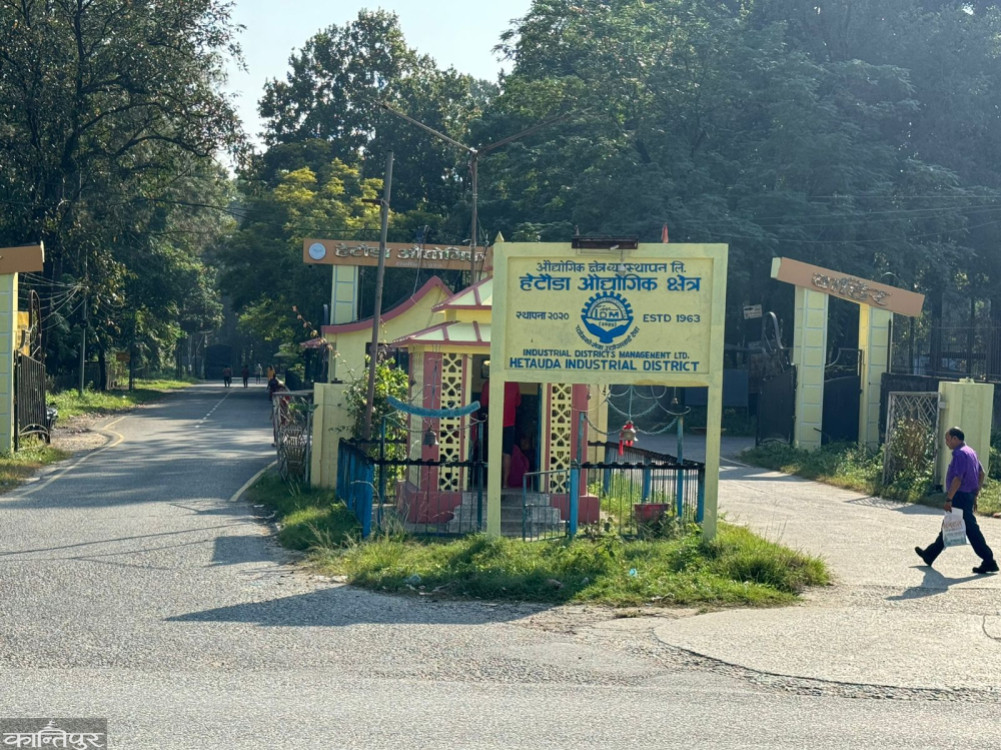
In this industrial sector, which was in crisis until a few years ago due to economic laxity, shortage of raw materials, embargo, earthquake and shortage of skilled manpower, entrepreneurs have started to be active to operate new industries.
We use Google Cloud Translation Services. Google requires we provide the following disclaimer relating to use of this service:
This service may contain translations powered by Google. Google disclaims all warranties related to the translations, expressed or implied, including any warranties of accuracy, reliability, and any implied warranties of merchantability, fitness for a particular purpose, and noninfringement.
Hetaunda industrial area located in the south of Hetaunda, the capital of Wagmati province, has various industries with the investment of national and multinational companies. The biggest and oldest industrial area of Nepal is Makwanpur and the main place of employment for people from other areas.
This industrial zone has been established in Chure Forest, south of Hetounda, which is located in the middle of Birgunj, the country's largest commercial port and the capital Kathmandu.
In 2013, with the construction of Tribhuvan Rajpath, the concept of establishing an industrial zone in Hetaunda was born. In the first five-year plan of 2013, the government of Nepal approved the policy of building industrial areas. In order to implement this policy, the government made a proposal to the United States of America in Nepal (USID) to build industrial zones in Kathmandu and Hetaunda.
An industrial zone has been established with the support of the American government on the barren land located in Balaju and Hetaunda sub-metropolis-8 of Kathmandu. At that time, a diesel plant with a capacity of 14 megawatts of electricity was established at Chowkitol in Hetaunda with the help of the British government for the industrial sector. Currently, the diesel plant is closed.
In this industrial sector, which was in crisis until a few years ago due to economic stagnation, lack of raw materials, embargo, earthquake and lack of skilled manpower, entrepreneurs are now active to operate new industries.
According to the Hetaunda Industrial Area Management Office, the number of multinational companies and big industries coming to find land to establish is increasing. Currently, 115 industries are operating within this industrial area. Now 13 different new industries are under construction . Out of which 7 industries are constructing buildings . The under-construction industry has committed to start production within the current fiscal year 2081/82.
In the industrial sector, 6 industries of various types have been closed for a decade due to economic crisis and lack of raw materials. So far, 8,275 people have received direct employment from the industries operating here. The industries here have submitted revenue worth about 2 billion rupees to the government annually. According to the data of the Management Office, the investment of the private sector is about 6 billion rupees.
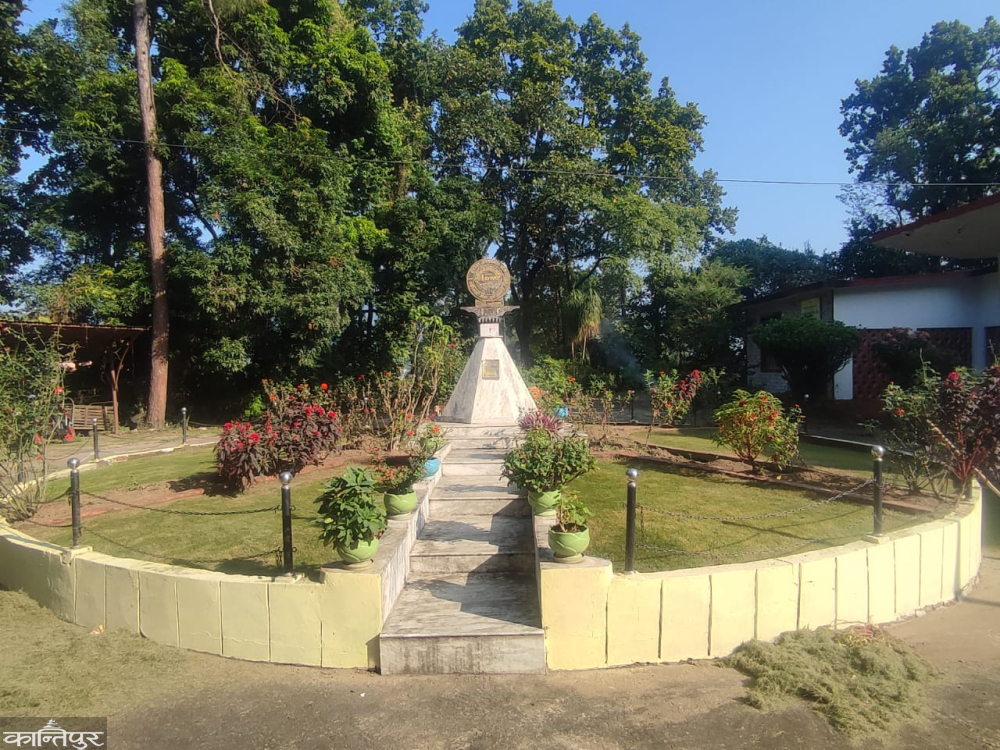 In the industrial area spread over 2 thousand 829 ropani area, during the establishment of various medium industries, multinational companies, about 1 thousand 2 ropani land has been kept in reserve on the east side of the industrial area. Hetaunda Milk Distribution Project, which has been owned by the government for 20 years, Wagmati Province Food and Quality Control Office, Provincial Soil Testing Office, Provincial Sowing Office, Local Police Office, Nepal Bank Limited and Armed Police Office are operating within the industrial area complex. After the government used the armed police as an industrial security force, barracks were placed on the land of the textile industry.
Due to various adversities, exports are decreasing every year due to the decrease in industrial production. There is data that the export trade from Makwanpur with the neighboring country India and third countries is continuously decreasing. In the last financial year, industrial products worth around 59 million rupees have been exported from Makwanpur to third countries. In the financial year 2079-080, the export trade was 68.5 million rupees. Before that, in the year 2078-079, 4 industries exported industrial products worth 3.4 billion rupees.
Pact Group Closure System Nepal Pvt Ltd, which manufactures beverage containers in Hetaunda and exports them to India, Himalaya Kattha Udyog, which exports spices used in bread, Godavari Polypacks & Fabic Pvt. Ltd., which manufactures and exports plastic bags, Khajuri, which manufactures biscuits and produces electrical transformers Nepal Ikrat Engineering Company's products are sold in third countries including India.
Multinational companies in the district have also limited their production in Nepal and due to the closure of many industries, the export trade of Makwanpur has decreased. Industries like Colgate Palmolive Nepal Pvt Ltd, Everest Mineral Products, Makwanpur Engineering, a multinational company that exports billions of goods every year, have been closed.
Industries like Everest Polymers, Everest Vinyl, Reswine Quality Food, Asean Leather Arts and Tanning are also non-existent now . Even multinational industries like Asian Paints, Antarctic Biscuits have not exported their products for 10 years . Gorkha Lahari Pvt Ltd, which has been exporting cigarettes, has also stopped exporting to India a few years ago. Export trade is having a big impact after the cessation of export of crusher products from Makwanpur.
Waiting for new industrial area
As an alternative to Hetaunda industrial area, a new industrial area is under construction in Mayurdhap located in Hetaunda-14 . Due to the lack of land in Hetaunda industrial area and the fullness of industrial areas in Kathmandu valley, the government has advanced the plan of Mayurdhap industrial area. However, due to the area of Parsa National Park, the construction of Mayur Dhap Industrial Zone has not been able to accelerate. With the change of government, every industry minister has visited this area . Although they promised to solve the problem, the implementation aspect is zero .
An industrial zone was announced in 2073 with a plan to build one industrial zone in each of the seven provinces. There is a large area of vacant land in Mayurdhap after the Chure Khare has changed its slope. There are no big trees on the land covered by butane. The file of Mayurdhap in the Ministry of Forests and Environment of the Federal Government has been stuck for years.
The cabinet meeting on May 14, 2073 decided to reduce the area and establish an industrial zone in the area of 134.86 hectares (199.12 bighas) of Mayurdhap, and the project office was also established from October 5, 2075. According to which the government planned to operate the Mayur Dhap Industrial Zone within 2077. However, since the EIA process could not proceed, the work could not proceed .
62 industrial plots have been allocated in this industrial area complex. The land is divided from 7 to 14 ropani in each allotted plot . According to the detailed study report (DPR), about 7 billion 234 million rupees will be invested for infrastructure construction. It is said that about 20,000 people will get employment opportunities directly and indirectly from the various industries that will be established in the industrial area.
Mayurdhap industrial area offers industries such as dyes, dairy products, soap, food, plastic, steel, rubber, wire, distillery, pipes, wood products, textiles, cement, electromechanical workshop, leather industry. It was proposed to establish water treatment, waste management and waste water treatment center in the industrial area .