Customs duty on import of sponge iron increased from 1 percent to 2.5 percent
We use Google Cloud Translation Services. Google requires we provide the following disclaimer relating to use of this service:
This service may contain translations powered by Google. Google disclaims all warranties related to the translations, expressed or implied, including any warranties of accuracy, reliability, and any implied warranties of merchantability, fitness for a particular purpose, and noninfringement.
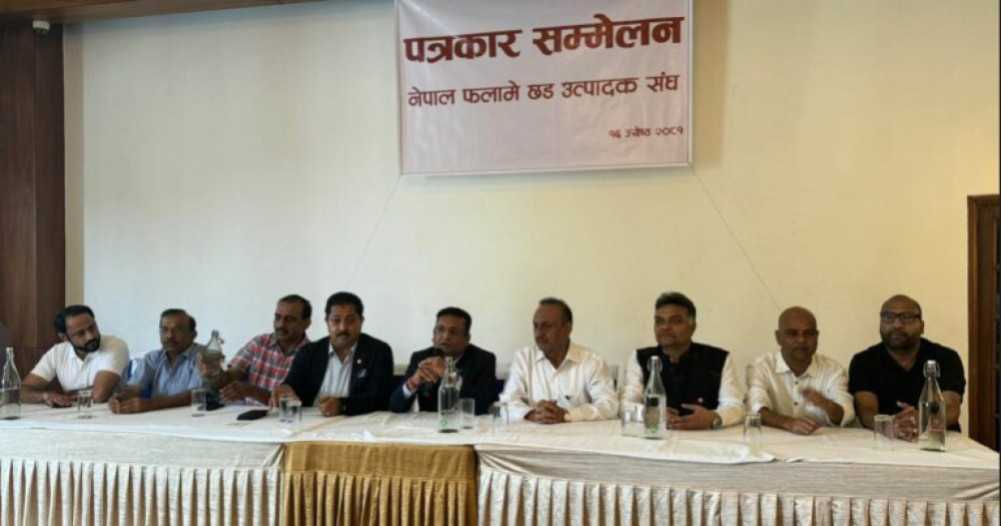
Businessmen have said that when the government changes tax policies and rates every year, the smelting industry is in a state of collapse. 18 smelting industrialists held a press conference and complained that their 36 billion investment was destroyed after the economic bill presented by Finance Minister Varshman Pun on Tuesday increased the customs duty on raw materials of sponge iron. "The melting plant cannot be operated without one level of customs facilities, the government's policy has led to the sinking of the 36 billion industry," said the businessmen.
According to the Nepal Iron Rod Producers Association, the budget for the fiscal year 2078/79 reduced the customs rate on the import of sponge iron from 5 percent to zero in accordance with the policy to promote the smelting industry. At that time, a duty of 5 percent per kg was levied on willet imports. The government had claimed that the duty on sponge import was zero and that on billet import was increased to discourage imported cane and encourage domestic production. Before the financial year 2078/79, there were 6 smelting industries in Nepal. 12 were added due to the easy policy of the government. The investment of that industry also increased from 24 billion to 36 billion.
'In the current financial year, even when the government decided to impose a customs duty of 1 percent and an excise duty of Rs 1 per kg on domestically produced billet rods,' the statement of the association said, 'Through the Economic Bill 2081, the duty levied on the import of sponge iron used in billet production By increasing the tariff from 1 percent to 2.5 percent, the government has not only violated the policy of imposing one level lower customs duty on the industry, it has also destroyed the industry which is playing a major role in increasing domestic production.'
The policy of imposing 5 percent on billet imports with less than 12 percent value addition and 2.5 percent on sponge iron with more than 50 percent value addition will not increase the competitiveness and productivity of the industry, said Anjan Kumar Shrestha, senior vice president of the Federation of Nepalese Chamber of Commerce and Industry. . I used to import and sell cars. The government established the industry after introducing a policy to encourage domestic production, now it has again imposed a tax on the raw materials needed by the industry. Are they trying to shut down the industry?', he said, 'The unstable policy of the government has caused problems for industrialists. This is the reason why the industrial sector has not flourished.'
On the one hand, the government is preparing to mine iron ore by investing crores in Dhowadi iron company in the country. On the other hand, it has taken the way of shutting down the industry with billions of investment in iron processing,'' the association said, 'We have not been able to understand whether the government wants to increase the industry and production or whether it wants to do business by importing.'
In the budget, the industrialists have demanded that the government, which has announced a difference in customs duty of one level between raw materials and final products, should impose at least one level i.e. 5 percent different customs duty on sponge iron. They say that if the government does not impose a different level of customs duty on sponge iron, then all the industries will be closed and they are ready to hand over the keys to the industry to the government.
They allege that the budget for the next financial year, which was announced with the aim of increasing production, productivity and employment, has destroyed the melting plant that has invested billions and is providing employment to more than 3,500 people. Industrialists have said that the government's policy of increasing customs duty has created more problems for the smelting industry, which is operating at a loss due to a decrease in demand in the market. At present, the smelting industry consumes up to 450 MW of electricity. Industries have to pay 2 to 3 billion rupees per month.
Finance Minister Varshman Pun has claimed that the tax rates on spun iron have not been modified in view of any individual or business house in particular. In a press conference held at the Ministry of Finance on Wednesday regarding the budget statement for the next financial year, he said that customs rates and excise duties have been maintained according to the raw materials. The tax rate has been changed with justification. We knew that there would be a dispute, but we have tried to restore order to the situation that was disturbed in the past by discussing a lot," he said.
According to the finance minister's claim, duty has been imposed on sponge iron and billet by making three slabs and working according to principle so that there is no deviation in sponge iron. "We have come to the conclusion that there should be one level of tax on finished goods than raw materials," he added Finance Minister Pun explained that customs duty of 1 percent was imposed on scrap, 2.5 percent on sponge and 5 percent on billet.