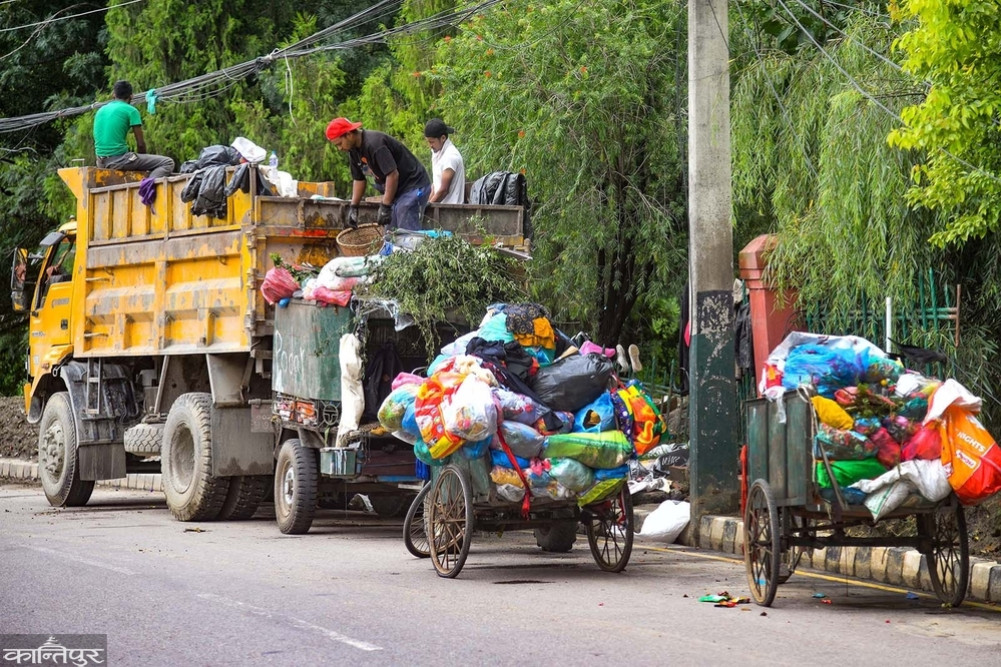
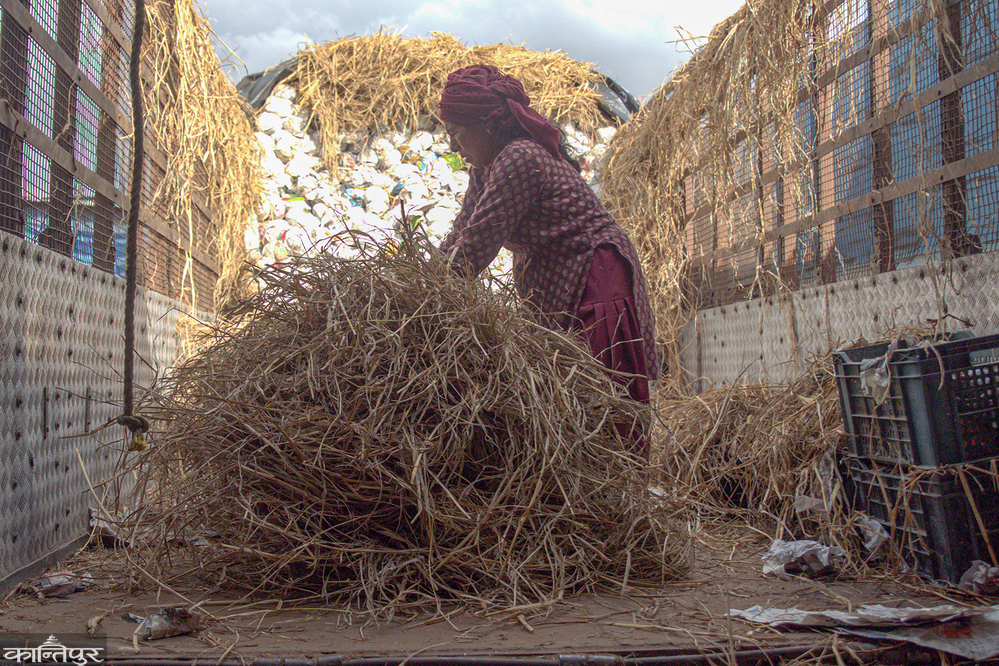
According to the 59th Annual Report of the Auditor General, Bancharedada will keep it for 20 years in case of mixed waste and 40 years in case of classified waste. Are the cities really serious about waste management?
We use Google Cloud Translation Services. Google requires we provide the following disclaimer relating to use of this service:
This service may contain translations powered by Google. Google disclaims all warranties related to the translations, expressed or implied, including any warranties of accuracy, reliability, and any implied warranties of merchantability, fitness for a particular purpose, and noninfringement.
It is about Chait 29, 2079. The conflict between the mayor of Kathmandu Metropolitan City Balen Shah and the federal government was heated over the issue of garbage management. As for the situation, Prime Minister Pushpa Kamal Dahal held a meeting to discuss the sustainable solution to the problem of waste management.
The Prime Minister and Council of Ministers Office called the stakeholders including ministers of relevant ministries, parliamentarians and people's representatives at the local level. But in the discussion, Balen Shah, the main stakeholder of the waste management of the valley, Mayor of Kathmandu Metropolitan City was not present. The situation was not limited to this. On March 25, Mayor Shah had said that he would not pick up the garbage of Singha Darbar complex, which is the administrative center of the country, by keeping his status on social media Facebook. He wrote, '
, the garbage of Singha Darbar will not be removed from today . If the country is really cleaned, its leaders will have to be dumped in the cesspool.' It has been a year and a half since the cold period between Mahagar and the federal government. But still a permanent and unanimous solution has not been found for waste management.
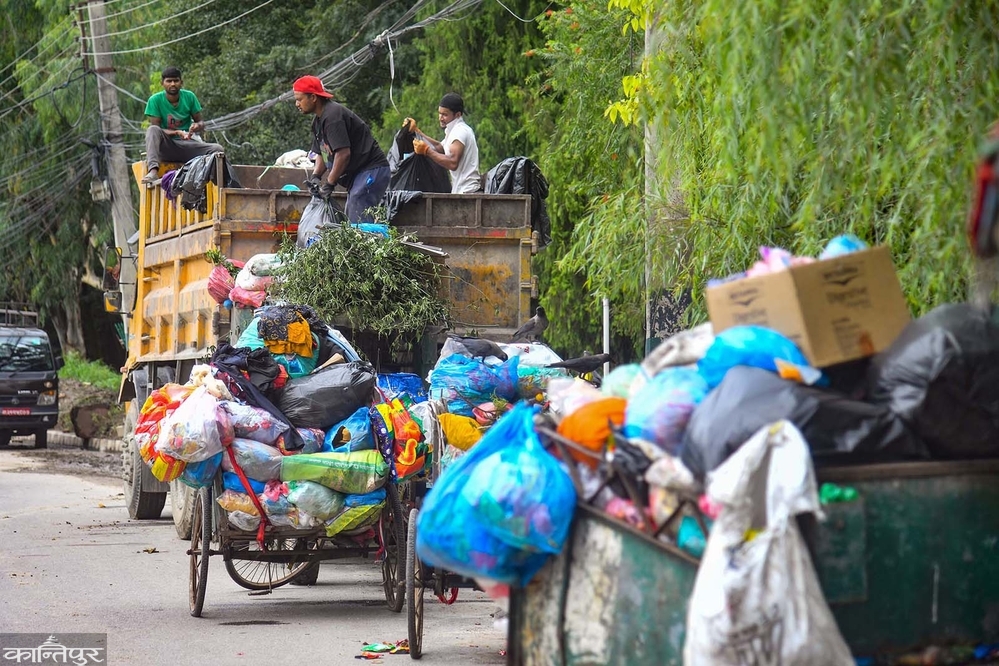
800 and 150 tons of garbage are produced in Kathmandu Metropolitan City and 150 tons in Lalitpur City. In addition to other municipalities in the valley, an average of 1800 tons of garbage is collected daily in the valley. The issue of managing so much waste is still becoming a complicated issue.
Neither the metropolis nor the local level, nor the private company that collects garbage. No one categorizes waste . Instead, all waste is sent to the landfill site at Bancharedanda in Solodolo Dhading. Although Kathmandu metropolis earns income by selling garbage of some wards to the private sector, Lalitpur metropolis has not been able to continue this work.
Sarita Rai, head of Kathmandu Metropolitan Environment Department, said that a budget of 10 million rupees has been allocated in the current financial year for a compost plant to convert rotting waste into fertilizer. "We are planning to start work soon," she said. So in July 2081 Kathmandu Metropolitan City had asked everyone to manage the waste by classifying it at the source. The metropolis
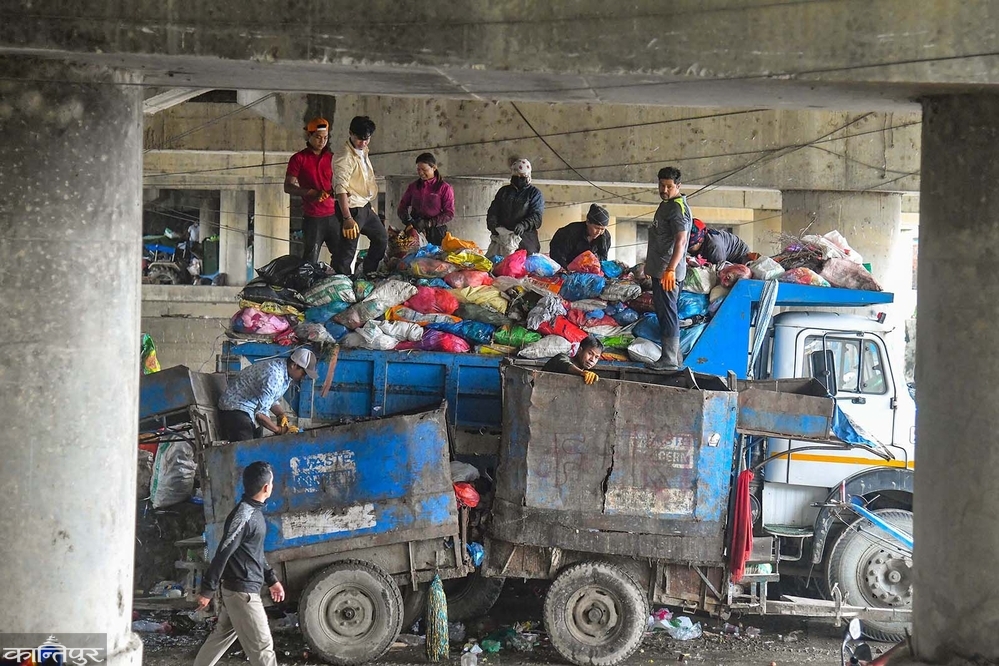
As the life of the place will decrease when all types of waste produced are taken to the final management site, , only waste that is classified at the source and decaying waste should be brought to that place, but the metropolis could not proceed with further work. Also, the metropolis had made similar efforts before. The metropolis had made a plan to keep separate vehicles to collect and collect garbage from Chait 1, 2070, to separate the biodegradable and non-biodegradable waste at the source, but it could not be implemented . According to the Garbage Management Act issued by the government in 2068 and the Environment and Natural Resources Protection Act issued by KAMPA in 2077, there is a provision in the law that the producer is responsible for separating the waste at the source. But neither the Kathmandu metropolis nor the Lalitpur metropolis has been able to implement it in practice.
There is no updated information about how much of the waste produced in Kathmandu Valley is decomposable and how much is non-decomposable. According to a study conducted by the Asian Development Bank in 2013, 66 percent of the produce is perishable in the valley. Apart from this, plastic 12, paper 9, glass 3, metal and cloth 2/2, rubber 1 and other 5 percent waste is produced.
Some local levels, including the two metropolises within the Kathmandu Valley, only collect about 30 percent of the garbage . The remaining 70 percent is raised by private companies. According to Garbage Management Association of Nepal (SWAMAN), there are 75 private companies working on Garbage in Kathmandu Valley. These companies have not entered into an agreement with any government agency. They are collecting and managing their own waste. Based on the waste generation, they collect a monthly fee of 400 to 500 rupees from the house owner and 5000 rupees to 7000 rupees from hoteliers, 10 thousand rupees to 50000 rupees from party palaces, banquets, hospitals.
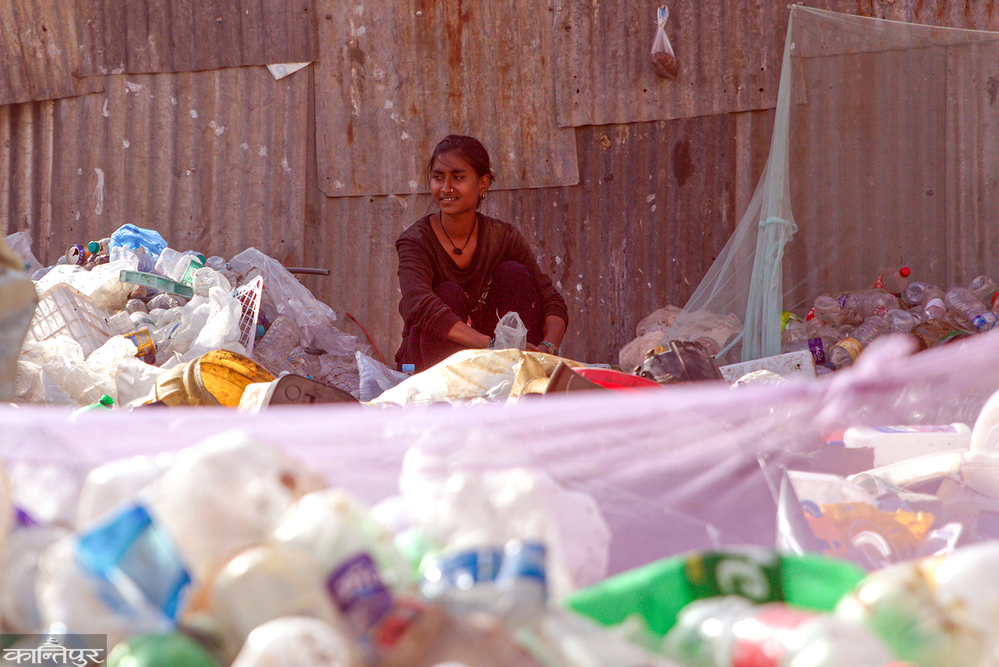
According to Swaman, two and a half lakh members in Kathmandu Valley, i.e. families, pay only Rs. 125 million per month to private companies for layering the produced waste. In other words, private businessmen have been collecting an annual fee of one and a half billion rupees for garbage. Where there is no presence of the private sector, the Kathmandu metropolis has been collecting garbage for free, while the Lalitpur metropolis has been charging only 360 rupees annually.
In the absence of a clear policy on garbage collection and management, arbitrary fees are being collected for garbage collection. Ramkumar Ghimire, President of Foharmaila Management Association of Nepal, said that they are ready to work with the local government to bring uniformity in garbage charges. "Unfortunately, there is no clear legal provision regarding waste management." There is no standard," he said, "According to the Fohomail Management Act 2068, work can be done by making an agreement. However, the service period is only 5 years. Everyone is afraid that the investment will sink if another contractor gets the contract after 5 years after investing a large amount of money.
He said that they are moving forward with the demand to amend the law to give responsibility for waste management for at least 20 years in the public private partnership model. He said, 'Government should create an environment to invest in waste management.' Spokesperson of the Ministry of Urban Development, Narayan Prasad Mainali, said that the demand of private businessmen is being discussed in the bill related to waste. "The management of garbage will be done by the local level," he said, "We will only facilitate it." But Navin Manandhar, the spokesperson of Kathmandu Metropolitan City, said that those who play politics in the garbage will gradually run out . He said, "We have started work by separating different areas to sell the garbage produced in the city."
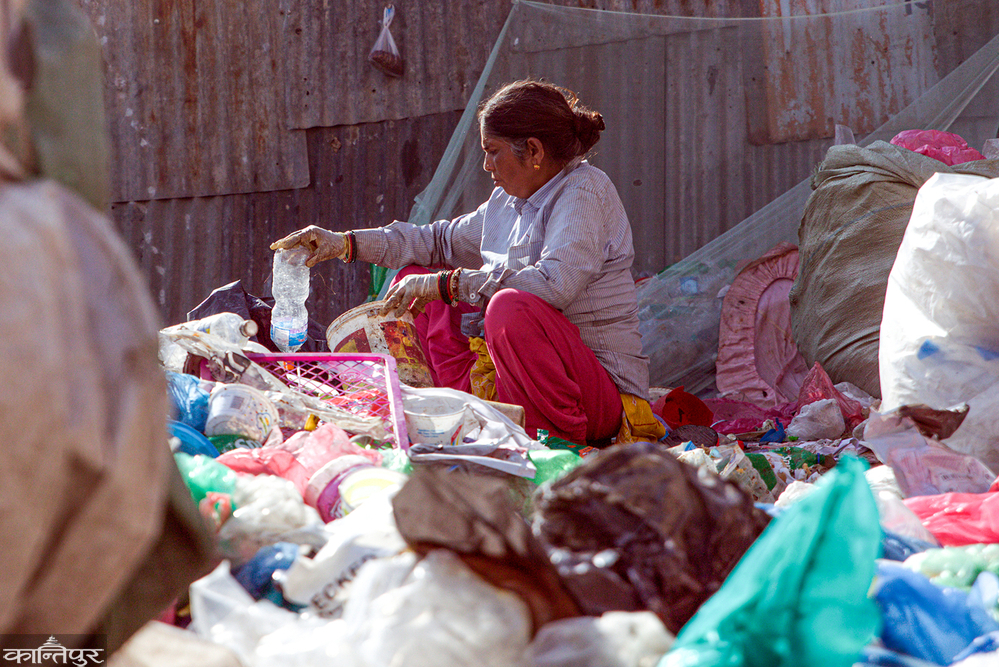
More than 7 years have passed but the PDA has not been finalized
Will the local level do the collection and management of garbage or bring the private sector in? This matter has been in confusion for seven years . While the Investment Board had signed a Project Development Agreement (PDA) in February 2074 to give the responsibility of waste management to the private sector.
At that time, the board made an agreement to hand over the waste management of 10 municipalities, including Kathmandu Metropolitan City, to an organization named 'Nep West'. The board had sent the draft for the agreement to implement the PDA with the investor in February 2074 to the Kathmandu Metropolitan City. However, the then head of the metropolis, Vidyasundar Shakya, refused to give it to the private sector saying that the draft sent by the board did not mention anything about the employees of the metropolis.
Even the current chief Balendra Shah has not approved this draft . There are 500 permanent and 300 contract employees working as drivers, helpers and cleaners under the Department of Environment in Kathmandu. Garbage collection of Kathmandu is not possible only with these employees.
Navin Manandhar, spokesperson of Kathmandu Metropolitan City, argued that the PDA should be approved immediately to keep the Kathmandu Valley clean and tidy. "We had already approved it from the executive board meeting when Vidyasundar Shakya was the chief," he said, "Why now Mayor Shah has not agreed to approve it". will . Waste will collect 219 rupees per household for garbage collection. The garbage collected in this way will be deposited in Nuwakot Banchare Danda. Nap West will hand over the project to the government after 20 years, which will be operated under the Public-Private Partnership (PPA) model. According to the board, it will cost 5 billion rupees to operate the project. 3 billion rupees project will pay royalty . Compost fertilizer, 4 to 5 megawatts of electricity, natural gas will be produced from waste. According to the board, in the second and third phase, the waste management of all the municipalities of Lalitpur metropolis, Kirtipur municipality and Bhaktapur district will be given to "Clean Valley" organization. Clean Valley will also produce compost manure, biogas, alternative fuels and biodiesel. Metropolises are still struggling due to the lack of policy clarity regarding garbage collection and management. Until 2062, the waste of the valley was taken to Gokarna and stored.
After the landfill site was filled, Sisdol started to be taken to Okharpauwar in Nuwakot on 22 June 2062 referring to World Environment Day. Bancharedanda, Dhunibesi Municipality-1 of Dhading was selected as a sanitary landfill site (waste treatment site) in 2062-063. Before the infrastructure was built, the 2 km long sisdol was temporarily used for waste management . Now, since the garbage has been filled in Sisidol, it has been started to be taken to Bancharedanda. But Bancharedanda is not the only long-term solution.
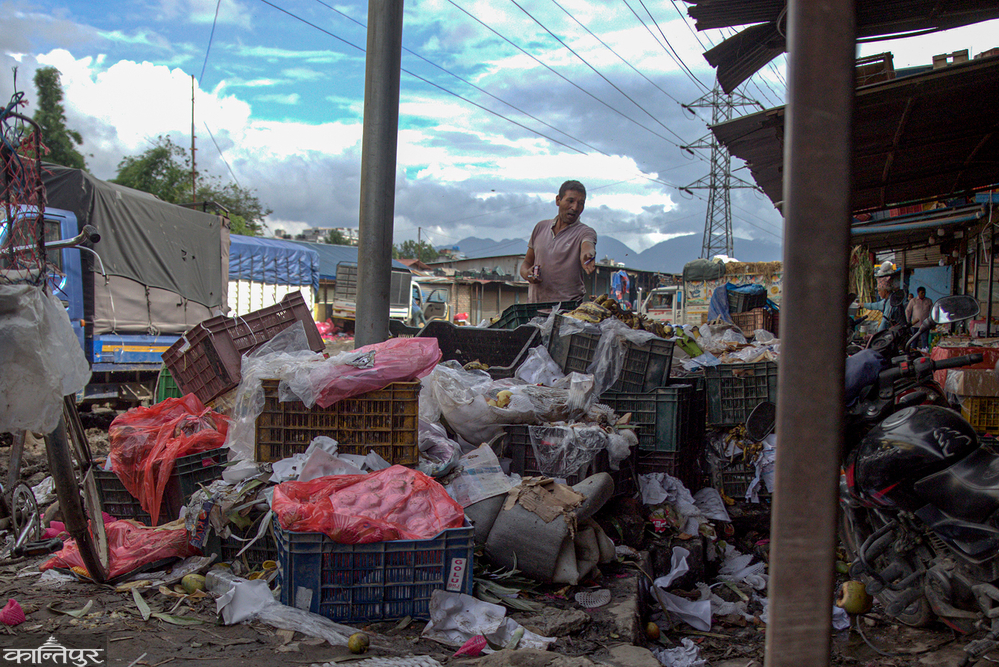
In the 59th annual report of the Auditor General, Bancharedanda will store mixed waste for 20 years and classified waste for 40 years . Are the metropolises serious about this?
Paths of Kathmandu metropolis earning from garbage
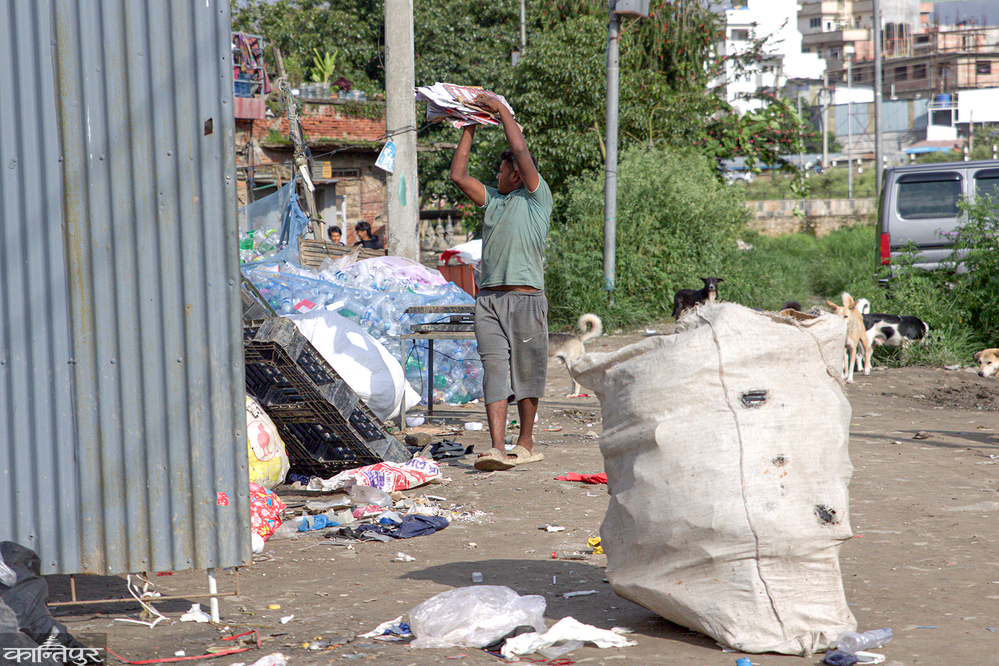
It is not that Kathmandu metropolis has not done anything about garbage collection and management. Kathmandu Metropolitan City had signed an agreement with DOCO Recycling Company to purchase dry waste in 2082. In the said agreement, it is mentioned that household waste will be separated and sold to DOCO and the annual income will be 70 lakh rupees . According to which, Doko has already paid 17 lakh rupees, according to the metropolis.
The metropolis aims to generate an annual income of 68 million rupees from garbage. Kathmandu metropolis has divided 32 wards into 7 regions to turn garbage into money. There is an agreement to sell the waste produced in each area to 7 separate companies. According to the Metropolitan Municipality, an agreement has been made with Nepsemac Company for 6642 thousand 100 rupees annually, in area 2 with Practical Waste Solution for 51 lakh 59 thousand 43 lakh rupees, and with Creative Sansafi Company for 55 lakh 35 thousand rupees annually. Likewise, the metropolis has informed that there is an agreement to sell garbage for 1 crore 15 lakh 4 thousand rupees with Mechi Poly Industry in area number 4, 96 lakh 46 thousand rupees with Energy Development Company in area number 5 and 91 lakh 81 thousand rupees with Waste Management in area number 6. Area No. 1 includes 2, 3, 4, 5 and 7 wards, Area No. 2 includes 1, 11, 28, 29 and 30 wards, No. 3 includes 6, 8 and 9, 4 wards and No. 4 includes 16, 17 and 26 wards, No. 5 includes 13, 14 and 15 wards and No. 6 includes 10, 31 and 32 wards .
According to the Kathmandu Metropolitan City, in order to implement the contract with 6 companies, the Metropolitan City should manage a 'garbage transfer center' in each area to separate the biodegradable and non-biodegradable waste from the house. But the work for this has not been done . Rai, head of the Kathmandu Metropolitan Environment Department, said that 400 million rupees have been allocated in the current financial year to establish a garbage transfer center. She said, 'We have received approval from the ward to establish a garbage transfer center.'
Raju Maharjan, spokesperson of Lalitpur Metropolis, said that there is a plan to sell garbage by dividing the 29 wards of the metropolis into 3 areas. "Last year, by allocating the budget, we have already trained the ward residents to classify biodegradable and non-biodegradable waste," he said. He said, 'Soon we will turn garbage into money.'