Rather than strengthening institutions that control corruption, there is a tendency to use those institutions in favor of oneself and against others
We use Google Cloud Translation Services. Google requires we provide the following disclaimer relating to use of this service:
This service may contain translations powered by Google. Google disclaims all warranties related to the translations, expressed or implied, including any warranties of accuracy, reliability, and any implied warranties of merchantability, fitness for a particular purpose, and noninfringement.
The KP Sharma Oli-led government formed on the basis of the 7-point agreement reached between Congress and UML on 17 June 2081 has completed one year. In the agreement, it was mentioned that the leadership of Alopalo government (Oli for the first two years and then Sher Bahadur Deuba until November 2084), constitutional amendment, good governance, economic revival and ensuring political stability.
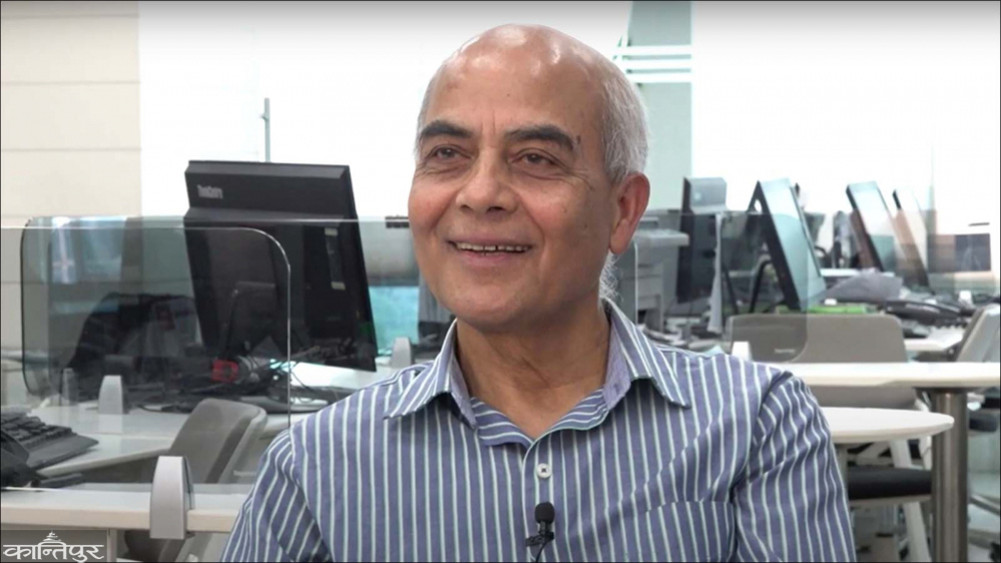
In one year of the formation of the government, although the economic indicators have become somewhat positive due to the increase in exports, decrease in imports, increase in currency reserves and control of inflation, the expected progress in governance and corruption control has not been achieved. The people have not been able to get a different feel for good governance and the credibility of the leadership has been seriously questioned. Kulchandra Neupane of Kantipur spoke with analyst Bhojraj Pokhrel about why the strong government with two-thirds support could not work according to the people's expectations and where the government went wrong:
What the current government could or could not do in one year, what does it look like from the outside?
Two major parliamentary parties formed a government. The basis for forming this government was the seven-point agreement at midnight on June 17. A cursory look at each of those points shows that 70 percent progress has been made on the power-sharing point. That is the agreement that they will run the government in turn, in which Oliji will become the prime minister in the first phase. However, apart from that, I do not see any satisfactory progress in other programs.
The government said to maintain good governance and control corruption, what kind of progress did you get in that direction?
The first point of agreement was to control corruption and maintain good governance in the country. But, because of corruption, this government should have come down hard on base and characters, which I don't see. The biggest corruption in the country now is political corruption, rather than where the evidence of corruption control can be seen. The sub-committee reported that political corruption should be controlled during the discussion in the Parliament committee during the amendment of the law of the Commission for Investigation of Abuse of Authority. The committee also came to support it. However, the government did not allow it to proceed by interfering. This revelation shows that the government is not very willing to address the root causes of corruption. What is happening in the media also confirms this. Rather than strengthening the institutions that control corruption, there is a tendency to use those institutions in favor of oneself and against others. This has weakened the search for corruption control.
In terms of development, political stability and national consensus, how successful was the government in achieving its goals?
It was said that there should be political stability to speed up the construction of national development. For that, the main point was to form a government of national consensus. However, when it comes to development and construction, the situation of Asare development has not been controlled. The chronic disease that cannot be spent on the budget is the same. Until a few days ago, only 75 percent of the development expenditure was spent. Resources are scattered. The Center has created a Yojana Bank so that no scheme of less than 3 crores will be maintained. However, looking at the current budget, plans of thousands to millions are included. There is a difference in speech and behavior. The latest report of Transparency International has shown that Nepal's corruption index has decreased compared to last year. These things seem to be good governance, corruption control, speed of development and political stability, but what is written on paper is not perfect in practice. It was said to form a government with the consent of all parties for political stability, but until today, the number of parties that should have participated did not. It was not a government of national consensus, but a government of two parties. Apart from two parties, some of the participating parties have left, some are in the process of leaving. This raises the question of where we went wrong.
How much progress do you think the government has made in the field of economic reform?
There has been some good work in the financial sector. Many amendments were made to the laws and procedures to make policy reforms to keep the economy moving. This has given a positive message to the private sector and has been welcomed. However, the results have not come. Investment has not increased. Money is piled up in banks. It does not appear that the market should be active. I think that the hope that was raised in this area has not been seen in practice.
A separate commission has also been formed to maintain good governance under the chairmanship of the Prime Minister. How do you see it?
We have always limited governance to speech and mouth. Method, methodology and process should be adopted to maintain good governance. Structures should be strengthened. However, attention has not been paid towards it. There is no shortage of policies, rules and laws to maintain good governance. The Good Governance Act 2064 Has also made arrangements in this regard. However, what the law says and the process are different. Weaknesses must be corrected to strengthen structures. However, everyone is concerned about political interference. Institutions have not been able to function fearlessly due to increased political interference.
In constitutional commissions, there are political rumors, tussle and division in giving opportunities to people who are capable and wanted by the country. If the government is truly committed to good governance, such things should not happen again and again. Actions should be addressed, not words. In my opinion, the necessity of setting up a good governance commission is not done by the prime minister himself. In special circumstances, a commission is formed under the chairmanship of the Prime Minister. For example, in the year 2004, a government recommendation commission was formed under the chairmanship of Girija Prasad Koirala. However, the Vice President Kulshekhar Sharma had to resign due to non-implementation of the recommendations given by it. The current commission has not been able to do anything to implement the sensitive issues. This commission has become a burden to the government. Even the ministers have not yet been able to make public the property details.
When the first and second parties of the parliament formed the government together, the citizens had great hope and confidence, didn't they?
In the current situation, the credibility of the Prime Minister and party leaders has ended. People are not ready to believe them. The number of people who believe that something good will happen is almost zero. Past history shows this. I hoped that the government comprising two powerful parties with almost two-thirds majority would not repeat the mistakes of yesterday and would identify and address the causes of good governance.
The people's desire was the same. However, good governance does not come only through the formation of commissions and speeches. The government has obstructed the amendment of the law. Yesterday's trend in policy making has continued. This government could clean up all the garbage if it wanted to. The reasons for the lack of development and budget spending could have been addressed at the root. The promise of good governance could have been fulfilled. However, the tradition of disclosing the property of its own members of the Council of Ministers was not fulfilled by this government. Differences in speech and action undermine credibility. They are losing credibility as they fail to demonstrate that good governance has been achieved.
There is no progress in the promise to amend the constitution, how do you see it?
Amending the Constitution is not easy. The government raised the hope that understanding the complexity, they would make amendments based on national consensus. It was said to revise the constitution after reviewing the positive and weak aspects of its implementation. However, there is no progress till date. A mechanism could have been made to reach the people immediately, but that was not made. The two major parties managed to form the government together. It was implemented that Oliji would become the Prime Minister. It is not possible to say what will happen in the future. Apart from that, the expected progress has not been made in good governance, corruption control, development and political stability. Even now, the country is confused and suffering huge losses. The question is who will make up for this loss.
Is it because of the ruler's lack of will or because of our state structure that the parties could not do anything?
It's our biggest mistake to trust characters who have tried and failed over and over again. It is a mistake to believe that those who have failed repeatedly will succeed again. Can't trust those who fail time and time again. With a new character comes a new perspective. After coming to power, they could not realize that they should be honest and accountable to the nation. Yesterday's view that there is a majority, no matter what is done, continued.
Failed to make civilian government accountable. The biggest thing is the lack of willpower. If there was a will, institutions could be freed from politicization. The government could propose an end to political interference in the process of making civil laws. However, the government did not want it. Because they want political interference to continue. The will is seen in the constitutional appointments to keep their people and to bring the institutions under their control. For example, the Vice-Chancellor of Tribhuvan University had to resign due to the non-cooperation of the government. How can we believe in the commitment to free governance and institutions from politics?
After coming to power, the leaders did not consider the people as the source of power, but put the powerful bodies of the state under their control and tried to get power from them. Did this problem arise?
Rather than becoming powerful through the power of the people, there is a tendency to become stronger through the power of the organization by placing its own people. If there was self-control that we maintain good governance by strengthening and empowering the statutory bodies of the state, government bodies, corporate sector, media, all mechanisms, this country would have gone on a different path. However, after coming to power, there was a tendency to make those institutions conform to him, to amend laws and regulations, to appoint his own people, and to keep them in his favor by creating pressure through workers. It is not intended. When this happens, where is the good governance we are looking for? Instead of strengthening institutions and giving good governance, where will the nation become when it starts to be used as a means of seizing the three, using them in favor of themselves and their own, and if necessary, subduing the adversary? Where does good governance come in?
As a whole, political leadership is the root of the problem of frequent occurrences in the country?
The society has stopped believing the major political figures of today. The main problem of the political leadership that comes to power is that instead of strengthening the institutions and giving good governance, they tend to seize those institutions, use them in their favor and subjugate their opponents. This trend has always hindered nation building and good governance. There is also a danger that the country will be included in the 'grey list' of wealth laundering.