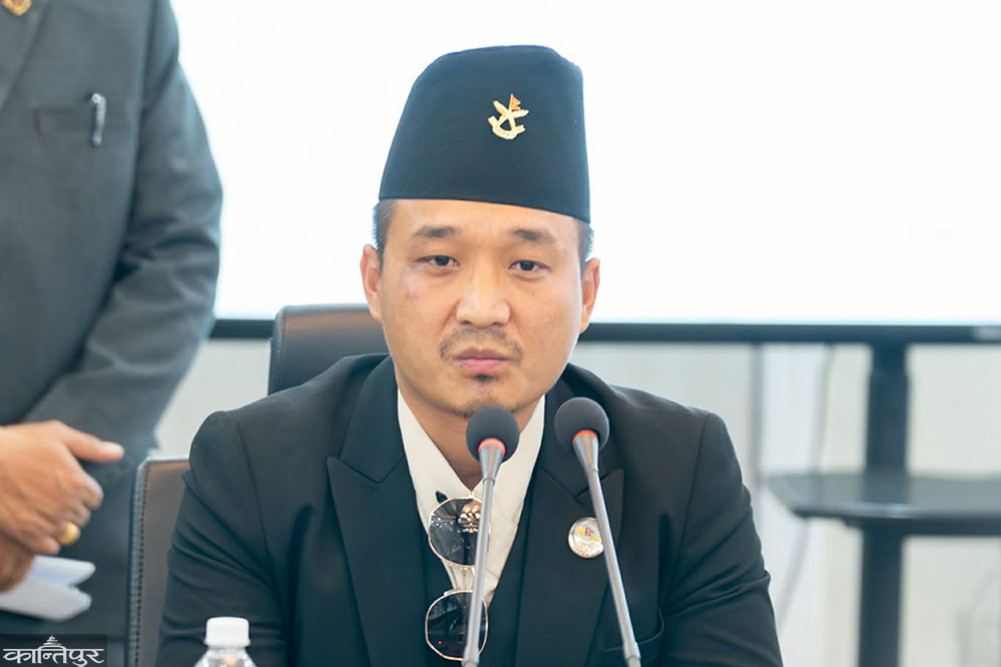
Gurung, who emerged from the Gen-G movement, took over the responsibility of the Taluk Ministry, which leads the country's home administration, within seven months.
We use Google Cloud Translation Services. Google requires we provide the following disclaimer relating to use of this service:
This service may contain translations powered by Google. Google disclaims all warranties related to the translations, expressed or implied, including any warranties of accuracy, reliability, and any implied warranties of merchantability, fitness for a particular purpose, and noninfringement.
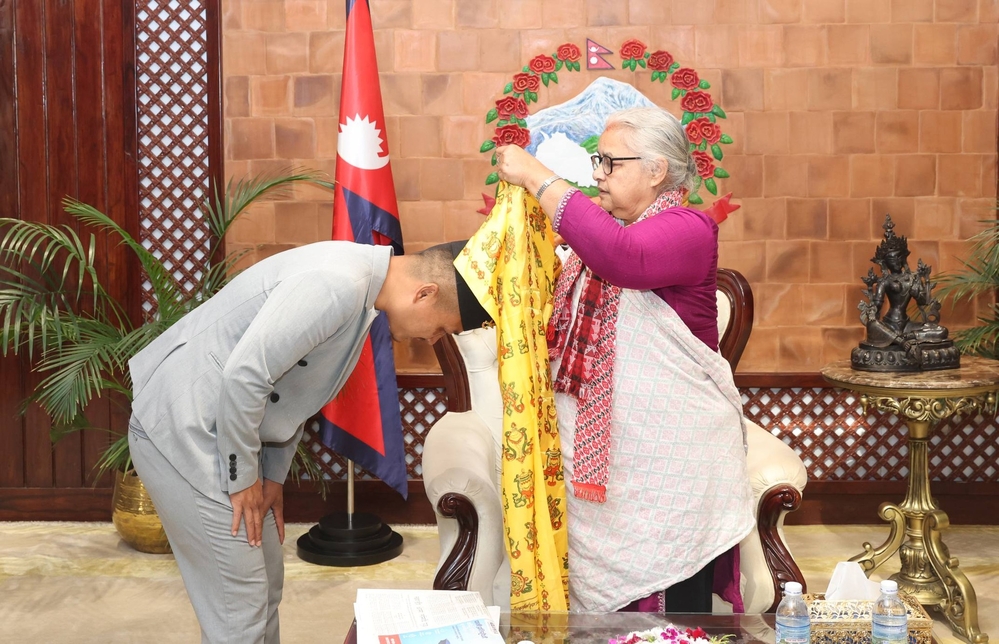
Sudhan Gurung has come under the political leadership of the 'powerful' Home Ministry that exercises governance, power and authority. Gurung has become the Home Minister in the government led by senior leader of the National Independent Party, Balendra Shah. The 37-year-old Gurung, who won from Gorkha-1 from the Rashtriya Swatantra Party, is a youth who emerged with the Gen-G movement of 23 and 24 Bhadau. Gurung has also been accused of inciting the youth in the Gen-G movement and playing a role in instigating the movement. The inquiry commission led by Gauri Bahadur Karki has suggested that those involved in the destruction of 24 Bhadau should be investigated, and questions have also been raised about Gurung regarding the events of that day. However, the same Gurung has come under the leadership of the Taluk Ministry, which is responsible for implementing the law. There was a long tug-of-war between RSP President Ravi Lamichhane and senior leader Shah over whether to make Gurung the Home Minister or bring someone else, but after Shah took the stand to make Gurung the Home Minister, an agreement was reached. RSP Vice President DP Aryal and Chief Minister Sunil Lamsal were also seen as contenders for the Home Minister post. However, in the end, a consensus was reached in favor of Gurung. Gurung, who joined the RSP just a few days before the last candidacy nomination, had won the election and set his parliamentary journey. According to sources, Gurung became the Home Minister at the choice of Prime Minister Balendra Shah. Gurung took charge of the Home Ministry after taking the oath of office and secrecy from President Ram Chandra Poudel on Friday.
During the election campaign, Gurung launched a door-to-door campaign with an agenda to end the suffering of Gen-G martyr families and the injured by going to ministries. After the investigation report on the incidents of Bhadra 23 and 24 was made public, he also included in the election campaign that he would continue to pressure the government from the parliament to initiate the prosecution and action process based on the report. However, Prime Minister Shah brought Gurung to lead the ministry that was linked to the implementation of the report.
The Ministry of Home Affairs and its mechanisms are considered important and powerful as internal managers of peace and security management, service delivery, crime prevention and control, internal security management, and national security.
Nepal Police, Armed Police Force, National Investigation Department, District Administration Office, Immigration Department, National Disaster Risk Reduction and Management Authority, and departments and offices under the ministry are also considered powerful.
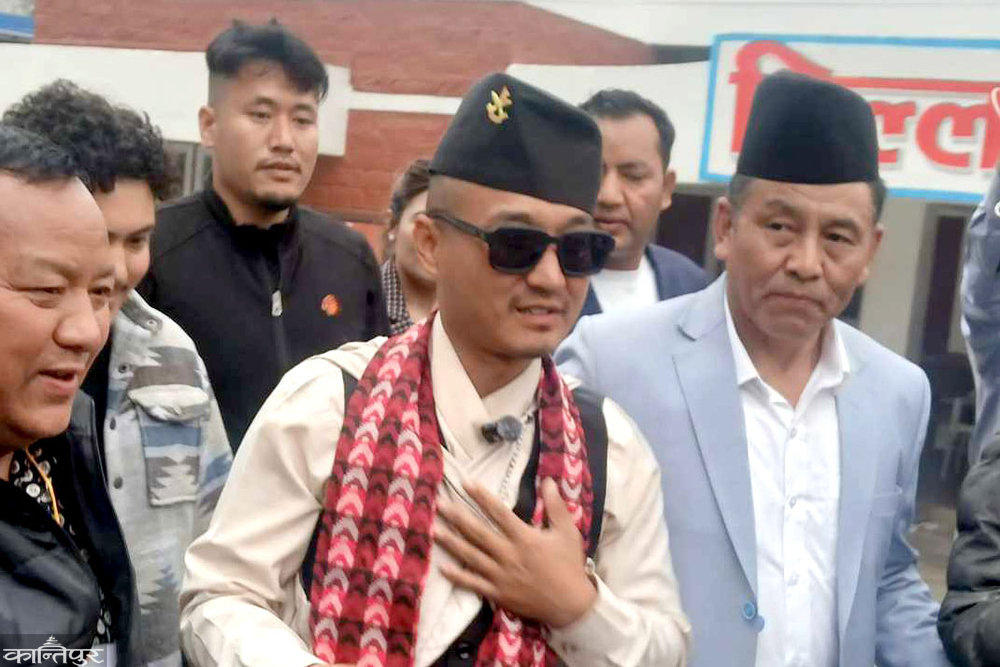
That is why, when a coalition or single majority government is formed, leaders seem to be intensely lobbying to become the Home Minister with the ambition of using that power. If we forget the exceptions when there is power-sharing in a coalition government, in the past, when the leader of one party became the Prime Minister, the other major partner party went to the government with the leadership of the Home Ministry.
In the wake of the Gen-G movement of 23 Bhadra and the violent protests that followed the outbreak of the movement, in the recently held House of Representatives elections, the Rashtriya Swayamsevak Sangh (RSS) emerged as the largest party with 'almost' two-thirds of the public vote with 182 seats out of the total 275 members in the House of Representatives. Senior Rashtriya Swayamsevak Sangh (RSS) leader Shah became the Prime Minister. Under his leadership, the Rashtriya Swayamsevak Sangh (RSS) formed a single majority government on Friday. And, Gurung became the Home Minister in the Shah-led government.
Before the Gen-G movement, Gurung from Nagchet in Chumanubri-3 Sirdiwas had been active in relief and rescue work in various disasters including earthquakes through an organization called 'Hami Nepali'. After the Gen-G movement, he emerged as the leader of this movement. After that, he was seen active in activities ranging from forming an electoral government to criticizing the government formed with his own activities.
In the difficult situation of the Gen-G movement and the subsequent Gen-G movement, Gurung, who became the Home Minister with the reins of the overall peace and security management of the country, has to move forward by overcoming the challenges. Being the Home Minister of a majority government, the burden of the Jap-Ups also falls on him. Since he has not worked in any public/political role in the past, he lacks experience in working in government. He has to work on this by taking the subordinate mechanism into confidence.
The Ministry of Home Affairs is the head of the Nepal Police, an integral part of the criminal justice system, the Armed Police Force (APF), which is responsible for securing Nepal's international borders, and the taluk unit of the National Investigation Department, the country's main intelligence agency.
The Ministry of Home Affairs is also the head of all 77 District Administration Offices, departments/divisions designated with various responsibilities and roles, and disaster management. The role of 'District Officer' of sensitive mechanisms such as the Ministry of Foreign Affairs and the Commission for the Investigation of Abuse of Authority has also been delegated to the Chief District Officer under the Ministry of Home Affairs. Not only this, the Central Security Committee itself is led by the Home Minister, while the Constitution itself has ensured the Home Minister as an ex-officio member in the National Security Council. It is against this backdrop that Gurung has arrived at the responsibility of the Home Minister.
The Home Administration and its subordinate mechanisms are caught in an extreme political quagmire. Rather than fulfilling the responsibilities assigned by the law, system, and the use of the authority specified by law, the Home Administration and its subordinate bodies have been misused as ‘the guardian of the orders of those in power’. There is also a tendency to ‘abuse’ the mechanism to suit one’s own interests through decisions taken by the government, not by making laws through parliament. To some extent, the police administration has also become weak due to the obstacles made to hinder the investigation itself and preventing the case from reaching the court according to the facts and the essence of the investigation.
However, for him, who has been the Home Minister in a single-party government, an opportunity has also come for him to break the distortions of the past and fulfill his responsibilities transparently and legally. It seems that it is necessary to bring an internal reform framework starting from the amendment of the 70-year-old Police Act-2012 to make the transfer, promotion, and career development of security agencies based on merit and ability, not on gossip and ‘proximity’, and to implement it in full.
To make the Armed Police Force deployed in border security effective and timely, it is necessary to amend the 25-year-old law and create a clear framework for its mobilization through the act itself. The Armed Police Force was established in 2057, but no government has amended the act at that time. Due to which its mobilization, mobilization, and management in changing circumstances have not been able to be done accordingly.
The Investigation Department has been mobilized by the law of 2042 BS. The department, which also works as an espionage and counter-espionage force to look after internal and external affairs, is in a weak state. This mechanism has reached a point where it cannot be found even when there is turmoil in the country. The Home Minister is also responsible for raising it to a higher level and making the assigned responsibilities effective.
Until 2046, the department was the 'Nepal Public Relations Head Office', which was handled by the Internal Affairs 'A' and External Affairs 'B' units. After the advent of multi-party politics, both these mechanisms were abolished and promoted as the National Investigation Department. The Ministry of Home Affairs needs to set up separate units to look after internal and external affairs and assign responsibilities accordingly. For that, the role of the Home Minister in law formulation and management of provisions is important. 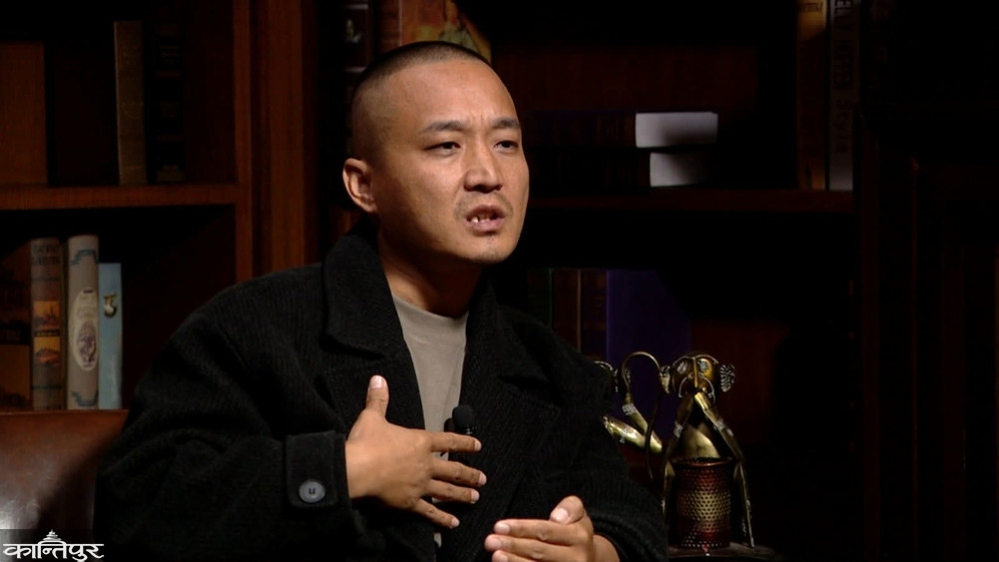
The three security agencies under the Ministry of Home Affairs have not been able to manage the necessary security equipment and other resources to face the challenges. Due to the extreme commissions and interests of middlemen from being in power, the procurement of lethal and non-lethal weapons required for the security agencies has always been drawn into controversy. It is necessary to clear the way for transparent procurement of provisions by freeing them from controversy. It is also necessary to ensure peace and security for the common citizen, to provide public services in a way that the common citizen can experience, and to end political interference and undue pressure on the security apparatus. 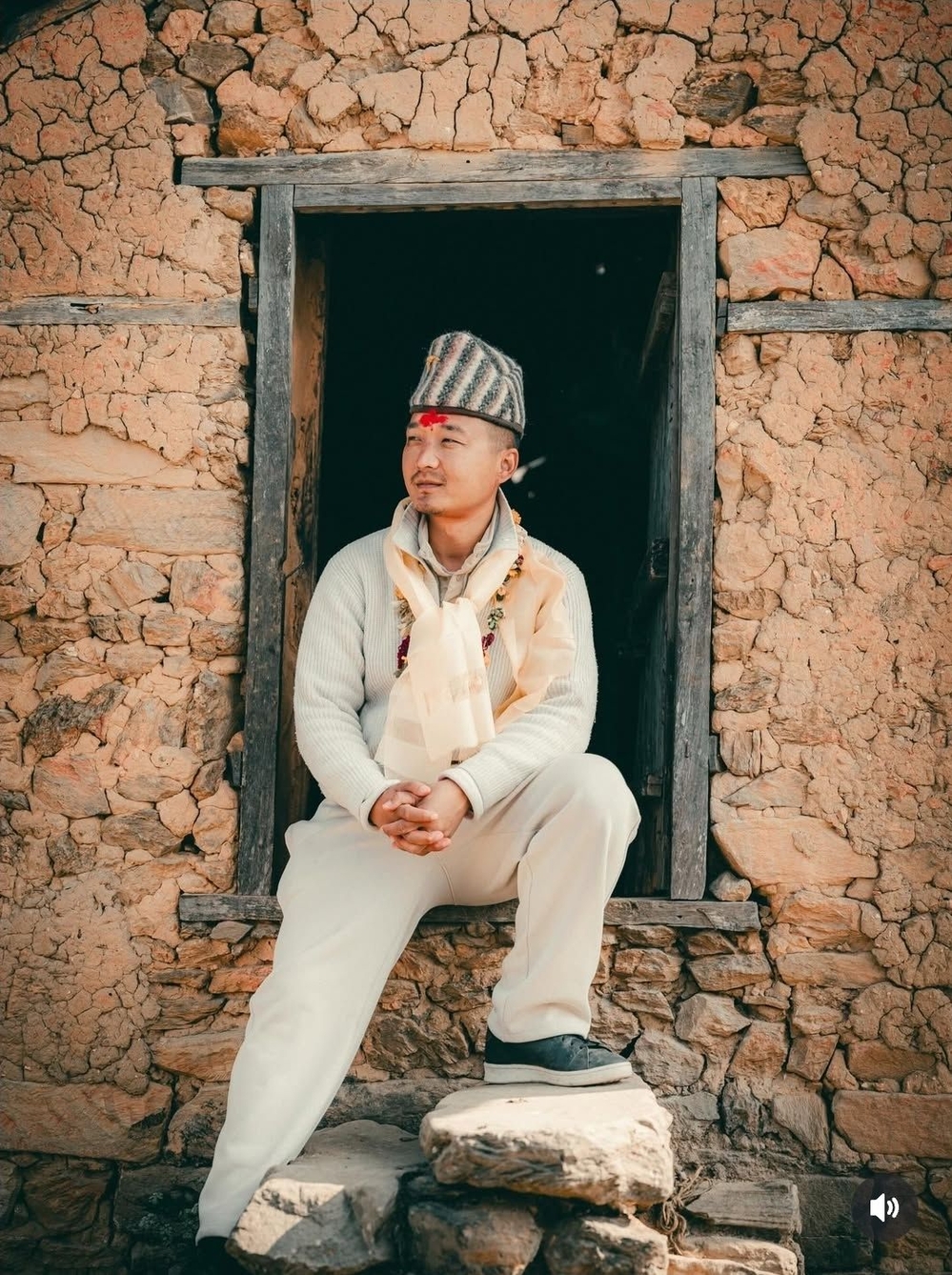
The report of the commission formed to investigate the suppression of the Gen-G movement and the demolition of the 24th has also pointed out the failure to reform and modernize the home administration and security agencies. In the past, bills and draft laws related to security agencies have been neglected in the parliament and the ministry. The commission has pointed out the lack of information power of the Investigation Department, the lack of coordination between the police and the Armed Police Force in peacekeeping and other assigned tasks, the lack of clarity in force mobilization in the law that makes the district heads of the district and security agencies responsible for maintaining peace and security in the district, and the lack of non-lethal weapons and equipment for the security agencies.
The commission has also suggested that the information received from the security agencies and other mechanisms be made into a 'Joint Secret Information Fusion Center' and an Integrated Security Operation Center. Similarly, it has also recommended preventing misuse of the security agencies. Even though the question of misuse of security personnel has been raised since the past, every government has been ignoring it. There has been no organized mobilization to solve the open border and the problems created by it.
The secretaries and chief district officers of the Ministry of Home Affairs have been appointed not on the basis of 'service specialization' but on the basis of access, gossip and recommendation. Sending administrators who do not have knowledge and experience of home administration to the role of mobilizing the security mechanism has also caused problems. It seems that the experience of the human resources deployed in the civil administration and units under their jurisdiction should be prioritized for the new Home Minister. How will the Home Minister move forward with all these risks and challenges? The decisions and results made by the ministry in the coming days will determine the outcome.
Not only that, the commission has recommended various forms of action against the then Prime Minister KP Sharma Oli, the then Home Minister Ramesh Lekhak, the then Home Secretary Gokarnamani Duwadi, the then Inspector General of Police Chandrakuber Khapung, the then Inspector General of Police Dan Bahadur Karki, the then Inspector General of Armed Police Raju Aryal, the then Chief of the Investigation Department Hutraj Thapa, and other political, security and administrative high-ranking officials for playing a role in suppressing the movement and failing to stop the destruction.
On the one hand, the recommendation for action against security officials, and on the other hand, the recommendation for action against the background of overcoming the difficult situation of movement and destruction and holding the election peacefully, the challenge for the Home Minister is to find a way to work in the interest of the country by facing both challenges. It is also an equal challenge to win the trust of the security agencies in the background of the movement, the new scenario after the election, and the recommendation for action by the commission.
Political and administrative officials at the leadership of the Home Department are also involved in criminal charges for abuse of power. The then Home Minister Balkrishna Khand was jailed in the Bhutanese refugee case. He is a defendant who was released on bail from the court. Ramesh Lekhak, who was the Home Minister during the Gen-G movement, was questioned from the streets to the House in the visit visa case. A high-ranking immigration official was arrested in the visit visa case and is facing a case in court. The then Home Secretary Teknarayan Pandey is also in jail during the trial in the refugee case.
The Home Minister also plays a non-parental role in the Taluk Ministry in eradicating the controversy and stigma created by the misuse of his position and creating an environment that guarantees the legal mobilisation of subordinate mechanisms. The Ministry's leadership role is important in conducting an unhindered investigation into the institutions and individuals involved in inciting, instigating and systematically mobilising the Gen-G movement and bringing those involved to justice.
It is also the responsibility of the home administration to identify those involved in activities against the country's interests under the guise of NGOs, to seek transparency in the expenses of foreign organizations, and to regulate them through strong laws. The home administration must take necessary steps to ensure effective monitoring, control, and mechanism operation to prevent the risk of suspicious individuals misusing Nepal's land against their land and air neighbors. There were many shortcomings during the Gen-G movement due to ineffective inter-security agency coordination and cooperation. Accordingly, a law on coordination should be introduced to prevent this from happening again.
It has been 8 years since the country switched to a federal system of governance. However, the laws on security agencies and the Police Adjustment Act have not been enacted accordingly. The provincial governments are dissatisfied with the center for not bringing the civil servant and police adjustment act. It remains to be seen how the incoming government will address this.