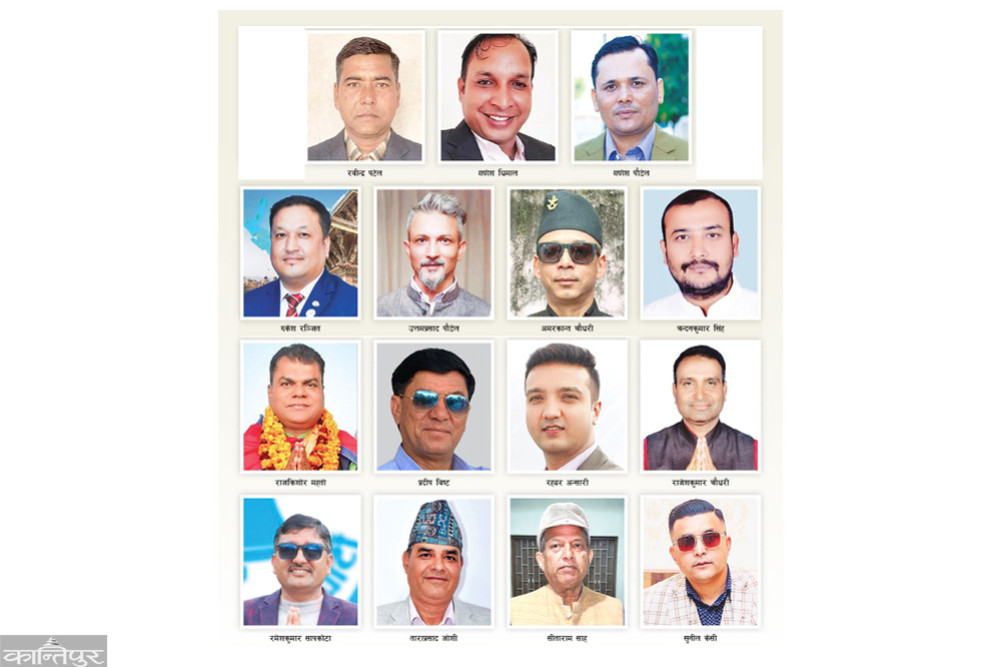
The highest number of people who risked defecting to win on the eve of the election are from Madhesh Province, 17. The highest number of people who left the party are from the Nepali Congress, 19, while the NCP has 5 and the UML has only one.
We use Google Cloud Translation Services. Google requires we provide the following disclaimer relating to use of this service:
This service may contain translations powered by Google. Google disclaims all warranties related to the translations, expressed or implied, including any warranties of accuracy, reliability, and any implied warranties of merchantability, fitness for a particular purpose, and noninfringement.
The National Independent Party has won 125 seats in the direct election to the House of Representatives. Of these, 42 were won by candidates who left the Congress, UML, NCP and Madhesh-centric parties.
They won despite changing parties on the eve of the election. In Madhesh Province, the maximum number of 17 people have changed parties and won the election from the Rashtriya Swatantra Party.
Newly elected MP Deepak Kumar Sah, who came to the fore after defeating Congress leader and former minister Gyanendra Bahadur Karki in Sunsari-4, has not been long since he joined the Rashtriya Swatantra Party. Until some time ago, he was active in the Janmat Party led by CK Raut. Sah, who was also the vice-president of Janmat and the coordinator of the disciplinary committee, left the party after the party took disciplinary action.
Immediately after the expulsion of Janmat, Sah formed a new party called 'Janaswaraj' under his own leadership. However, Janmat President Raut went to court demanding that the party not be recognized. After the court did not recognize 'Jana Swaraj', Sah changed the name of the party to 'Sarvodaya' and registered the party with the Election Commission. Sah is the president of the newly formed Sarvodaya Party, and the party's election symbol was 'Makkako Ghogha'. However, as the 21 Falgun elections approached, Sah abandoned his own party and election symbol and joined the Rashtriya Swayamsevak Sangh (RSS). After that, he became a candidate from the RSSS and won the election by defeating influential Congress leader Karki.
Similarly, former journalist Santosh Rajbanshi, who came to the limelight after defeating leaders including Congress General Secretary Gururaj Ghimire, also joined the party and became a candidate for the RSSS. Rajbanshi, who has experience working for Nepal Television and local radio stations, had started to appear more active in politics than journalism since the 2079 elections. At that time, he was affiliated with the Citizens' Liberation Party led by Resham Chaudhary. He tried to contest the election for the ward chairman of Biratnagar Metropolitan City from the same party, but did not get a ticket at the last minute.
It has not been long since Rajbanshi joined the RSSS. He joined the Rashtriya Janata Party (RJP) just a week before the nomination was filed. He has now become a hot topic after switching parties overnight and defeating Congress General Secretary Ghimire, former NCP minister Aman Lal Modi, and former Koshi Province minister and UML leader Jeevan Ghimire.
In Madhesh Province, the RJP candidate Ramji Yadav, who won from Saptari-2, became active in politics in 2073 BS from the then Rastriya Janata Party (RJP) Nepal. An engineer by profession, he contested as a candidate from the RJP after the latest Gen-G movement. Similarly, Amarkant Chaudhary, who joined the RJP from the RJP and contested the Saptari-3 election, also defeated JSP Chairman Upendra Yadav. Yadav had won from the same constituency in the last general election. Sitaram Sah, who left the Congress and contested Saptari-4 from the RJP, defeated Tejulal Chaudhary, a candidate from his old party, the Congress, and former minister, and became a member of the House of Representatives.
Rambinod Yadav, who had been affiliated with various Madhesh parties, won in Dhanusha-2 by defeating Congress candidate Dinesh Prasad Yadav. Similarly, Rajkishore Mahato got a ticket from the Rashtriya Swayamsevak Sangh (RSS) for Dhanusha-4 immediately after leaving the JSP. He managed to defeat former Congress joint general secretary Mahendra Yadav. In Mahottari-1, Pramod Kumar Mahato not only became the RSS candidate by abandoning the Democratic Socialists, but also won by defeating Girirajmani Pokharel of the NCP. Ujjwal Kumar Jha, who left the JSP and became the RSS candidate for Mahottari-3, also won.
Similarly, Narendra Sah Kalwar, who became a member of the House of Representatives from Sarlahi-3, was once a local leader of the NCP. He defeated senior NCP leader Narayan Kaji Shrestha. Rajesh Kumar Chaudhary, who started politics by joining the UML in 2054, became the Congress district secretary of Rautahat in 2074. This time, the same Chaudhary not only won from Rautahat-1 as the RSVP candidate, but also defeated UML's Ajay Kumar Gupta, Congress's Anil Kumar Jha, and NCP's co-coordinator Madhav Kumar Nepal by a large margin.
Similarly, Rabindra Patel, who won in Rautahat-3, had joined the RSVP before nominating his candidacy. He defeated JSP's Govinda Chaudhary. Ganesh Poudel, the winner of Rautahat-4, had also left the Congress and joined the RSVP. He defeated Congress's Dev Prasad Timalsena. Similarly, Ganesh Dhimal, who became an MP from Bara-1, also has a political background from the Congress. He defeated Congress's Shambhu Budhathoki. In Bara-2, Chandan Kumar Singh, who left the JSP and joined the RSVP, defeated former party JSP leader Ramkishore Yadav. In Bara-4, former Maoist provincial MP Rahbar Ansari won by taking a ticket from the RSVP.
Sushil Kumar Kanu, who won from the RSVP in Parsa-2, was previously affiliated with the JSP. Similarly, Ramakant Prasad Chaurasia, who was elected from the RSVP in Parsa-3, was once a local leader of the Congress. This time, he defeated former Congress leader Surendra Chaudhary. Tek Bahadur Shakya, who was once a local leader of the NCP, won from the RSVP in Parsa-4, while former Congress leader Ramesh Rijal lost by a margin of more than 15,000 votes.
Sunil KC, the winner of the RSVP in Kathmandu-2, is a former leader of the RPP. He defeated Kabir Sharma of the Congress. Pradeep Bista, who won from the RSVP in Kathmandu-10, was previously a Congress worker. He defeated Himal Karki of the Congress. Rukesh Ranjit, the winner of the RSVP in Bhaktapur-2, is previously a UML worker. He not only destroyed the stronghold of the NEP here, but also defeated its senior leader Prem Suwal. Similarly, Badan Kumar Bhandari, who won in Kavre-1, left the Unified Socialist Party and became the candidate of the Rashtriya Swayamsevak Sangh.
Bodh Narayan Shrestha, an MP from Dhading-2, is a former Maoist supporter of the Rashtriya Swayamsevak Sangh. Swarnim Wagle, who left the Congress in the previous by-election and joined the Rashtriya Swayamsevak Sangh, was re-elected in Tanahun-1 this time. Shriram Neupane, who was elected in Tanahun-2, is also from the Congress background. Before joining the Rashtriya Swayamsevak Sangh, he worked close to President Ramchandra Poudel.
He was the unit president of the Pulchowk Engineering Campus of the Nepali Sangh and the joint secretary of the Self-Union Union. Sagar Bhusal, who was elected from Parbat, was the district secretary of the Congress-affiliated Tarun Dal before joining the Rashtriya Swayamsevak Sangh. After District President Pravin Gurung was elected as the president of the Bihadi Rural Municipality of Parbat, he was designated as the acting president. Despite his desire to become the president from the convention, he joined the Rashtriya Swayamsevak Sangh. He left the Rashtriya Swayamsevak Sangh (RSS) for some time before the Gen-G movement and returned to the Congress, but after the movement, he got closer to the RSS and got a ticket.
Sushil Khadka of the RSS elected from Baglung-1 was previously a representative of the Congress's provincial convention. He participated in the Gandaki provincial convention of the Congress representing Myagdi in the last convention. Uttam Prasad Poudel, elected from the RSS in Kaski-2, was also previously the regional secretary of the Tarun Dal. He also joined the party after Ravi Lamichhane left Galaxy TV and formed the RSS. Dhananjay Regmi, elected from Syangja-1, is from the Congress background before joining the RSS. He became close to the UML when he became the executive head of the Tourism Board.
The candidates who left the old party have said that they chose the House of Representatives to fulfill the people's desire for 'change'. Kanhaiya Baniya, who won Rupandehi 4(1) from the then Loktantrik Samajwadi Party, resigned from the provincial assembly. He joined the Rashtriya Swayamsevak Sangh (RSS) from the pre-nomination JSP (Nepal) and won from Rupandehi-4.
Former Congressmen have also won from West Nawalparasi-1 and 2 from the RSS. After internal turmoil within the district party increased, the then Congress Lumbini Province General Secretary Bikram Khanal had joined the RSS before the nomination. Khanal had given a rebel candidacy after Binod Chaudhary was the candidate from West Nawalparasi-1 in the 2079 election. Since then, a dispute had started in the Congress District Committee. After Khanal became a rebel candidate, the Congress took disciplinary action against him.
This time, the Congress made Chaudhary the candidate from West Nawalparasi-1. Khanal immediately left the party and was elected as a candidate from the RSS. Former Congress leader Narendra Gupta was also elected from West Nawalparasi-2. He also joined the RSS after there was no possibility of getting a ticket from the Congress. The Congress had given tickets to Bhim Bahadur Thapa and Devendra Raj Kandel in West Nawalparasi-2. Since Thapa had registered his nomination first, the Election Commission accepted his candidacy as official. Taking advantage of the controversy within the Congress and the wave seen in favor of the Rashtriya Swayamsevak Sangh (RSS) party, Gupta was elected. Gupta was elected as the mayor of Ramgram Municipality, the headquarters, from the Congress in 2074.
Former Congress leader Vikram Singh Thapa joined the RSS party during the nomination process and was elected from Kapilvastu-2. Thapa defeated Congress candidate former minister Surendra Raj Acharya. Thapa, who was defeated by a narrow margin in the entrance assembly in 2079, was an aspirant for the House of Representatives this time. After the party did not give him a ticket, he chose the RSS party. From Palpa-2, Dr. Madhav Thapa defeated Congress President Himal Dutta Shrestha. According to those close to the Congress, Thapa is still a district working committee member.
Thapa, who has close ties with Congress District President Shrestha, had joined the Rashtriya Swayamsevak Sangh (RSS) at the time of nomination. Shrestha had taken Thapa to the district working committee. Thapa, who traveled and lived with him, defeated his friend Shrestha. The Congress only learned about his joining the RSSP after he became a candidate. Congress workers say that Thapa was a district member of the Congress even after being elected as a member of the House of Representatives.
Devraj Pathak, elected from Dang-1, had been doing Congress politics along with his teaching career for a long time. Having been the district vice-president of the Teachers' Association, he left the then Teachers' Association and teaching profession in 2079 BS and joined the RSSP. He defeated Congress Joint General Secretary Yogendra Chaudhary, former Urban Development Minister Metmani Chaudhary, and former Chief Minister Kul Prasad KC of Lumbini Pravesh. Before becoming a candidate from the RSSP, Khagendra Sunar, elected from Banke-3, was known as a former Congress worker. This time, he defeated Congress Lumbini Province President Amar Singh Pun from Banke-3. Suresh Kumar Chaudhary, who won from Banke-1, has joined the Rashtriya Swayamsevak Sangh (RSS) from the Nagarik Unmukti Party.
Former journalist Thakur Singh Tharu, who had become a candidate from the Nagarik Unmukti Party in Bardiya-1 in the 2079 election, was elected from the RSS this time. Tharu, who has been a journalist for a long time, was initially close to the UML. He left journalism in 2079 and became a candidate from the Nagarik Unmukti Party. At that time, he was defeated by Sanjay Gautam of the Congress. This time, Tharu, who joined the RSS and became a candidate, defeated the same Gautam of the Congress. He joined the RSS after the NAUPA became weak. Shreedhar Pokharel, who won from the RSS in Bardiya-2, had previously been affiliated with the Congress for a long time and led various organizations. He joined the RSS a year and a half ago.
The RSS has won only one seat in Karnali Province. The RSS candidate Ramesh Kumar Sapkota won from Surkhet-2. He is the former Birendranagar secretary of the Congress. There are many who have achieved success by changing parties in Sudupaschim too. Komal Gyawali, who was elected from the RSVP in Kailali-1, was previously in Naupa. Dr. Tara Prasad Joshi, who succeeded in destroying the Congress stronghold in Dadeldhura, was the leader of the then Unified Socialist Party. He was elected as a member of the Provincial Assembly as an independent candidate in 2079. This time, he resigned from his position as a member of the Provincial Assembly before nomination and became a candidate. Harimohan Bhandari, who won from Baitadi, was a rebel candidate of the Congress in 2079. He joined the RSVP shortly after the party lifted its ban. He defeated Congress's Chatur Bahadur Chand by becoming a candidate from the RSVP. ***
*** Gyanendra Singh Mahata, who was elected from the RSVP in Kanchanpur-3, has been removed after the incident has been removed. - Editor