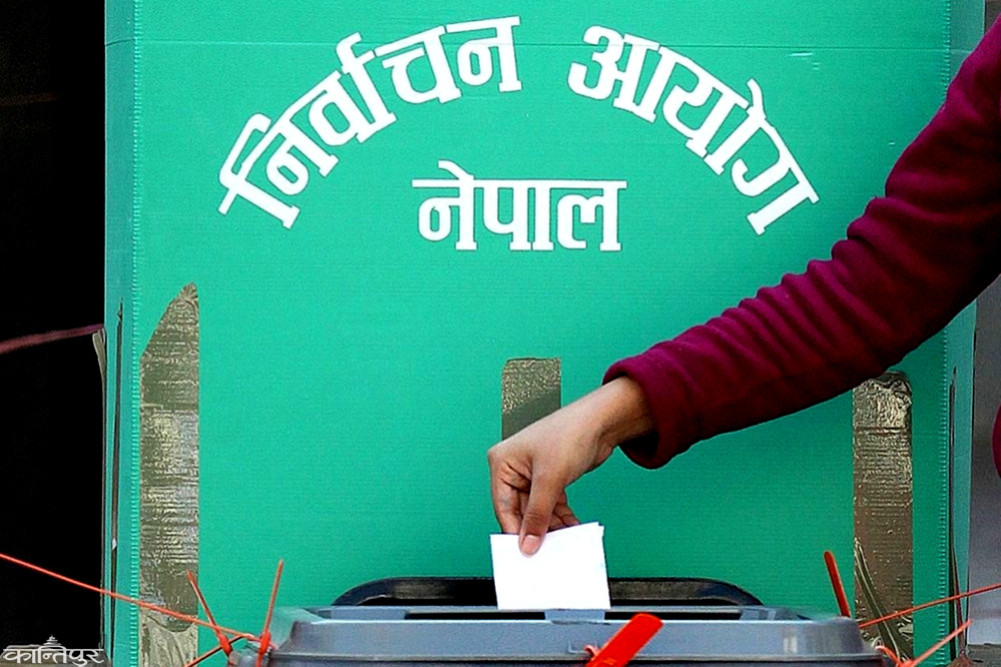
Along with the responsibility of voting, it is equally important to be aware of who to vote for because every vote has value.
We use Google Cloud Translation Services. Google requires we provide the following disclaimer relating to use of this service:
This service may contain translations powered by Google. Google disclaims all warranties related to the translations, expressed or implied, including any warranties of accuracy, reliability, and any implied warranties of merchantability, fitness for a particular purpose, and noninfringement.
Elections are the heart of democracy. This is the time when the real power of democracy can be clearly seen to be concentrated in the common people.
And, political leaders are just ordinary people elected by the common people. Voting is not only the right of every citizen, but also a duty. It determines the future of the nation and can change its course. Elections are the beginning of a democratic government, which must ensure representation of every citizen and everyone's voice must be heard. The winning candidate must also be the voice of the minority group that did not vote for him. Therefore, even though democracy is a majority rule, minorities cannot be ignored.
What the country has experienced in the last three years is the result of the previous elections. Which were full of controversy and conflict. During this period, a major political change took place through the Gen-G movement, in which 74 people lost their lives and the country had to face a national-level political crisis. This has angered the people, demanding a change in political behavior. The next election is a matter of reform, atonement and political awareness, which must lead the country towards a better future.
After the Gen-G movement, there has been a major change in the balance of power of political parties. While the old parties are trying to maintain their long-held dominance, the new parties are trying to displace the old parties from the forefront. In the midst of such a power struggle, citizens must be careful not to be misled by abstract illusions and empty promises. It is the responsibility of citizens to choose representatives who can raise the real issues of the people and become their voices.
'Irrational decision-making tendency'
Bertrand Russell said in his article 'On Politicians', 'To criticize politicians in a democracy is to criticize ourselves - we deserve the politicians we get.' This statement is fully applicable in our context. The political leaders we blame are born of our own actions, habits and political consciousness.
We often fall into 'irrational decision-making tendency', due to which weak and incompetent representatives end up in government. For example, voting on the grounds that a candidate's election symbol is 'toothbrush' and 'toothbrush cleans teeth' is ridiculous, but unfortunately such reasons are seen. Such an argument, while good for entertainment, cannot be the basis for voting. Along with the responsibility of voting, it is equally important to be aware of who to vote for, because every vote has a value.
Another reason that weakens the power of elections is superstition – voting for party, ideology, family influence, or personal interests without considering the qualifications of the candidate. This leads to the repetition of the same representatives over and over again, who often fail to become the voice of the people. As a result, even honest and capable candidates are neglected. Habit builds trust, but when necessary, one must be able to break out of it and change. Not wanting to find a better alternative even after a failed experiment is activating the negative and dangerous side of democracy. Our civic power that we use in elections is the process of choosing the best representative, who can protect our hopes, aspirations, lives, and freedoms.
This irrationality is even more apparent in the age of social media and the internet. Misinformation and propaganda can easily influence the public, due to which real social and economic issues are overshadowed. Especially in Nepal after the Gen-G movement, the need for a common political consciousness has increased. No matter who wins, voters must hold politics and politicians accountable to the people. Every decade, our society has followed some leaders as role models, only to be disappointed when expectations are not met. Change comes with time and stability. It is not just a matter of popularity or imitation.
Voting for a better future
Elections determine the future of the state and affect all aspects of politics, society and economy. There are many challenges in the upcoming elections. Unfair influences such as exceeding the spending limit by candidates, violating the code of conduct are always in the foreground. Political leaders who disappeared after the previous elections will reappear among the people, giving long speeches
talking about their ethics, work and dedication to the country. I consider this to be the result of the deep ego in our leaders. Ego may keep an individual satisfied but weakens society and democracy.
Therefore, a deeper political consciousness is needed among the people to ensure that democracy does not become a means to fulfill the interests of a few. In a democracy, the responsibility for politicians and their actions lies with us, the citizens. When they are corrupt, we too are somehow complicit in it. Democracy can only be a good system when the people vote wisely – electing honest and capable people, breaking the chain of political disease that is holding back the pace of overall development.
The most important aspect of democracy is the ability of ordinary people to influence the state and government, and elections are the strongest means of exerting that power. Ultimately, the future of the state depends on how citizens vote.