Bird flu has spread in 11 districts, including the three districts of the Kathmandu Valley. Currently, the highest number of infections has been reported in Kavre.
We use Google Cloud Translation Services. Google requires we provide the following disclaimer relating to use of this service:
This service may contain translations powered by Google. Google disclaims all warranties related to the translations, expressed or implied, including any warranties of accuracy, reliability, and any implied warranties of merchantability, fitness for a particular purpose, and noninfringement.
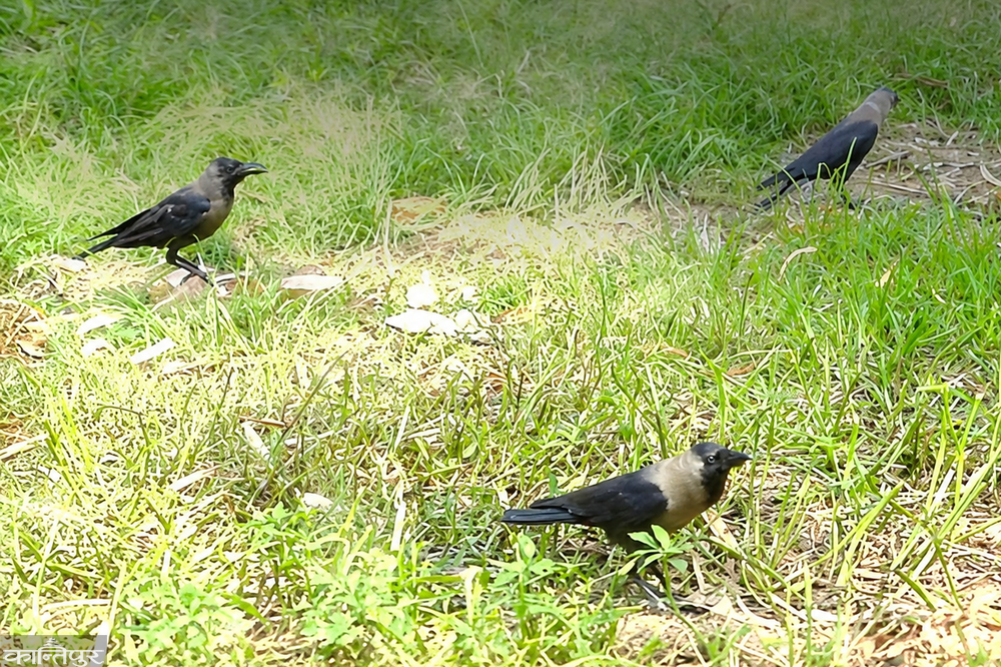
The confirmation of bird flu infection in dead crows inside Lalitpur’s Central Zoo continues. The Central Veterinary Laboratory has also confirmed bird flu in the latest samples sent from dead crows.
After bird flu infection was confirmed in vultures, owls, ducks, and wild cats, among others, at the zoo, the zoo has been closed since Asar 5. Although birds at the zoo have been dying from the infection, the zoo administration was accused of trying to cover up the incident. An investigation committee was also formed regarding the incident.
Officials have stated that, since the closure of the zoo—which is visited by about 2,000 people daily and 5,000 on holidays—approximately 20 million rupees in revenue has been lost so far. As infections continue to be confirmed, there is no immediate prospect of reopening, according to zoo spokesperson Ganesh Koirala.
"Bird flu infection was also confirmed in the latest samples from dead crows," he said. "Crows are not birds kept at the zoo, but they fly in and out of the zoo. Since the infection can spread to the birds here, there remains an environmental risk at the zoo."
The zoo administration has said that the zoo will only be reopened to the public after receiving a report from the Central Veterinary Laboratory confirming the absence of bird flu and after the Epidemiology and Disease Control Division grants permission.
Since the bird flu outbreak began in the Valley about a month ago, it has been confirmed at 84 poultry farms so far. Of these, 28 are in Kathmandu, 41 in Bhaktapur, and 15 in Lalitpur.
The infection has also been confirmed at 22 poultry farms in Kavrepalanchok. Just on Thursday, teams were deployed for culling and disinfection at two farms in Kathmandu and one each in Kavre and Lalitpur where infection was confirmed.
According to the Department of Livestock Services, since Chaitra alone, more than 754,000 chickens and ducks have been culled. Bird flu infection has been confirmed at poultry farms in 11 districts across the country. Around 1.1 million eggs and about 250,000 kilograms of feed at affected farms have also been destroyed.
"Today as well, teams including technicians have been mobilized to cull chickens at four farms," said Dr. Mukul Upadhyay, Senior Veterinary Officer at the Department of Livestock Services and focal person for Avian Influenza Control and Disease Surveillance. "Currently, the highest number of infections is being seen in Kavrepalanchok."
In Nepal, viruses such as Avian Influenza A (H5N1), A (H9N2), and A (H5Nx) are spreading infection among chickens. These are highly contagious viruses that primarily affect domestic birds like chickens and ducks.
The outbreak, last seen in eastern Nepal in Chaitra, has now spread to the three districts of Kathmandu Valley and to 11 districts including Kavrepalanchok.
Bird flu infection was first confirmed in Nepal in January 2009. Since then, outbreaks have occurred almost every year, resulting in the destruction of millions of birds and large quantities of poultry products. Many farmers have abandoned poultry farming after not receiving adequate compensation.
Previously, in 2019, one person died in Nepal due to bird flu.