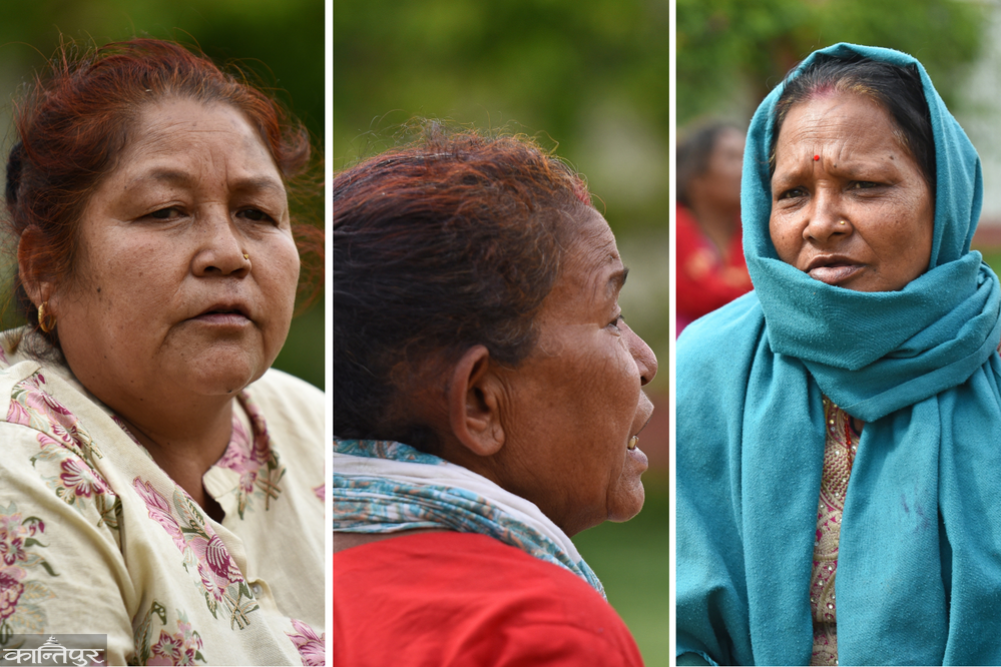
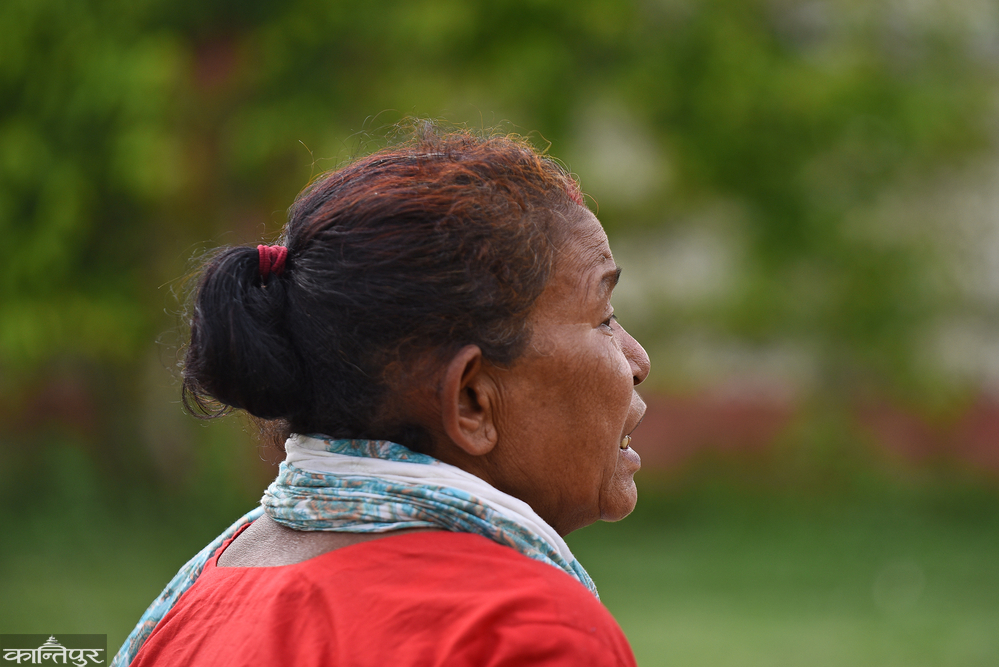
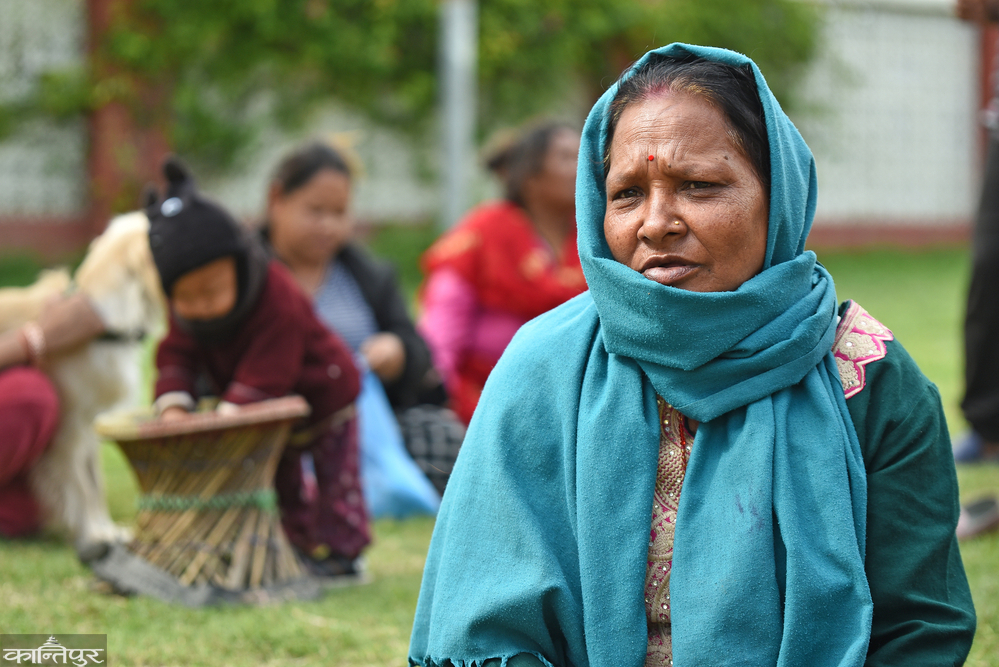
They were left homeless after the demolition of the squatter settlement in Thapathali on April 12. From there, they were taken to the holding center in Kirtipur and are terrified about their uncertain future.
We use Google Cloud Translation Services. Google requires we provide the following disclaimer relating to use of this service:
This service may contain translations powered by Google. Google disclaims all warranties related to the translations, expressed or implied, including any warranties of accuracy, reliability, and any implied warranties of merchantability, fitness for a particular purpose, and noninfringement.
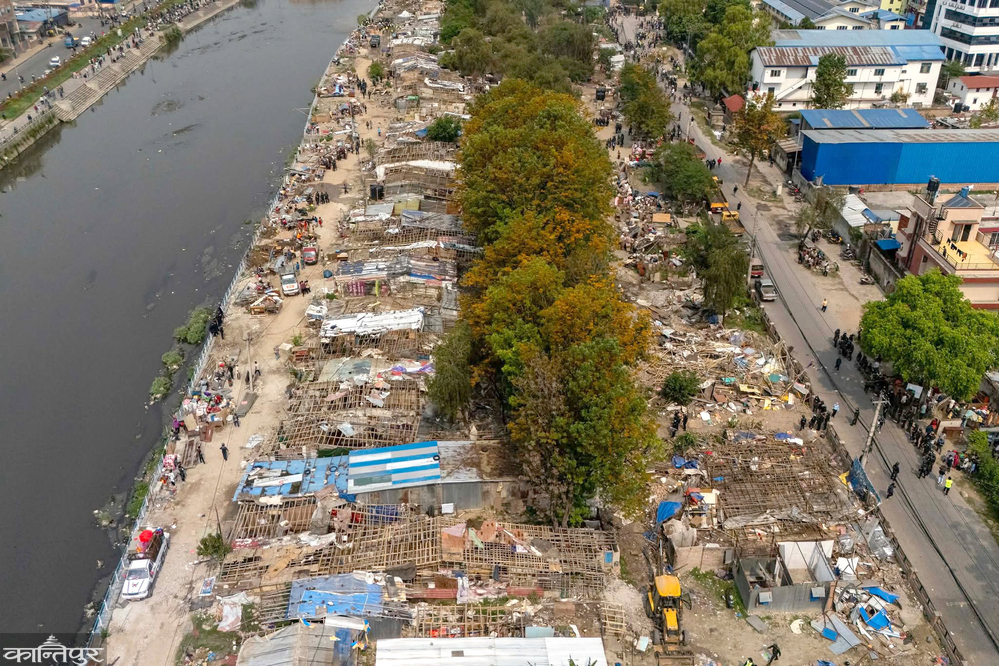
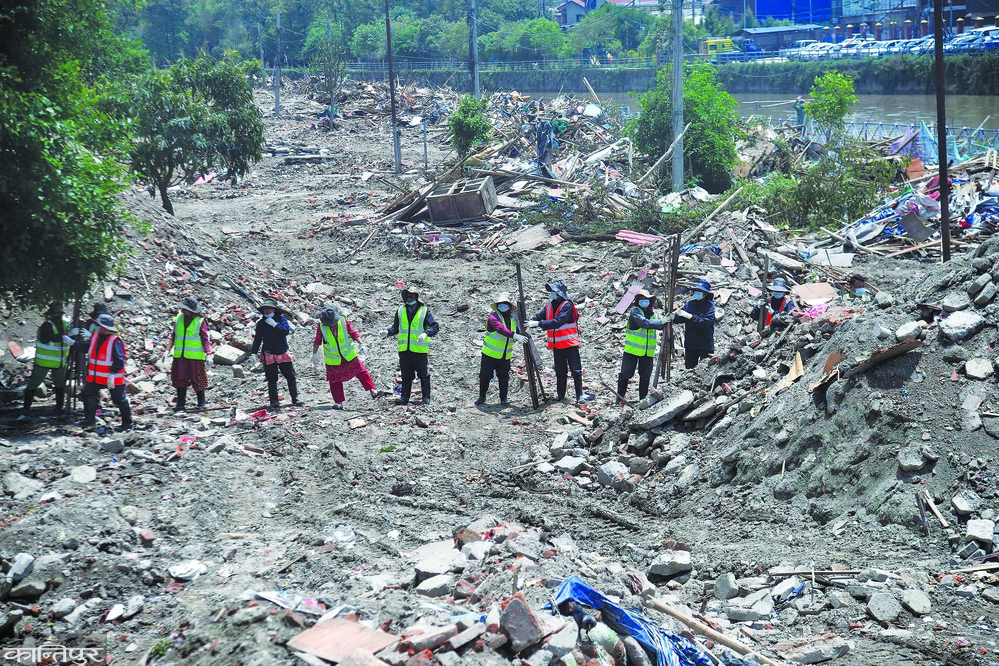
Prime Minister Balendra Shah was the mayor of Kathmandu Metropolitan City from 2079 Jestha 16 to 2082 Magh 4 (about 3 years and 7 months). From the beginning of his term, a campaign to seize the carts and goods of street vendors in the name of sidewalk management had begun. Just as carts were seized in the name of clearing sidewalks when he was the mayor, the demolition of squatter settlements began when he was the prime minister in the same way. Just 30 days after becoming prime minister, the government began a campaign to remove squatter settlements from Baisakh 12. 3,479 houses and huts located on the banks of rivers in the Kathmandu Valley were demolished. Some residents of these settlements are still living in the holding center in Kirtipur, the Red Cross building in Banepa, the Electricity Authority office in Bhaktapur, and the government residence in Ichangunarayan.
During the demolition of the settlement, the homes of those characters were also uprooted, whose carts were confiscated when Balendra Shah was the mayor of the metropolis. According to the statistics of the Metropolitan Police Force, during Balendra's tenure alone, the Metropolitan Police confiscated 1,309 carts used to trade on the sidewalk. Among those confiscated in this way are Pramila Rai, Kamali Uraun, Mithumaya Magar and Geeta Lama.
They built houses in the squatter settlement in Thapathali and used to do brisk business by placing carts in front of the maternity hospital in Thapathali until 2079 BS. In 2079 BS, they lost their goods including the carts while doing business. From last Baisakh 12, the government started demolishing the squatter settlement, saying that they would vacate the encroached land. In the same process, the homes of Pramila, Kamali and Mithumaya were also confiscated.
50-year-old Pramila had been living in the Sukumvasi settlement in Thapathali since 2063. She and 15 other women in the settlement had started the ‘Ama Group’ in 2069 with the aim of creating self-employment. Initially, they collected 100 rupees from each member. After a few months, they started collecting 500 rupees monthly. Pramila took a loan of 20,000 from the same group that same year. And bought a cart. She used to do brisk business on a cart on the side of the road in front of the maternity hospital. But after 10 years of doing business, she had to face harassment from the metropolis. In the elections of ‘079 Baisakh 31, we voted for Wallen.’ We thought that now it would be better for us. But from the rainy season of that year, the Metropolitan Police started chasing us,' says Pramila.
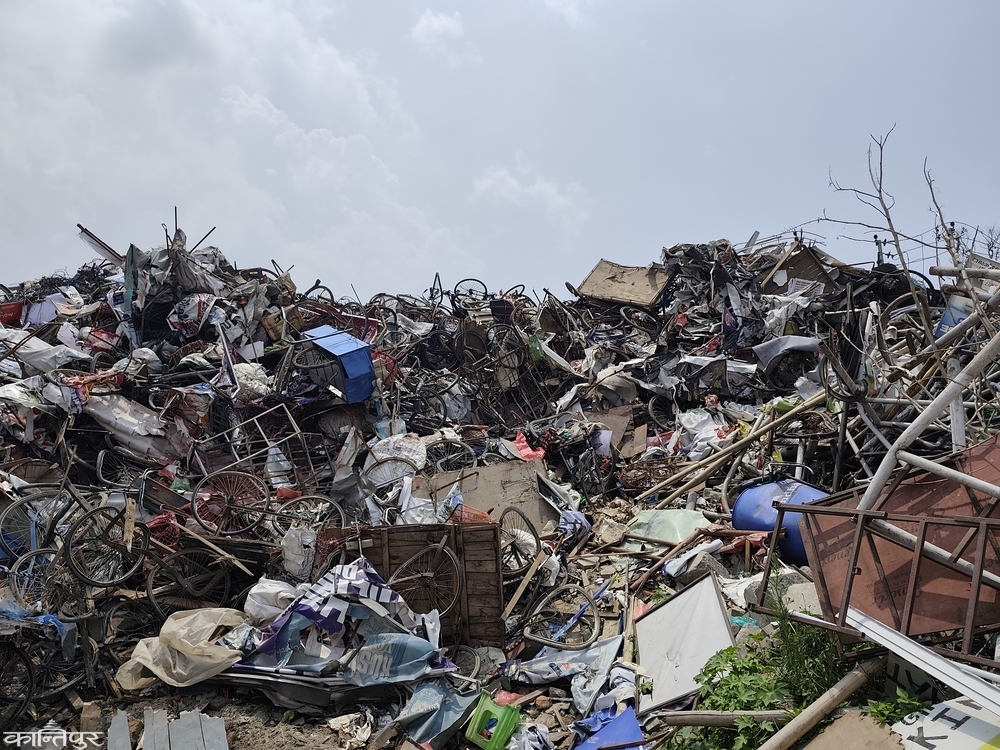 It was the month of Pus. She was doing business. Suddenly, the Metropolitan Police got out of the vehicle and started arresting her. She fought hard to protect the cart and its belongings. '15 people chased me, beat me up. And then they took the cart without giving it back,' says Pramila.
Pramila used to save five hundred a day from her brisk business. She used to support her house with that money. After that, even though she had to keep the table and the umbrella, she did not give up the business. A day later, the Metropolitan Police took it away again. In the beginning of 081 BS, Pramila took another loan of 20 thousand and bought a new cart. After that, she started doing business within the settlement. 'Once, the Metropolitan Police came to pick me up there too. We threw stones at them and chased them away,' says Pramila.
Balendra was appointed Prime Minister on Chaitra 14, 2002. Less than a month after becoming Prime Minister, on Baisakh 12, 2003, the government led by him used a bulldozer to clear the squatter settlements. This time, not only Pramila's cart but also her house was destroyed. 'The bulldozer first hit the cart. Then the house. We sat on a site against the wall. We could do nothing but cry,' she recounted the moment when she was helpless, 'We took out a cooking pot and a bedsheet. Everything else was buried.'
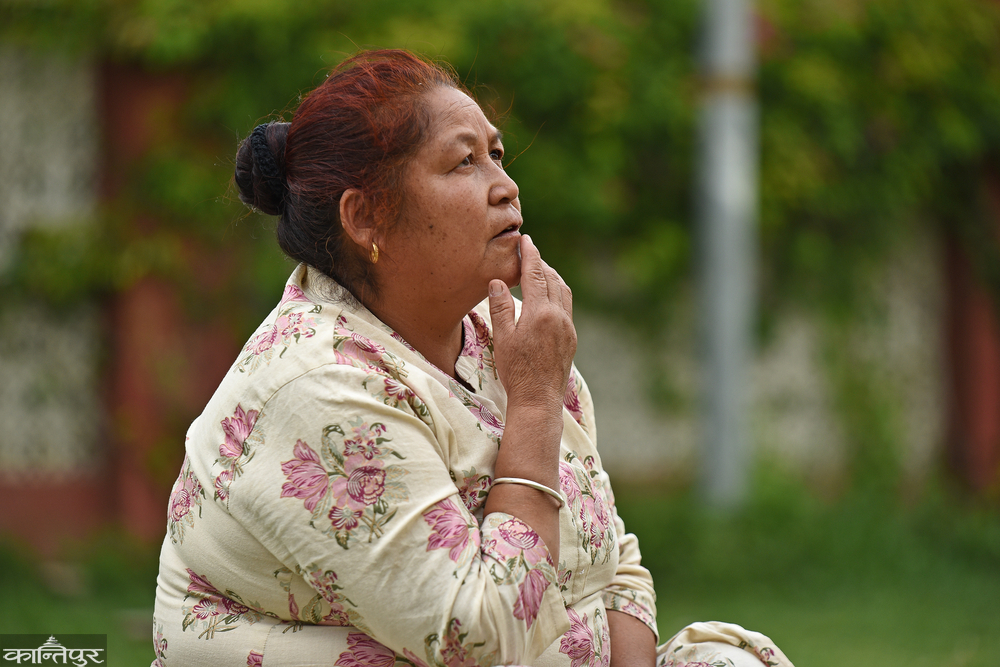 She is currently at the government-designated Radha Satsang Holding Center in Kirtipur. Both her legs are sick. She had an operation on one of her legs in June last year due to uric acid. ‘The doctor said that if you carry a lot of weight and move around, the bones will wear out. The soft flesh inside will also dry up. I shouldn’t do anything,’ she says.
She initially went to Bir Hospital for treatment after having problems with her legs. Bir told her that the treatment would cost 6 lakhs. ‘We can’t afford a thousand, how can we afford 6 lakhs,’ she says. ‘We decided not to have treatment,’ she says. ‘With the help of a foreign organization, she was treated at Anandavan.’ Pramila’s family consists of only her and her 27-year-old daughter.
Pramila was married to Hemraj Rai in 2050 BS. Hemraj was an orphan since childhood. After their marriage, Hemraj told her that he was raised by a peon who worked at the Teaching Hospital. Hemraj used to work as a labourer. In 2063 BS, he drowned while cleaning a well near Teaching. After Hemraj's death, Pramila started working as a labourer. 'I had to carry heavy loads in a three-story house. At that time, I never stopped working hard,' she says. As she grew older, Pramila started having problems with her knees. After she could no longer do heavy work, she started a business on a cart in 2069 BS. 'Now I have neither a house nor a job. I don't even know how the government will manage,' Pramila sounds worried.
The campaign by the Metropolitan Municipality to seize bicycles and carts on the sidewalks was intense until October-November 2007. At that time, there were repeated clashes between the municipal police and businessmen. After the 199-hour protest of activist 'E:' in October 2007, there was a lull for some time, but towards Magh/Phalgun, the use of force and the seizure of carts increased again.
50-year-old Kamali Uraun also had her cart seized in December 2007. She, who lives in a squatter settlement in Thapathali, bought a cart in December 2007 with a loan of 20,000 from a mother's group and started a brisk business in front of a maternity hospital. The Metropolitan Police also seized her cart and belongings in December 2007.
Then Kamali took another loan of 20 and bought another cart and started trading within the settlement. ‘Business grew due to the people coming and going to the hospital. But the city police also started coming into the settlement. We chased them away,’ she says.
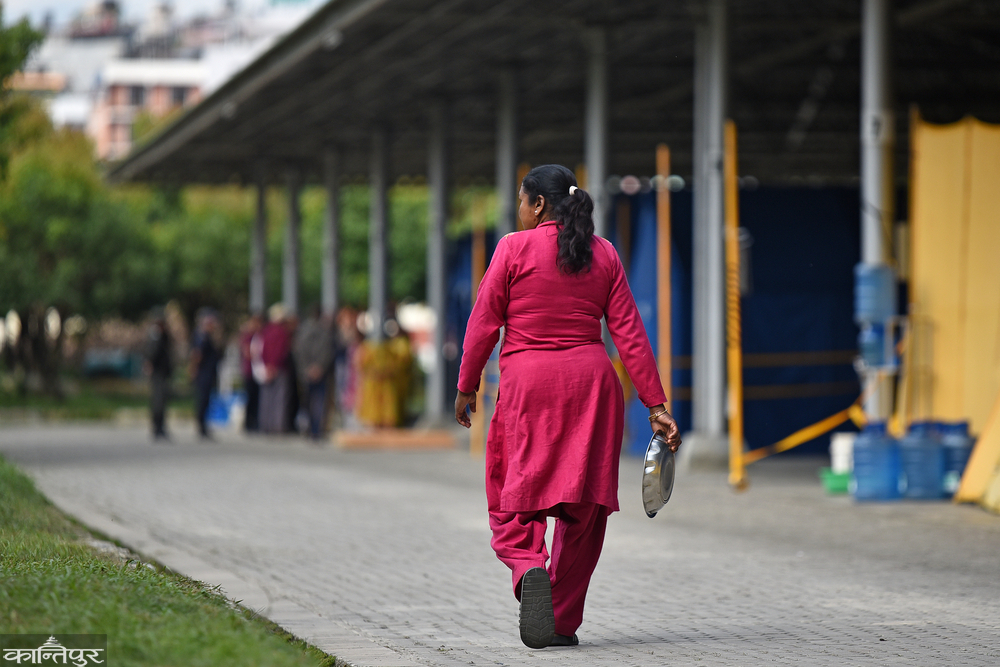 Kamali has three children including her husband. When her children were young, the government had demolished their house in 2069 BS when Baburam Bhattarai was the Prime Minister. Even then, they could not take out their clothes and bedding. ‘This time, if we could save our belongings and clothes, we would cook and eat in the open air.’ We covered the belongings in the riverbed. We cried a lot. Our daughters explained to us,’ she says.
When she was going to take out her belongings, her hand was cut by a piece of zinc. Kamali, showing her severed hand, says, ‘This wound is visible, everyone knows it. There is an even bigger wound inside the heart. That is not visible. No one knows.’
Kamali does not know why the government has wronged them. ‘Even if they had investigated properly and used a dozer, they would have understood. Not even that. Weren’t we the people of the country,’ she complains. Kamali’s family is unaware of where the government will take us and how it will manage it. She says, ‘They will take us to housing.’ She does not want a big palace. ‘Let them give us land even if it is just a piece. Instead, we can live happily even if we are in a tent,’ she says.
67-year-old Mithu Magar has a heart condition. After the demolition of her house in Thapathali, her illness has worsened. Mithu had been running a shop selling cigarettes, bindis and hot spices in a cart since 2068 BS. ‘I have been running it since my legs hurt. I used to sell cigarettes, bindis, khaini and hot spices in the cart,’ she says, showing her problem. Mithu’s cart, which she built with a loan of 20,000 from the Gyanjyoti Cooperative during the winter of 2079 BS, was confiscated by the Metropolitan City. Mithu added three carts in 15 years. The first cart was confiscated by the Metropolitan City. It was swept away when the Bagmati River flooded. Then, the cart, which she built with the loan, was buried with the house demolished by a dozer on Baisakh 12.
‘Sometimes I would earn a thousand, sometimes four or five hundred. Now I don’t have a cart. "Only 60,000 rupees of the loan taken by the cart are left," she says with a sad sigh. She came to Kathmandu from Rautahat for the first time when she was 30 years old. After a lot of struggle, they settled in the slums. Mithu thought that Balendra's government would bring happiness to her children this time too. But now she says that she has experienced more sorrow.
 Balendra had also launched a campaign to clear encroached land since he was the head of the Kathmandu Metropolitan City. The Kathmandu Metropolitan City had started the campaign by using a dozer for the first time on illegal structures built in the parking area of the Baneshwor Complex in Baneshwor on Bhadra 6, 2079. After that, incidents like the excavation of Kathmandu Mall, RB Complex, Alpha Beta and Tukucha Khola received a lot of attention. The Metropolitan City bulldozer also went to demolish the squatter settlement at that time. On Mangsir 12, 2079, the Metropolitan City team reached the Bagmati riverbank settlement in Thapathali for the first time with a bulldozer. At that time, the squatters pelted stones. The Metropolitan City was forced to retreat after 36 city police officers were injured in the stone-pelting.
Since last April 12, the government has been rapidly moving forward with a campaign to demolish the settlements across the country, saying that they will vacate encroached land. Under which, according to the data of the empowered Bagmati Civilization Integrated Development Committee, 3,479 houses and huts located on the banks of the river in the Kathmandu Valley have been demolished.
Houses in Gairigaun, Thapathali Slum Settlement, Manohara Slum Settlement, Balkhu River Bank Settlement, Bansighat Slum Settlement near Tripureshwor, Shankhamul Slum Settlement, Jungedhara Slum Settlement in Balaju, Slum Settlement in Kapan area and Dhobikhola Corridor Settlement in Anamnagar-Bijuli Bazaar area were demolished.
 Geeta Lama, 55, who lost her house in the same process, has a similar story. Geeta had a house in the Slum Settlement in Thapathali. She had also been living there since 2063. She used to work as a handyman. That work became more difficult with age. In 2077, a relative of hers, seeing Geeta's suffering, helped her with 10,000 rupees. Geeta added 10,000 to that money and bought a cart and a She bought ‘everything’. She used to carry goods in a cart from Thapathali to Shankhamul. A record would play on her cart saying ‘everything worth 10-20-30 rupees’. Little by little, she had added goods worth 30 thousand rupees to the cart. She did business confidently for two years. Things were going well. But since Balendra Shah was elected mayor of Kathmandu Metropolitan City, she also started feeling sad. ‘It was winter around 2079. One day, a municipal vehicle came. The municipal police came down and seized my cart. I had invested the money I earned and delivered goods worth 30 thousand rupees. That too was taken away along with the cart,’ she says. After that, she went back to her daily work.
Lama's family, who are currently living in the holding center in Kirtipur, used to live in Sarlahi. They became homeless after the flood of 2007 washed away their house and land. Then they came to Kathmandu in 2007. After coming to Kathmandu, her husband and wife used to work as laborers to raise their two children. Later, they started living in a small hut in the slums of Thapathali. 'Now, even that house they built with pain is gone,' says Geeta.
After the cart was confiscated, they repeatedly went to the Metropolitan Police Force in the hope that it would be returned. But it did not come back. Instead, it was auctioned. The practice of controlling sidewalks and confiscating carts was prevalent in Kathmandu Metropolitan City even before Balendra Shah became mayor, but during his tenure, 'zero tolerance' was adopted in its policy and implementation. During the time of mayors before Balen, there was a system where even if the city police confiscated carts, traders could get their vehicles back by paying a certain fine. But the executive meeting of 2074 Baisakh 12 had passed a policy of ‘not returning confiscated goods and auctioning them off’. After Balen Shah took over the leadership, he strictly implemented this policy and from Asad 2079, he started confiscating carts and bicycles of street traders without ever returning them.
 According to Bishnu Prasad Joshi, the chief of the Kathmandu Metropolitan Police Force, the rapid action had started since 2074 BS. ‘At that time, when Vidyasundar Shakya was the mayor, I was the chief of the Metropolitan Police. Before 2074 BS, it was customary to return goods by paying a fine, but that did not control encroachment. त्यसपछि हाम्रो कार्यपालिका र नगरसभाले पटक-पटक सूचना जारी गर्दा पनि अटेर गर्नेहरूको सामान जफत गर्ने र लिलामी प्रक्रियामा लैजाने निर्णय गर्याे । सोही निर्णय अनुसार हामीले दिनहुँ ठूलो संख्यामा सामान जफत गर्न थाल्यौँ, जसको परिणामस्वरूप अहिले अतिक्रमणको क्रम घटेर एकदमै न्यून अवस्थामा पुगेको छ,’ उनी भन्छन् ।
उनका अनुसार नगरपालिका ऐन २०४९ मा पनि ‘सार्वजनिक आवागमन र सार्वजनिक स्थानको प्रयोग गरेर कसैले पनि अतिक्रमण गर्न पाइँदैन’ भन्ने उल्लेख थियो । त्यसै कुरालाई पछि स्थानीय स्वायत्त शासन ऐन २०५५ र स्थानीय सरकार सञ्चालन ऐन २०७४ ले पनि आत्मसात् गर्दै अघि बढायो । ‘हाम्रो मुख्य उद्देश्य सार्वजनिक सम्पत्तिको संरक्षण गर्नु हो, जस्तै फुटपाथ पैदलयात्रीका लागि हो, सडक सवारी साधनका लागि हो र पार्कहरू सौन्दर्यकरणका लागि हुन्,’ उनी भन्छन् ।
फुटपाथमा व्यापार गर्नेहरूका लागि छुट्टै ठाउँ नछुट्याउने उनी बताउँछन् । ‘महानगरभित्र व्यवसायका लागि भनेर छुट्टै स्थान तोकिएको छैन र हामीसँग त्यस्तो थप भूमि पनि छैन । स्थानीय सरकारलाई कानुनले आवश्यकता अनुसार साप्ताहिक, पाक्षिक वा मासिक रूपमा हाट बजार लगाउने व्यवस्था गर्ने अधिकार दिएको छ । तर, अहिलेसम्म कतैबाट त्यस्तो माग नआएको र मौजुदा अवस्थाले नै परिपूर्ति भइरहेको देखिएकाले हामीले त्यतातिर थप ध्यान दिनु परेन,’ उनी भन्छन् ।
अधिकार सम्पन्न वाग्मती सभ्यता एकीकृत विकास समितिको आयोजना प्रमुख मचाकाजी श्रेष्ठका अनुसार उनीहरूको रेकर्डमा अहिलेसम्म २ हजार ६ सय ८ परिवार विस्थापितले नाम टिपाएका छन् । उनीहरू अहिले सरकारले तोकेको होल्डिङ सेन्टरमा बसिरहेका छन् ।
भूमि तथा कृषि अधिकार अभियानमा क्रियाशील अभियन्ता विश्वास नेपाली व्यवस्थित योजनाबिना उठीबास गराउँदा सुकुमवासी परिवार र उनीहरूका बालबालिकाको भविष्य नै अन्योलमा परेको बताउँछन् । ‘वैकल्पिक व्यवस्था नगरी उठीबास गराउँदा मानिसहरू ऋणमा डुब्ने र कतिपयले आत्महत्या समेत गर्ने परिस्थिति सिर्जना भएको छ, जुन उनीहरूको सम्मानपूर्वक बाँच्न पाउने मौलिक हकको हनन हो,’ नेपाली भन्छन्, ‘यो देश गरिब, मजदुर र भूमिहीनहरूको पनि हो र राज्य उनीहरूको अभिभावक हुनुपर्छ । त्यसैले उचित विकल्प र व्यवस्थित योजनाबिना कसैलाई पनि उठीबास गराइनु हुँदैन ।’
राज्यले अब उठीबास लगाइसकेका भूमीहिन सुकुमवासीहरूलाई बसोबासको व्यवस्थापनसँगै उनीहरूको क्षमता अनुसारको रोजगारी र आम्दानीको स्रोत सुनिश्चित गरिनुपर्ने उनी बताउँछन् । ‘राज्यले १५ दिनभित्र व्यवस्थापन गर्ने आश्वासन दिए पनि महिनौँ बित्दा समेत उचित आवास र जीविकोपार्जनको कुनै ठोस योजना छैन । यो अत्यन्तै पीडादायक कुरा हो,’ उनी भन्छन् ।
 काठमाडौं महानगरले फुटपाथका व्यापार, व्यवसाय हटाउँदा त्यसको गम्भीर असर अनौपचारिक अर्थतन्त्र र त्यसमा आश्रित वर्गमा परेको अर्थविद् केशव बस्याल बताउँछन् ।‘सडक व्यापारमा संलग्न समुदाय सबैभन्दा जोखिमपूर्ण अवस्थामा हुन्छ । आर्थिक संकटको समयमा यो वर्गलाई सबैभन्दा ठूलो असर पर्छ । राज्यले उनीहरूको रोजगारी गुम्ने स्थिति बनाउनु हुँदैन,’ उनी भन्छन् ।
उनीहरूले आफू मात्र नभई अरूलाई पनि रोजगारी दिइरहेका हुन्छन् । सडकबाट व्यापार हटाउँदा उनीहरू र उनीहरूमा आश्रित अरूको पनि रोजीरोटी खोसिने तर्क बस्यालको छ । उनका अनुसार नेपालमा ठूला उद्योग र कलकारखानाहरूले धेरै मानिसलाई रोजगारी दिन नसकिरहेको अवस्थामा स्वरोजगारका अवसरहरूजति बढी भयो, विदेश जाने दबाब त्यति नै कम हुने । त्यसकारण यस्ता व्यापार हटाउँदा मानिसहरू रोजगारीका लागि विदेशिन बाध्य हुन्छन् । ‘नेपालको सन्दर्भमा झण्डै ८४ प्रतिशत रोजगारी र ९० प्रतिशत जति उद्योग व्यवसाय अनौपचारिक क्षेत्रमै छ । यति ठूलो हिस्सा ओगटेको क्षेत्रलाई व्यवस्थापन नगरी हटाउनु व्यावहारिक हुँदैन,’ उनी भन्छन् ।
बस्यालका अनुसार सहरको सुन्दरता र सफाइका लागि हटाउन खोजिए पनि उनीहरूलाई व्यवस्थित ढंगले कुनै निश्चित ठाउँमा सार्नुपर्ने बताउँछन्, जहाँ मानिसहरूको पहुँच होस् र सामानहरू सस्तोमा पाइने वातावरण बनोस् । ‘राज्य सबैको अभिभावक हुनुपर्छ । विशेष गरी यस्तो जोखिममा रहेको वर्गको रोजगारी संरक्षण गर्दै उनीहरूलाई विस्थापन हैन औपचारिक बनाउनेतर्फ लाग्नुपर्छ,’ उनी भन्छन् ।