The Fair Square report states, ”Foreign workers are forced to work long hours in extreme heat, are kept in unsafe housing, are not given adequate rest and food, and are not properly compensated in the event of an accident or death.”
We use Google Cloud Translation Services. Google requires we provide the following disclaimer relating to use of this service:
This service may contain translations powered by Google. Google disclaims all warranties related to the translations, expressed or implied, including any warranties of accuracy, reliability, and any implied warranties of merchantability, fitness for a particular purpose, and noninfringement.
An international study report has been made public that migrant workers, including Nepalis, working in projects of Saudi Arabia's national oil company Saudi Aramco are at serious risk.
According to a recent report by Fair Square, a London-based organization that researches the human rights of migrant workers, foreign workers, including Nepalis, working in Saudi Aramco projects are forced to work for long hours in extreme heat, are kept in unsafe housing, are not given adequate rest and food, and are not properly compensated even in the event of an accident or death.
It is among the world's fourth largest companies in terms of revenue. The company has the world's second-largest proven crude oil reserves and is still considered the world's largest oil exporter. Aramco is owned by the Saudi government and the Public Investment Fund by about 98 percent. Aramco's income from oil sales is considered to be about two-thirds of the Saudi government's total revenue.
According to 'The Wall Street Journal', Aramco has more than 10,000 supplier companies in Saudi Arabia alone. Workers are recruited through various subcontractors under these companies. The report states that due to this complex structure, it is difficult to determine responsibility for the exploitation of workers. About 20 percent of Nepali workers working in the construction sector in Saudi Arabia are employed in these projects.
Workers working in various Aramco projects have said that they have to work for 12 to 14 hours a day in temperatures exceeding 50 degrees Celsius. The report states that many workers faint at work due to the heat. Kamal (name changed), 27, who arrived in Saudi Arabia in 2023, said that he went there expecting to get work in a hotel. He had spent 150,000 rupees for that. However, after reaching Saudi Arabia, he was assigned to a construction project related to Aramco's gas plant. 'We thought that we would get good work after going abroad.' However, the reality was different when we got there. Our passports were confiscated immediately upon arrival. "We were forced to work for 12 hours a day in the scorching sun," he said. "I saw many of our colleagues collapse at work due to the heat. I found it very difficult to work outside in the heat. I left Saudi Arabia after working for 10 months."
Temperatures above 50 degrees Celsius for two months of the year 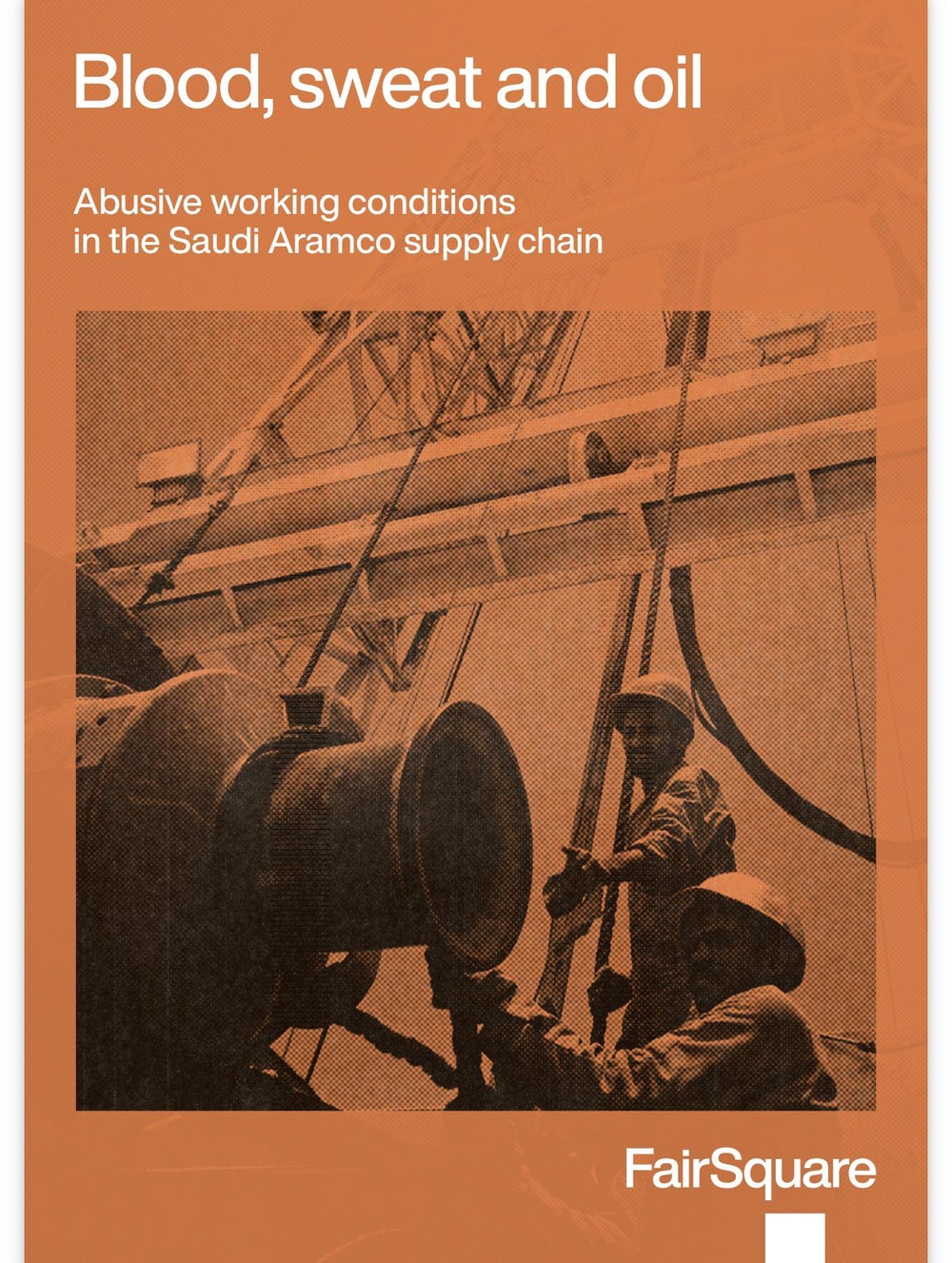
According to workers working on Aramco's $21 billion 'Margin Increment' project, the temperature here reaches above 50 degrees Celsius in June and July. Many workers faint due to lack of water and extreme heat. "Many people would collapse from the heat. Their body parts could not function," he said.
According to another Nepali worker working on the project in Jizan, a Nepali colleague fainted while walking. "A vehicle came, sprayed water on him and took him to an air-conditioned room." If someone faints, they are left alone in the room,' he said, 'anything can happen there.'
According to him, work stops only when the temperature reaches above 50 degrees. Apart from that, workers are forced to work even if it is in the shade. Prasad (name changed), 40, from Gorkha, had worked for 13 years on a pipeline project related to a gas plant in Dammam. According to him, even though the security officers told them to rest, the foremen would pressure them to work continuously. He said that even though the security officers told them to rest for 15 minutes after working for 1 hour, in practice it was not possible.
'The safety people would say, 'Don't work continuously, work for an hour and rest for 15 minutes.' But, the foremen would force them to work. So they had to work continuously,' he said, 'After working in the scorching heat for a long time, my health deteriorated. I have kidney disease.’
Even in such a serious condition, his employer did not contact him even once after his return. There was no discussion about compensation. ‘At that time, my health was so bad that I thought I should save my life first. I thought we should think about compensation later,’ he said. ‘Aramco is the richest company in Saudi Arabia. It became rich by working with workers like us. But today, when I was sick, it did nothing.’
Vishal (name changed) from Siraha was a driver in a fuel transportation company affiliated with Aramco. According to him, driving tankers for 18-19 hours a day was normal. According to him, the company had no interest in the condition and safety of the drivers.
‘Nobody cared whether we ate food or not, whether we got stuck in traffic or not. Nobody cared,’ he said. ‘We did not have weekly holidays.’ We worked for 30 days straight. There were no public holidays.'
He said that driving a tanker full of fuel was a very risky job in itself. 'That job is like walking around with a bomb,' he said.
The report also stated that the living conditions of the workers are deplorable. Many workers are forced to live in containers. They complain of getting electrocuted when it rains, toilets are not cleaned and food is of poor quality. The most serious issue is that the families of workers who die or become seriously ill during work do not get justice, the report states. Out of the six cases studied, only one family was found to have received proper compensation. The wife of a worker who was paralyzed during work said, 'The company did not provide any help. We do not have money for treatment.'
The wife of another deceased worker complained that the cause of her husband's death was not even clearly explained. The report states that although Saudi labor law provides for compensation in the event of death or permanent disability while working, the process is complicated, leaving many families deprived of justice.
Fair Square has also raised questions about international sports organizations that have partnered with Aramco. Fair Square director Nick McGeehan said that FIFA has once again raised questions about its responsibility to ensure the safety of workers. “Aramco is the commercial engine of Saudi Arabia. It has both a responsibility and an impact to ensure the safety of the workers it depends on,” he said. “These findings raise serious concerns about FIFA’s increasingly close relationship with Saudi Arabia, not just with Aramco, but with Saudi Arabia as a whole.”
Fair Square has sought a response from Aramco on these issues, but has not yet received a response. Aramco employs more than 75,000 employees. In addition, there are millions of low-paid workers involved in various projects. Which is being implemented through subsidiaries, partnerships and joint ventures of more than 50 countries.
Out of the 18.2 million workers employed in Saudi Arabia by mid-2025, about 14.1 million are foreign workers. This is 77 percent of the total labor force. In 2019, the number of foreign workers was 9.4 million. Most of these South Asian workers are forced to work for low wages. In 2024, about 2.47 million foreign male workers were employed in the construction sector alone. There are four hundred thousand Nepalis in Saudi Arabia.
Related news
Nepal-Saudi labor agreement signed, more opportunities for Nepali workers
469 stranded in Saudi claim insurance to get their withheld salaries and tickets
Nepali workers leaving high positions in Saudi Arabia
Insurance payments to workers who have not received salaries in Saudi Arabia
‘Self-deportation platform’ for undocumented workers in Saudi Arabia

