Digital transformation projects, considered a cornerstone of economic growth, have been mired in a vortex of weaknesses in need identification, policy and structural ambiguity, cumbersome procurement processes, disputes, irregularities, and design flaws.
We use Google Cloud Translation Services. Google requires we provide the following disclaimer relating to use of this service:
This service may contain translations powered by Google. Google disclaims all warranties related to the translations, expressed or implied, including any warranties of accuracy, reliability, and any implied warranties of merchantability, fitness for a particular purpose, and noninfringement.
The Nepal government has signed a loan agreement worth around 13 billion rupees ($90 million) with the World Bank and the Asian Development Bank for the ‘Nepal Digital Transformation Project’. The project promises to strengthen secure digital infrastructure and data centers, provide efficient online services to 7 million citizens from public bodies within the next 5 years, and reduce government work time from 6 hours to 2 hours.
However, such promises are not new to Nepal. Earlier, initiatives like the Digital Nepal Acceleration Project (DNA) and the Digital Nepal Project (DNP) were canceled without making any progress. The government had to return 17 billion rupees of the DNA project to the World Bank, but no one publicly took responsibility for it.
Now that the DNA itself has been approved for a new loan with a revised name and programs, questions have been raised in the parliament and social media: What is really different this time? Why was the old loan returned? Or, was there a review of the reasons for the failure of the previous project? Rastriya Prajatantra Party MP Khushbu Oli has raised a question in Parliament, asking whether the Nepal government has requested this loan or whether it has been proposed by the donor agency. ‘Which parliamentary committee, which policy debate and which need prioritization assessment was used to decide on taking such a large loan?’ She asked.

The government has signed an agreement to take a loan of 50 million US dollars from the World Bank and 40 million US dollars from the Asian Development Bank for the digital transformation project. Since it is a concessional loan, the interest rate is 1.0 percent for the first 8 years and 1.5 percent per annum for the remaining period, and the loan must be repaid in 32 years, i.e. by 2114 BS. The World Bank has also agreed to provide a loan at 1.5 percent interest for a period of 20 years, including a 5-year grace period. The main goal of this new project is to create basic digital public infrastructure (DPI). In the previous DNA project, special emphasis was given to connectivity or digital foundation expansion and digital literacy programs, but it failed.
Now, a loan agreement has been signed with a donor agency for a program of the same nature by changing some words, processes, and expanding the area. Experts suggest that such projects that failed in the past should be reviewed and improved based on that before implementing new programs. Experts point out that the failure of the DNA project highlights Nepal's administrative inaction and conflicts between government agencies. 'The project was stalled due to the tendency of one ministry to blame another, lack of inter-agency coordination, and non-participation of stakeholders,' says digital economy expert Vivek Rana. 'The government was also confused by political demands and pressure from various provinces regarding the DNA project.' According to him, no bank gives loans on its own, they give them only when there is a demand.
However, his analysis is that asking for money on its own and getting confused in implementation shows the weakness of the government's debt management and need identification . 'Now, learning from past failures, the new project should be taken forward as a large-scale digital economic reform project, but even now it is being treated like a normal IT project,' he said, 'Nepal should do such projects whether with its own money or with loans . However, working without a strategic basis like Digital Nepal Framework 2.0 risks working piecemeal like in the past and not getting integrated results .'
As expert Rana said, there are still about a dozen projects that have investment from donor agencies . However, the progress and implementation of those projects are not satisfactory . Nepal ranks 119th in the United Nations' e-Governance Development Index . We are lagging behind regional neighbors like Bangladesh and India. In the context of Nepal, the series of digital project failures seems to be old.
Nepal had started its efforts for digital socio-economic transformation by creating an e-governance master plan since 2007. Donor agencies have also been supporting this government campaign through loans and grants. However, digital transformation projects, which are considered the cornerstone of tomorrow's electronic governance and economic growth, are not succeeding. These projects have been mired in a whirlwind of policy and structural ambiguity, cumbersome procurement processes, disputes, irregularities, and design-related complaints. With the change of government, the institutional mechanism for implementing digital projects has changed, and this year's 'Nepal Digital Transformation Project' has once again become a source of confusion.
But now there is no confusion, according to the World Bank and government officials. The ‘Project Appraisal Document’ states that the government should prepare project operating regulations in collaboration with the World Bank and establish a project management unit for the disbursement of funds. ‘We have prepared the Digital Transformation Project by learning lessons not only from the DNA Project, but also from similar projects around the world,’ World Bank Country Director David Sislen said in an email interview with Kantipur. ‘Our self-assessment has shown that digital transformation requires inclusiveness and trust in the project, as well as a strong policy foundation, user-friendly design, institutional and managerial capacity. We have learned these things and included them in the new project.’
David said that some specific structural and strategic changes have been made in the Digital Transformation Project and its implementation process to avoid repeating past failures and weaknesses. ‘In the previous DNA project, almost 50 percent of the total investment was allocated for expanding broadband internet in rural and remote areas, but in this new project, the connectivity aspect has been removed and more focused on public service delivery,’ he says. ‘This time, by absorbing the vision of the new government and past lessons, the emphasis has been placed on building basic digital public infrastructure. Under this, investment will be made in areas such as national identity cards, citizen apps, data exchange platforms, data hosting, cyber security and data security.’
The World Bank Board Group in Washington, DC, approved the decision to provide a loan of $50 million to Nepal on January 10. The Balendra Shah-led government decided to accept the concessional loan in the cabinet meeting on March 10. The Ministry of Finance and the World Bank signed the agreement electronically in the second week of April, while the agreement was signed with the ADB on April 14 through an internal program.
While implementing these programs, it is necessary to look at the details of the failure of the canceled DNA. The World Bank has stated in its 'Note on Cancelled Operations' report about the reasons for the failure to implement the DNA. Even after 18 months of project approval, no progress has been made in the implementation and not a single rupee has been spent. The initial agreement was to provide a grant to the Nepal Telecommunication Authority for broadband expansion. However, after the general elections of Mangsir 2079, the government with Pushpa Kamal Dahal as Prime Minister and Bishnu Prasad Poudel as Finance Minister insisted on providing a loan to the Authority, not a grant. The dispute escalated when the Authority refused to take the loan, saying that a grant was required as per the old agreement.
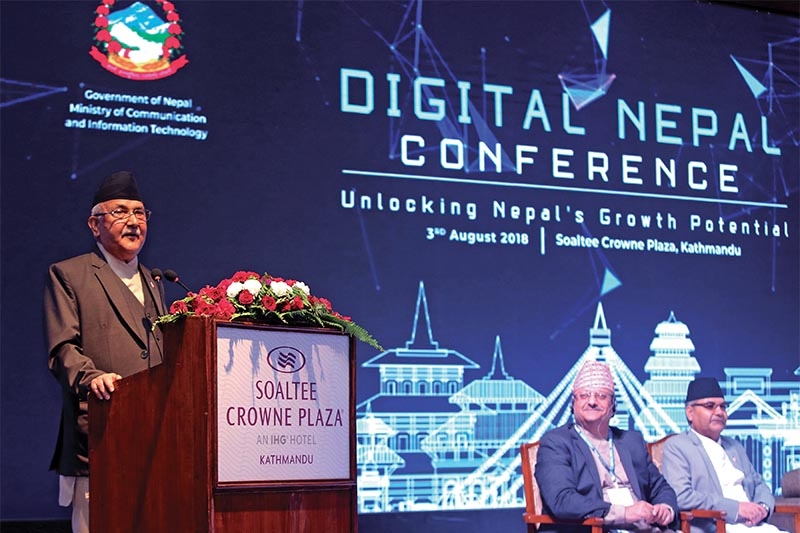
The agreement was signed on Asoj 2, 2079 by the then Finance Secretary Krishnahari Pushkar and Faris H. Hadad-Zervos, Country Director for Maldives, Nepal and Sri Lanka on behalf of the World Bank. The agreement signed on the same day between Hadad-Zervos and the then chairman of the Nepal Telecommunications Authority, Purushottam Khanal, appears to mention a ‘loan’ (credit) rather than a ‘grant’. ‘The DNA project was foreign aid in the form of a loan, but the structure was prepared as a grant to secure the expansion of broadband access through a subsidiary agreement between the Ministry of Finance and the Nepal Telecommunications Authority,’ said the World Bank’s Sislen.
Meanwhile, after a long dispute and confusion between government agencies over whether it was a loan or a grant, the Ministry of Finance did not include a budget heading for the project in the Budget System (LMBIS) for the fiscal year 2080/81. The World Bank believes that the Ministry of Communications was unable to start any process of selecting consultants or purchasing goods due to the lack of a budget heading. Dhaniram Sharma, Joint Secretary of the International Economic Relations Division of the Ministry of Finance, also blames the flawed design and modality dispute between the implementing agencies as the main reasons for the project’s cancellation.
‘The problem with the previous project was the design itself, it was seen that not enough attention was paid to how the funds would flow during the design,’ he said, ‘The Telecommunications Authority, which was entrusted with the responsibility of broadband expansion, was itself resourceful and had billions of rupees in its Rural Telecommunications Development Fund. In such a situation, it was not practical for the government to ask for a loan and invest again. The project was stopped due to the complexity of the Authority not wanting to take a loan and the government not being able to give it a grant.’ The design of the project involved the direct involvement and coordination of the World Bank representative, the Information Technology Division of the then Ministry of Communications and Information Technology, the Telecommunications Authority, the Ministry of Finance, and others.
Rekha Sharma, who became the Minister of Communications at the time the controversy flared, says that she did not agree with the Authority on the issue of taking a loan for laying fiber under the project. ‘Donor agencies pressure us to spend money only on their terms, due to which the real needs of our country are overlooked,’ she said, ‘The same thing happened in this case too.’ They used to emphasize broadband expansion, which the Telecommunications Authority was doing from its own rural fund. Forgetting the dispute over loans or grants, the question arises as to why the Authority agreed to the broadband expansion work being done from the Rural Telecommunications Fund.
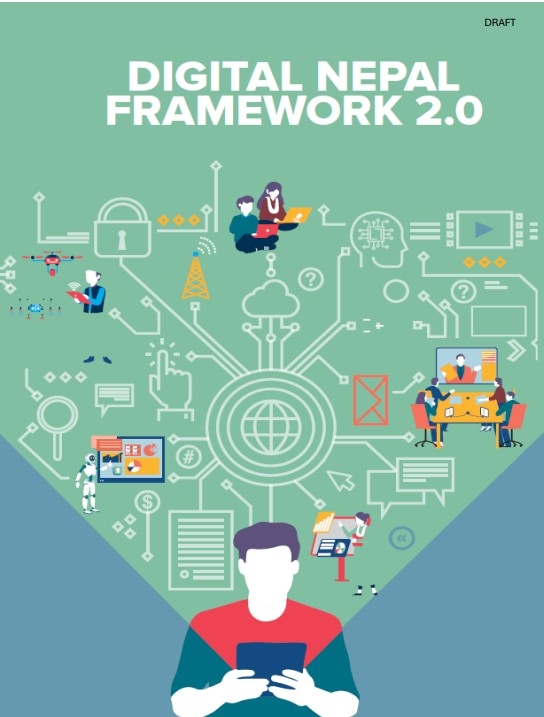
In the context of the lack of inter-agency coordination and disputes over the implementation structure that led to the entire DNA project being scrapped, some are skeptical that the same fate will not be repeated this time. Digital economy expert Rana says that accepting new loans without clarity on the status of the guiding principle of the Digital Transformation Project, ‘Digital Nepal Framework 2.0’, has raised concerns about repeating old mistakes. The ‘Digital Nepal Framework 2.0’, which was made public for opinions and suggestions in Chaitra 2081, is still in the draft stage and has not been approved by the Council of Ministers. Reports and ‘Project Appraisal Documents’ available on the websites of the World Bank and ADB state that the current Digital Transformation Project has been designed to be compatible with the old Digital Nepal Framework. The Digital Nepal Framework of 2076 BS was said to be outdated and was shelved by making a 2.0 version of it.
Joint Secretary of the Information Technology Division of the Ministry of Communications, Adesh Khadka, said that the Transformation Project has not been designed to be compatible with the old Digital Nepal Framework but with 2.0, the e-Governance Blueprint and the 16th Plan. “The DNF 2.0 as a strategic document is in the process of being approved by the cabinet and the project work will proceed according to the same new thinking and vision,” he said. “The only delay in approving 2.0 is due to the change in government.”
ADB’s written response to Kantipur states that the transformation project has been designed in line with the priorities set by the government for Nepal’s investment and reforms in the digital sector. “The Government of Nepal has incorporated its digital ambitions into the current Digital Nepal Framework, e-Governance Blueprint, Sixteenth Periodic Plan, and National Integrated Social Security Framework,” the ADB said. “This project will help advance the government’s digital transformation agenda and provide citizens and businesses with access to high-quality digital services.”
Although the digital transformation project was initially planned to be implemented through the then Ministry of Communications and Information Technology, Department of Information Technology, and Department of National Identity Cards and Registration, the government is preparing to reorganize the ministry’s work and bring the technology component under the Prime Minister’s Office. Joint Secretary Khadka informed that due to this reshuffle, the digital transformation project is currently on hold. ‘Due to the change in the division of labor regulations, information technology-related tasks have been shifted from the Ministry of Communications to the Office of the Prime Minister and the Council of Ministers,’ he said. ‘Due to this structural change, the project has been put on hold. More information will be known only after the Ministry of Finance and donor agencies (World Bank/ADB) sit down and work out.’
Experts suggest integrating both laws and structures at this time. ‘It is necessary to integrate many scattered laws to work in the digital sector,’ says former Communications Minister Sharma. ‘Without a strong legal basis and a clear implementation plan, taking loans alone cannot work, and there is a risk that the country will only have to pay back the debt. There is no need to work but the money borrowed has to be repaid.’
At the recently concluded Kantipur Economic Summit, Finance Minister Swarnim Wagle had said that digital projects would be taken forward not as a technical matter but as the main means of reaping the benefits of good governance and restructuring the economy. “The government plans to create a powerful IT authority under the Prime Minister’s Office and consolidate all work related to information technology there,” he said. “The old culture of government agencies working separately should be broken and mutual coordination and inter-linkage of data should be considered as the core principle. For example, an environment will be created for the Passport Department to directly obtain data from the National Identity Card.”
Based on the feedback from government officials, this change in the institutional mechanism and the process of building a new structure have once again added ‘transitional’ confusion to the project implementation. Government officials admit that since the current institutional framework is different from what was previously agreed upon with the donor agency, there is a risk that it will take some time to manage it and make it compatible with the current system. “However, once an empowered body is established, coordination between all ministries will be more effective and the project will gain momentum compared to the past,” is determined by Dhani Ram Sharma, Joint Secretary, International Economic Relations Division, Ministry of Finance. उनका अनुसार अहिले परियोजना कार्यान्वयनको प्रारम्भिक तयारीमा छ । यसका लागि परियोजना व्यवस्थापन एकाइ र प्रोजेक्ट अफिस खडा गर्ने, विभिन्न विज्ञहरू नियुक्त गर्ने र कार्यविधिहरू बनाउने काम सुरु भइसकेको छ ।
डिजिटल अर्थतन्त्र विज्ञ दीप्त शाहले पनि डिजिटल रूपान्तरणका परियोजना विभिन्न निकायसँग जोडिने विषय भएकाले कुनै एउटा मन्त्रालयमा सीमित गर्नुभन्दा प्रधानमन्त्री कार्यालयमातहतकै अधिकारसम्पन्न र प्राविधिक रूपमा सक्षम एकाइमा राख्दा कार्यान्वयन सहज हुने अपेक्षा गर्छन् ।
शाहका अनुसार राजनीतिक इच्छाशक्तिलाई नतिजामा बदल्न सक्यो भने यो नयाँ परियोजनाबाट नेपालले ठूलो फाइदा लिन सक्छ । ‘विश्व बैंक र एडीबीबाट लिइने ऋण स्थानीय बैंक वा वित्तीय संस्थासँग लिइने ऋणजस्तो होइन,’ उनले भने, ‘यस्ता ऋण अत्यधिक सहुलियतपूर्ण र न्यून ब्याजदरका हुन्छन् । यस्ता ऋण प्याकेजमा ठूलो मात्रामा प्राविधिक सहायता पनि मिसिएर आउने भएकाले ऋणसमेत अनुदानसरह नै हुन पुग्छ । यसले परियोजनाको सम्भाव्यता अध्ययन र आवश्यक सामग्री खरिदमा मद्दत पुर्याउँछ ।’
नेपालका लागि अहिले डिजिटल एजेन्डा सबैभन्दा महत्त्वपूर्ण पक्ष भएको र आज बनाइने डिजिटल पूर्वाधार नै भोलिको विद्युतीय सुशासन र आर्थिक वृद्धिको आधार भएकाले यसमा गम्भीर हुनुपर्ने शाह औंल्याउँछन् । ‘दातृ निकायहरूलाई नेपालको वास्तविक आवश्यकता थाहा नहुन सक्छ, हामीले नै उनीहरूलाई बुझाएर आफ्नो प्राथमिकताका आधारमा बार्गेनिङ गर्ने हो,’ शाह भन्छन्, ‘दातृ निकायहरूले हाम्रा सबै आवश्यकता बुझिदिन्छन् भनेर आशा गर्न मिल्दैन । ऋण प्याकेजहरू बनाउँदा वा सम्झौता गर्दा हामीलाई यी चिजहरू चाहिन्छन् र यी चाहिँदैनन् भनेर स्पष्ट रूपमा बोल्न सक्ने क्षमतावान् टोली आवश्यक छ । यस्तो टोलीमा बिगर पिक्चर बुझेको र दातृ निकायको काम गर्ने शैली एवं उनीहरूको इन्सेन्टिभ बुझेका मानिस हुनुपर्छ ।’
डिजिटल रूपान्तरणको परियोजनामा नेपाल पछि परिरहँदा अन्य देशको उदाहरण अध्ययन गर्न आवश्यक छ । विश्वव्यापी रूपमा इस्टोनिया, युक्रेन र भारतजस्ता देशहरूले डिजिटल सार्वजनिक पूर्वाधारको सफल प्रयोगमार्फत सार्वजनिक सेवा प्रवाहमा व्यापक लागत बचत र कुशलता हासिल गरेका छन् । श्रीलंकाले ‘गभटेक एजेन्सी’ नामक तटस्थ प्राविधिक संस्था खडा गरी डिजिटल रूपान्तरणलाई गति दिएको छ । विश्व बैंककै सहयोगमा सञ्चालित सो डिजिटल ट्रान्सफरमेसन प्रोजेक्टअन्तर्गत श्रीलंकाले विशिष्ट मोडेल अपनाएको हो । यो सरकारी भए पनि स्वायत्त निकायका रूपमा बजारबाट उच्च दक्ष प्राविधिक जनशक्ति भर्ती गर्ने, सबै सरकारी निकायका लागि डिजिटल प्लाटफर्म डिजाइन एवं व्यवस्थापन गर्ने जिम्मा पाएको छ । विश्व बैंकको वित्तीय सहयोगमा यसले राष्ट्रिय डिजिटल परिचयपत्र, केन्द्रीकृत डेटा एक्सचेन्ज प्लाटफर्म लगायत निर्माण गरेको छ ।
मलेसियाले प्रधानमन्त्री कार्यालयबाटै ‘एमडेक’ जस्तो शक्तिशाली निकाय इन्क्युबेट गरेर यसलाई छुट्टै मन्त्रालयको तहसम्म पुर्याएको उदाहरण छ । भारतले डिजिटल पूर्वाधार विकासमा सार्वजनिक–निजी साझेदारी मोडेल अपनाएर सरकारको न्यून लगानीमा निजी क्षेत्रलाई प्रभावकारी रूपमा परिचालन गरेको छ । ‘विश्व बैंक वा दातृ निकायका एउटै प्रकृतिका परियोजना अन्य देशमा सफल हुँदा नेपालमा किन नतिजा शून्य छ ?’ शाह प्रश्न गर्छन्, ‘जुन टोलीले श्रीलंका, जर्जिया, इजिप्ट र दक्षिण अफ्रिकाजस्ता देशहरूमा गजबको सफलता हासिल गरे, त्यही टोलीले नेपालमा काम गर्दा परियोजना नै रद्द भएका छन् । यसको अर्थ, परियोजनाको सफलता दातृ निकायभन्दा पनि ऋण लिने देशको कार्यान्वयन क्षमतामा बढी निर्भर हुन्छ ।’
नेपालको सार्वजनिक क्षेत्रका कयौँ आईटी वा डिजिटल परियोजनाहरू विवाद, अनियमितता र असफलताको मारमा पर्दै आएका छन् । नेपालको डिजिटल बैंकिङ र सरकारी कारोबारलाई एकीकृत गर्ने भनिएको राष्ट्रिय भुक्तानी गेटवे, अवैध र चोरीका मोबाइल नियन्त्रण गर्ने भन्दै लागू गर्न खोजिएको मोबाइल डिभाइस म्यानेजमेन्ट सिस्टम, यातायात व्यवस्था विभागको स्मार्ट ड्राइभिङ लाइसेन्स र प्रिन्टर खरिद, फाइभजी विस्तार, विद्यालयहरूमा आईसीटी ल्याब परियोजना विवाद, भ्रष्टाचार र असफलताको सूचीमा छन् ।
‘सन् २००२ डिसेम्बरमा विश्व बैंकको बोर्डबाट स्वीकृत भएको सेन्ट्रल बैंक रिफर्म प्रोग्रामको लागि ३०.१ मिलियन डलर स्वीकृत गरिएको थियो तर त्यो रकम नेपालले उपयोग गर्न नसकेपछि किर्गिस्तानतर्फ मोडिएको थियो,’ विज्ञ राणा सम्झन्छन्, ‘सरकारी निकायहरूले एप्लिकेसन र हार्डवेयर थुपार्ने तर संस्थागत रूपान्तरण वा बिहेभियर चेन्जमा ध्यान नदिने प्रवृत्तिका कारण नेपालले आजसम्म पनि डिजिटल लगानीबाट वास्तविक प्रतिफल पाउन सकेको छैन ।’
‘भर्खरै द्वन्द्वबाट निस्किएको बेला निरन्तरको राजनीतिक अस्थिरता, नीतिगत तहमा ई–गभर्नेन्सलाई प्राथमिकता दिने इच्छाशक्तिको कमी, सीमित इन्टरनेट पहुँच, लोडसेडिङ र नागरिकहरूमा प्रविधिको ज्ञान कमजोर हुनु यो परियोजनाका मुख्य चुनौती हुन्,’ तत्कालीन सूचना प्रविधि उच्चस्तरीय आयोगका सदस्य सचिव मदन प्रसाद परियारले लेखेको अनुसन्धान पत्रमा भनिएको छ ।
पहिले कार्यान्वयनमा प्रश्न रहेका र नयाँ परियोजनाको परिकल्पना भने आकर्षक देखिन्छ । अहिलेको डिजिटल ट्रान्सफरमेसन परियोजनामार्फत निर्माण गरिने सरकारी प्लाटफर्महरूलाई एकीकृत र पुनः प्रयोग गर्न मिल्ने बनाइने र यसले निजी क्षेत्रको लगानीमा दोहोरोपन नहुने गरी पूरकको भूमिका खेल्ने विश्व बैंकले जनाएको छ । नागरिकको गोपनीयता सुरक्षित गर्न परियोजनामा ‘प्राइभेसी बाई डिजाइन’ को अवधारणा अनिवार्य गरिएको र सन् २०२६ अप्रिलमा भएको सम्झौताले अन्तर्राष्ट्रिय डेटा सुरक्षा मापदण्ड पालना गर्ने कुरालाई सुनिश्चित गरेको बैंकको ठहर छ ।
 एडीबीले यस परियोजनामा आफू ‘ट्रेल लेन्डर’ भएकाले विश्व बैंककै नीतिहरू पछ्याउने र डेटा सेन्टरहरूको स्तरोन्नतिका लागि अन्तर्राष्ट्रिय रूपमा मान्यता प्राप्त ‘एज ग्रीन डेटा सेन्टर प्रमाणीकरण’ मापदण्ड अनिवार्य गर्ने जनाएको छ । बैंकले साइबर सुरक्षा र डेटा सुरक्षासम्बन्धी कानुनी सुधारका लागि यसै वर्ष छुट्टै नयाँ कार्यक्रममार्फत सरकारलाई सहयोग गर्ने र हाल भइरहेको ‘साइबर सुरक्षा प्रभाव मूल्यांकन’ को नतिजाका आधारमा थप लगानी सुनिश्चित गर्ने कान्तिपुरलाई प्रतिक्रिया दिएको छ ।
‘हाल नेपालका सार्वजनिक डिजिटल पूर्वाधारमा धेरै कमजोरी देखिएको छ र कतिपय त आयु नै समाप्त हुने अवस्थामा पुगेका छन्,’ एसियन डेभलपमेन्ट आउटलुक सार्वजनिक गर्न आयोजित पत्रकार सम्मेलनमा नेपालका लागि एडीबीका देशीय निर्देशक आर्नो कोस्वाले भनेका थिए, ‘डिजिटल रूपान्तरणलाई सरकारी संरचनाको हिस्सा बनाउँदा दक्ष जनशक्ति र प्रतिभाहरूलाई आकर्षित गर्न मद्दत पुग्छ ।’
एडीबीका कोश्वाले संकेत गरेजस्तै बालेन्द्र शाह नेतृत्वको सरकारले महसुस गरेर प्रधानमन्त्री कार्यालयमा शक्तिशाली आईटी प्राधिकरणको गृहकार्य गरिरहेको देखिन्छ । त्यसकारण नेपालको डिजिटल रूपान्तरणको मार्गका लागि अर्थमन्त्री स्वर्णिम वाग्लेले जेठ १५ मा ल्याउने बजेट र प्रधानमन्त्री शाह मातहतको प्राधिकरणको संरचना तथा जनशक्तिमा निर्भर रहनेछ ।