Live

‘Kantipur Conclave-2026’

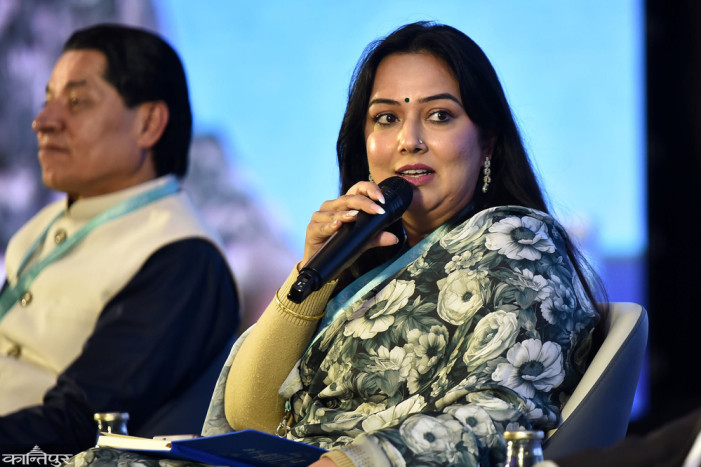
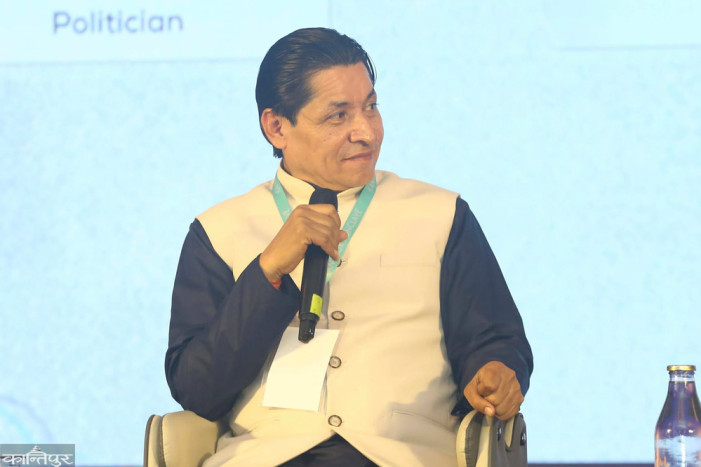
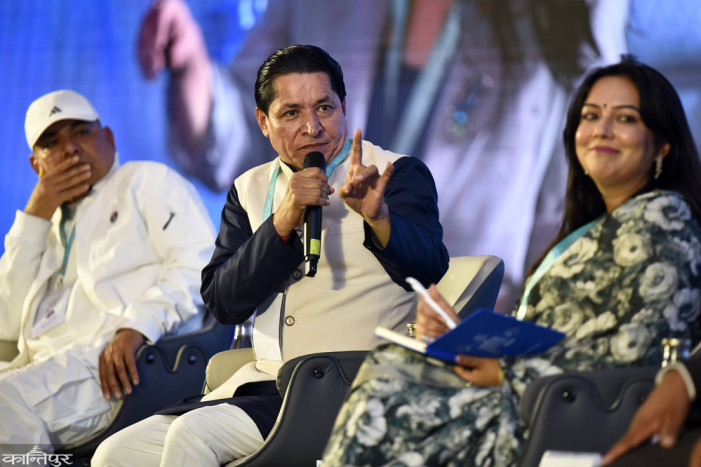
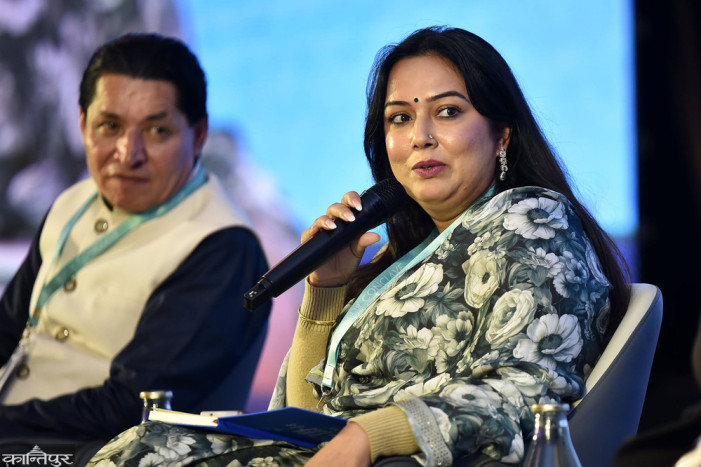
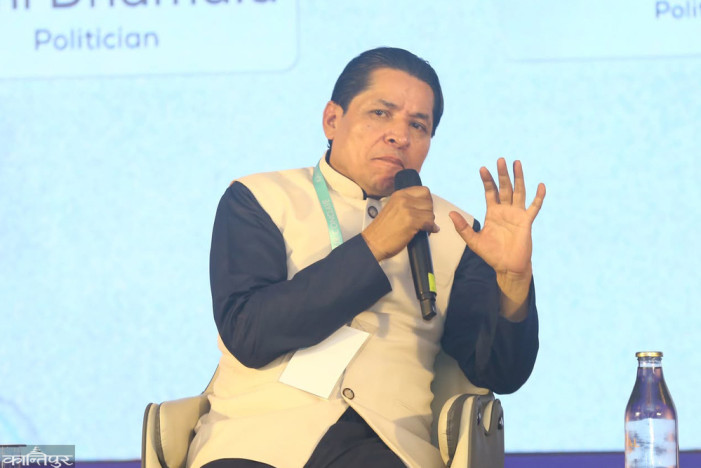
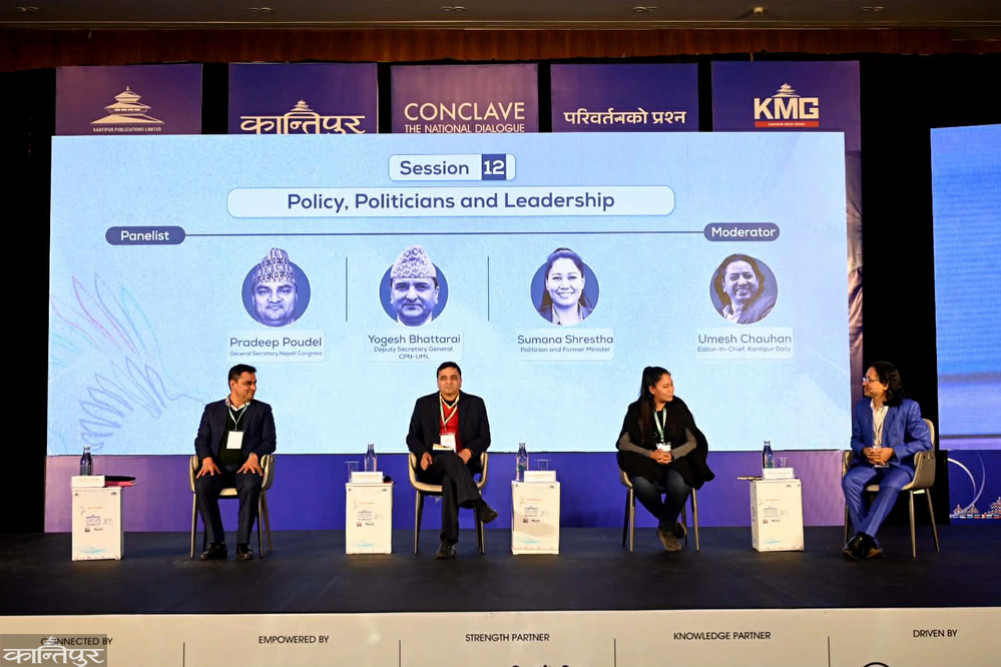
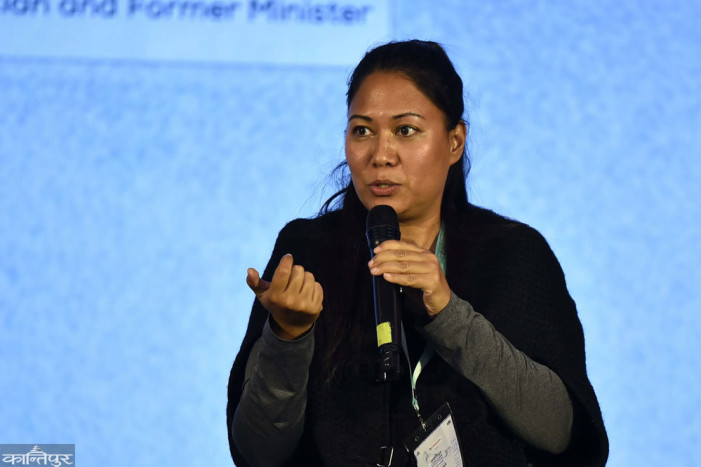
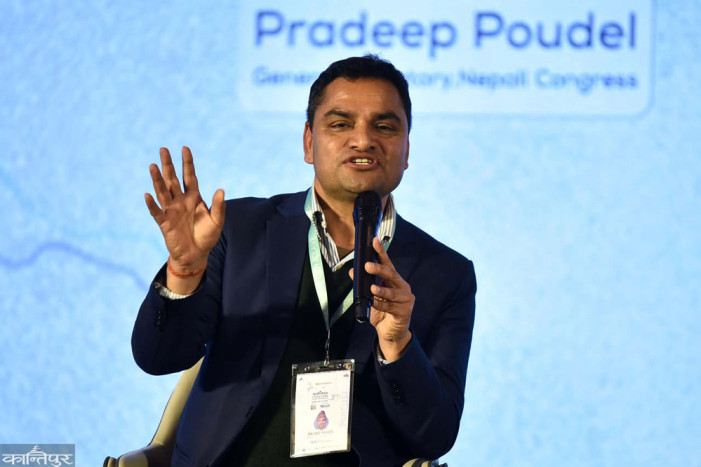
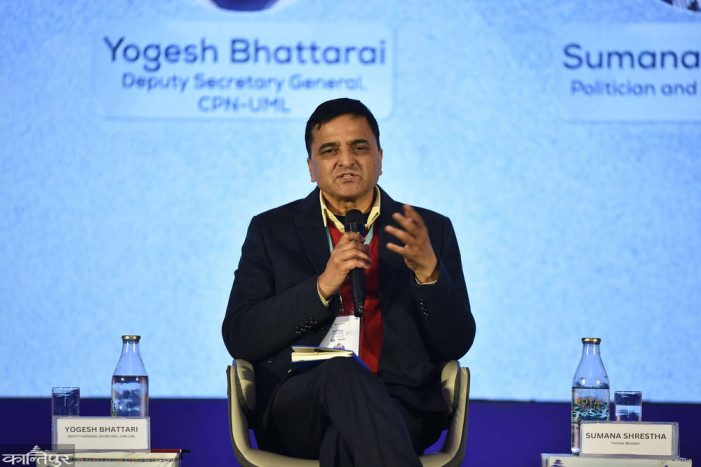
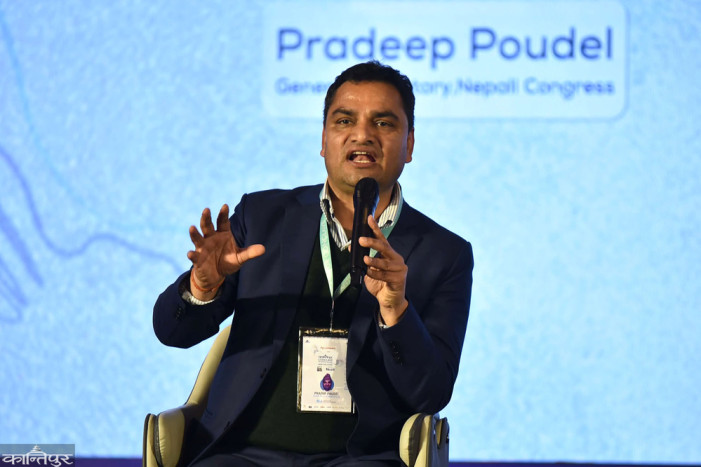
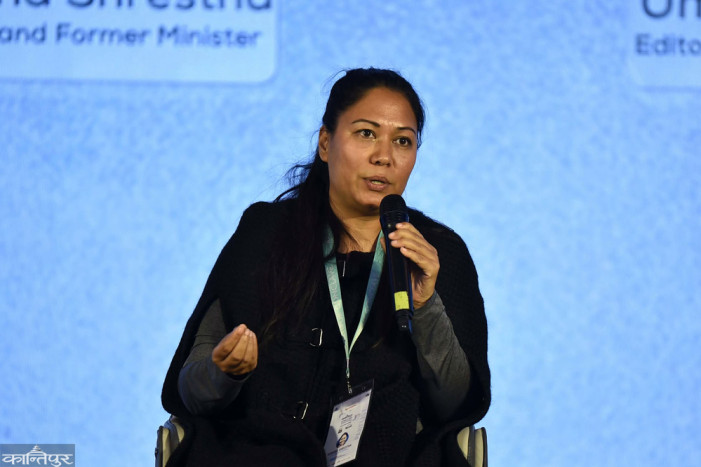
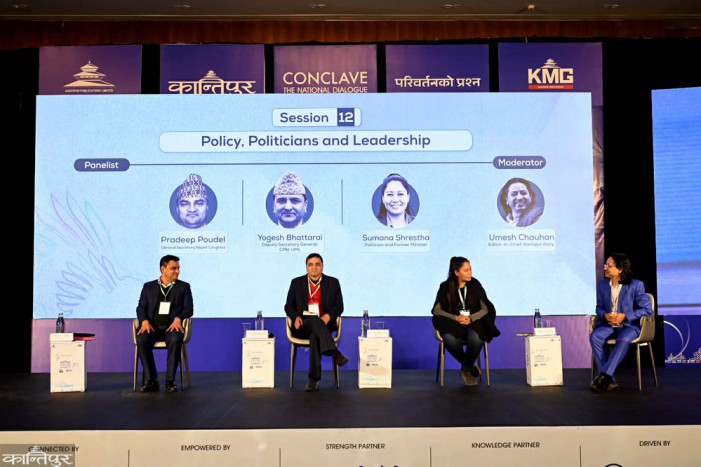
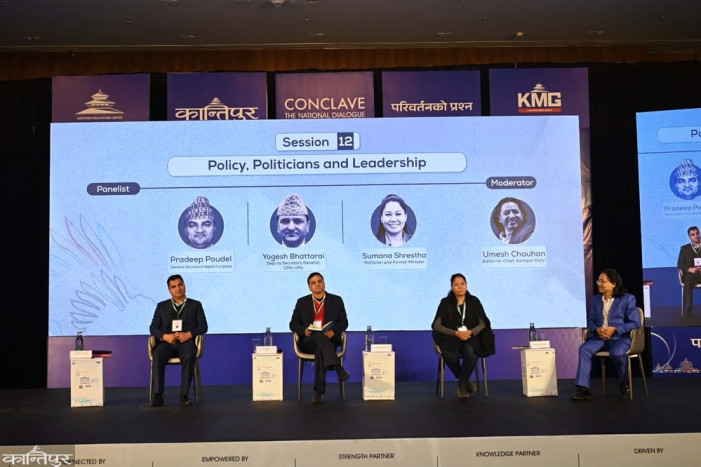
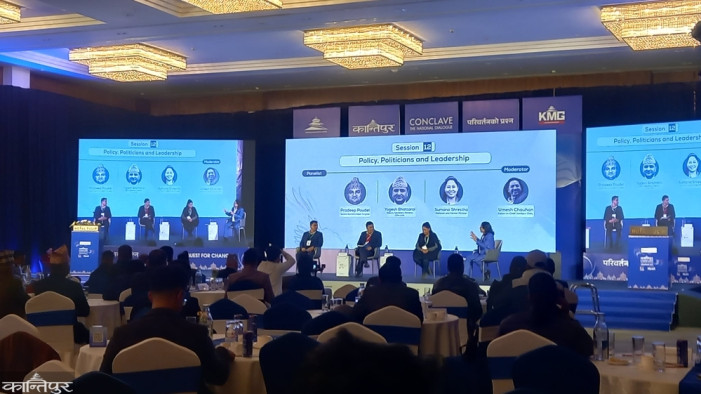
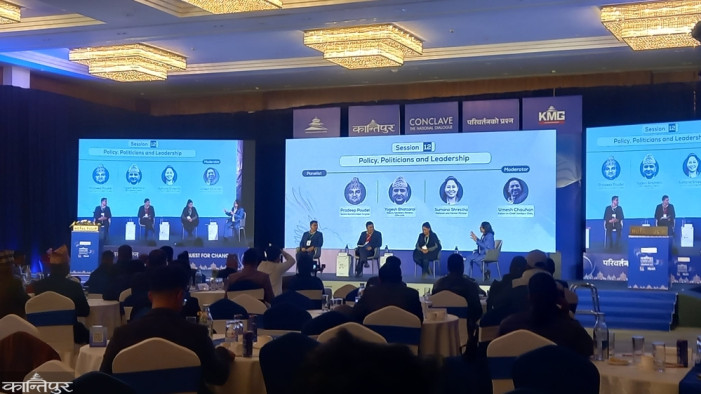
In the final session, 'Policy, Leaders and Leadership', Kantipur Daily Editor-in-Chief Umesh Chauhan debated with Congress General Secretary Pradeep Poudel, UML Deputy General Secretary Yogesh Bhattarai, and Sumana Shrestha, who is also a former minister.

Magh 27, 2082

Kantipur Reporter

‘Kantipur Conclave-2026’

We use Google Cloud Translation Services. Google requires we provide the following disclaimer relating to use of this service:

This service may contain translations powered by Google. Google disclaims all warranties related to the translations, expressed or implied, including any warranties of accuracy, reliability, and any implied warranties of merchantability, fitness for a particular purpose, and noninfringement.

85 Updates

(07:06 PM)

Strong opposition needed in parliament and on the streets: Sumana Shrestha

Former Education Minister and former MP Sumana Shrestha said that a strong opposition is needed in the parliament and on the streets. She said that the first and second parties should not form a government together. ‘If the first and second parties form a government together, the opposition will be weak. That will weaken the parliament and the streets as well,’ she said.

Strong opposition needed in parliament and on the streets: Sumana Shrestha
तस्बिर : अंगद ढकाल/कान्तिपुर

(07:05 PM)

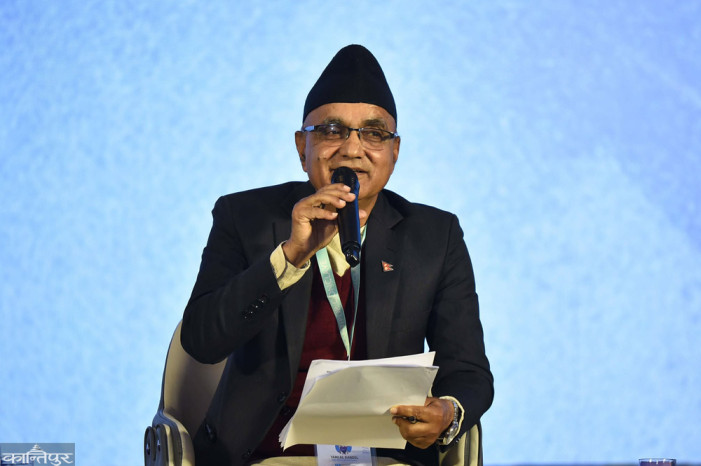
A revolution has been made in the selection of Congress candidates this time: Pradeep Poudel

General Secretary Pradeep Poudel said that a revolution has been made in the selection of candidates for the upcoming elections in the Nepali Congress. According to him, although the party has to decide the leadership of the ticket immediately, it has not been able to select candidates from the Gen-G generation, but 111 candidates out of 165 constituencies for direct elections have not contested elections before. He also said that the Congress will select candidates through internal elections within the party in the upcoming elections.

A revolution has been made in the selection of Congress candidates this time: Pradeep Poudel
तस्बिर : अंगद ढकाल/कान्तिपुर

(06:59 PM)

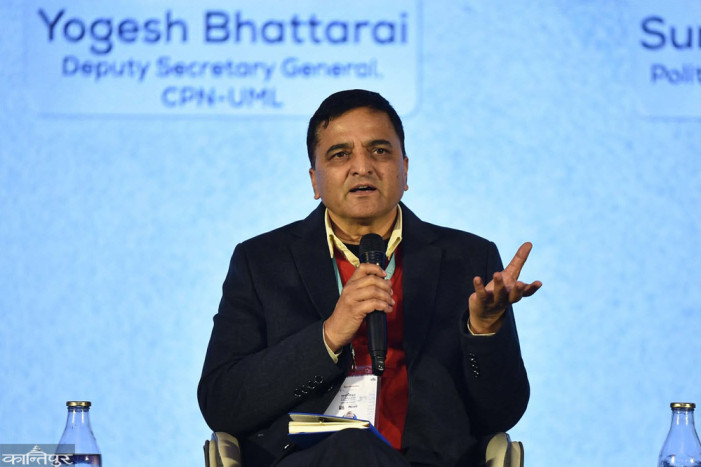
We will change the driving seat of UML at some point: Yogesh Bhattarai

UML Deputy General Secretary Yogesh Bhattarai said that the UML leadership will be changed when the right time comes. He said, ‘We do not have the opportunity to be outdated, so we are updated. Today, we are servicing the party. At some point, we change the engine, we change the driving seat.’ He said that the idea put forward by the new generation of friends in the ninth general convention was passed. Stating that political parties should be reformed according to the times, he said that reforming a political party does not mean changing the leadership.

We will change the driving seat of UML at some point: Yogesh Bhattarai
तस्बिर : अंगद ढकाल/कान्तिपुर

(06:47 PM)

Let's hold direct elections for the post of Chief Minister: Yogesh Bhattarai

UML Deputy General Secretary Yogash Bhattarai said that direct elections should be held for the post of Chief Minister of all seven provinces. He said that direct elections should be held for the post of Chief Minister to keep the provinces stable. He said that during direct elections, people from each province will be elected.

Let's hold direct elections for the post of Chief Minister: Yogesh Bhattarai
तस्बिर : अंगद ढकाल/कान्तिपुर

(06:44 PM)

Ab ki baar Gagan Sarkar is not the official slogan of Congress: Pradeep Poudel

General Secretary Pradeep Poudel said that the slogan "Ab ki baar Gagan Sarkar" was not officially coined by the Nepali Congress. "That slogan is not officially coined by the Congress. It was brought about informally by local friends who have faith in the Congress in a way that the locals can understand, to create an atmosphere for the elections," he said. "The friends thought it was right and brought it up."


Ab ki baar Gagan Sarkar is not the official slogan of Congress: Pradeep Poudel
तस्बिर : अंगद ढकाल/कान्तिपुर

(06:39 PM)

There should be an investigation into the money found at Sher Bahadur Deuba's house: Pradeep Poudel

Nepali Congress General Secretary Pradeep Poudel said that an investigation should be conducted into the money found at the house of former President Sher Bahadur Deuba. He said, "Since former President Sher Bahadur Deuba has also called for an investigation, the Congress is not saying that the money was made by AI." He also said that it would have been better if former President Sher Bahadur Deuba had spoken about the matter only after the investigation. Deuba had earlier said that the money found at the house was made by AI.

There should be an investigation into the money found at Sher Bahadur Deuba's house: Pradeep Poudel
तस्बिर : अंगद ढकाल/कान्तिपुर

(06:35 PM)

MPs should be people's representatives, not party representatives: Sumana Shrestha

Politician and former Education Minister Sumana Shrestha said that elected MPs should become people's representatives. She said, "There should be no system of party-based harassment. MPs should be able to use their discretion. They should be people's representatives. They should not be party representatives." She also said that the narrative that there is no politics without a party should be changed.

MPs should be people's representatives, not party representatives: Sumana Shrestha
तस्बिर : अंगद ढकाल/कान्तिपुर

(06:25 PM)

Once you enter politics, you can't leave? : Sumana Shrestha

Former Education Minister Sumana Shrestha has asked, "Once you enter politics, you can't leave." She said that if this standard is maintained, then they will remain in politics for life and will do anything for the position. She even claims that everyone has changed their minds that there is no politics without a party in Nepal.

Once you enter politics, you can't leave? : Sumana Shrestha
तस्बिर : अंगद ढकाल/कान्तिपुर

(06:21 PM)

The statement that there is no politics without a party must be challenged: Sumana Shrestha

Former Education Minister and politician Sumana Shrestha said that the statement that politics cannot exist without a party should be challenged. 'Isn't it true that once someone enters politics, they should never leave?' Speaking at a session on 'Policy, Leaders and Leadership' under the Kantipur Conclave, she said, 'I want innovation to happen in the House.'


The statement that there is no politics without a party must be challenged: Sumana Shrestha
तस्बिर : अंगद ढकाल/कान्तिपुर

(06:09 PM)

No education or training on social media usage: Sumana Shrestha

Former Education Minister and politician Sumana Shrestha said that despite the increasing use of social media, there is no education about its use. She said that children and parents should be educated about the use of social media. ‘Social media has made citizens stronger. It has reduced the cost of elections,’ she said, ‘There is no education about the use of social media. There has been no discussion. There is also a risk of misuse.’ She said that there should be education and training about the good/bad, advantages/disadvantages of social media. ‘There has been no discussion about the health effects of using digital content. Deepfake content is increasing. Children and parents should be educated,’ she said.

No education or training on social media usage: Sumana Shrestha
तस्बिर : अंगद ढकाल/कान्तिपुर

(06:03 PM)

Gen-G movement born due to lack of good governance: Pradeep Poudel

Nepali Congress General Secretary Pradeep Poudel said that politics should not be limited to finding solutions to questions alone, but should also find ways to lead society in a positive direction. Stating that the Gen-G rebellion occurred due to the lack of good governance, he said that the Congress viewed it politically. 'The Gen-G movement was born out of the lack of good governance, and we have understood it politically,' he said. He emphasized that public trust can be restored only through good governance, accountability, and policy clarity.

Gen-G movement born due to lack of good governance: Pradeep Poudel
तस्बिर : अंगद ढकाल/कान्तिपुर

(06:00 PM)

Changes were lost due to lack of attention to good governance: Pradeep Poudel

Nepali Congress General Secretary Pradeep Poudel said that despite many changes in the country, those changes have been overlooked due to lack of sufficient attention to good governance. ‘Many changes have taken place since 2048, but good governance has not been achieved. That is why all the achievements have been overlooked,” 

Changes were lost due to lack of attention to good governance: Pradeep Poudel
तस्बिर : अंगद ढकाल/कान्तिपुर

(06:00 PM)

We have not been taught what to do in the virtual world: Sumana Shrestha


Former Education Minister Sumana Shrestha has commented that social media is empowering the people. She said that social media has also reduced election spending and added that negative things spread six times faster on social media than positive things. She said, ‘We have not been taught how to survive in the virtual world and how to behave in it.’

She said this while speaking at the Kantipur Conclave. 

We have not been taught what to do in the virtual world: Sumana Shrestha
तस्बिर : अंगद ढकाल/कान्तिपुर

(05:53 PM)

Centralized power exercises within parties do not return democracy to the people: Yogesh Bhattarai

UML Deputy General Secretary Yogesh Bhattarai has said that they are seeking decentralization of power in democracy. Speaking at the Kantipur Conclave, he said that the practice of centralizing power within the party in one place will not bring democracy back to the people.

He also said that the Gen-G rebellion incident has changed the material situation of the country.

Centralized power exercises within parties do not return democracy to the people: Yogesh Bhattarai

(05:51 PM)

Not only has there been a change in leadership in the Nepali Congress, but it has also become clear in terms of policy: General Secretary Poudel

Congress General Secretary Pradeep Poudel said that not only has there been a change in leadership in the Congress, but it has also been clear in terms of policy. He said, 'Not only has there been a change in leadership in the Congress, it has also been clear in terms of policy.' He also said that it is not natural to assume that the Congress will be the same today as it was yesterday.

Not only has there been a change in leadership in the Nepali Congress, but it has also become clear in terms of policy: General Secretary Poudel
तस्बिर : अंगद ढकाल/कान्तिपुर

(05:43 PM)

Gen-G rebellion was a warning to us: Congress General Secretary Poudel

Congress General Secretary Pradeep Poudel has said that it is time to move forward from the stage of just asking questions and doubting and adopt a positive mindset. He said that they have moved forward after realizing their mistake and did not say that they created chaos, but rather that they understood the Gen-G rebellion as a warning to them.


He said this while speaking at the Kantipur Conclave.

Gen-G rebellion was a warning to us: Congress General Secretary Poudel

(05:40 PM)

The last session of Kantipur Conclave 'Policy, Leader and Leadership' started

In the final session titled ‘Policy, Leaders and Leadership’, Kantipur Daily Editor-in-Chief Umesh Chauhan will engage in a debate on leadership transition and political culture with young leaders from the Nepali Congress, UML and independent parties. Nepali Congress General Secretary Pradeep Poudel, UML Deputy General Secretary Yogesh Bhattarai and former minister Sumana Shrestha will be panelists in this session. The conclave is being held in collaboration with Asian Paints, Extreme Energy Drinks and Ncell.

The last session of Kantipur Conclave 'Policy, Leader and Leadership' started

(05:36 PM)

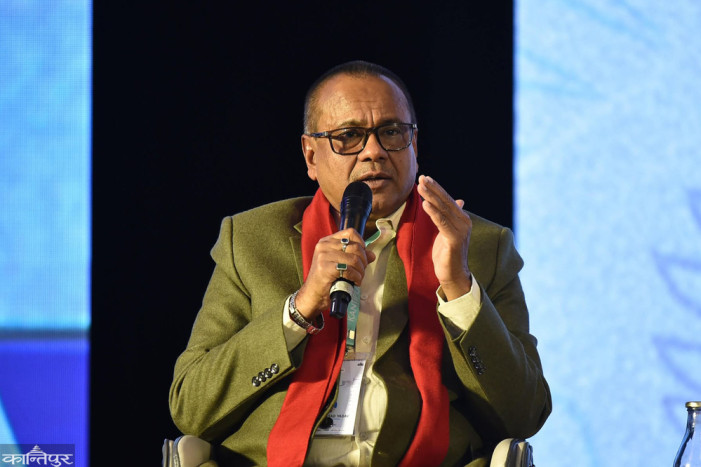
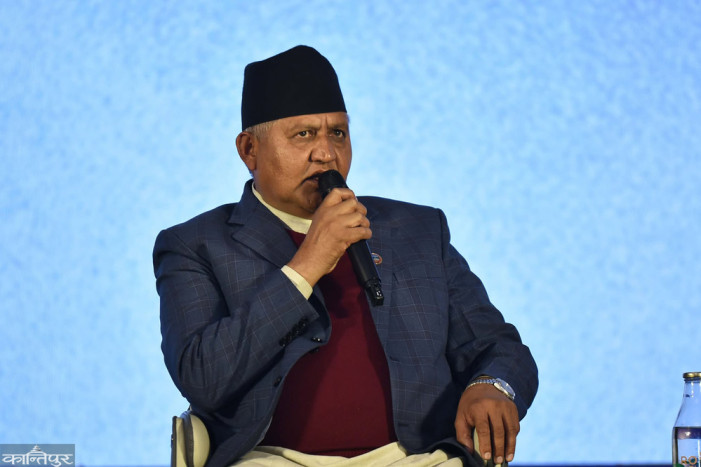
Provincial Chief Minister should be elected through direct elections: Chief Minister Kandel

Karnali Province Chief Minister Yamalal Kandel said that it would be better to amend the constitution and elect the Chief Minister of the province through direct elections. He said that development work would be effective if the term of office is five years like the local government. ‘Development and construction prosperity of the province have their own priorities. Instead of implementing the decision made in Kathmandu, committees and parties should be run from the province as per the need,’ he said, ‘The constitution should be amended so that the Chief Minister is elected through direct elections. Since the provincial government is a legislature and basically a development unit, this election is not likely to bring a majority, so it would be better if it was like the local government for five years.’ He said that the parties should start building a structure according to the spirit of the constitution.

Provincial Chief Minister should be elected through direct elections: Chief Minister Kandel
तस्बिर : अंगद ढकाल/कान्तिपुर

(05:32 PM)

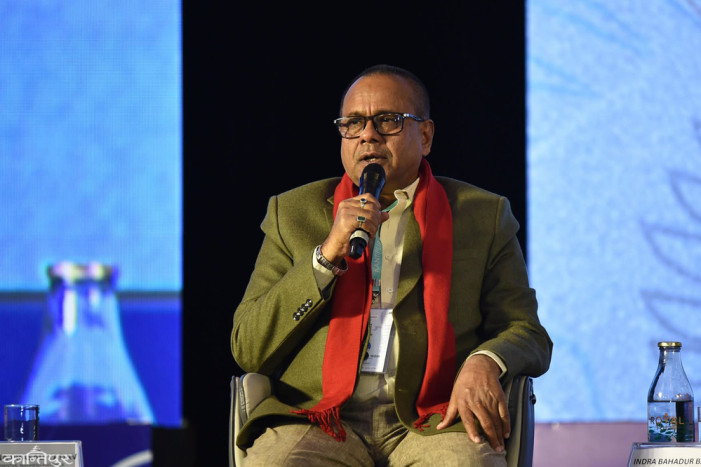
Even after eight years, the province has not been able to obtain government status: Chief Minister Baniya

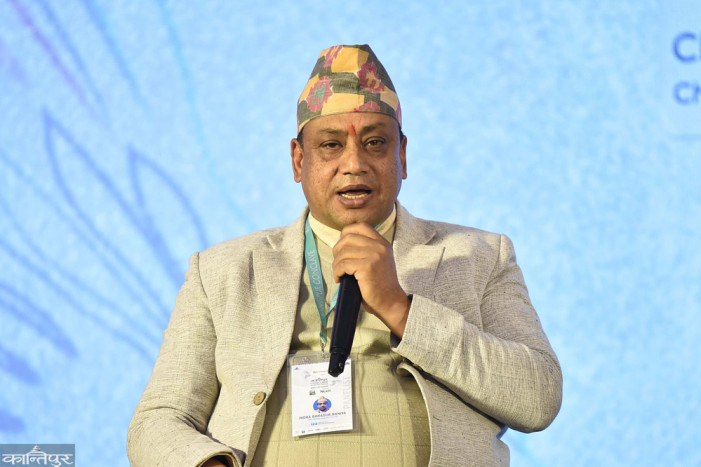
Bagmati Province Chief Minister Indra Bahadur Baniya claimed that the province has not been able to get the status of a government even after eight years of federalism. ‘The constitution has made provisions for a central government, a provincial government and a local government. There is a local government. There is a central government. But there is a provincial structure, not a provincial government,’ he said, ‘To be a government, police are needed. Civil servants are needed. It needs geographical rights. It needs land rights. It needs forest rights. The provincial government does not have any of these rights. Therefore, it is not a provincial government. It is only a provincial structure.’

Even after eight years, the province has not been able to obtain government status: Chief Minister Baniya
तस्बिर : अंगद ढकाल/कान्तिपुर

(05:32 PM)

Discussions about provincial government expenses are being held to discredit federalism: Sudurpaschim Chief Minister Shah


Sudurpaschim Province Chief Minister Kamal Bahadur Shah has said that although some sporadic issues related to federalism have been raised, not much has been raised about the system. He said that they have been raised only to defame the expenses and other issues of the provincial government. Chief Minister Shah said that just as the commentary has been made on the party leaders, efforts are being made to defame federalism as well.

He said, ‘Federalism has worked as a place for the development of the place and for the common citizen to express his views.’

Speaking at the Kantipur Conclave, he said this. Instead of debating whether federalism is weak or strong, he said that such a debate should be considered whether it provides a solution or not. He also said that we should think about where we are on the issues raised after the Gen-G rebellion.
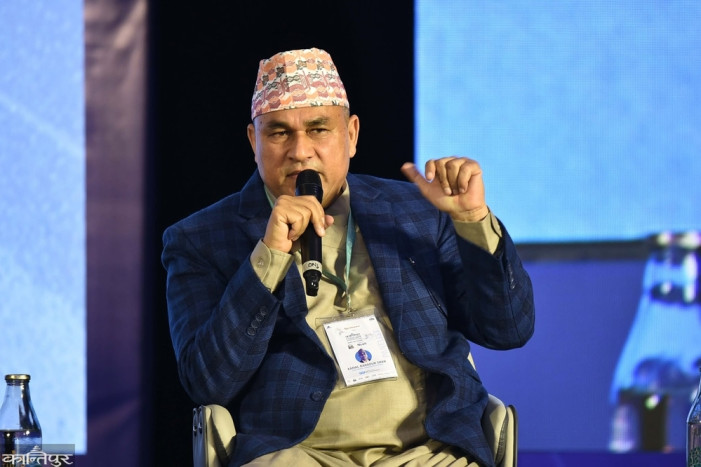
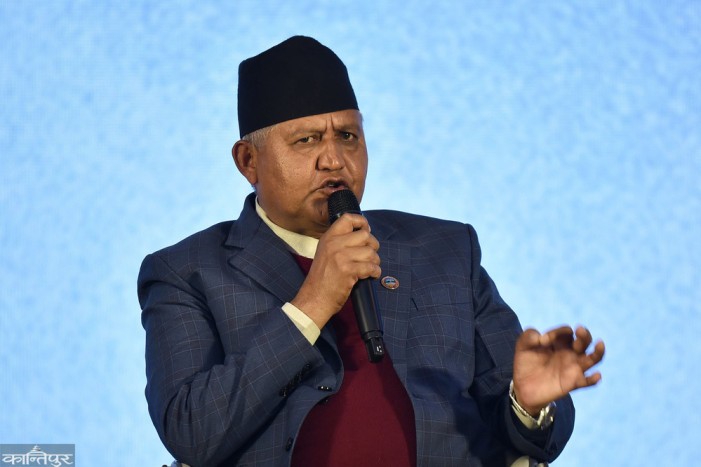


Discussions about provincial government expenses are being held to discredit federalism: Sudurpaschim Chief Minister Shah

(05:27 PM)

Lumbini Province's government structure was not burned in the Gen-G movement, my house was burned: Chief Minister Acharya

Lumbini Province Chief Minister Chet Narayan Acharya said that the people are in favor of the need for a provincial government. ‘The government structure of Lumbini Province was not burned in the Gen–Gi movement. My house was burned. Those affiliated with a political  party burned my house,’ he said, ‘The people of Lumbini Province are in favor of the province.’

Lumbini Province's government structure was not burned in the Gen-G movement, my house was burned: Chief Minister Acharya
तस्बिर : अंगद ढकाल/कान्तिपुर

(05:20 PM)

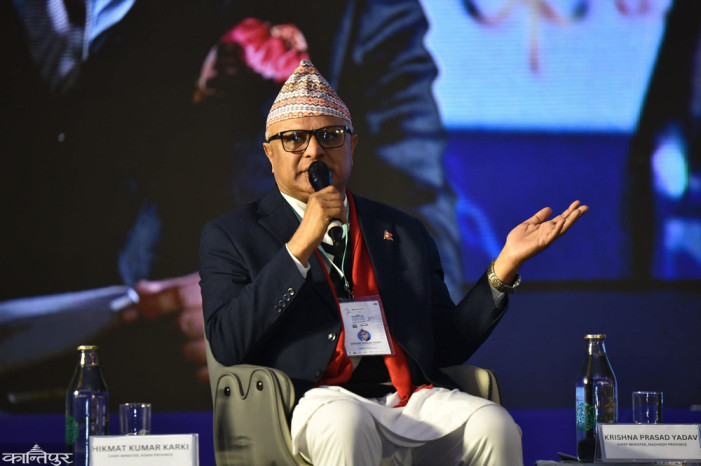
Madhesh Province has been allocated the lowest budget: Chief Minister Yadav

Madhesh Province Chief Minister Krishna Prasad Yadav claimed that the lowest budget among the seven provinces has been allocated to Madhesh. ‘The federal government allocates 6 percent of the budget by combining the seven provinces. Out of that, the lowest equalization budget of 12 billion rupees has been allocated to Madhesh,’ he said. 

He said that the low development expenditure this year was due to the Gen-G movement and government changes. 


Madhesh Province has been allocated the lowest budget: Chief Minister Yadav
तस्बिर : अंगद ढकाल/कान्तिपुर

(05:07 PM)

Political parties are divided over federalism: Chief Minister Yadav

Madhesh Chief Minister Krishna Prasad Yadav said that political parties are divided over federalism. 'Political parties are divided over federalism. Some parties say federalism is inevitable, while other parties cannot speak out against federalism but want it to be repealed,' he said, 'There are also parties that make public statements that federalism is not needed. Many acts, including the Police Act, have fallen under their sway.'

Political parties are divided over federalism: Chief Minister Yadav
तस्बिर : अंगद ढकाल/कान्तिपुर

(05:04 PM)

After federalism, the people of Madhesh felt the state: Chief Minister Yadav

Madhesh Province Chief Minister Krishna Prasad Yadav said that the people of Madhesh were able to feel the state only after the implementation of federalism. ‘Federalism is needed by Madhesh. The oppressed Madheshi, Janajati, Adivasi, Dalits of Madhesh have been able to feel that after federalism, we too have a government and a state,’ he said.

After federalism, the people of Madhesh felt the state: Chief Minister Yadav
तस्बिर : अंगद ढकाल/कान्तिपुर

(05:01 PM)

We have worked to make farmers happy in Koshi Province: Chief Minister Karki

Chief Minister Hikmat Kumar Karki said that the province has worked to make farmers happy, including in the animal husbandry sector. Stating that the provincial government has worked by focusing on the rights and interests of farmers, including in the animal husbandry sector, he claimed that this has satisfied the farmers. He also said that other provinces are also learning from the system of vaccination and other measures for the treatment of diseases seen in animals in the province. ‘The provincial government is supporting the work of producing honey or preparing coffee zones,’ he said, ‘The province has also started work on preparing to export buffalo meat to China. The farmers of the province are happy.’

We have worked to make farmers happy in Koshi Province: Chief Minister Karki
तस्बिर : अंगद ढकाल/कान्तिपुर

(04:57 PM)

Due to physical infrastructure work in Karnali Province, all districts can be reached in a single day: Chief Minister Kandel

Karnali Province Chief Minister Yamalal Kandel said that due to the physical infrastructure work in Karnali Province, all districts can be reached in a single day. ‘We have done a good job. The situation has improved, including good governance. Budget spending, structural reforms,’ he said.

Due to physical infrastructure work in Karnali Province, all districts can be reached in a single day: Chief Minister Kandel
तस्बिर : अंगद ढकाल/कान्तिपुर

(04:52 PM)

Provinces can do better if they amend laws: Chief Minister Kandel

Karnali Chief Minister Yamalal Kandel said that the provinces can do better if old laws are amended. ‘Laws are from ancient times. Even if people leave, they cannot do what they say in this situation. If they change, the provinces can do what they want,’ he said, ‘It has been 8 years since we have been operating a three-tier government. There is a need for structural and policy reforms. ’

Provinces can do better if they amend laws: Chief Minister Kandel
तस्बिर : अंगद ढकाल/कान्तिपुर

(04:46 PM)

An attempt is being made to create a narrative that states are not necessary: ​​Chief Minister Acharya

Lumbini Province Chief Minister Chet Narayan Acharya said that the people have experienced development due to the work of the provincial government. 'There is no need for a forced province. It has become a burden. It has become expensive,' he said, ‘The people have experienced development due to the province. The people are happy with the provincial government.’

An attempt is being made to create a narrative that states are not necessary: ​​Chief Minister Acharya
तस्बिर : अंगद ढकाल/कान्तिपुर

(04:39 PM)

The Gen-G movement was like an unimaginable and unnatural disaster: Chief Minister Baniya

Indra Bahadur Baniya, who became the Chief Minister of Bagmati Province just a month before the Gen-G movement, described the Gen-G movement as an unimaginable and unnatural disaster. ‘The demand and demonstration of Gen-G were on one side. The incident happened on the other. Now we have to reform the electoral system itself,’ he said, ‘It will be our duty, religion and responsibility towards the people to reform the system through elections.’

The Gen-G movement was like an unimaginable and unnatural disaster: Chief Minister Baniya
तस्बिर : अंगद ढकाल/कान्तिपुर

(04:33 PM)

Coordination and collaboration between three levels of government is necessary: ​​Chief Minister Pandey

Gandaki Province Chief Minister Surendra Raj Pandey said that coordination and cooperation between the three levels of government are necessary. ‘Coordination and cooperation between the three levels of government are necessary. If the laws made by the province or local government conflict with the laws of the central government, they will be repealed,’ he said, ‘There are improvements in some constitutional provisions to make the federal system stable and effective.’

Coordination and collaboration between three levels of government is necessary: ​​Chief Minister Pandey

(04:30 PM)

Only broken things become news, things that are made don't come out: Chief Minister Pandey

Gandaki Province Chief Minister Surendra Raj Pandey said that people are questioning the provincial government because the good works done by the province are not discussed in the media and social media. ‘Only the things that are broken become news, the things that are done do not come out,’ he said, ‘This has spread despair in the society, this is also one of the reasons for the Gen-ji movement. If the positive works done by the government are made public in time, the negative impact on the people will be reduced.’ He also informed that even before the Gen-ji movement, 32 offices in Gandaki Province were reduced to 19, and posts were cut. 


Only broken things become news, things that are made don't come out: Chief Minister Pandey
तस्बिर : अंगद ढकाल/कान्तिपुर

(04:23 PM)

The work done by the provincial government has changed the face of the village: Lumbini Chief Minister Acharya

Lumbini Province Chief Minister Chet Narayan Acharya said that criticizing the provincial government for being wasteful is wrong.

Speaking at the Kantipur Conclave, he said that in the last seven years, people have experienced development only through the work done by the provincial government. He said, ‘The investment made by the province in infrastructure, education and health sectors has changed the face of the village.’

The work done by the provincial government has changed the face of the village: Lumbini Chief Minister Acharya
तस्बिर : दीपेन श्रेष्ठ/कान्तिपुर

(04:13 PM)

The government has expanded for the third time under my leadership after the Gen-G movement: Krishna Prasad Yadav

Madhes Chief Minister Krishna Prasad Yadav has said that the Madhes government has expanded for the third time under his leadership after the Gen-G movement. He said, ‘There was a government before the Gen-G government. After the Gen-G movement, one government changed in 22 days and another government in 25 days. After that, the government was formed under my leadership.’ He added, ‘The government has been formed with 100 percent support.’


Stating that the Madhes government has assimilated Gen-G's demand for eradicating corruption and maintaining good governance, Yadav said that the environment has definitely created a feeling for the people.

The government has expanded for the third time under my leadership after the Gen-G movement: Krishna Prasad Yadav
तस्बिर : दीपेन श्रेष्ठ/कान्तिपुर

(04:11 PM)

The electoral system itself must be reformed: Indra Bahadur Bania

Bagmati Province Chief Minister Indra Bahadur Bania has said that the electoral system itself needs to be reformed. He said, ‘This system does not allow anyone to get a majority.’ He mentioned that there is a situation where two or more parties cannot form a government without coming together, both at the center and in the province.


He said this while speaking at the Kantipur Conclave.

The electoral system itself must be reformed: Indra Bahadur Bania
तस्बिर : दीपेन श्रेष्ठ/कान्तिपुर

(04:11 PM)

'We were not worried about losing the Chief Minister's post, we were worried about the people suffering'

Koshi Province Chief Minister Hikmat Karki said that they are confident that the province will remain as long as Nepal's constitution exists. He said, 'We were confident that the province will remain as long as Nepal's constitution exists. We were not worried about the Chief Minister leaving. We were worried about the people suffering.'

'We were not worried about losing the Chief Minister's post, we were worried about the people suffering'
तस्बिर : दीपेन श्रेष्ठ/कान्तिपुर

(04:06 PM)

Fear and confusion arose among the provincial chief ministers after Bhadra 23 and 24: Hikmat Kumar Karki


Koshi Province Chief Minister Hikmat Kumar Karki said that there is a state of fear and confusion among the Chief Ministers of the province after the incidents of Bhadra 23 and 24. He mentioned that although he is not worried about losing his post, there is confusion about what will happen and where he will go.

He said this while speaking at the Kantipur Conclave.


Fear and confusion arose among the provincial chief ministers after Bhadra 23 and 24: Hikmat Kumar Karki
तस्बिर : दीपेन श्रेष्ठ/कान्तिपुर

(04:00 PM)

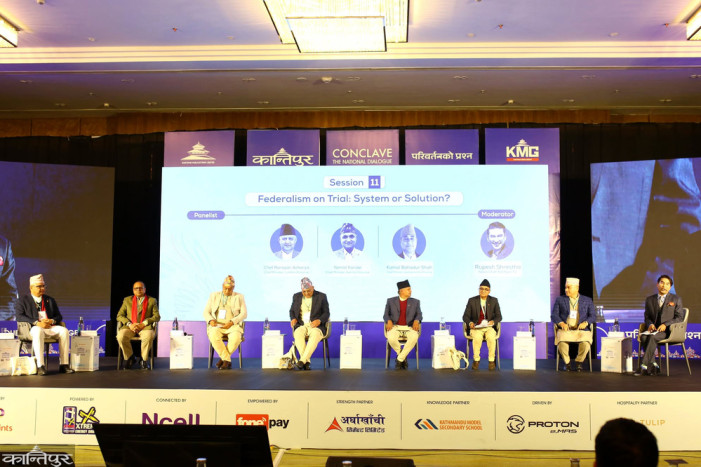
The fifth session of Kantipur Conclave, ‘Federalism: Only Structure or Also a Conveyor?’ begins

The fifth session of the second day, ‘Federalism: Only a Structure or a Conveyor?’, will feature Chief Ministers of all seven provinces standing on the same stage and debating. The session is facilitated by Kantipur Television’s News Chief Rupesh Shrestha. There will be a direct dialogue between political leaders on the achievements, challenges and future of federalism.

The fifth session of Kantipur Conclave, ‘Federalism: Only Structure or Also a Conveyor?’ begins
तस्बिर : दीपेन श्रेष्ठ/कान्तिपुर

(03:44 PM)

Zen-ji does not worship individuals: Zen-ji leader Ansari


Majid Ansari, the leader of the Gen-G movement, has said that the Gen-G youth will prioritize methods, processes and systems over individuals.

Speaking at the session on the second day of the Kantipur Conclave titled ‘New Voices of the Republic’, he made it clear that worshipping individuals will not make the system strong. ‘Democracy, federalism and the principle of inclusion must be strong. Gen-G never worships individuals. We do not need a king, we have already thrown out the king,’ he said.

He said that the Gen-G people are committed to the federal democratic republic. ‘When Rabi Lamichhane was released from jail on Bhadau 24, the Gen-G people were at the forefront. But we said “go back”

Zen-ji does not worship individuals: Zen-ji leader Ansari

(03:42 PM)

It cannot be said that the new generation lacks political awareness: Raksha Bam

Gen-G activist Raksha Bam has said that it is not fair to say that the new generation lacks political awareness. She said that the fact that Gen-G took to the streets to raise issues of good governance is proof of political awareness. Stating that an entire generation cannot do politics, she said, ‘Citizen-level political awareness is necessary, and Gen-G has that.’


She said this while speaking at the Kantipur Conclave.

It cannot be said that the new generation lacks political awareness: Raksha Bam

(03:35 PM)

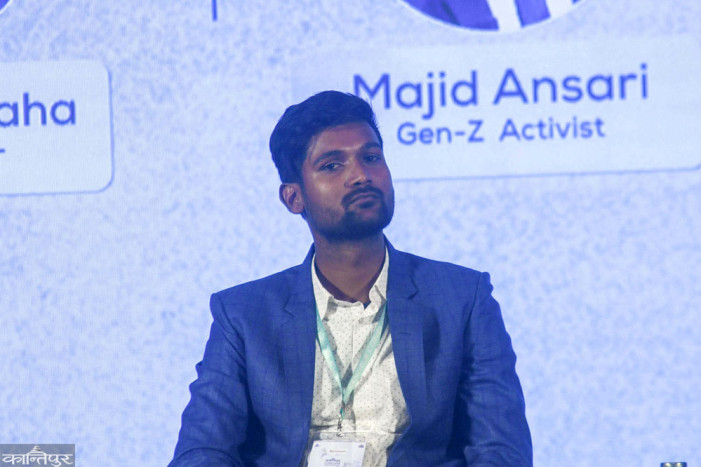
Gen Zs in Nepal are democratic: Majid Ansari

Gen–G activist Majid Ansari has said that Nepal's Gen–Gs are democratic, which is why the environment has been created for the elections. He said that the scene here is different from that of Bangladesh, and that the old parties are not wanting elections, but the government formed from the Gen–G rebellion has postponed the date of the inquiry commission to hold elections.


He said this while speaking at the Kantipur Conclave.

Gen Zs in Nepal are democratic: Majid Ansari
तस्बिर : दीपेन श्रेष्ठ/कान्तिपुर

(03:32 PM)

People have leaders, not masters: Raksha Bam

Gen-G activist Raksha Bam said that the issue of new and old has been misinterpreted. She believed that there should be reforms within the party and that leadership should be handed over rather than generational change. She said, ‘Leadership handover does not mean that Gen-G should come. It means removing the mentality and tendency that we have spoken against.’


She said that leaders are of the people, not the masters of the people, ‘Candidates should not go among the people thinking that they are the masters of the people.’

People have leaders, not masters: Raksha Bam

(03:25 PM)

My disagreement is with the division of new and old: Pradeep Gyawali


Gen-G activist and central member of the Rashtriya Swayamsevak Sangh (RSS) Pradeep Gyawali has said that he disagrees with the division of political parties into new and old.

‘The basic slogans and principles of political parties are their own. I disagree with the division of new and old,’ he said while participating in the ‘New Voices of the Republic’ session of the Kantipur Conclave, ‘As much as we need the new, we also need the experience and skills of the old.’

He also argued that they have a new vision and innovation in politics. ‘The new generation is capable of turning the pages of history, honoring them, correcting the weaknesses of the present, and giving political direction to the future,’ he said.


My disagreement is with the division of new and old: Pradeep Gyawali
तस्बिर : दीपक केसी/कान्तिपुर

(03:21 PM)

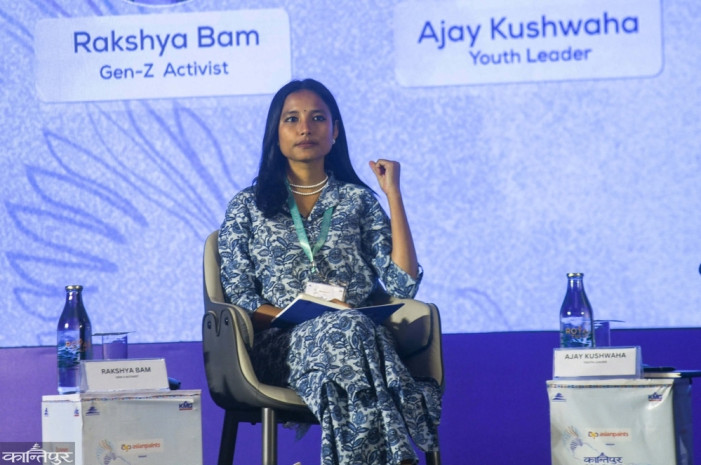
I was thinking of not contesting the election, I am enjoying myself on the streets: Raksha Bam

Gen-G activist Raksha Bam said that she would rather be on the streets than in the parliament and would be determined to protect democratic values ​​from the streets. 'I am still learning something. Politics is a personal matter. I am grateful for the proposals put forward by various parties. But I had no intention of contesting the election,' she said. 'The streets are close to me. The streets always keep the questions alive. Being on the streets, asking questions and demanding transparency makes you stronger.'

I was thinking of not contesting the election, I am enjoying myself on the streets: Raksha Bam
तस्बिर : दीपेन श्रेष्ठ/कान्तिपुर

(03:18 PM)

Democracy that does not listen to and count on the common man is useless: Majid Ansari

Gen–G activist Majid Ansari has said that the federal democratic republic cannot be protected by leaders who do not listen to and do not count the voices of the common people.


Speaking at the session on the ‘New Voices of the Republic’ on the second day of the Kantipur Conclave, he pointed out that leaders of both new and old political parties have a tendency to not listen to and do not count the voices of the common people. ‘Just going to Mukulung and Pathibhara does not earn the respect of the people there. If the common people are not counted, democracy will not survive,’ he said.

Democracy that does not listen to and count on the common man is useless: Majid Ansari
तस्बिर : दीपेन श्रेष्ठ/कान्तिपुर

(03:17 PM)

'It is necessary to leave behind the confusion of new and old parties and understand what is necessary'

Young candidate Ajay Kushwaha said that the country's development and political priorities are the need of the hour. He said that the confusion between new and old parties should be left aside and the focus should be on what is necessary. ‘On the basis of what is new? On the basis of registered parties or on the basis of ideas and thoughts?,’ he said,‘ Now we need to understand the main objective of the Gen-G movement.’ According to him, the development of the country should be the main objective and it is necessary to focus on real problems rather than faces. ‘ The people do not want big things, they only want roads, drains and a better society,’ he said,‘ They did not think about who will form the government, and when those outside the government will form the government.’

'It is necessary to leave behind the confusion of new and old parties and understand what is necessary'
तस्बिर : दीपक केसी/कान्तिपुर

(03:12 PM)

Democracy is strengthened by asking questions on the streets: Raksha Bam


Gen-G activist Raksha Bam has said that we need to seriously think about whether we have the political culture we think we have. She believes that even if it is a personal decision to enter politics or not, entering politics without understanding it will betray the people.

She said that she has chosen not to contest elections and to struggle on the streets. Referring to the fact that some parties have proposed her to be a candidate, Bam said, ‘I chose the streets. Democracy becomes stronger when democratic values ​​are questioned on the streets.’ She said this while speaking at the ‘New Voices of the Republic’ session of the Kantipur Conclave.


Democracy is strengthened by asking questions on the streets: Raksha Bam
तस्बिर : दीपेन श्रेष्ठ/कान्तिपुर

(03:04 PM)

We should question why the movement happened, rather than the new and old ones: Ajay Kushwaha

Ajay Kushwaha, who has become a candidate from the Nepali Communist Party, said that the prevailing thought is that if it happens in one party, it will be good, and if it happens in another party, everything will be bad. Speaking at the ‘New Voices of the Republic’ session of the Kantipur Conclave, he said, ‘New and old do not make any difference.’


He said that the question should be asked why the movement took place, rather than the new one.

We should question why the movement happened, rather than the new and old ones: Ajay Kushwaha

(03:03 PM)

If the party's democracy is strong, the country's democracy will be strong: Raksha Bam

Gen–G activist Raksha Bam said that they were looking for a new style of leadership rather than a face and person in the name of the new. She said, 'We did not want one KP ‌Oli to replace another Oli. We needed reforms within the party. If the party's democracy is strong, the country's democracy will be strong. ' She said that the time has come to change the political culture. 'We had demanded a change that is in line with the times according to our age,' she added.

If the party's democracy is strong, the country's democracy will be strong: Raksha Bam
तस्बिर : दीपेन श्रेष्ठ/कान्तिपुर

(02:58 PM)

We will not replace one KP Oli with another: Raksha Bam

We will not bring another KP Oli by throwing out one KP Oli: Raksha Bam

Gen–G activist Raksha Bam has said that they are opposing the wrong style and wrong trend rather than wanting everything new. She said, ‘We will not bring another KP Oli by throwing out one KP Oli.’


Speaking at the ‘New Voices of the Republic’ session of the Kantipur Conclave, she said this. She has made it clear that change also means style.

We will not replace one KP Oli with another: Raksha Bam
तस्बिर : दीपेन श्रेष्ठ/कान्तिपुर

(02:51 PM)

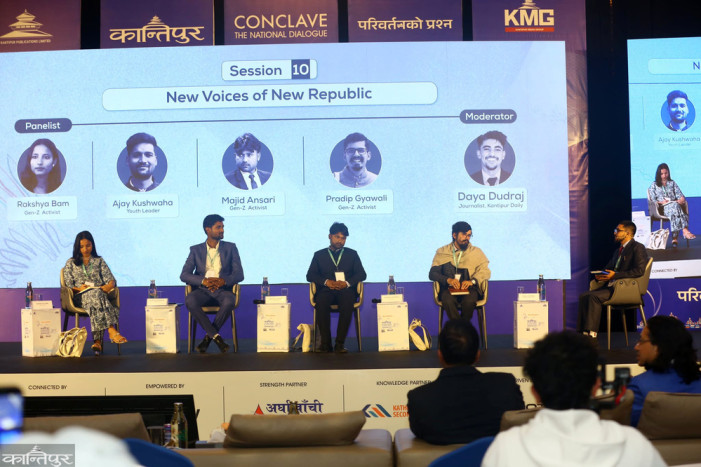
Fourth session of Kantipur Conclave: 'New Voices of the Republic' begins

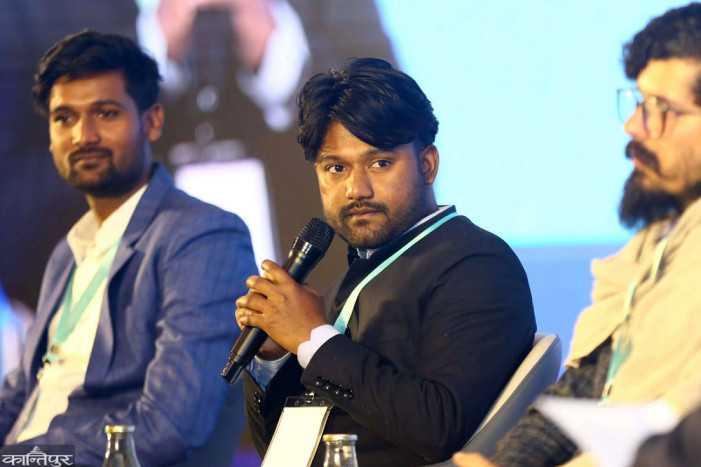
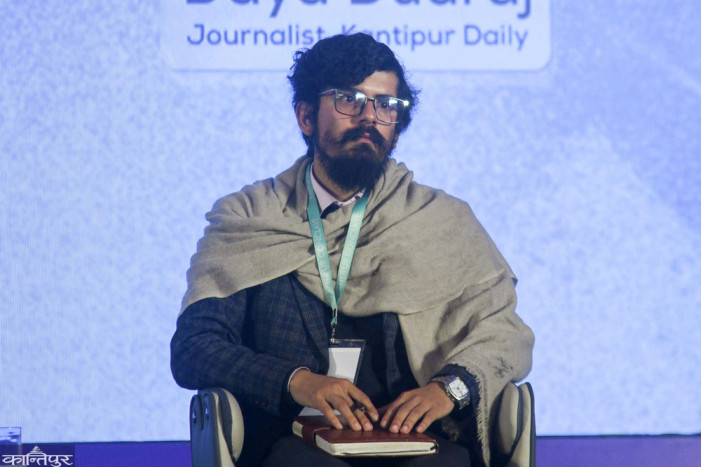
The fourth session of the second day, ‘New Voices of the Republic’, has begun. In the session, Raksha Bam, Majid Ansari, Pradeep Gyawali, and Ajay Kushwaha will debate leadership, legitimacy, and citizen participation. 
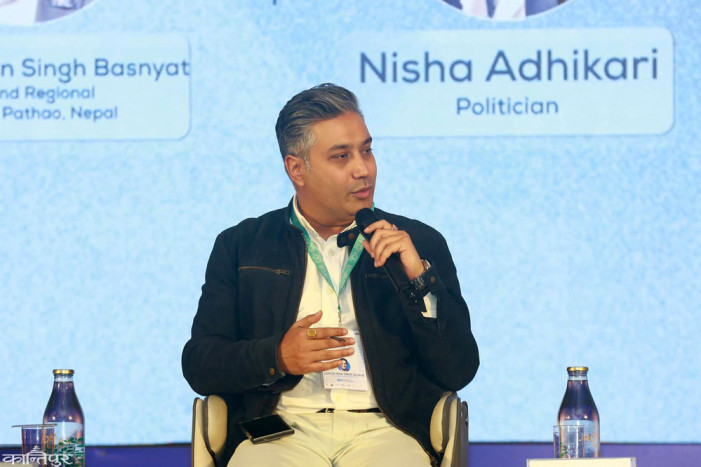
Fourth session of Kantipur Conclave: 'New Voices of the Republic' begins

(02:03 PM)

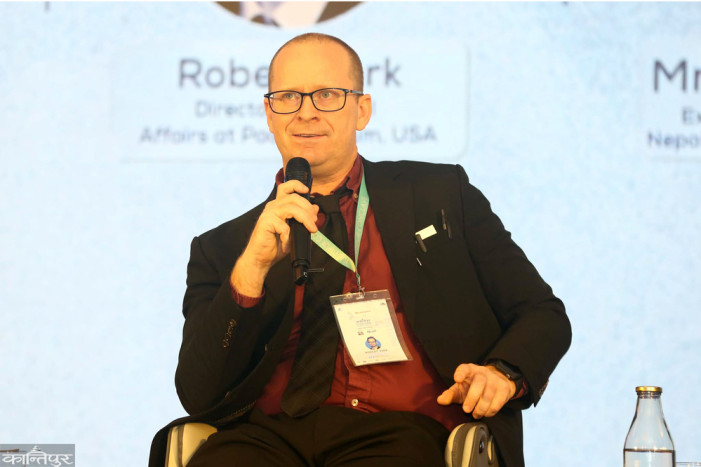
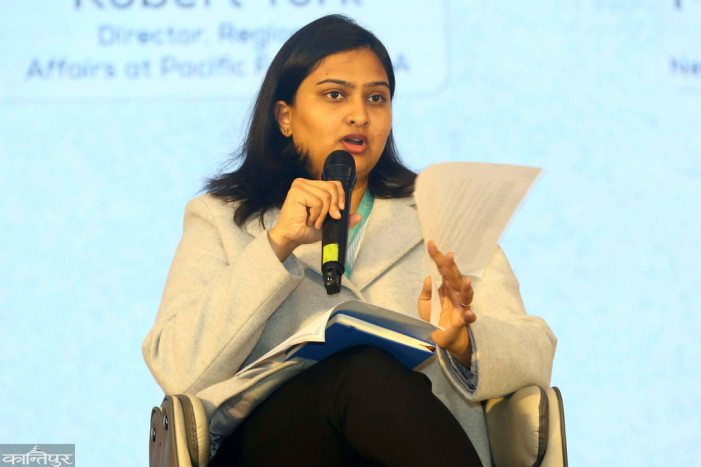
The protests in Hong Kong, Bangladesh or Nepal were not created by the US: Robert York

Robert York, regional director of the American think tank Pacific Forum, said that the US did not create the movements in Hong Kong, Bangladesh or Nepal. He said, 'The democratic movements or demonstrations that took place in Ukraine, Hong Kong, Bangladesh or here were not created by the US. The citizens of those societies raised their voices and demanded change. The US does not want to take credit for those movements.'


The protests in Hong Kong, Bangladesh or Nepal were not created by the US: Robert York
अमेरिकी थिंकट्यांक प्यासिफिक फोरमका क्षेत्रीय मामिला निर्देशक रोबर्ट योर्क । तस्बिर : दीपेन श्रेष्ठ/कान्तिपुर

(01:54 PM)

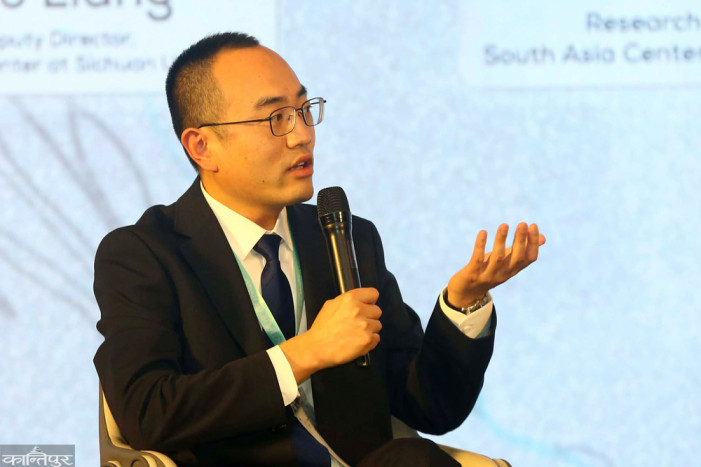
The so-called 'red line' was not created by China: Gao Liang

Gao Liang, deputy director of the Nepal Center at Sichuan University in China, said that there is already some common understanding between the political forces of China and Nepal, and that despite differences on some issues, there is a common concern and respect for fundamental issues. 'Sometimes, some issues may appear on a case-by-case basis. But if we look deeper into these issues, it seems that the pressure comes not from Nepal or China, but from external forces,' he said. 'These pressures are linked to historical reasons ‍colonialism and imperialism. Therefore, these so-called ‘red lines’ are not created by China, and it is not appropriate to blame China for this.'


The so-called 'red line' was not created by China: Gao Liang
चीनको सिचुआन विश्वविद्यालयको नेपाल सेन्टरका उपनिर्देशक गाओ लियाङ । तस्बिर : दीपेन श्रेष्ठ/कान्तिपुर

(01:47 PM)

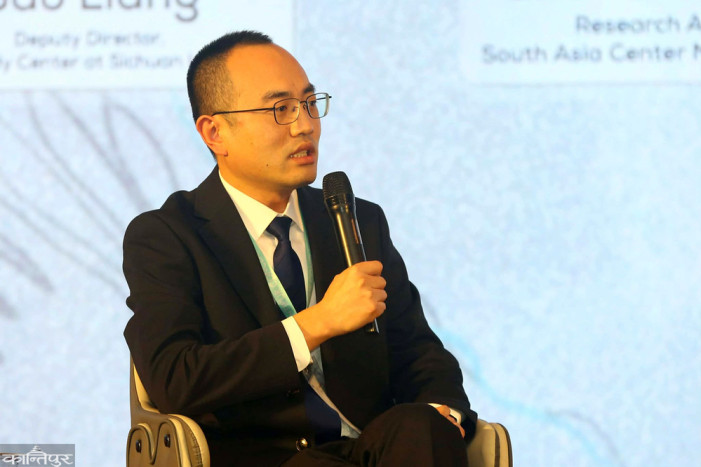
China-Nepal relations have remained stable and strong for 75 years: Gao Liang

Gao Liang, deputy director of the Nepal Center at Sichuan University in China, said that the Chinese side's policy of non-interference in Nepal's internal affairs has played a very important role. He said that the China-Nepal relationship has been stable and strong for the past 75 years, partly because of the Nepalese side's respect for China's core interests.

China-Nepal relations have remained stable and strong for 75 years: Gao Liang
चीनको सिचुआन विश्वविद्यालयको नेपाल सेन्टरका उपनिर्देशक गाओ लियाङ । तस्बिर : दीपेन श्रेष्ठ/कान्तिपुर

(01:43 PM)

China wants to promote BRI for Himalayan connectivity in Nepal as well: Gao Liang

Gao Liang, deputy director of the Nepal Center at Sichuan University in China, said that China wants to promote the BRI in Nepal for Himalayan connectivity as well. He said, "Nepal will not only gain development from it. Nepal, a less developed country, will also create a positive external environment for the development of China's Tibet region."

China wants to promote BRI for Himalayan connectivity in Nepal as well: Gao Liang
चीनको सिचुआन विश्वविद्यालयको नेपाल सेन्टरका उपनिर्देशक गाओ लियाङ । तस्बिर : दीपेन श्रेष्ठ/कान्तिपुर

(01:34 PM)

Nepal-India relations are becoming based on economy and institutional development: Sneha Kumcha

India is adopting a policy of economic interdependence and institutional cooperation with Nepal, said Sneha Kumcha, a researcher at the South Asia Center, MP-IDSA, India.  Kumcha said that India's relations with Nepal have been changing recently.  Kumcha said, 'Compared to five years ago, the relations between Nepal and India are now really based on economic and institutional development.'

Nepal-India relations are becoming based on economy and institutional development: Sneha Kumcha
तस्बिर : दीपेन श्रेष्ठ/कान्तिपुर

(01:19 PM)

The Gen-G movement has given us time to explore where we are and what we can do: Mrigendra Karki

Tribhuvan University's Sinas Executive Director Mrigendra Karki said that the Gen-G movement has raised questions for everyone. Karki said, 'With this question, it is time to find out what Nepal is? Where are we? What can we do.'

The Gen-G movement has given us time to explore where we are and what we can do: Mrigendra Karki
त्रिभुवन विश्वविद्यालयको सेन्टर फर नेपाल एन्ड एसियन स्टडिज (सिनास) का कार्यकारी निर्देशक मृगेन्द्र कार्की । तस्बिर : दीपेन श्रेष्ठ/कान्तिपुर

(01:03 PM)

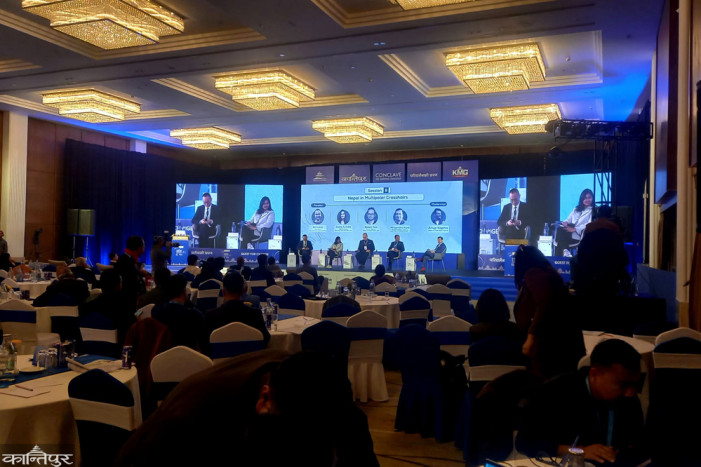
The third session of Kantipur Conclave, 'Nepal in the tug of war of power', begins

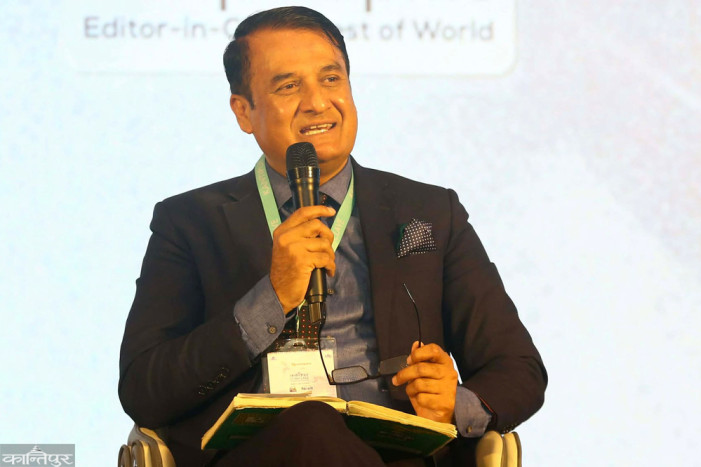
The third session of the second day, ‘Nepal in the Power Struggle’, has begun. Experts from China, India and the US are debating the geopolitical situation in Nepal. Gao Liang, Deputy Director of the Nepal Center at Sichuan University in China, Sneha Kumcha, Researcher at MP-IDSA in India, Robert York, Regional Affairs Director of the American think tank Pacific Forum, and Mrigendra Karki, Executive Director of CINAS, will be the panelists. The question of how to maintain a balance between neighboring and global powers will be at the center of this session. The session will be facilitated by Anup Kafle, Editor-in-Chief of Rest of the World.
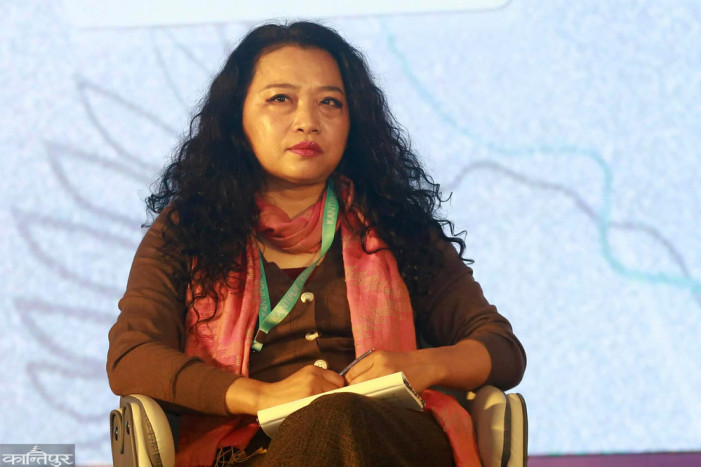
The third session of Kantipur Conclave, 'Nepal in the tug of war of power', begins

(12:57 PM)

It is not right to nominate just any candidate in the name of representation: Khushbu Oli

Politician Khushbu Oli said that it is not right to field any candidate in the name of representation in parliament through the proportional system. ‘062/63 There is no policy and law to address the issue of backwardness. Some who were brought through the proportional system are not able to make policy interventions. This is a shameful issue,’ she said,’ Regardless of the system of representation, policy interventions seek the status of representation. When an educated woman comes to politics, it does not mean that a backward woman must come.’

It is not right to nominate just any candidate in the name of representation: Khushbu Oli
तस्बिर : अंगद ढकाल/कान्तिपुर

(12:53 PM)

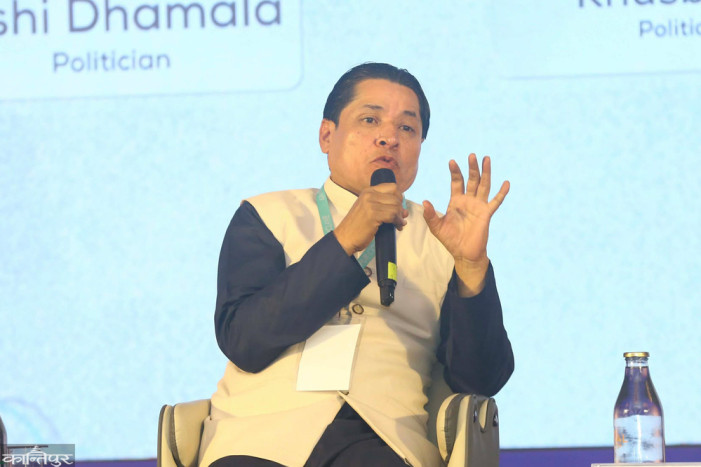
I entered politics for the upliftment of the poor: Rishi Dhamala

Politician Rishi Dhamala said that he left everything and entered politics to serve the people. He claimed that he was the leader with whom he had associated the most leaders and said, ‘I came into politics for the upliftment of the poor people.’ He said this while speaking at the Kantipur Conclave. 


He claimed that he was carrying the ideas of Congress leader Pradeep Giri and also argued that health and education should be made free. He added, ‘I did not come into politics just like that and spontaneously. I have experience of associating with leaders and I have understood everything.’

I entered politics for the upliftment of the poor: Rishi Dhamala
तस्बिर : दीपेन श्रेष्ठ/कान्तिपुर

(12:50 PM)

The issue of nation-building was not debated on social media: Rishi Dhamala

Politician Rishi Dhamala said that there has been no debate on social media on the issue of nation-building. He said that social media is dividing the society. He said, 'What kind of leaders should be born, how to develop the country, create jobs, how to attract investment?'

The issue of nation-building was not debated on social media: Rishi Dhamala
तस्बिर : अंगद ढकाल/कान्तिपुर

(12:44 PM)

Currently, there is a situation where people look at trends but not at individuals and ideas: Khushbu Oli

Politician Khushbu Oli said that it is very dangerous to choose a leader based on popularity on social media. ‘You can make yourself popular by investing in social media in a moment. Choosing a leader based on this is a very dangerous thing,’ she said,‘In this day and age, we look at trends and trends, but what is the person like? What is their personality? What are their ideas? They don't even ask questions, they don't even seek accountability from that leader? It seems that they are being voted for through social media.’

Currently, there is a situation where people look at trends but not at individuals and ideas: Khushbu Oli
तस्बिर : अंगद ढकाल/कान्तिपुर

(12:38 PM)

Madhesh is the most affected by the dowry system: Rishi Dhamala

Politician Rishi Dhamala said that now politics will also be dedicated to the country and the people. 'The suffering people are in Rautahat. If I had contested from Dhading and Kathmandu, I would have won with a large number of votes. I will win from Rautahat too. It is where the most illiterate and poor people are,' he said, 'Madhesh province is the most affected by the dowry system. I have come here after seeing all those pictures. I have gone to solve the problems of sugarcane farmers. I did not go to Rautahat 4 just for that.'

Madhesh is the most affected by the dowry system: Rishi Dhamala
तस्बिर : अंगद ढकाल/कान्तिपुर

(12:33 PM)

Go to Rautahat to understand why Srishi Dhamala cried: Srishi Dhamala

Rishi Dhamala, who left journalism to enter politics, has questioned why there is no debate on social media about building a nation. He also talked about his political journey, saying that people should be serious about the use of social media.

He said, "I have reached the people. I have to win the people's vote in my favor. Everyone should go to Rautahat once and see. See what is there, go there and understand why Rishi Dhamala cried."

He said this while speaking at the second session of the second day of the Kantipur Conclave.

Go to Rautahat to understand why Srishi Dhamala cried: Srishi Dhamala
तस्बिर : दीपेन श्रेष्ठ/कान्तिपुर

(12:28 PM)

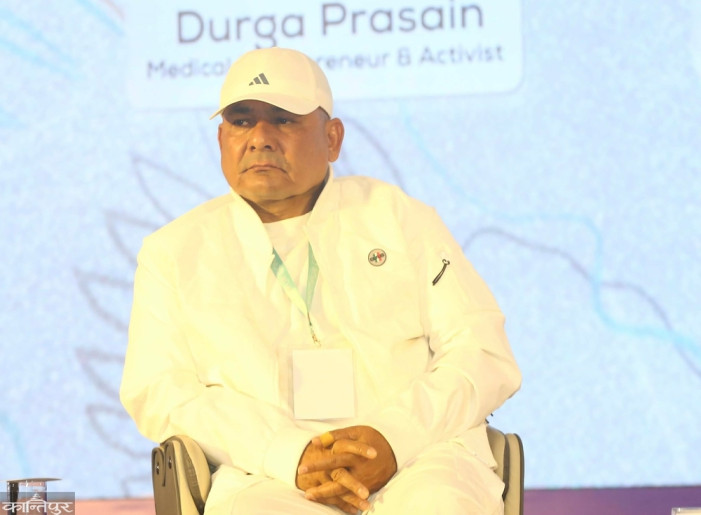
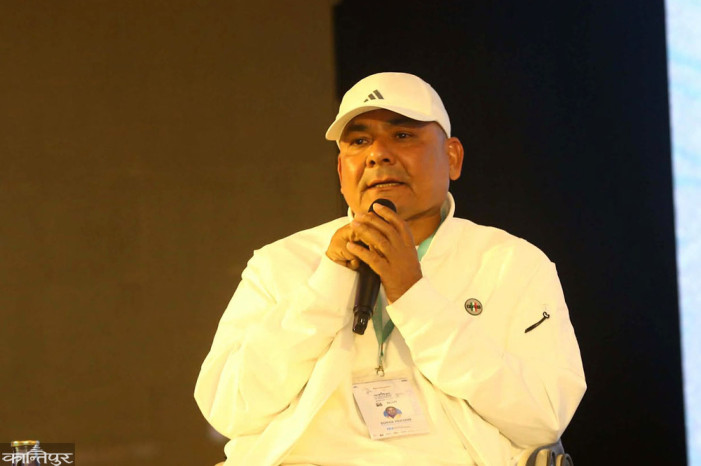
Going to and from jail has become a routine: Durga Prasai

Medical practitioner Durga Prasai has claimed that he has taken a different path after coming to the conclusion that politics does not make a country. Speaking at the Kantipur Conclave, he said that he has arrived where the problem is and that is why he is saying that a king should be brought in.


He said that going to and from jail has become a routine and that he has been speaking openly about the monarchy and religion. 

Going to and from jail has become a routine: Durga Prasai
तस्बिर : दीपेन श्रेष्ठ/कान्तिपुर

(12:20 PM)

Durga Prasai: I sometimes get angry because I consider former King Gyanendra as my guardian


Medical practitioner Durga Prasai said that she sometimes gets angry with former King Gyanendra because she considers him her guardian. He said this while speaking at the second session of the second day of the Kantipur Conclave. He said, ‘Children get angry with their guardians, that’s how it is.’

He said that he has been in touch with all the leaders of the big parties and that after meeting Pushpa Kamal Dahal and UML Chairman KP Sharma Oli, he started calling her ‘Marsi’.


Durga Prasai: I sometimes get angry because I consider former King Gyanendra as my guardian
तस्बिर : दीपेन श्रेष्ठ/कान्तिपुर

(12:16 PM)

How mature will the next parliament be: Khushku Oli


RPP leader Khushbu Oli has said that social media does not make leaders, but rather it only creates waves. She said that social media is an easy way to become popular, citing both information and falsehoods. She explained the background of candidates seeking popularity through social media, saying, "I am worried about how mature the parliament that will be formed will be."

She said this while speaking at the second session of the second day of the Kantipur Conclave.


How mature will the next parliament be: Khushku Oli

(12:13 PM)

The current leadership could not build the country, the country was not built: Rishi Dhamala

Politician Rishi Dhamala said that he entered politics to improve politics and make it more people-oriented. He said that Nepal should move forward in development and prosperity by joining politics. ‘The current leadership has failed. They achieved success in political movements but could not build the country, the country did not become,’ he said, ‘Corruption is rampant in the country. There is no good governance in the country, only misgovernance. That is why I have become a candidate from the backward area of ​​Rautahat 4.’

The current leadership could not build the country, the country was not built: Rishi Dhamala
तस्बिर : दीपेन श्रेष्ठ/कान्तिपुर

(12:12 PM)

For a long time, there was an understanding that those who spoke were not journalists: Santosh Deuja


Journalist Santosh Deuja has raised the question of where the media has gone, what has happened to the media. Speaking in the second session of the second day of the Kantipur Conclave, he said that there has been a long-standing understanding in Nepal that those who speak are not journalists, and that the notion of who is a journalist and who is not has also persisted for a long time.

He said that supporting good people does not make the country, and said that he supports those who do good work. He mentioned that he supported Nepal Communist Party candidate Renu Dahal, arguing that he supported him based on the person, not the party. 


For a long time, there was an understanding that those who spoke were not journalists: Santosh Deuja

(12:00 PM)

I entered politics at the age of 14: Rishi Dhamala

Politician Rishi Dhamala said that he entered politics at the age of 14. 'I don't want to say much about why I entered politics. I want to talk about the Gen-G generation of the 2046 BS people's movement. I entered politics at the age of 14,' he said, 'I spent seven days in jail for democracy in 2046 BS. I am the person who reports on the need for democracy in the newspaper we jointly published, along with Ramchandra Bhattarai, Jibendra Singhada, and others.'

I entered politics at the age of 14: Rishi Dhamala
तस्बिर : दीपेन श्रेष्ठ/कान्तिपुर

(11:48 AM)

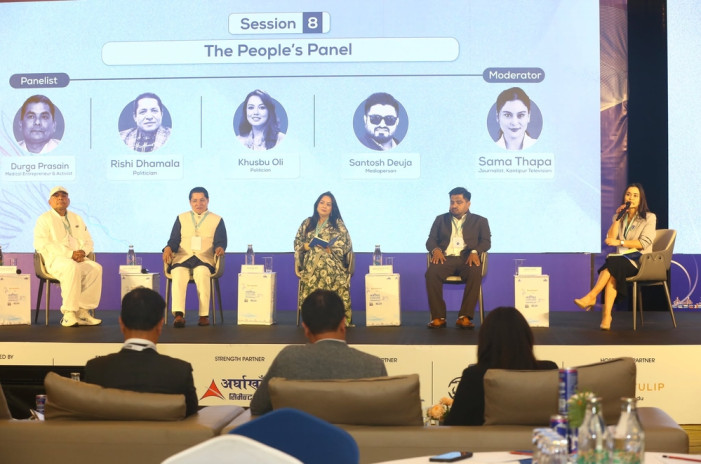
The second session of the second day of the Kantipur Conclave has begun.

The session, moderated by Sama Thapa, will feature medical practitioner Durga Prasai, politicians Khushbu Oli, Rishi Dhamala, and media personality Santosh Deuja.

Second session begins

(11:47 AM)

A separate ministry is needed to look after information and technology: Nisha Adhikari

Politician Nisha Adhikari said that since the use of technology poses a challenge to national security, it is necessary to establish a separate ministry to look after information and technology alone. ‘These ministries should have more technicians than politicians,’ she said, ‘Nepal's security is also needed technically. Technology poses a challenge to national security.  This is also a matter of linking it to geopolitics.’

A separate ministry is needed to look after information and technology: Nisha Adhikari
तस्बिर : दीपेन श्रेष्ठ/कान्तिपुर

(11:45 AM)

In the Gen-G movement, people came to the streets following ideas, not individuals: Asimman Singh Basnyat

Pathao Nepal Managing Director Asimman Singh Basnyat said that in the Gen-G movement, people came to the streets following ideas rather than individuals. He said that if the movement had been limited to individual-centered leadership from the beginning, such a large participation would not have been possible. At the decisive moment of the movement, people came to the streets making issues and ideas more important than leadership, but during the movement, there was infiltration, he said. 'On the first day, there was infiltration. The next day, it turned into a people's movement,' he said, 'Later, infiltration increased again and the situation turned towards destruction.'

In the Gen-G movement, people came to the streets following ideas, not individuals: Asimman Singh Basnyat
तस्बिर : दीपेन श्रेष्ठ/कान्तिपुर

(11:40 AM)

Big tech companies are becoming more aggressive without listening to the people: Dobhan Rai

AI expert Dobhan Rai said that big technology companies are becoming more aggressive without listening to the people. ‘This aggressiveness will continue to increase for some time,’ she said, ‘There may be limited agencies in Nepal. We have to take our own accountability from our own community or individual or state‍. We have to play our own role along with core regulation.’

Big tech companies are becoming more aggressive without listening to the people: Dobhan Rai
तस्बिर : दीपेन श्रेष्ठ/कान्तिपुर

(11:34 AM)

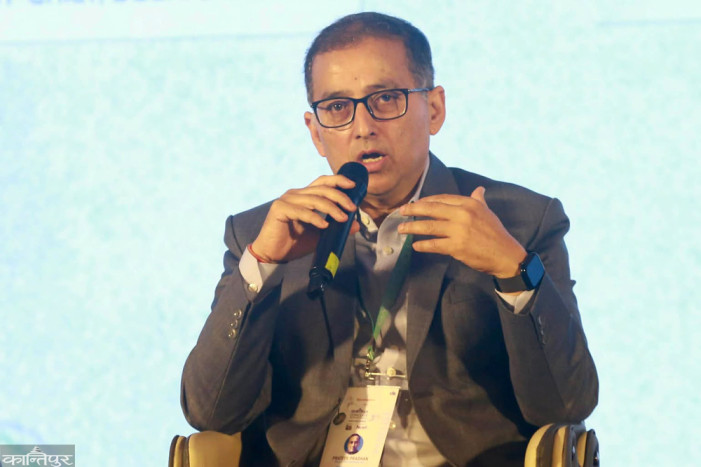
Citizens are now guided by social media rather than media: Prateek Pradhan

Editor-in-Chief of Bahrakhari, Pratik Pradhan, has said that deepfakes have increased and that people should be aware of them. "The current problem is that social media guides citizens more than the media. How many likes are there? How many comments are there? How many shares are there? People are counting. Even that is starting to become fake," he said. "If someone writes on social media and gets 500,000 likes in 5 minutes, it is fake. We should be able to explain that." He said that fake likes, comments and shares should be avoided.


Citizens are now guided by social media rather than media: Prateek Pradhan

(11:31 AM)

Institutional failure cannot be attributed to algorithms: Dobhan Rai

AI expert Dobhan Rai has argued that institutional failure cannot be attributed to algorithms. 'The narrative of algorithms is that sometimes they do what they say they will do, and sometimes they make a scapegoat out of it, saying that the algorithm did everything. This problem is institutional failure,' she said. 'Institutional failure is the result of the inability to trust any individual or institution, leading to chaos.'

Institutional failure cannot be attributed to algorithms: Dobhan Rai
तस्बिर : दीपेन श्रेष्ठ/कान्तिपुर

(11:23 AM)

'Journalism is becoming weaker as content is being spread indiscriminately'

Editor-in-Chief of Bahrakhari, Pratik Pradhan, said that journalism has a lot of responsibility and that it should provide the topics sought by the society and be clear about what content to give to the society and what content not to give. He said, 'Journalism should be an institution that leads thought.' Yesterday, news was released to the public. He said that there was a tendency to move forward by understanding its response, but now it is trapped in the algorithm. He said that if we continue to make whatever we see news, the journalism profession and business will end. 'The media is getting stuck. We should make a borderline for what content to give to the citizens. It should be clear what the media is. There should be freedom of the press. The society that journalism does is change,' he said. He pointed out that journalism is weakening when random content is released.

'Journalism is becoming weaker as content is being spread indiscriminately'
तस्बिर : दीपेन श्रेष्ठ/कान्तिपुर

(11:17 AM)

Don't forget to be accountable tomorrow in the race for views and sentiment: Asimman Singh Basnyat

Pathao Nepal Managing Director Asimman Singh Basnyat said that it is wrong to compete for views and emotional reactions on social media. He also said that the tendency to earn views and sentiment immediately can cause problems for oneself later. 'If we think that we will earn views today and sentiment today when we present our presentation, it will cause problems for ourselves,' he said, 'It is easy to earn views by creating a fund. But what if we get the discussion and views first and then it is not practical? '

Don't forget to be accountable tomorrow in the race for views and sentiment: Asimman Singh Basnyat
तस्बिर : दीपेन श्रेष्ठ/कान्तिपुर

(11:15 AM)

Big tech companies are spreading toxic content: Dobhan Rai

AI expert Dobhan Rai has said that a global initiative is needed to hold big tech companies accountable. He says this requires a collective effort, not just from any one country.


Rai said this in the first session of the second day of the Kantipur Conclave, titled ‘The Intersection of Dialogue, the Confusion of Algorithms’.

Big tech companies are spreading toxic content: Dobhan Rai
तस्बिर : दीपेन श्रेष्ठ/कान्तिपुर

(11:13 AM)

Journalism is failing by following the crowd: Prateek Pradhan

Editor-in-Chief of Bahrakhari, Pratik Pradhan, said that journalism is failing by following the crowd of visitors. He said that journalism should be able to voice the voice of the people rather than chasing the crowd. ‘Algorithms have also changed the media. Journalism has moved forward through print, radio, television, and online,’ he said, ‘Journalism was supposed to voice the voice of the people. Journalism is the medium of freedom of expression.’ But recently, he pointed out that thought-leading journalism organizations have been failing by focusing only on content creation. 

Journalism is failing by following the crowd: Prateek Pradhan
तस्बिर : दीपेन श्रेष्ठ/कान्तिपुर

(11:12 AM)

Big tech companies are at risk of becoming more chaotic: Dobhan Rai

AI expert Dobhan Rai said that chaos has increased in the digital space as institutions fail, and that society is going through a psychology of fear rather than trust. She believed that we should be serious about why such a situation is being created on social media. She said, ‘Everyone's participation is needed to solve this problem. There is a possibility that big tech companies will become more aggressive in the next 5-6 years.’


Rai said this in the first session of the second day of the Kantipur Conclave on the topic ‘Chautari of Dialogue, Confusion of Algorithms’.

Big tech companies are at risk of becoming more chaotic: Dobhan Rai
तस्बिर : दीपेन श्रेष्ठ/कान्तिपुर

(11:11 AM)

Algorithms are not the same today as they were yesterday: Dobhan Rai


AI expert Dobhan Rai said that algorithms are not the same today as they were yesterday and will not be the same tomorrow. She said, ’The nature and practice of the algorithms we see now is not the same, the algorithms are the same as they are today. We have not surrendered to the idea that they should be like that.’

Algorithms are not the same today as they were yesterday: Dobhan Rai
तस्बिर : दीपेन श्रेष्ठ/कान्तिपुर

(11:07 AM)

You can reach voters without flashy or stunts: Nisha Adhikari

Nisha Adhikari, leader of the Dynamic Democratic Party, has said that it is possible to reach voters without resorting to flashy and stunts. She said that she is practicing how to reach voters in the right way and that there is still a lot of work to be done on how to reach the public and what to say. She said, ‘I am running a different kind of campaign with a stance not to approach the public in a misleading and flashy manner.’


Adhikari said this in the first session of the second day of the Kantipur Conclave on the topic ‘Chautari of Dialogue, Confusion of Algorithms’. She said that a policy is also needed on what candidates can and cannot write on social media.


You can reach voters without flashy or stunts: Nisha Adhikari
तस्बिर : दीपेन श्रेष्ठ/कान्तिपुर

(10:58 AM)

Journalism is not content creation: Prateek Pradhan


Editor-in-Chief of online portal Bahrakhari, Pratik Pradhan, has said that journalism is not content creation. He expressed concern that journalism has started running after followers, stating that journalism has started moving away from leading thought and the conscience of what to give and how much to society and has started moving towards clickbait.

Pradhan said this in the first session of the second day of the Kantipur Conclave on the topic of ‘The Circle of Dialogue, the Confusion of Algorithms’.


Journalism is not content creation: Prateek Pradhan

(10:52 AM)

There is a lot of noise here: Dipesh Tripathi

Dipesh Tripathi, founder of the YouTube channel ‘The Nepali Comment’, has said that there is an overabundance of information in the digital space and it is becoming difficult to distinguish what is true and what is false. Facilitating the first session of the second day of the Kantipur Conclave, he said, ‘There is a lot of noise here.’


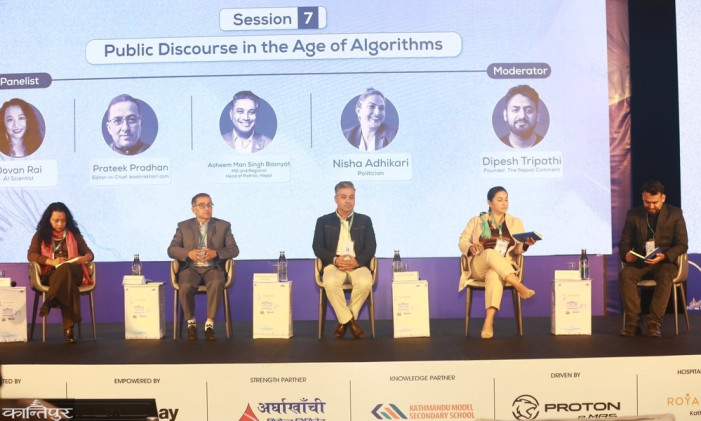
The discussion titled ‘Chautari of Dialogue, Confusion of Algorithms’, which Tripathi will facilitate, will be attended by AI expert Dobhan Rai, Editor-in-Chief of online portal Bahrakhari, Prateek Pradhan, Managing Director of Pathao Nepal, Asimman Singh Basnyat, and politician Nisha Adhikari.

There is a lot of noise here: Dipesh Tripathi

(10:48 AM)

Discussion on the topic of dialogue, the confusion of algorithms

The second day of Kantipur Conclave. The first session is being discussed under the title ‘Chautari of Dialogue, Confusion of Algorithms’. This session will be attended by AI expert Dobhan Rai, Editor-in-Chief of online portal Bahrakhari Pratik Pradhan, Managing Director of Pathao Nepal Asimman Singh Basnyat, and politician Nisha Adhikari. The session will be facilitated by Dipesh Tripathi, founder of YouTube channel ‘The Nepali Comment’.

Discussion on the topic of dialogue, the confusion of algorithms

कान्तिपुर कन्क्लेभ–२०२६

Kantipur

Link copied successfully