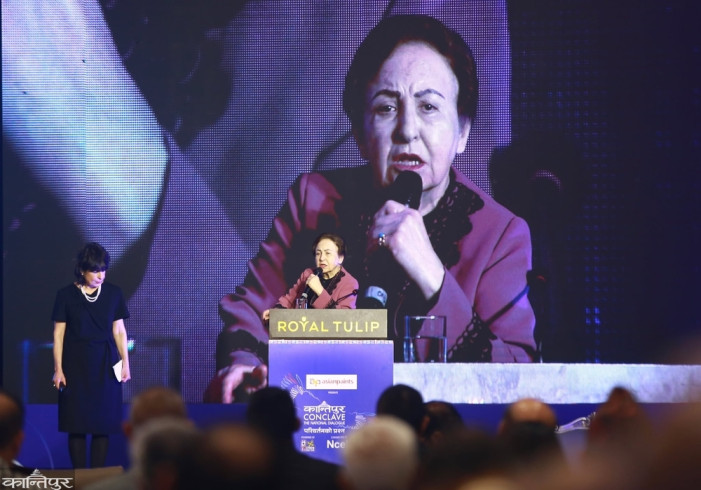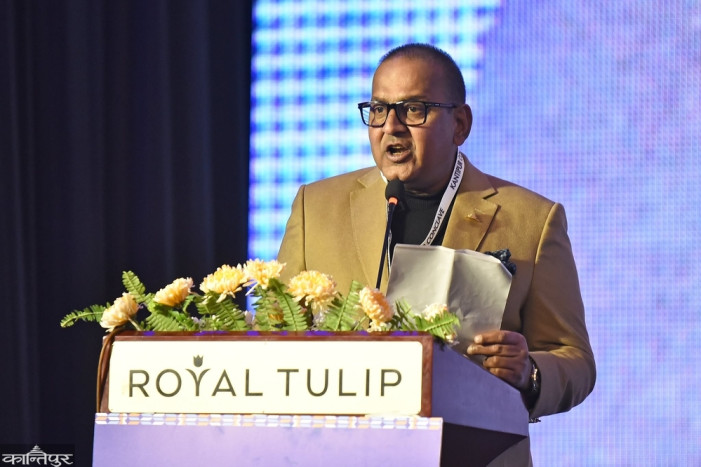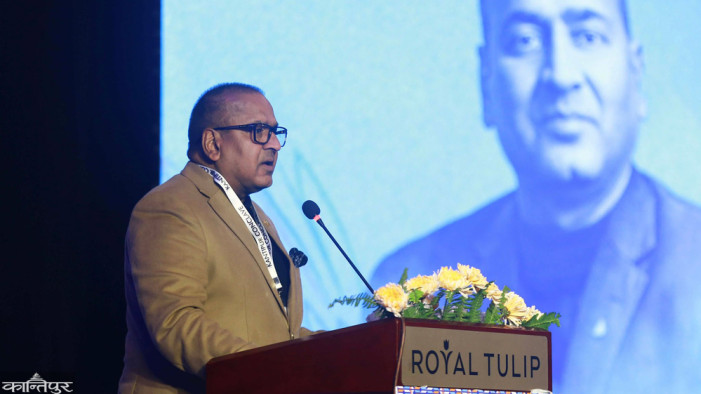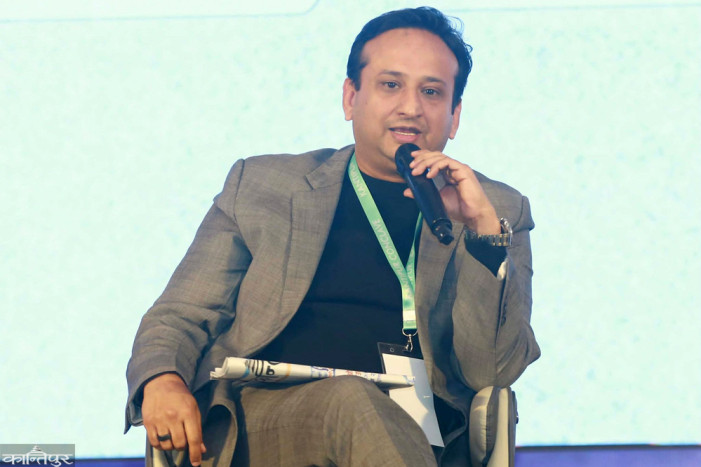
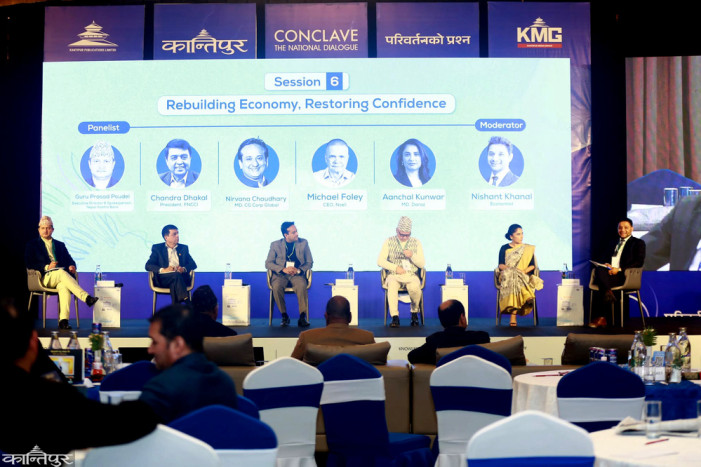
The sixth session of the Kantipur Conclave-2026 discussed the topic of 'Reviving the Economy, Restoring Trust'.
We use Google Cloud Translation Services. Google requires we provide the following disclaimer relating to use of this service:
This service may contain translations powered by Google. Google disclaims all warranties related to the translations, expressed or implied, including any warranties of accuracy, reliability, and any implied warranties of merchantability, fitness for a particular purpose, and noninfringement.
Nepal Rastra Bank spokesperson Guru Prasad Poudel said that the main role of the central bank is to maintain economic stability. For this, the Rastra Bank has been continuously studying international practices and practices during policy formulation, he said. 'Stability is the main thing. We have taken risks as central banks to maintain economic stability,' he said, 'Some changes have been made in foreign exchange rate management to provide convenience.' He informed that the Rastra Bank is currently trying to maintain balance by keeping interest rates within certain limits.
Nirvan Chaudhary, Executive Director of Chaudhary Group, said that political parties should prioritize the economy and economic activities in the upcoming elections. He said that this is why the Confederation of Nepalese Industries, a few weeks ago, had suggested that political parties prioritize the economy and private sector issues in their manifestos. He said that the formation of 15 governments in the last 25 years proves the extent of political instability in the country. That is why he said that political parties should now prioritize the economy.
Nepal's banks are becoming more positive and open to lending to businesses, said Nirwan Chaudhary, Managing Director of CG Corp Global. He said that banks are positive in lending to industries and businesses. He said, 'Currently, banks have become more positive and open to lending to new business opportunities. The policy role of the central bank is very important in this process.'
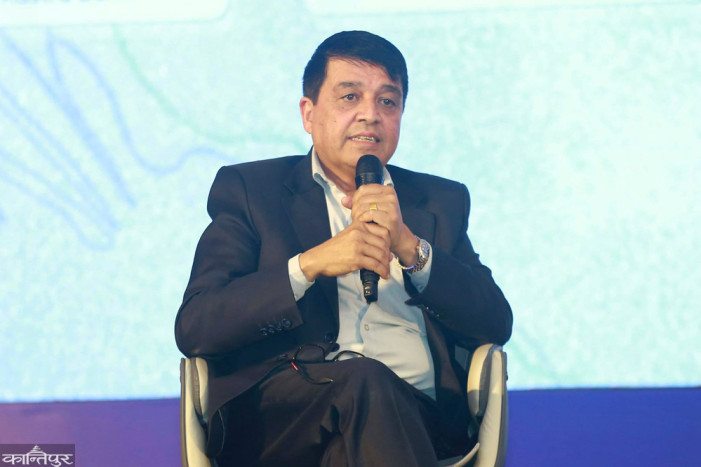
Although the confidence of the private sector is low at present, they are optimistic, said Chandra Prasad Dhakal, president of the Federation of Nepalese Chambers of Commerce and Industry. 'Currently, not only the private sector but also the society has lost confidence,' he said, 'However, the private sector is not sitting still because its confidence has decreased.' He said that they are continuously working for this. 'For example, in the protests on Bhadra 23 and 24, many properties of the government and private sectors were damaged. Of these, most of the private sector industries and businesses have resumed operations,' he said, 'However, the government sector is still providing services by pitching tents. This also proves the will of the private sector to work.' Based on this, he said that not only has the confidence of the private sector decreased, but they are also optimistic about the future.
Chandra Prasad Dhakal, President of the Federation of Nepalese Chambers of Commerce and Industry, said that due to the government's policy, businessmen have left manufacturing and started trading. When asked why businessmen are not engaged in manufacturing? Why are they only engaged in trading? He said that the government's policy is an obstacle. He said that every person seeks profit in business and wherever there is profit, businessmen will go there. He said that if tax exemptions and other exemptions can be brought for the manufacturing industry, businessmen engaged in trading will also shift.
Nepal Rastra Bank spokesperson Guru Prasad Poudel said that increasing credit flow alone is not enough to revive the economy, but rather creating a sense of trust and security among investors. He said that the bank is waiting for a suitable investment environment to emerge. According to him, the demand for credit has not increased as expected. 'A survey published by a private organization some time ago showed that about 70 percent of investors were looking at what to do next and 7 percent said they would not invest anymore,' he said. 'The lack of demand for credit may be due to the lack of trust and security among investors and the perception that the product will not yield returns.'
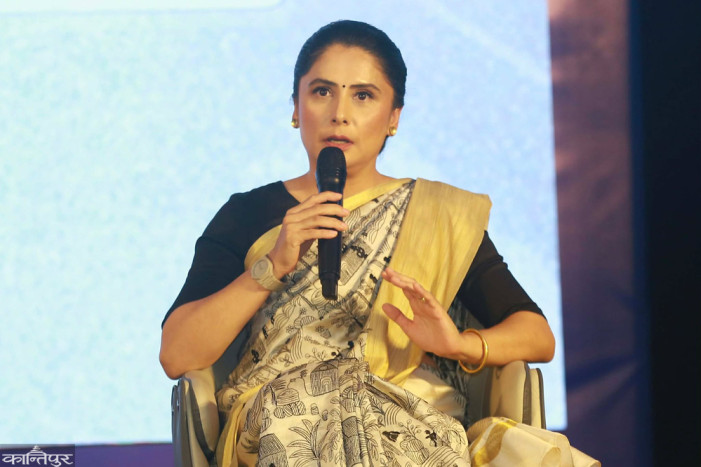
Aanchal Kunwar, managing director of online marketplace Daraz, complained that the Gen-G movement has affected her business. She said that the movement affected her business when she was preparing for the Dashain market. ‘We have 35,000 customers. We were preparing for the Dashain market. The movement also affected the private sector,’ she said, ‘It also affected Daraz.’ She said that after the movement, she has been moving the business forward by joining the Rebuilding Nepal campaign. ‘Customers order goods from us online. The goods are packed as per the order from the departmental store,’ she said, ‘We deliver them to the customer's home.’ She said that although the Gen-G movement directly affected the business, it is returning to normal.
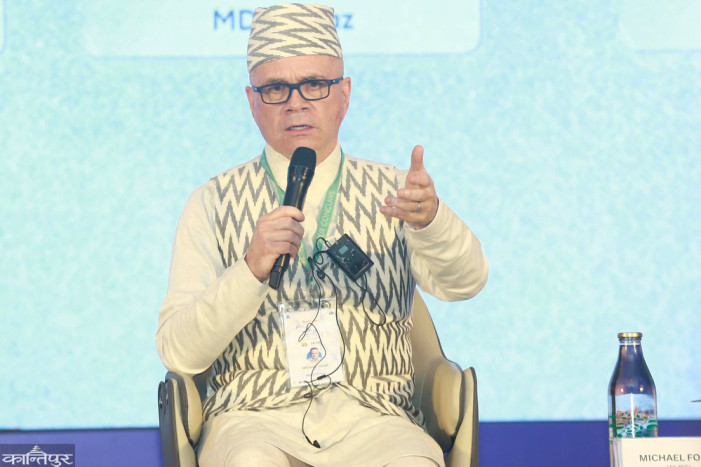
Ncell CEO Michael Foley has said that the protests were not limited to Nepal last September. 'This protest was not limited to Nepal in September. It was happening all over the world. There was a change of government in Kenya, there was a change of government in Madagascar, Sri Lanka and Bangladesh. It was not limited to Nepal. Rather than defining what happened yesterday, what will happen after the elections in March will determine the investment,' he said. 'The company I represent, Ncell, has been in Nepal for almost 22 years. I think it will be there for a long time.' He also said that if Ncell is allowed, it will bring 5G. 'We are very confident. We want to invest. If we are allowed, we will invest,' he said, 'and we will bring 5G. We will bring data centers that need to be done.'
Nepal Rastra Bank Spokesperson Guru Prasad Poudel, FNCCI President Chandra Dhakal, CG Corp Global MD Nirwan Chaudhary, Ncell CEO Michael Follo, and Daraz Nepal MD Aanchal Kunwar are participating in the sixth session of Kantipur Conclave-2026, titled ‘Reviving the Economy, Restoring Trust’. The session will also discuss the investment climate that has deteriorated due to unstable policies, the psychology of the private sector, and options for reform.
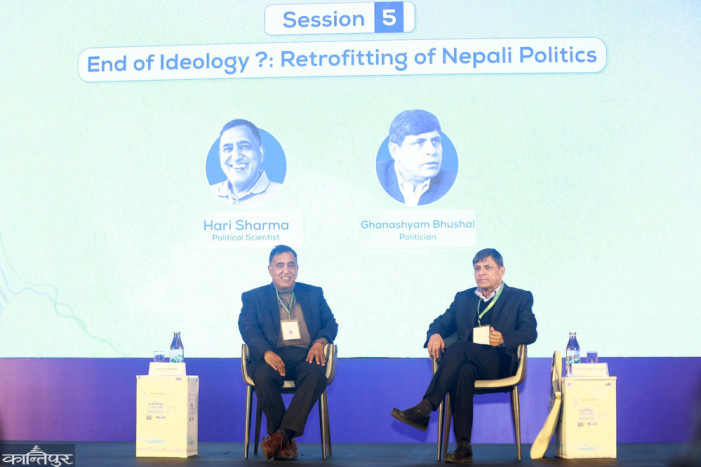
Hari Sharma said that Nepali society is becoming narrow. He said that society should be open in a democracy. ‘It is said that Nepali society is becoming wider. But it seems that it is becoming narrower,’ he said, ‘It should be open in a democracy. There should be debate and discussion. But it seems that it is gradually shrinking.’ He said that those who set out to build society are ruining society. ‘The history of the state is long. The relationship between the state and society is like that of a chicken and an egg. Society has not been built by those who set out to build society,’ he said, ‘Society should be made wider through questions, answers and discussions.’
Hari Sharma said that the results of the elections to be held on February 21 will give legitimacy to the government. The Gen-G movement argued that the legitimacy of the then parliament should be abolished and new elections should be held. He asked, ‘If the court restores the parliament, will it gain political legitimacy to govern?’ Stating that the narrative that elections do not provide anything is becoming, he said that those who are elected will be given the right to govern and form a people-elected government.
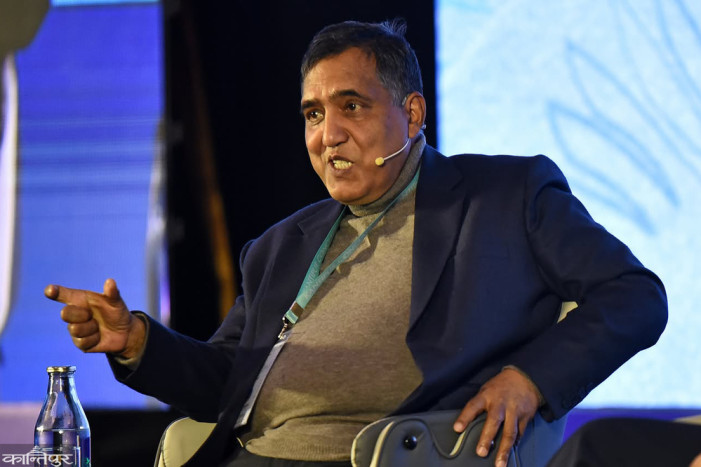
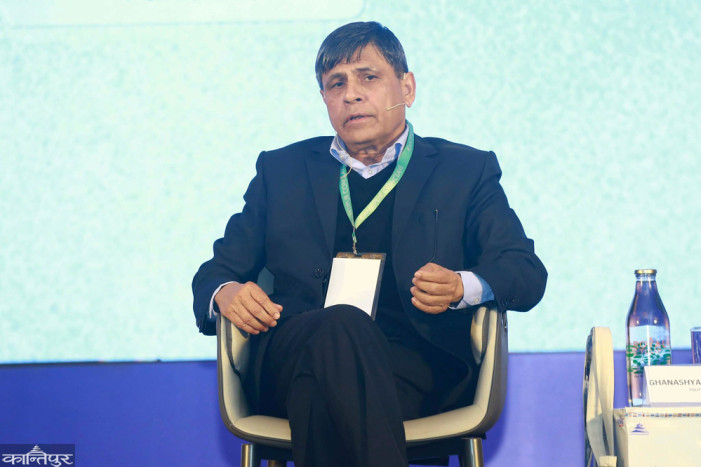
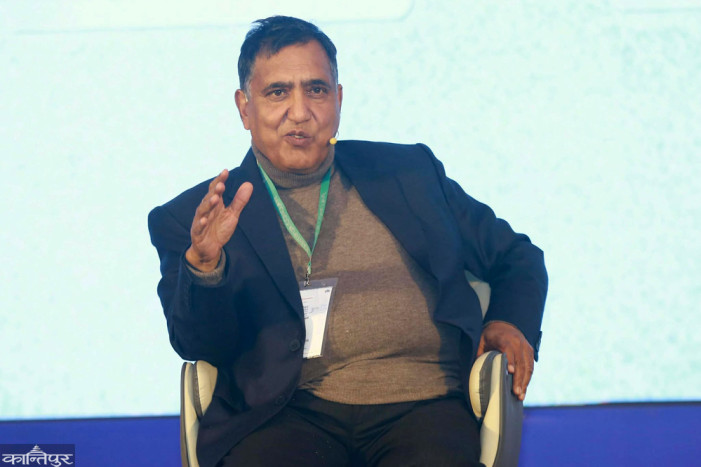
Politician Ghanshyam Bhusal said that society has become more dynamic with the rapid development of technology in recent times. He said, ‘Even though technology is lagging behind, society is moving forward. Society has also changed with the change of generation.’ Recalling his experience of his time, he said, ‘In our time, to express dissatisfaction, one had to meet the person himself, one had to reach out to the person concerned.’ He said that the time has come when social media can provide quick feedback to citizens.
Leader Ghanshyam Bhusal said that there was disappointment when political activities did not fulfill the aspirations of the people. Leader Bhusal said that there was no discussion on all the issues of the Gen-G movement. He said that if we look at it from an economic and political perspective, rather than from a political perspective alone, its situation will be clearer and clearer.
Political analyst Hari Sharma said that social media is like a maze. He said that time and space are becoming narrower due to digital technology. He said that the Gen-G movement started in a short time due to the call from social media and was stopped immediately. ‘I am very confused about what will happen tomorrow,’ he said, ‘Suddenly, the Gen-G movement started and stopped in 3/4 hours.’ Political analyst Sharma said that the youth revolted because the political system could not give them the opportunity they should have.
Comedian Sundar Khanal said that making the audience laugh is not an easy task. Speaking at the session 'Nepali Politics by Satirizing Yourself' under Kantipur Conclave-2026, he said, 'Tears come unintentionally, but people want laughter. It is difficult to make people laugh. It requires a lot of hard work. Comedy is not just entertainment but a serious creation.' Raising the question of how long comedy will survive, he said that this field will depend on the responsibility of the artist, the understanding of the audience and the support of the entire society. Khanal said that when comedians start going in the wrong direction, caution and criticism are equally necessary for reform.
A dialogue has begun between political analysts Hari Sharma and Ghanshyam Bhusal in the fifth session of the Kantipur Conclave. Analyst Sharma said that Nepali society is divided on the issue of viewing the Gen-G rebellion and there are different understandings about it. Sharma said that the question of which political theory to view the Gen-G rebellion is complex.
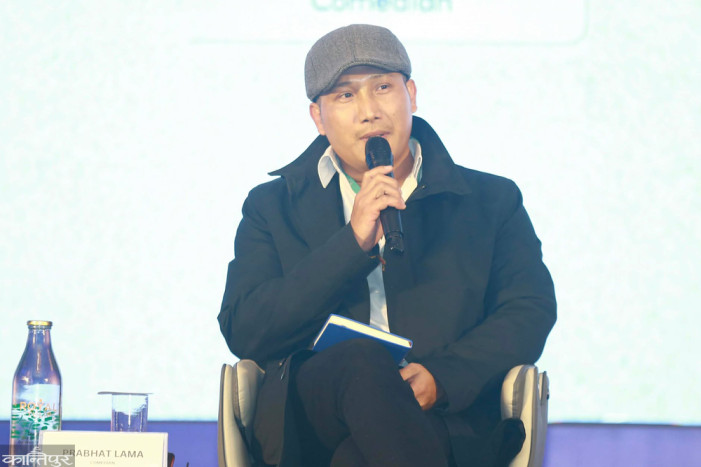
Comedian Prabhat Lama said that comedy has always made the government afraid. Lama said that comedy has worked to weaken autocratic governments all over the world. ‘If comedy stops, thoughts and questions stop. People start getting scared. If people are scared, political change cannot happen,’ he added, ‘Comedy can bring change. Comedy also has a role in Nepal’s change.’ He said that comedy has prevented the ruler from becoming autocratic by seeking accountability in politics.
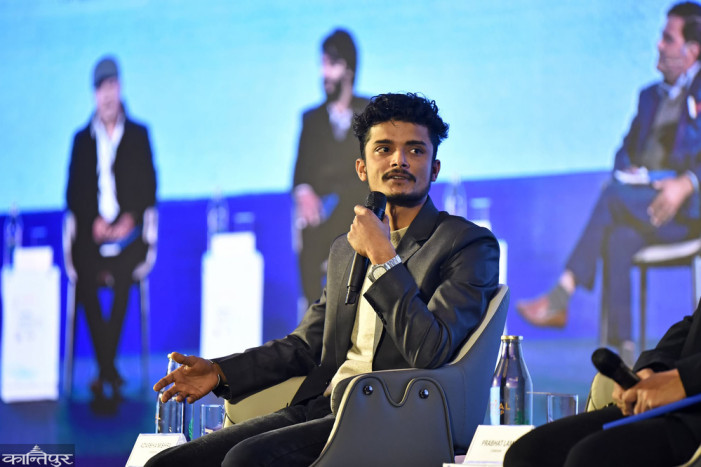
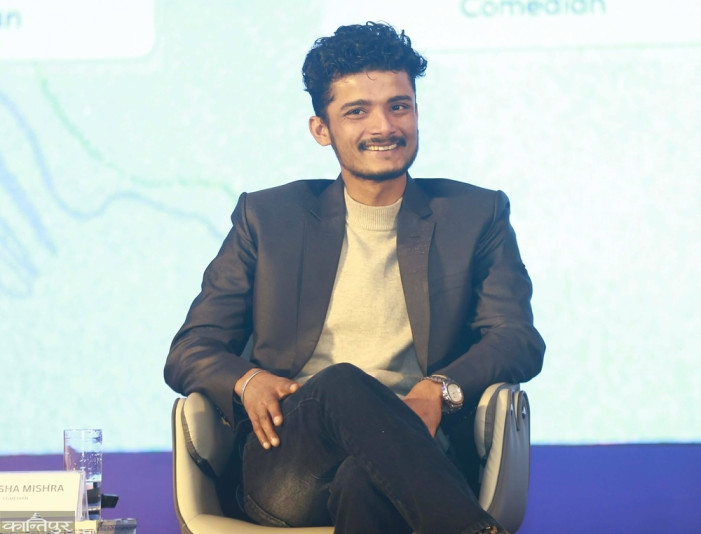
Comedian Adarsh Mishra said that there is no language barrier in comedy. ‘There is no language barrier in comedy,’ he said, ‘A person slips and falls on a banana peel. Those who watch it laugh. But the person who falls gets hurt. That’s it. ’
Comedian Adarsh Mishra said that he does not feel like he has to think carefully when he 'satires' politics and politicians.
He said that if leaders and politicians do not speak thoughtfully, then we do not have to speak thoughtfully either. ‘I have watched many speeches of leaders, up to 15/20 minutes,’ he said, ‘That is why I laugh the most when leaders speak.’
Stating that comedy is going global, he said that in India, comedians have to go to jail for making jokes.
He recalls, ‘In Nepal too, first Pranish went to jail. Then Apoorva went. They were going to take me too. They have to go to Bihar to issue an arrest warrant for me. Because I do not have citizenship.’ He said that he did not feel like the joke should be twisted or blended and that it should be told in the same spirit in which it was written.
Comedian Adarsh Mishra said that people are not in a hurry these days. In the fourth session of the fifth edition of Kantipur Conclave, 'Nepali Politics by Satirizing Yourself', Mishra said, 'I like one-liners. People don't have the patience to listen to the whole thing these days. People today can't watch a 15-second reel, so who will pay attention to my joke that comes after one and a half minutes?'
Comedian Adarsh Mishra has said that every news in Nepal feels like a punchline of satire. In the fourth session of the fifth edition of Kantipur Conclave, 'Nepali Politics by Satirizing Yourself', Mishra said, 'I read the news every day, every news seems like a punchline of satire to me. Yesterday I was reading - the country has run a trade deficit of 73.6 billion. This is a good joke. There is nothing to add to this, it is enough to read this.'
Comedian Prabhat Lama has expressed his views on the income gap between the comedy industry and journalism. Speaking at the session titled "Nepali Politics by Satirizing Yourself" of the fourth session of the 'Kantipur Conclave' that began in Kathmandu on Monday, he said that journalists earn more than comedians.
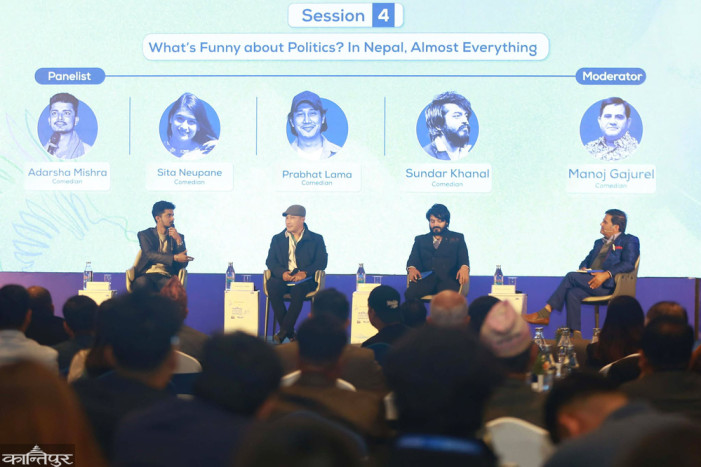
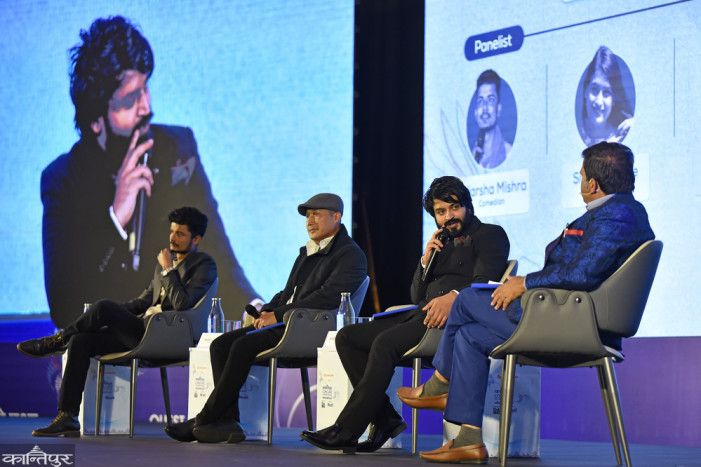
The fourth session of Kantipur Conclave is being discussed under the title 'Nepali Politics by Satirizing Yourself'.
This session, moderated by comedian Manoj Gajurel, will feature comedians Adarsh Mishra, Prabhat Lama, and Sundar Khanal.
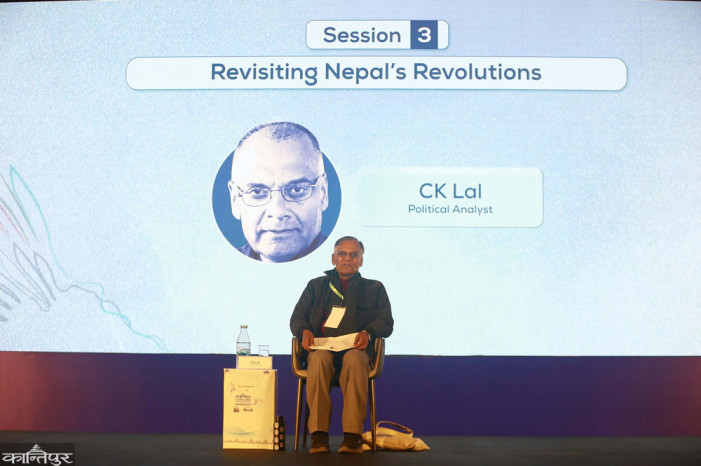
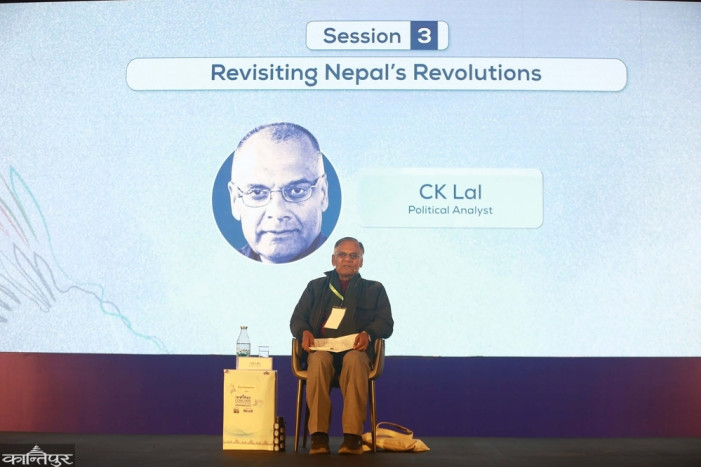
Political analyst CK Lal has said that the Gen-G movement is not Nepal's but the youth's. Analyst Lal said this in the session 'Journey of Nepali Revolution: Review of the Past, Assessment of the Future' on Monday in the fifth edition of Kantipur Conclave. 'Nepalese people love brands, even if it is a fake from China, they should wear the brand. In political matters, one should take a brand. If the brand is taken, it is Gen-G. The Gen-G movement is not Nepal's, but the youth's. It started with protests. There was no capacity to manage the protests. When the protests could not be managed, it exploded. When the explosion occurred, the state and geopolitical powers came together. They managed it well so that it did not turn into an uprising, movement or revolution.'
Political analyst CK Lal has said that the complex problems of the current country cannot be solved through elections alone. He said that the agenda of change is more related to the government and the state machinery than elections. According to him, although the problems seen now are related to the agenda of change, they cannot be addressed through elections. 'Elections form the government, but the agenda of change is implemented by the government,' he said. He said that only some 'micro' issues can be addressed within the current system. However, he concluded that the transformative change expected by society is not possible through the electoral process alone. According to him, long-term solutions are not possible without structural reforms, institutional restructuring, and changes in political culture.
Political analyst CK Lal argued that although revolution is a natural process, extensive preparations are made behind it. Presenting past movements as examples, he said that various political movements in Nepal also have a history of moving forward with planned preparations. 'When the expectations of the citizens are not met, a society that wants change seeks an alternative and revolts or revolutions,' he said.'Revolts and revolutions are not sudden events but processes born of long preparations and social compulsions.' According to him, once a revolution starts, it determines its own direction and moves forward.
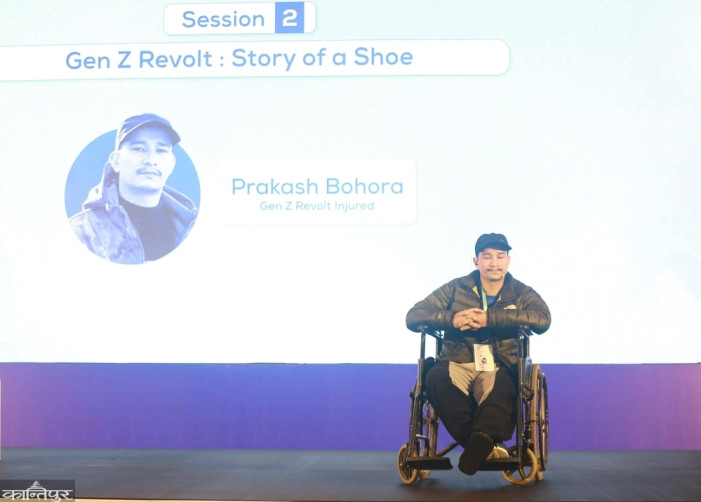
Prakash Bohra, a victim of the Gen-G movement, has said that if we vote in the right place, the right leadership will come. Speaking at the session 'Gen-G Rebellion: The Story of Shoes' of the Kantipur Conclave, he requested to elect capable people in the upcoming elections. ‘If we make a mistake again and the country goes into agitation again,&nsquo;there could be a big loss tomorrow. The dead and injured at that time may be members of our family,’ he said.
At the Kantipur Conclave, political analyst CK Lal said in a session titled 'Journey of the Nepali Revolution: Reflection on the Past, Assessment of the Future' that change is natural and what needs to be explored is the speed and direction of change. 'What we are comes from history. Why a health worker from Dailekh wants to go and fight in Russia is determined by four different states of mind - geography, history, economy and production system, and culture. The state of mind of a person runs on these four wheels,' he said, 'Change is natural. There is no need to search for change. What needs to be explored is where the speed and direction of change will be? That needs to be explored.'
Analyst CK Lal has presented an explanation of the background of the revolutions in Nepal and India and the events that took place at that time.
He has also discussed how the series of revolutions and counter-revolutions work and how they are built. Speaking at the Kantipur Conclave under the title ‘The Journey of the Nepali Revolution: An Analysis of the Past, an Assessment of the Future’, he has analyzed the past of the revolutions in Nepal.
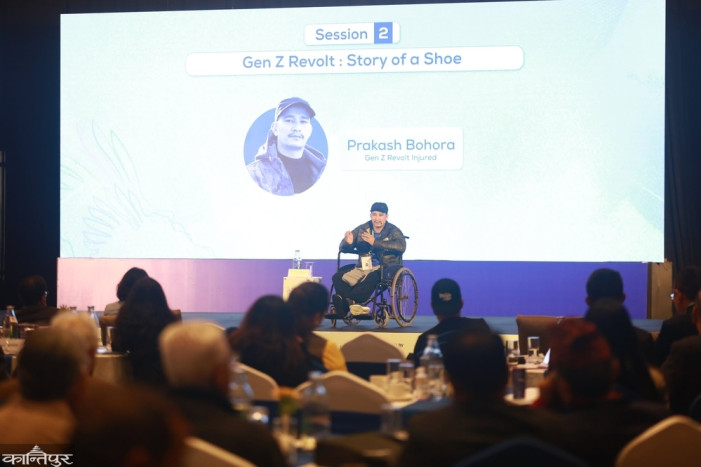
Prakash Bohara, who was injured in the Gen-G movement, said that he participated in the Gen-G movement on Bhadra 23 for change. Speaking at the Kantipur Conclave's 'Gen-G Rebellion: The Story of Shoes' session, he said that he joined the movement to contribute to the new generation. 'I had returned to Nepal after serving in the Russian army for 18 months. I was preparing to join the Qatar police. I came to know about the Gen-G movement in Baneshwor on Bhadra 23 through social media,' he said. 'My blood started boiling when I heard the demands.' He said that he reached Baneshwor on Bhadra 23 via Maitighar with the hope of bringing change to the country. 'I thought that I should join the movement for the new generation. I did not know who the organizer was. When I reached Baneshwor, he gave me water. My brother and I headed towards Baneshwor. We were moving forward as a team. "I was shot in the left leg while going to the place where the wall of the parliament building was demolished,' he said, 'I am being treated at the trauma center.' The 28-year-old Bohra from Dailekh was discharged only on Magh 20 after undergoing treatment at the National Trauma Center for 5 months. The blood-stained shoes he wore during the protest went viral, and became an icon of the Gen-G movement.
Prakash Bohora, an injured person in the Gen-G movement, has said that he was happy to hear Prime Minister Sushila Karki's words while in the hospital, but he is sad that no action has been taken accordingly after he came to power. He said this while speaking at the Kantipur Conclave.
'After I was injured and reached the hospital, I underwent a 12-hour long operation. I regained consciousness after 26 hours. After that, my whole body ached when I heard Sushila Karki's words on the mobile phone,' Bohora said, 'As a woman with legal expertise, she had said that the criminals who committed the murders should be brought to justice. I thought she was doing a good job. But I am sad that no action has been taken accordingly.'
He also complained that no action has been taken against the culprits of the Gen-G movement.
Prakash Bohara, a victim of the Gen-G movement, spoke at the 'Story of the Gen-G Rebellion Shoes' session of 'Kantipur Conclave-2026' and said that he was forced to go to the Ukraine war because the government could not do anything for the youth. He said, 'This is the current situation of all the youth, including me.' He said that the condition of the country's youth has become miserable due to the weakness of the government and foreign employment has become a necessity. The bloody shoes that became the icon of the Gen-G rebellion belonged to the same 28-year-old Prakash Bohara. He had a permanent residence in Narayan Municipality-8 of Dailekh and was shot in the leg.
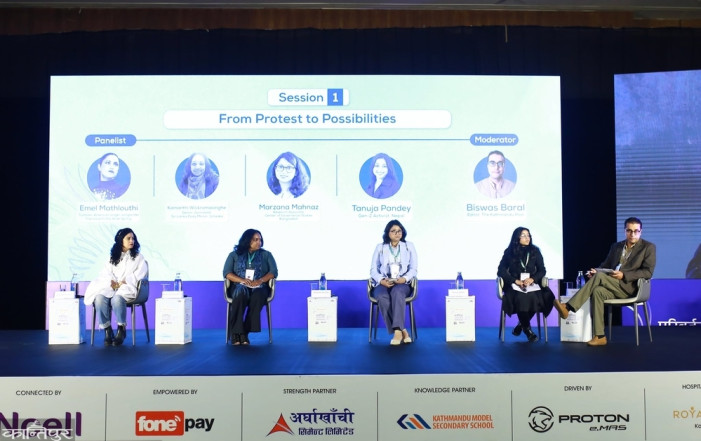
Bangladeshi sociologist Marjana Mahanal said that new parties and new leaders will be born in the elections after the movement, and they should also be held accountable. Responding to a question on what Nepal can learn from Bangladesh in the first session of Kantipur Conclave 2026, 'From Movement to Opportunity', she also said that there should be no delay in holding elections. She suggested that Nepal should hold elections as soon as possible and on time. 'One lesson is that when there is a power gap, extremist groups can impose their ideas and control. Therefore, elections should be held soon, not late,' she said. Secondly, she pointed out that popular leaders and parties are more likely to emerge after the youth and student movement. She said that such parties and leaders should be held accountable. She said, 'The youth should always question their leaders. Now that the elections are approaching, many popular and new parties have started emerging. It is necessary to hold those leaders accountable. They should be made not to be corrupt like in the past.'
Prakash Bohora, a wounded member of the Gen-G movement, has shared his experience at the Kantipur Conclave about how he went to Russia in search of employment, joined the Russian army, and fought in the war with Ukraine. He said, ‘There are many Nepalis like me there. In a place where it is not known when they will die.’
He said that his son was born in Nepal while he was on the battlefield. He said, ‘I was very scared when I saw the child’s face. I felt like I was going to run or fly. I even felt like running away.’
He also shared how he joined the Gen-G movement after returning to Nepal from the Russian army.
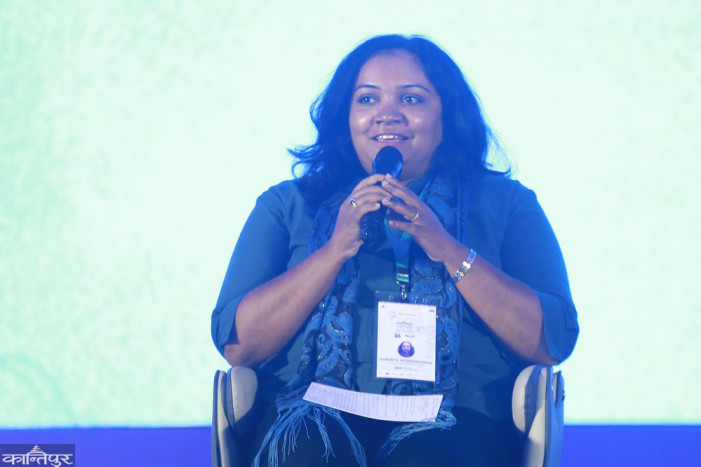
Kamanthi Wickramasinghe, a journalist for the Sri Lankan newspaper 'Daily Mirror', has said that the Sri Lankan people have no other choice but to choose a new option and face after the Sri Lankan movement. 'The Sri Lankan people had no other choice but to choose a new option and face after the Sri Lankan movement. That is why the people voted for the new political force, National People's Power (current President Anura Kumara Dissanayake),' she said, 'The government seems to be responding to the voice of the people, the role of the media and public opinion.'
Prakash Bohora, a victim of the Gen-G movement, has spoken about his struggling past at the Kantipur Conclave. He shared his experience of growing up in a village in Dailekh and the hardships he faced in finding employment.
After being shot in the leg during the Gen-G movement, his bloody shoe was left on the road. Prakash's bloody shoe became a symbol of the Gen-G movement.
Related News
Prakash Bohora, a victim of the Gen-G movement, is discharged from the hospital after 5 months
Nepal's Gen-G activist Tanuja Pandey said that 'populism' is dangerous for democracy. She also said that the situation of agitation in Nepal has been created because we have protected the leadership from questioning. 'There is always a trend of worshipping the leadership. We should also question new faces,' she said, 'Populism is dangerous for democracy. It makes the situation more frightening. The situation of worshipping the leadership should not be allowed to repeat itself.' She said that questioning alone is not enough and that work should be done to make the agitation institutional memory and sustainable. 'We are experiencing agitations every decade, we must learn lessons from those agitations. We must connect the institutional knowledge stores with each other,' she said.
Bangladeshi sociologist Marjana Mahanaz said that Bangladeshi citizens have become more aware after the protests. But she was also concerned about the increasing spread of rumors. She said that Bangladeshi citizens have also started seeking accountability. She said that awareness has come among citizens after the student protests in Bangladesh in 2024. “After the protests in July 2024, people have become more aware. They are showing resistance and resilience that was not seen before. They are starting to understand that they can question authority and demand accountability.”
Gen-G activist Tanuja Pandey said that the youth movement in Nepal is focused on reforming political parties, transparency, accountability and lifting restrictions on social media. She said that although the movement is similar to Bangladesh and Sri Lanka, it is Nepal's own organic movement. She said that while the traditional political parties want reforms, the Gen-G movement is not for new faces and new parties. She also said that the Gen-G movement is an explosion of the despair that has been present among the youth for a long time.
Daily Mirror journalist Kamanthi Wickramasinghe has said that the people are convinced that there is no corruption in the government that came to power after the elections in Sri Lanka. Wickramasinghe made the statement at the fifth edition of the 'Kantipur Conclave' held in Kathmandu on Monday.
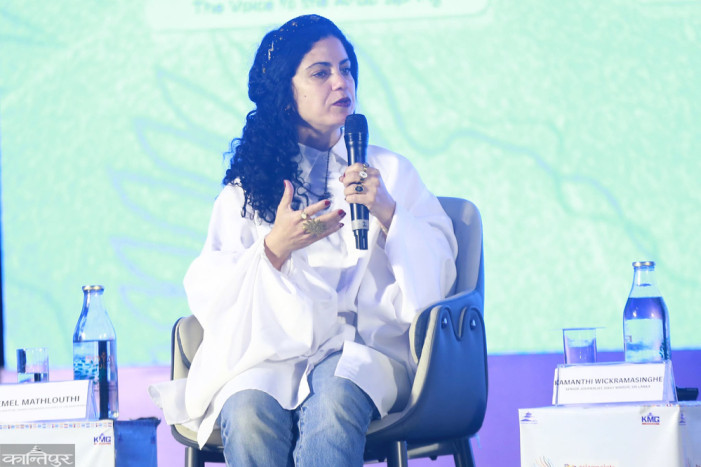
Tunisian singer Emel Mathlouthi said that she has loved freedom and independence since she was a child. She said this at the opening session ‘From Movement to Opportunity’ on Monday under the ‘Kantipur Conclave-2026’. ‘I loved freedom since I was a child and I loved freedom. I did not want to be ruled by rulers,’ she said, ‘I gradually felt that I had to speak out against that ruling system. And if I could be a voice for someone, why not, I protested through songs. My voice was for the voiceless.’ The song ‘My Word is Free’, which she sang during the Tunisian revolution ‘Aber Spring’ that began in 2010, became a symbol of revolution worldwide.
The opening session of the ‘Kantipur Conclave – 2026’ on Monday, titled ‘From Movement to Opportunity’, will feature speakers from Tunisia, Sri Lanka and Bangladesh, who will share their experiences of transitioning political life after the popular uprisings. Tunisian singer Emel Mathaluthy, Sri Lankan journalist Kamanthi Wickramasinghe, Bangladeshi Marjana Mahanaz and Nepali Gen-G activist Tanuja Pandey will also be participating in the session.
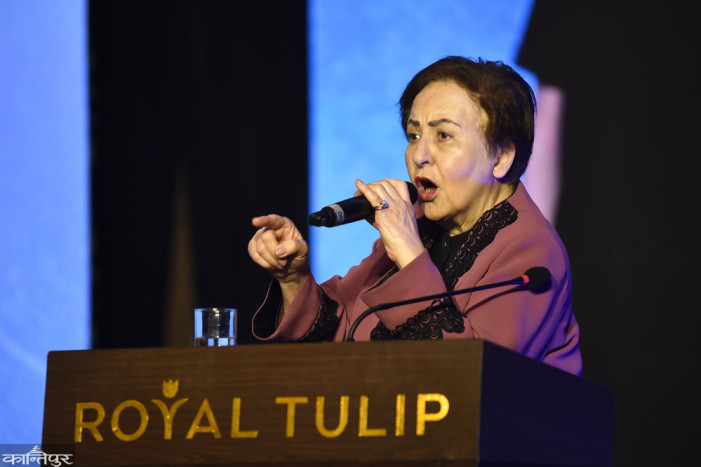
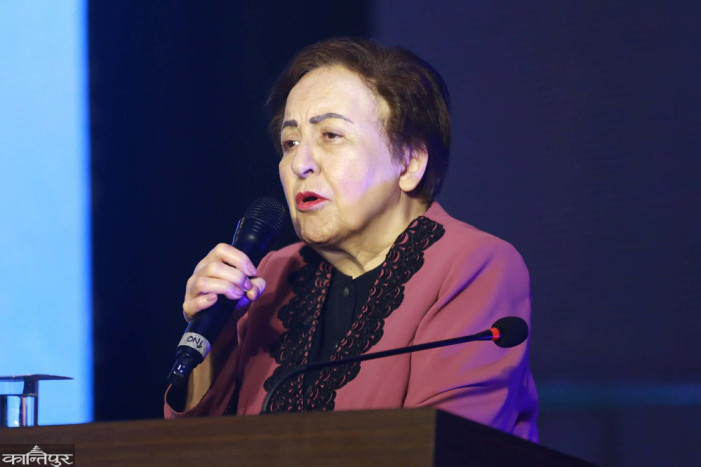
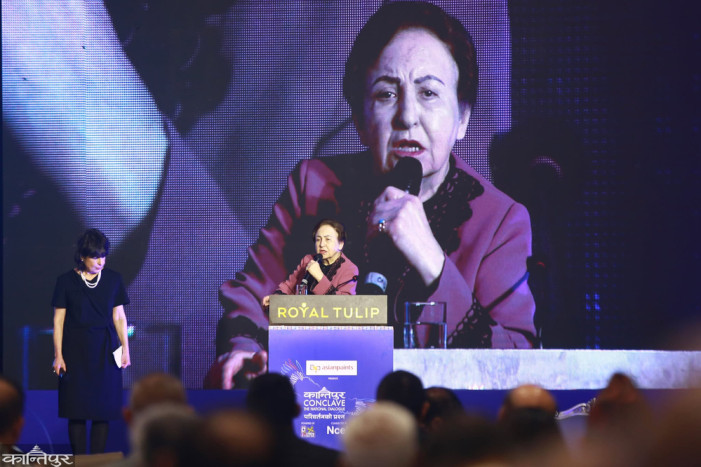
Nobel Peace Prize winner and human rights activist Shirin Ebadi has said that human rights and freedom of expression are the cornerstones of democracy. While delivering the keynote address at the Kantipur Conclave-2026, she said that the youth are not raising their voices for political parties, but against the authoritarian rule of the old political parties in Nepal. She said, 'In my country, the movement against the state has been going on for 4 decades. But the power has not yet been shaken.'
Nobel Peace Prize winner Shirin Ebadi said that the people of Iran and the gendarmerie are in continuous agitation and that they have not given up. She also stated that the regime is continuously resorting to violence and has caused great human losses.
She expressed her hope that news of the people's victory in Iran will soon come, saying that the gendarmerie and other citizens' movements will reach a conclusion.
Nobel Peace Prize winner and human rights activist Shirin Ebadi, while delivering the keynote address at the Kantipur Conclave-2026, said that the Gen-G movement in Nepal on Bhadra 23-24 had caught her attention. 'Nepal caught my attention after the Gen-G movement in Nepal. I also watched with interest why they protested. I was happy with the movement for democracy,' she said, 'I would like to pay my heartfelt tribute to those who lost their lives in the movement.'
Shirin Ebadi, who has been expressing solidarity with the ongoing movements for democracy and women's rights in Iran and around the world, recalled the background of the continuous protests by citizens taking to the streets for the past four decades. She said that the rulers are killing and imprisoning those who participate in the protests.
Ebadi said that despite Iran being the country with the fourth largest gas reserves, two-thirds of the population is forced to live below the poverty line, and said that this situation has arisen because the value of democracy has not been conveyed to the people.
Nobel Peace Prize winner and human rights activist Shirin Ebadi, while delivering the keynote address at the Kantipur Conclave-2026, mentioned the Gen-G movement in Nepal on Bhadra 23-24 and suggested that those who have reached the age of 18 should vote. She said, 'The elections are being held in the next 19 days because of the voice raised by the youth. I am happy about that. I would like to suggest to you that such a movement should not happen again. All those who have reached the age of 18. Please vote.'
Kantipur Media Group Chairman Kailash Sirohia has said that the recent movements, discontent and citizen voices are asking the state and political leadership new questions about where, how and under whose leadership. From villages to cities, from the young generation to the elderly, from the streets to the digital platform, the questions seem loud, but the answers to them seem hollow, he said. He said that flowing speeches, loud slogans and attractive assurances cannot address the aspirations of the citizens. 'Today's need is a calm, fact-based, honest and result-oriented national dialogue. For that purpose, we are determined to make the 'Kantipur Conclave' a meaningful platform,' he said.
Kantipur Media Group Chairman Kailash Sirohia has said that the basis of a conscious society is accurate information, debate and dialogue. Speaking at a program organized in Kathmandu on the first day of the fifth edition of the Kantipur Conclave, he said that along with the daily practice of news and opinion, they are continuously advancing the platform for debate and dialogue by focusing on issues of national importance.