We use Google Cloud Translation Services. Google requires we provide the following disclaimer relating to use of this service:
This service may contain translations powered by Google. Google disclaims all warranties related to the translations, expressed or implied, including any warranties of accuracy, reliability, and any implied warranties of merchantability, fitness for a particular purpose, and noninfringement.
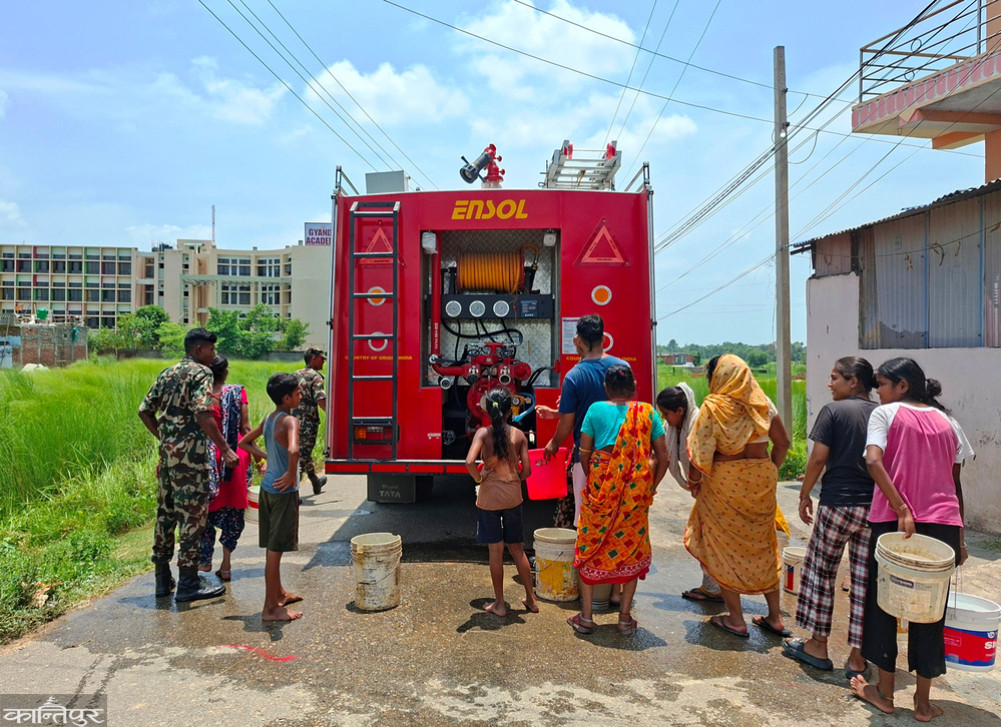
The Madhesh province, which has been suffering from drought for a long time, has been declared a disaster prone area by the Union Government. On the recommendation of the Madhesh state government, the Union Cabinet on Wednesday declared all the eight districts of the state as disaster-prone areas for three months.
In Section 32 (1) of the Disaster Risk Reduction and Management Act, if a disaster of a serious nature occurs in any place, the Government of Nepal shall publish a notice in the Gazette and declare it a disaster-prone area with specified boundaries and duration. The Madhesh government had recommended to the union government on Tuesday to declare the area as a crisis zone. The state government has already declared all the 8 districts as drought-affected areas on June 26.
Union government has sent two teams with experts to Madhesh to investigate the water crisis in Madhesh. Union and state governments are being criticized for not bringing any program to solve the crisis.
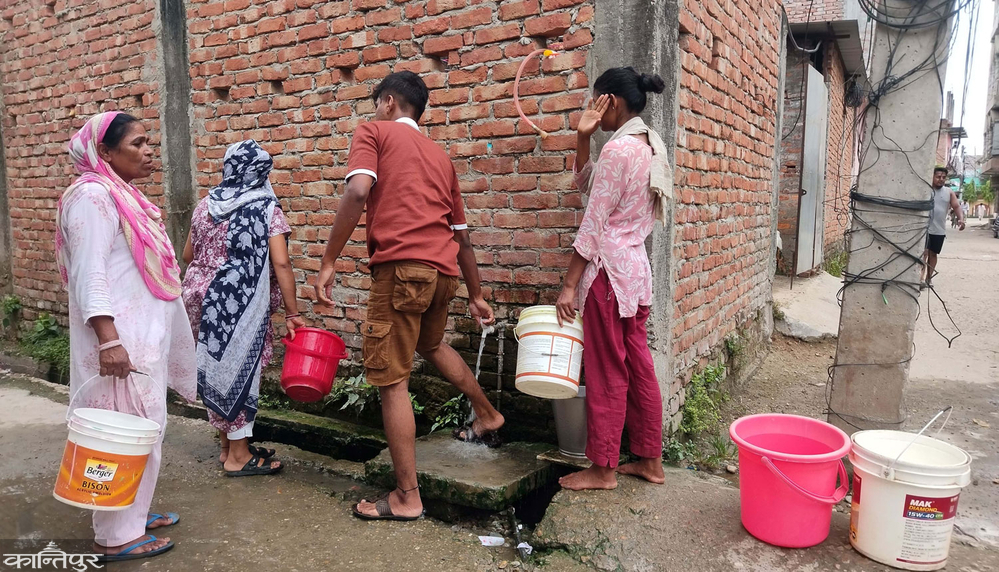
Most of the people in Terai-Madhesh depend on Chapakal for drinking water. With the traditional wells and wells becoming useless, Chapakal also became Madhesh Kakakul when it dried up. Rakesh Kumar Yadav, sub-engineer of the Ministry of Energy, Water Supply and Irrigation of Madhesh Province, says that Chapakal is the main water supply system in the province.
'It has been many years since the 125 feet Chapakal dried up. Even in the 400-feet Chapakal, water is coming in some places," he said, "The underground surface of the water is going under. We extracted a lot of underground water. Recharge was not done. That's why the water crisis has deepened now.
According to the study of the Ministry of Water Supply of Madhesh Province, the borings buried randomly for irrigation have also reached below the water level. There is also a standard for where to bury boring and deep boring, how far to bury, and how many feet to bury," said Yadav, a sub-engineer of the water supply ministry. "Boring has been done randomly by mixing all those criteria." Water is drawn from chapakal buried in the house by running a motor.
Engineer Ratneswarlal Karna, who has a long experience in the irrigation department, said that although the water crisis is linked to the destruction of water, the increasing population in Madhesh and the habit of consuming water bottles are also to blame. The global environment is being affected. The rainy season is changing. It has been seen that there is heavy rain when it is not needed, and it is dry when it is needed," he said, "Earlier the water pressure was high in Chure. Now the pressure is reduced. Water has decreased in Madhesh like in Chure. Around 1954-55, a campaign was started to eliminate malaria disease which became an epidemic in Terai-Madhesh.
With the eradication of malaria, rehabilitation programs were introduced in the Terai. The resettlement program itself became the first link in Chure's destruction. Soon after, deforestation was also carried out when the East-West Highway was built. And, the crusher industry and the terror of the dozers caused further damage to Chure. Under the guise of irrigation and drinking water, boreholes buried indiscriminately led to underground water table.
Environment expert Vijay Singh Danuwar said that the water source is drying up due to the destruction of chures due to the rehabilitation program brought to the Terai along with the elimination of malaria, deforestation during the construction of East-West highway, crusher industry and random operation of dozers.
He mentioned that the borings buried randomly for irrigation and drinking water have pushed the underground water below the surface. "Chure provides water for irrigation and drinking water," said Danuwar to Kantipur, "The same chure could not be recharged when people randomly excavate, cut, set fire to it, and make charicharan." To recharge, you have to protect the stolen. There is only destruction everywhere.
Environmental expert Danuwar Chure says that if conservation is not prioritized, there is a danger of Terai-Madhesh becoming a desert. He said that many problems can be solved by managing the water resources in the Chure region. Karn, an expert in irrigation, says that for irrigation, the tube wells that were buried earlier and are now dilapidated should be dug up, a pump should be attached to the small tube wells and buried and protection of the stolen ones should be taken care of. Recharge dams and ponds should be built to protect the river. There is a master plan for Chure, but it has not been worked on,' he said, 'Until Chure is saved, the water crisis will get deeper and deeper.' However, Sanjeev Yadav, engineer of the branch, said that it was also insufficient. He informed that currently 8 million liters of drinking water is being supplied from 5 overhead and 13 underground pumps in Birganj metropolitan area.
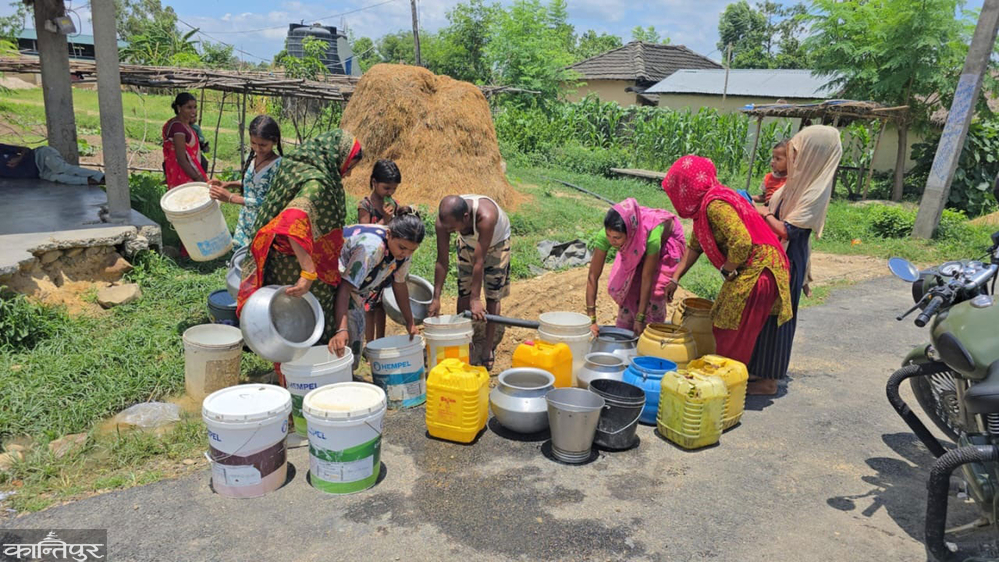
Radhemai, Sripur, Pratima Chowk, Maisthan Vidyapeeth, Bus Park, Ghantaghar have installed 2/2000 liter tanks to provide water to locals and Batuwa. Yadav says that the number of people coming to the branch to demand water connection is also increasing. "There were 12,865 customers till the end of June," he said, "since last week, that number has increased to over 13,000." Yadav says that currently 30 to 40 new pipes are being connected with the manpower available with the
branch. 8 people have been added to the daily wages as 8 people in the branch are not working for water connection. Yadav said that due to the tendency of metropolitan residents to store more water than they need, there is a problem in harmonizing the demand and supply of water. According to him, the construction of an 'underground' pump in Nagwa is currently in its final stages. "Probably it will come into operation from Friday and additional two million liters of water will be available for the metropolis," Yadav said.
across Kakakul
All the districts of Madhesh Pradesh border with Bihar province of India. The problem of drinking water has also intensified in Bazar Jayanagar, Madhwapur, Sursand, Sonvarsha and Raxaul of Seemapari Vihar. In 7 wards of Raxaul, which is close to Birganj, drinking water is being supplied due to the implementation of the Government of India water project, but in other 18 wards of Raxaul, there is a problem of drinking water. According to Raxaul's journalist Ganesh Agarwal, water supply is not regular even in the wards where the water project has been implemented.
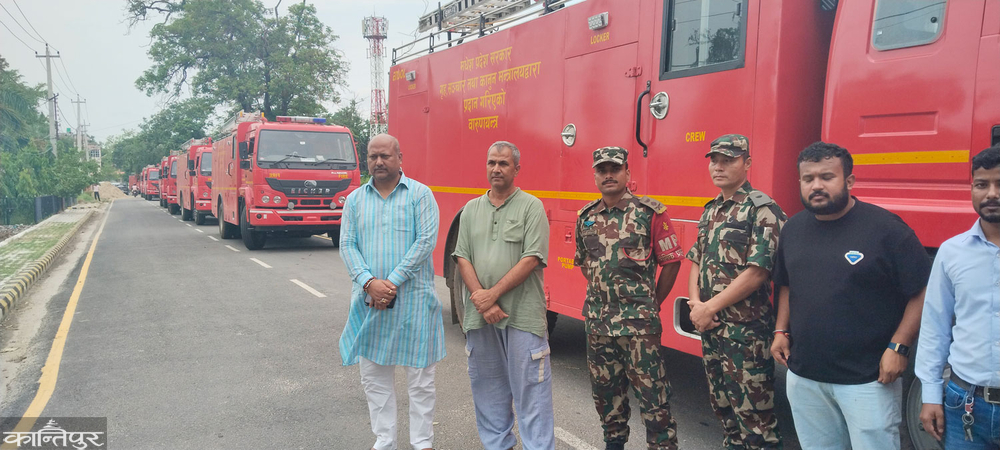
4 tankers of Raxaul municipality distribute water every day. Although Raxaul has prioritized deep boring, no pipe has been installed to deliver water from the deep boring to the homes of the locals. The population of Raxaul Municipality is about 150,000.
After the water stopped coming from Chapakal, most of them started to draw water by burying an additional 1 inch pipe 80 feet to the two and a half inch pipe of Chapakal buried below 250 feet. "Jar water has become more expensive in Raxaul after the water crisis," Agarwal said, "A jar of water that used to cost Rs 20, now costs Rs 35 to Rs 40."