Academic activities and the answer sheet test of SEE affected
We use Google Cloud Translation Services. Google requires we provide the following disclaimer relating to use of this service:
This service may contain translations powered by Google. Google disclaims all warranties related to the translations, expressed or implied, including any warranties of accuracy, reliability, and any implied warranties of merchantability, fitness for a particular purpose, and noninfringement.
The Nepal Teachers' Federation continued its protest on Saturday, refusing to hold a formal dialogue with the government. The teachers who have gathered in Kathmandu since Wednesday from all over the country are continuing their demonstration from Maitighar to Baneshwar area.
The educational activities of the school and the examination of the answer sheet of SEE have also been affected when the teacher participated in the movement centered on Kathmandu.
The Ministry of Education has been calling for negotiations through public appeals and correspondence, but the federation has been refusing. Shivkumar Sapkota, Joint Secretary and Spokesperson of the Ministry of Education, said that the environment for dialogue with teachers has not been created. "We have issued a notification and sent a letter to the Federation of Teachers to engage in dialogue," he said. "They are not ready to negotiate." The answer sheet is being collected after the SEE exam is over on March 18.
Spokesman Sapkota said that if the teachers' movement does not stop, the examination of the answer sheet of SEE will also be delayed. The National Examination Board has fixed the schedule for publishing the SEE results in the first week of June. The board staff said that it will be impossible to publish the results on the scheduled date if the answer sheet is not tested on time. According to
spokesperson Sapkota, the teacher's movement has affected all educational activities in schools except teaching. Chait is the time to end the academic session and start the new academic session. It is the time to test the answer sheet, publish the results, make an educational plan, consult parents, prepare for admission," he said. "It is the time for teachers to be active in schools.
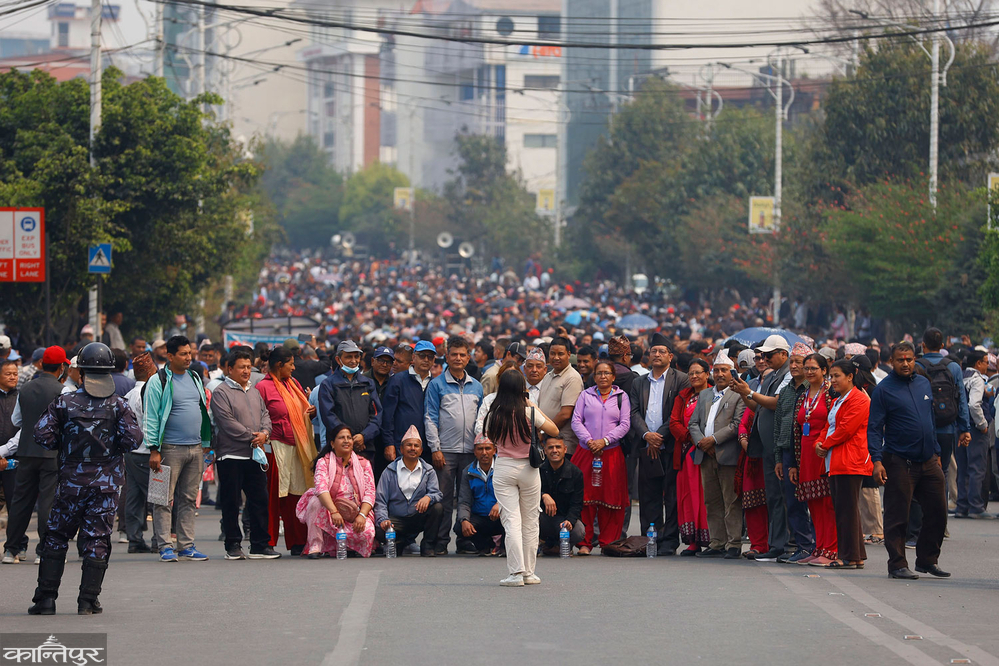
Speaking about the demands and protests of the teachers, the spokesperson Sapkota appealed to the government and concerned parties to come to dialogue and dialogue. The Ministry of Education is facilitating the issuance of the School Education Act. The help of teachers is also needed to give a quick exit, he said. The Teachers' Federation refused to negotiate and said that the Education Act should be promulgated immediately according to the agreement reached with the government in 2075, 2078 and 2080.
Federation president Laxmikishore Subedi said that there is no need to hold talks and urged the government to issue the Education Act as per the prior agreement. As the parliament session has ended, the Federation has put forward a proposal to pass the School Education Act from 3 options. Subedi said that the law can be passed by calling an ordinance, a regular session of the parliament or a special session.
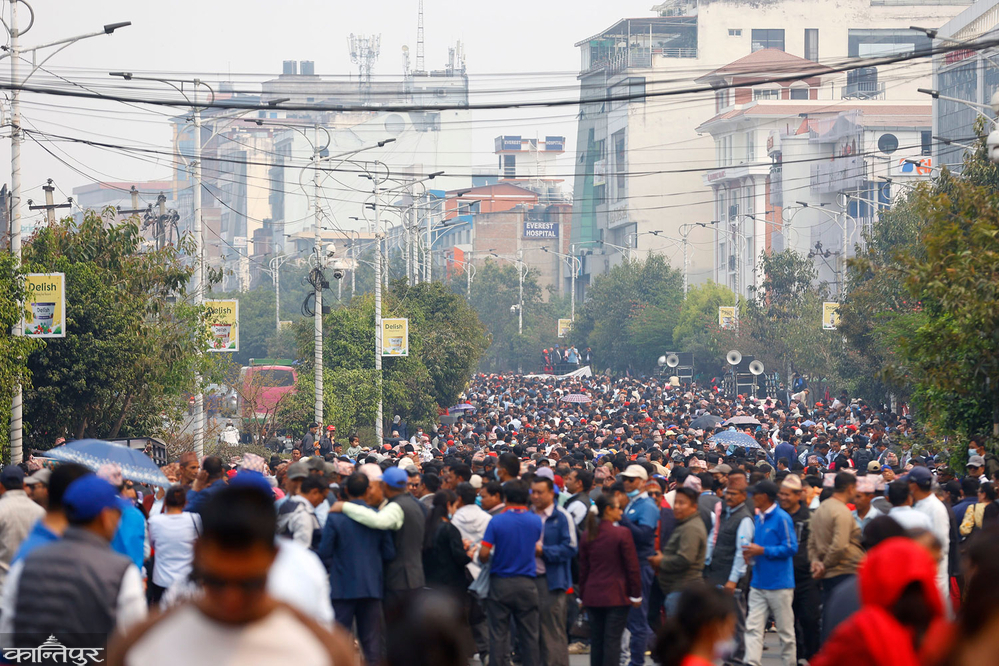
The government has prepared talks with the teachers in coordination with Deputy Prime Minister and Urban Development Minister Prakashman Shrestha. Prime Minister KP Sharma Oli has announced that the government will address the demands of teachers. Prime Minister Oli, who returned home after an official visit to Thailand on Saturday, thanked the teachers for believing in the current government and saying that this government listens to their voices.
He said, 'I would not have performed like this before. Because, even after performing, if there is no wind in the ears, why perform? I believe that the government will listen after raising its voice now.'
He mentioned that the government is not anti-teachers and the teachers are not anti-government and said that the demands will be resolved through mutual discussion. Prime Minister Oli came to Kathmandu and asked him not to suffer from the protest. We also talk. We listen to them. The government has no negative view. They came here, well, they didn't have to. A small delegation would have come.
The teachers have announced a protest with some professional and some demands against the constitution and federalism. The constitution provides that the local level will have sole authority up to secondary education. But the teachers have been refusing to stay under the local level.
Their main demand is to keep the district education office/unit as it is and organize the supervision, dismissal, transfer, promotion, appointment and action of teachers. People's representatives and educationists at the local level have been saying that there should be a single right up to the secondary level.
The school education bill is pending in the Education, Health Information Technology Committee of the House of Representatives. The committee has formed an 11-member sub-committee under the coordination of MP Chabilal Bishwakarma to discuss the bill twice and make a quick decision.
The Ministry of Education has agreed with the Federation of Teachers in the past to keep school education in the list of common rights of the three governments, restore the district education office, make temporary teachers permanent through internal competition, and maintain the posts of child development teachers and school staff. According to the same agreement, the teachers protested and pressured to pass the school education bill. are
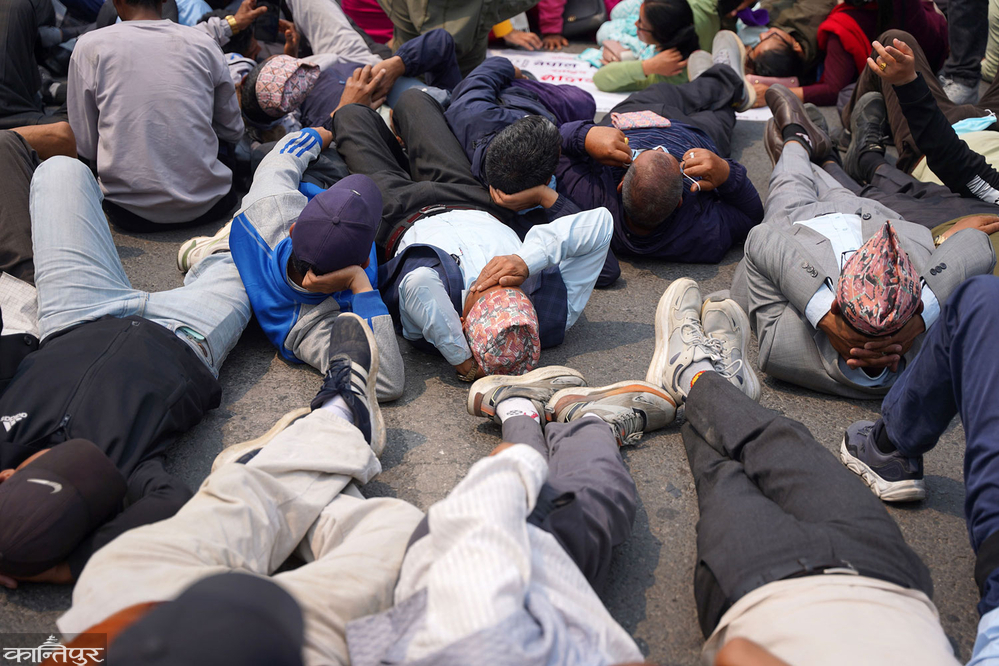
s. After the bill was registered in Parliament in August 2080, the teachers demonstrated for 3 days in Kathmandu. After the government agreed with the commitment to meet the demand when the law is issued, the teacher returned to the school. Due to the delay in passing the bill, the teachers have become agitating again.

