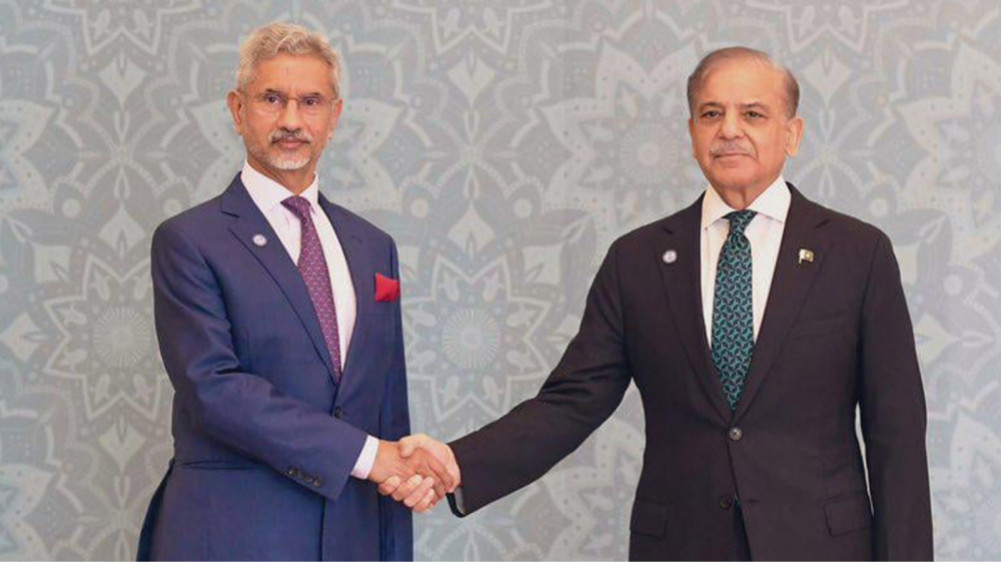
Mainly focusing on regional security issues, fighting against terrorism, ethnic separatism and religious extremism to regional development, the SCO has not been able to meet for a decade because of the conflict between India and Pakistan.
We use Google Cloud Translation Services. Google requires we provide the following disclaimer relating to use of this service:
This service may contain translations powered by Google. Google disclaims all warranties related to the translations, expressed or implied, including any warranties of accuracy, reliability, and any implied warranties of merchantability, fitness for a particular purpose, and noninfringement.
External Affairs Minister S. Jaishankar landed in Pakistan's capital Islamabad on Tuesday morning from an Indian Air Force plane. The visit of the Indian Foreign Minister to Pakistan comes amid long-standing tensions between the two countries.
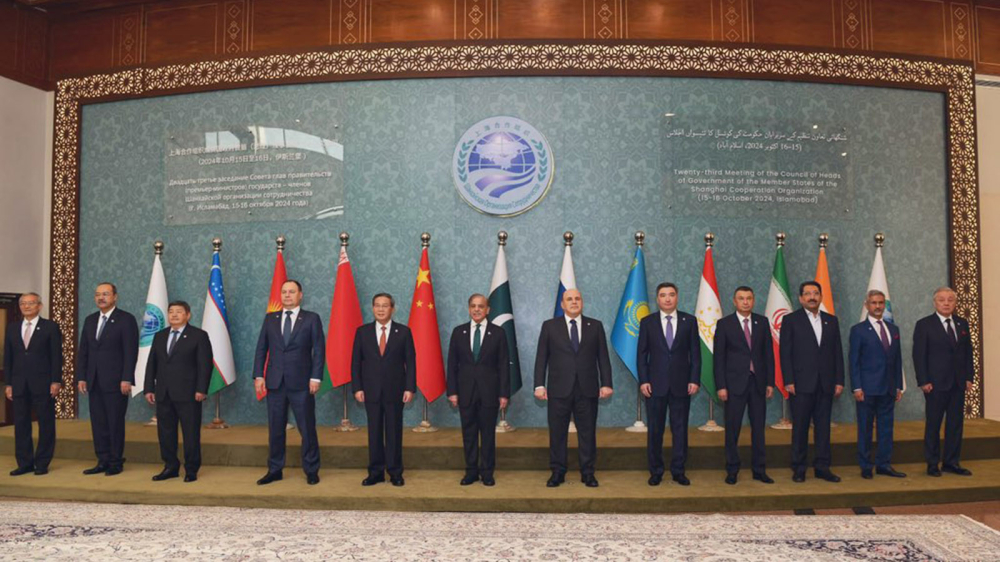
Before flying to Islamabad, Indian Foreign Minister Jaishankar had stated that the purpose of the visit was not bilateral but only to participate in regional organization meetings. "No bilateral issues will be discussed during this visit," Jaishankar had said before flying to Islamabad from New Delhi. Pakistan hosted the 23rd meeting of the Shanghai Cooperation Organization (SCO). In which there was a meeting of heads of government or prime ministers of the countries under the SCO, Foreign Minister Jayanshakar was present on behalf of India.
Chinese Prime Minister Li Qiang, Belarusian Prime Minister Roman Golovchenko, Kazakh Prime Minister Oljas Bektenov, Russian Prime Minister Mikhail Misustin, Tajik Prime Minister Kohir Rasulzoda, Uzbekistan Prime Minister Abdullah Aripov, Kyrgyzstan Prime Minister Akilbek Zaparov and Iranian Vice President Mohammad Reza Aref arrived in Pakistan during the
meeting. were Pakistan Prime Minister Sehbaz Sharif also participated.
Pakistan invited Indian Prime Minister Narendra Modi to participate in the meeting, but Foreign Minister Jayashkar attended. Modi made a surprise landing in Kabul from Kabul after visiting Afghanistan in December 2015. At that time, Modi had reached the residence of Pakistan's then Prime Minister Nawaz Sharif in Lahore. Modi's Lahore visit was analyzed as a positive initiative for bilateral and regional cooperation. But since then the relationship between the two countries has been more tense.
In 2016, diplomatic relations between the two countries were disrupted after a terrorist attack on the brigade headquarters of the Indian Army in Uri, Jammu and Kashmir. There was no high-level political visit from either country for seven years. In 2023, Pakistan's Foreign Minister Bilwal Bhutto came to participate in the Foreign Ministerial level meeting of the SCO in Goa. The visit was the first high-level visit from Pakistan to India in 12 years. On that occasion, Pakistan's foreign minister also stated that he had come to India not for bilateral talks as Jaishankar said, but only to participate in the SCO. He said, "This is my visit to Goa, India for the foreign minister level meeting." It will only focus on multilateral diplomacy.'
India and Pakistan have been hostile ever since they were divided into two countries after being freed from British rule in 1947. Every now and then there are 'ice breaks' and when trying to improve the relations between the two countries, some incidents lead to conflict again. Which has a direct impact not only on the relationship between India and Pakistan but also on the South Asian region. Despite the conflict between India and Pakistan, SCO meetings are being held continuously, and SCO summits are being held. The conflict between these two countries does not seem to affect it.
The conflict between India and Pakistan, on the other hand, has had a major impact on the South Asian Regional Cooperation Organization (SAARC). SAARC summit or foreign minister level meeting has not been held for a long time. Since the 18th summit in Nepal in 2014, SAARC has been virtually 'inactive'. Due to the conflict between India and Pakistan, the 19th SAARC summit scheduled to be held in Pakistan in November 2016 has not yet taken place. SAARC, which was established in 1985, is in a 'coma' due to the tension between these two countries. The main question is why India and Pakistan, who do not even want to see each other's faces in SAARC, are cooperating in SCO.
Santosh Sharma Paudyal, an expert on geopolitical affairs, believes that the reason why India bypasses SAARC and cannot do SCO is that the organization is equally important for New Delhi. “SCO is also important for India. India looking for excuses does not matter much to the SCO. He has a key role in SAARC. India can control SAARC. But India has no control over SCO. Even without India, the SCO had, has and will continue to have its own interests,” says Sharma. He believes that India has not felt comfortable with SAARC since its inception and thinks that South Asian countries have formed a group against it. "In its manifesto for the 2019 elections, the Bharatiya Janata Party mentioned BBIN and BIMSTEC, but did not mention the name of SAARC," Sharma adds, "After BJP came to government, it moved more towards BIMSTEC than SAARC. Even if SCO is a regional organization, it is bigger than that.
SCO organization now has 10 member countries. They are China, India, Kazakhstan, Kyrgyzstan, Russia, Pakistan, Tajikistan and Uzbekistan. Iran became a new member in 2023 and Belarus in 2024. But Afghanistan and Mongolia applied for membership but did not get it. These two countries are limited to observers. Nepal is also a 'dialogue partner' of SCO. Along with Nepal, Sri Lanka, Turkey, Cambodia, Bahrain, Egypt, Saudi Arabia, Azerbaijan, Sri Lanka, Armenia, Kuwait, Maldives, Myanmar and UAE are 'dialogue partners'. Even though Nepal wants to go to the observer, it has not been able to.
The SCO is now an important and powerful intergovernmental organization in the world. It was formed in June 2001 in Shanghai, China. The SCO was formed to focus primarily on regional security issues, regional terrorism, ethnic separatism and the fight against religious extremism. It is mentioned that regional development is also included in the priorities of SCO. Since its inception, the organization has been promoted as an alternative force against the Western-led world order, with an emphasis on security cooperation. Which is now growing and going strong.
The SCO is also known as the club of close member countries, mainly led by China. With the addition of Iran and Belarus, it is no different from the club of close neighbors China and Russia. India is working closely with its close allies the Chinese and the Russians in the SCO. Which can be a strategic way for India. Not only the SCO, which has been interpreted as China's club, India has also started to fall under Chinese encirclement from BRICS and RIC. China appears to be strong in three organizations namely SCO, BRICS and RIC (Russia, India and China). Due to China's strong economy and the Belt and Road Initiative (BRI) launched by President Xi Jinping and various other programs, China has also started to have a strong hold on BRICS.
in which India does not look strong. As both India and Pakistan seem weaker than Russia and China in the SCO, high officials of India and Pakistan are rushing to participate in the meeting of the organization. Which is not applicable in case of SAARC. Since 2014, there has been no SAARC Summit and since 2020, there has been no SAARC foreign minister level meeting on the sidelines during the United Nations General Assembly in New York.
Former Foreign Secretary Madhurman Acharya believes that India does not want to give up its presence because of the presence of countries like Russia and China in the SCO. This organization is also important because India and Pakistan and China and Russia are together. Otherwise, I don't see the importance of it," he said. Acharya believes that India is trying to weaken Pakistan by using SAARC. Although India-Pakistan is cooperating in SCO, the situation in SAARC remains the same.
'Tendency to participate in SCO and not in SAARC is wrong'
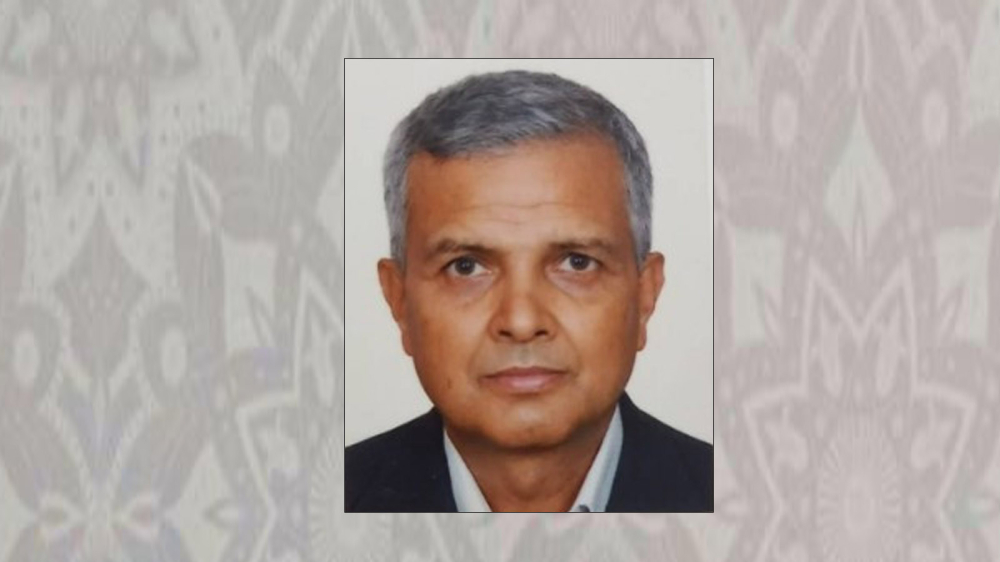
Yuvanath Lamsal, ex-ambassador
Firstly, due to the ongoing conflict between India and Pakistan, the SCO has also been affected. Who do not see bright future of SCO. Secondly, SAARC does not seem to be being pushed by India. Because India participated in the SCO meeting held in Pakistan. Last year also, Pakistan's Foreign Minister visited India to participate in the Foreign Ministerial Meeting of SCO. On the occasion, India also welcomed the Foreign Minister of Pakistan. But when it comes to SAARC, India does not seem to want to cooperate with Pakistan.
It is completely wrong to say that India should go to Pakistan during the SCO meeting but India should not participate in the SAARC meeting in Pakistan. The reason behind this, as I see it, is that India is not the only major power in the SCO. Russia in the SCO is also an important strategic partner of India. The SCO has powers like Russia and China. India's role alone is not going to do anything in the SCO. Even if India is not there, SCO meets and runs. Also, SCO is an important organization for establishing India's relations with Central Asian countries.