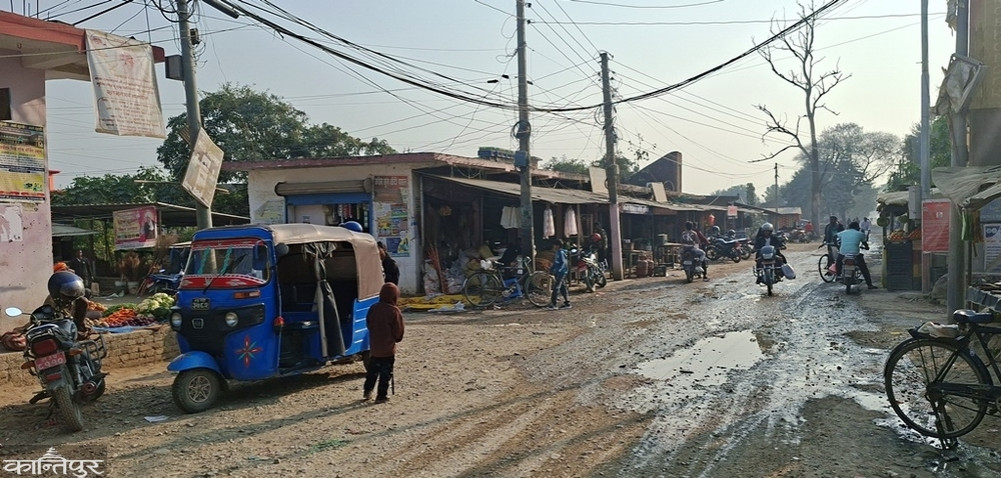
Despite the information that the election will be held on Falgun 21, the residents of the Marchwar area bordering Rupandehi have not yet formed the mindset to openly support the candidate. They are saying that this time's election is also an opportunity for the candidates to renew their 'false promises'.
We use Google Cloud Translation Services. Google requires we provide the following disclaimer relating to use of this service:
This service may contain translations powered by Google. Google disclaims all warranties related to the translations, expressed or implied, including any warranties of accuracy, reliability, and any implied warranties of merchantability, fitness for a particular purpose, and noninfringement.
Candidates are preparing to reach voters' doorsteps after registering their nominations for the House of Representatives elections.
Before that, the party is busy holding internal meetings to decide on the election campaign strategy. However, the residents of the rural areas of Rupandehi have not yet been touched by the elections. They are busy with their work.
Even though they know that the elections will be held on Falgun 21, they have not yet formed the mindset to openly support the candidates. Residents of the Marchwar area bordering Rupandehi say that this time's election is also an opportunity for the candidates to renew their 'false promises'.
They expressed their sorrow that the candidates who have become candidates in the parliamentary elections so far, from local to parliamentary elections, have not fulfilled their promises to provide basic necessities and modern development of the village until the day of voting. They say that there is not much interest in the elections as the same promises will be repeated this time too.
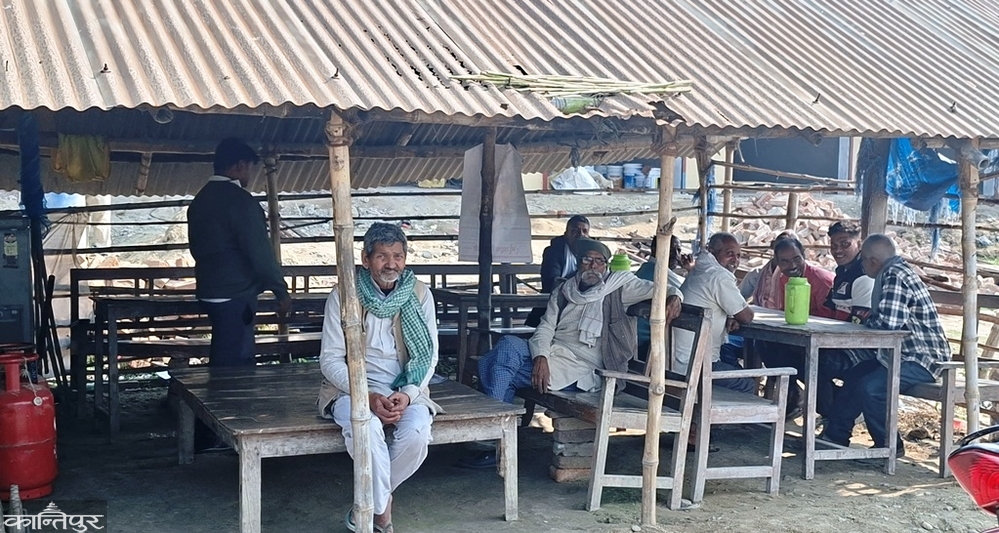
‘The march was the same as before, it is the same now,’ said 75-year-old Prem Harijan of Kothimai-5, ‘In the 30 years since the multi-party system came, the leaders have repeatedly said that they will develop the march, but so far our condition is bad.’
On Friday afternoon, he was sitting at a paan shop in Majhgawan, the center of Kothimai rural municipality. The shop is connected to the main road of the march. The main road since the Rana and Panchayat periods is still dilapidated. A single-lane road that was paved in front of a spectator has collapsed and is in a state of disrepair. Dust is flying.
This road serves as a mirror that shows the condition of the march. There is ample cultivable land on the right and left of the road. Wheat is currently growing. Locals are bringing in mustard. ‘We earn our living by farming for six months a year,’ he said. ‘The leaders have been saying for years that they will arrange fertilizer and irrigation for farming, but they have not been able to fulfill it yet.’
In every election, candidates have been making the issue of timely provision of fertilizer, seeds and irrigation their agenda. So far, the local residents here have been dependent on stolen Indian chemical fertilizers.’
Arjun Yadav, 32, of Belhawa, Sammarimai-6, Marchwar, says that the condition of the main road in Marchwar has been the same since he knew it. According to him, the condition of the road has become even worse now. It was pitched a decade ago. The pitched road collapsed within a short time. ‘The road is narrow,’ he said. ‘Accidents are happening every day.’
He said that he has started to suspect that the people’s representatives have not improved the road to make it an agenda for campaigning in every election. ‘There is no education and health care system in the village,’ he said, ‘If someone falls ill, they have to be taken to Butwal and Bhairahawa for treatment.’
Motilal Yadav, a retired teacher from Marchwarimai-3 Madhubaniya, says that the leader asks for votes in every election saying that Marchwar is lagging behind. ‘Voters do not ask candidates why development is not being done,’ he said, ‘Even the leaders are not serious about the need for development here.’
He said that despite campaigning at the beginning during the election, there is a tradition of winning elections by ‘distributing money’ at the end. He said that voters have been voting only after going to the booth due to influence and temptation. ‘There are no mines, factories, or enterprises in Marchwar,’ he said, ‘And where can the leader provide employment, as many of the youth here have gone abroad to work.’
According to him, the biggest problem in Marchwar is the road. Despite the increase in population, the road is still only one lane. ‘There are no good schools and hospitals,’ he said, ‘If someone falls ill, they have to be taken to Butwal-Bhairahawa. Otherwise, they have to be taken to Kolhapur and Gorakhpur in India.’ After winning the election from here, the people’s representatives stay in Kathmandu. He said that the residents here do not have access to the federal capital. ‘Leaders do not fulfill their promises,’ he said, ‘We cannot reach the leaders.’ He said that this time there are more complaints about the candidates than expectations.