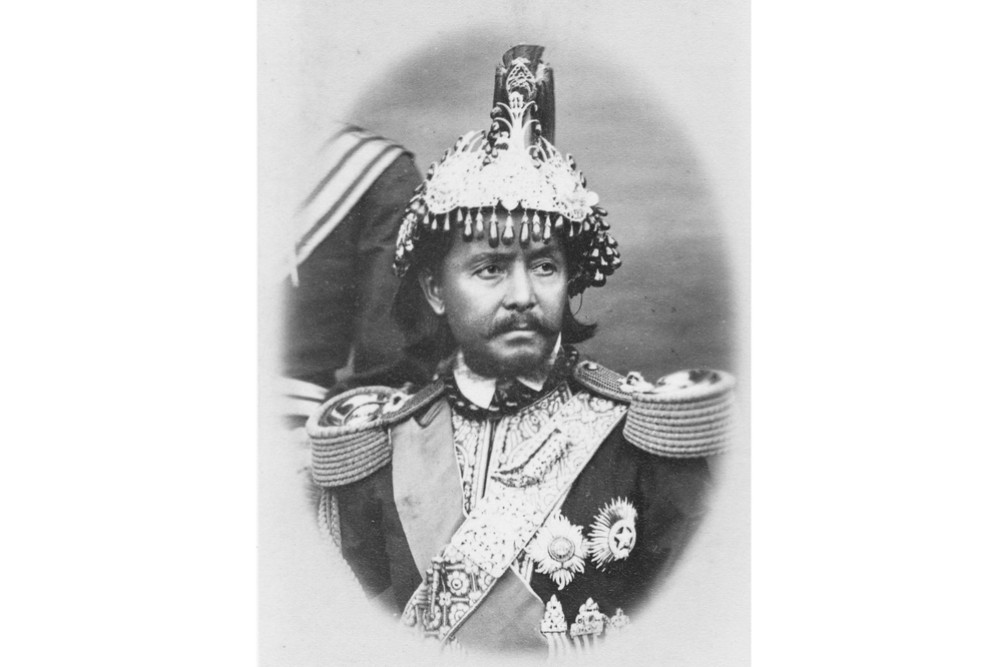
When the Indian army revolted, Nepal's Prime Minister Jung Bahadur personally led a Nepali army to suppress it. The British were pleased with him and, as a reward, returned Banke, Bardiya, Kailali, and Kanchanpur to Nepal, among the territories lost in the Sugauli Treaty. Jung Bahadur contributed to the codification of Nepal's laws and the promulgation of the Muluki Ain, and Nepal also won the war with Bhot.
We use Google Cloud Translation Services. Google requires we provide the following disclaimer relating to use of this service:
This service may contain translations powered by Google. Google disclaims all warranties related to the translations, expressed or implied, including any warranties of accuracy, reliability, and any implied warranties of merchantability, fitness for a particular purpose, and noninfringement.
इतिहासकै शक्तिशाली जनमतसहित वालेन्द्र शाह प्रधानमन्त्री बनेको तीन साता पुगेको छ । प्रधानमन्त्रीका रूपमा उनको भूमिका कस्तो रहनेछ ? उनलाई इतिहासले कसरी सम्झिन्छ ? अहिल्यै आकलन गर्नु हतारो हुनेछ । नेपालको राजनीतिक इतिहासमा ४० जना प्रधानमन्त्री भइसकेका छन् । तीमध्ये कतिपयलाई निरन्तर सम्झना गरिन्छ । कतिपय भने गुमनाम जस्तै छन्, औपचारिक सन्दर्भभन्दा बाहेक चर्चा गरिँदैनन् । ‘कोसेली’ ले केही प्रधानमन्त्रीको कार्यकाल सम्झना गरेको छ । ‘कान्तिपुर’ को सम्पादकीय समूहले पदमा रहँदा निर्वाह गरेको भूमिका र सार्वजनिक विमर्शमा नाम आइरहने १२ पात्र छनोट गरेको छ । उनीहरूको पदावधिको चर्चा गर्दा नेपालको मूलभूत शासकीय प्रवृत्ति उजागर हुनेछ भन्ने हाम्रो विश्वास छ ।
When we hear about Jung Bahadur Rana, he seems like a legendary hero. He did not emerge as a hero out of thin air, but his extraordinary talent certainly played the main role. His family and Mavali background were not weak either.
Earlier, his ancestor Ratanjit had served the Jumla kingdom. Later, after the invitation of the King of Kaski, Siddhi Narayan Shah, Ratanjit's son Ahiram came to Kaski. But when he could not agree with the king about the marriage method of his daughter, Ahiram left Kaski and went to Gorkha. After the Gorkhali King Narbhupal Shah gave him a village on the Kunwar River, they were called 'Kunwar', as mentioned in the 'Comprehensive Genealogy of Kunwar Ranaji' (2052:1).
This Ahiram had three sons, Ramkrishna, Jayakrishna and Amarsingh. Among them, Amar Singh lost his life in the Battle of Timal in 1819. Jang Bahadur is the great-grandson of Prithvi Narayan Shah's trusted general Ram Krishna. Jayakrishna's grandson Balabhadra Kunwar earned his name in the Battle of Nalapani. Jang Bahadur's mother Ganesh Kumari is the daughter of Bhimsen Thapa's brother Nayan Singh Thapa. Ganesh Kumari's mother Ran Kumari is the daughter of Ranjit Pande, son of Kazi Tularam Pande during Prithvi Narayan Shah's reign.
Jang Bahadur was born into a family with both paternal and maternal historical heritage.
When Swami Maharaj Ran Bahadur Shah went to Kashi, Bal Narsingh Kunwar was also with Bhimsen Thapa. After returning from Banaras, on the night of 14 Baisakh 1863, Rana Bahadur Shah, who was dying from a sword strike by his half-brother Sher Bahadur Shahi in the court held at the house of Qazi Tribhuvan Pradhan, cried out, “Oh boy, Shere has killed him.” At that moment, Bal Narsingh grabbed him by the thigh and killed him (Gyanmani Nepal, ‘Nepalko Mahabharata’ – 2052:62–63).
From that day on, the entire power of the state came into the hands of Bhimsen Thapa. Old relations and inheritance were still there, Bal Narsingh emerged as a powerful Qazi.
When Bal Narsingh went to Dhankuta as a Hakim, Jung Bahadur also went with his father. Reaching Dhankuta in Baisakh 1885, he joined the Shree Jang Paltan in 1886 at the age of 13 and started military service. When Balnarsingh was transferred to Dadeldhura in 1890, he also went there (Ganga Kharel, 'Sinas Journal' Year 26 Issue 1-Year 1999:164). He had already become a captain in Dadeldhura.
Jung Bahadur, who had gone bankrupt in gambling, wandered all the way to India in search of a job. Later, he returned and joined King Rajendra's hunting party and became a captain by showing his prowess. Jung Bahadur became powerful after organizing the Kot Parva and the Bhandar Khal Parva.
After the fall of Bhimsen Thapa, both Balnarsingh and Jung Bahadur lost their jobs. Unemployed Jung Bahadur fell into gambling addiction and got into debt. He tried to go to the Terai to catch elephants to get rid of his debt, but it did not go as planned. He wandered around India for some time in search of a job. Finally, he returned to Kathmandu after diving. Balnarsingh also faced a great financial crisis in the latter half of his life. At that time, he had approached his own brother Birbhadra (Balbhadra Kunwar's brother) to borrow a few rupees. But when Birbhadra said, "How can I give a loan without collateral to a man who has only eight sons and not a single penny of property?", Balnarsingh also said in a fit of anger, "My eight brothers and sons will one day reach high positions," as mentioned by Jung Bahadur's son Padmajung Rana in his 'Jung Bahadur's Life Story' (2074:16). After the rise of Jung Bahadur, Balnarsingh's descendants ruled Nepal alone for 104 years.
Restoration
When capturing an elephant, Jung Bahadur was looking for a trick to catch the king's eye. In the winter of 1897, when King Rajendra went to the Terai to hunt, Jung Bahadur also joined the same group. An elephant was surrounded by a wild beast. But when no one dared to catch it, Jung Bahadur, without caring for his life, managed to tie the hind legs of the elephant, which was torn apart by anger. King Rajendra, who was pleased with this, rewarded him with the rank of captain (Rana, 2074:19). In fact, this was his reinstatement.
After the fall of Bhimsen Thapa, there was a change in the head of government. Mathawar Singh Thapa, who had been in Lahore, was appointed as the Prime Minister by King Rajendra under the influence of Queen Rajya Lakshmi. First, his nephew Jung Bahadur was sent to summon Mathawar Singh, who was stuck in Gorakhpur, with respect.
During the reign of Mathawar Singh, Jung Bahadur was made the bodyguard of Crown Prince Surendra. At that time, he faced many hardships. Sankaha Surendra used to take his queens to the Bagmati and drown them, cut some of the nobles with a knife and even threw some into a well.
One day, even when Jung Bahadur was thrown into the well of Lagantol, he came out of the well after a while. He had to throw four times from the Sanghu of Trishuli. He ordered him to take the horse from the Sanghu and bring it halfway and then return it from there. After Jung Bahadur succeeded in bringing the horse back from the small Sanghu, which had a shaky phalanx and no phalanx in the middle, Surendra gave him the post of Qazi ('Prachin Nepal' No. 25-Kartik 2030:8)
Historian Purushottam Shamsher Jabra has mentioned in 'Shri 3 Harko Takhtavrittan' Part 1 (2065:18–19) that Mathawar Singh had fraudulently obtained a written order from Surendra to harass his nephew Jang Bahadur and made him his bodyguard. Another incident occurred. After Devi Bahadur Kunwar, who was undeservedly demoted from the rank of lieutenant, spread rumors that 'there was an immoral relationship between Rani Rajya Lakshmi and Gagan Singh', the queen ordered her to be executed. Devi Bahadur Jung Bahadur is the son of Balaram. When his own maternal uncle was the Prime Minister, when he tried to save Binti Bisai Bandhu, Mathawar Singh instead cut off his nephew's throat by saying, 'If it is an order from above, you will have to kill me and I will have to kill you too.' After that, the relationship between the maternal uncle and nephew cooled.
King Rajendra was also getting irritated by Mathawar Singh's behavior. The aim that Queen Rajya Lakshmi had set to have Mathawar Singh declare her son Ranendra as the crown prince was not being fulfilled. Finally, the king, queen and the queen's favorite character Gagan Singh, who were aware of the cold relationship between the maternal uncle and nephew, killed the then Prime Minister Mathawar Singh at the hands of Jung Bahadur. But rumors spread that King Rajendra was involved in this murder. Mathawar Singh's son Colonel Ranojjwal, who was distraught after the murder of his father, went to consult Jung Bahadur. Jung Bahadur, acting out that he was also saddened by the murder of his maternal uncle, not only suggested that he take refuge in India, but also sent his trusted brothers Bam Bahadur and Ranoddeep to take him to Thankot for his safety (Rana, 2074:54–55).
After this incident, Chautaria Fatehjung Shah was made the Prime Minister. Generals Abhiman Singh Rana, Dalbhanjan Pandey and Gagan Singh were included in the cabinet. Although he was not included in the cabinet, Jung Bahadur was given the rank of general and was given three battalions, but his respect was maintained (Nepal, 2052:189). General Gagan Singh was given the responsibility of seven battalions and made the most powerful.
That Kotparva!
It was a terrible night that turned Nepal's politics upside down, the night of 31 Bhadra 1903. Gagan Singh was suddenly murdered while he was performing evening prayers at his own house in Dhokatol. After receiving this news from Gagan Singh's son Wazir Singh, 'This body should not be raised, I will not accept the head of the head.' My minister was killed by the game of a nobleman without any fault! Now we will kill His Majesty Baksai,' said Rani Rajya Lakshmi, burning with anger, leaving with a naked sword. (Ancient Nepal, 2030:16) . The bugle sounds for the court .
Before the court begins to find the murderer, Jung Bahadur along with his brothers appears in the palace with his deployed platoon equipped with weapons . Jung Bahadur explains to the queen, who is surprised by this scene, ‘Since the life of the queen is also in danger at the hands of Gagan Singh’s murderer, I have come with the platoon for the queen’s safety . If the order is given, I will find out the murderer of Gagan Singh .’ General Abhiman Singh Rana arrives . Prime Minister Fateh Jang Shah is also called . Suspecting the murderer, the queen orders Abhiman Singh to behead Birkeshar Pande . But Abhiman Singh himself is killed when he hesitates to behead him without the king’s order . When he was about to die, Abhiman Singh wrote in blood on the wall, ‘Jange is the killer of Gagan Singh’ (Rana, 2074:66–69). When the massacre took place in Kot, King Rajendra became a mute spectator.
At that time, a person named Lal Jha was promoted as the killer of Gagan Singh. But historians of the Rana family are of the opinion that Jung Bahadur had a hand in that murder. As mentioned by Jabra (2065:35), Jung Bahadur sent his younger brother Badrinar Singh Kunwar to the gate to kill Gagan Singh, while he himself had already equipped his subordinate army with weapons and reached the royal palace. Rani Rajya Lakshmi met Jung Bahadur with his army on the way when she was returning from Gagan Singh’s house. Another historian, Pramod Shamsher Rana, in his ‘Ranashasanko Vrittant’ (2070:36), mentions that he heard from a reliable source that Dhir Shamsher had told his eldest son Bir Shamsher that it was Jung Bahadur who killed Gagan Singh.
It can be clearly assumed that Jung Bahadur was the one who directly or indirectly killed Gagan Singh, the queen’s favorite character. That same night, Jung Bahadur was given the responsibility of ruling the country at the behest of Queen Rajya Lakshmi. However, when Jung Bahadur did not show any signs of declaring her son Ranendra as the crown prince, the queen called Qazi Birdhwaj Basnet and Gagan Singh’s son Wazir Singh to Bhandar Khal and planned to kill Jung Bahadur. When Vijayaraj Pandey, the palace's worshiper, informed Jung Bahadur about this in time, he got a good opportunity to finish off his remaining opponents during the Kot festival. His power increased after the Bhandarkhaal festival held on 17 Kartik 1903. When Queen Rajya Lakshmi was sent to Kashi, King Rajendra also followed the queen.
On the advice of Guru Prasad Shah and others in Kashi, King Rajendra formed a military organization and started preparing to fight against Jung Bahadur. But during the Alau festival, Jung Bahadur easily suppressed those rebels and captured King Rajendra and imprisoned him in the Bhaktapur palace for life. And he declared Crown Prince Surendra the new king. Now if Jung Bahadur becomes the supreme ruler of the country, the king will be the god of the Khopa! Later, King Surendra's daughters were married to his sons Jagatjung and Jitjung, and his daughter to Surendra's son Yuvaraj Trailokya, and he not only made the king happy, but he also succeeded in winning the heart of the king and taking the title of Shri 3 Maharaj.
Prime Minister Jung Bahadur's salary
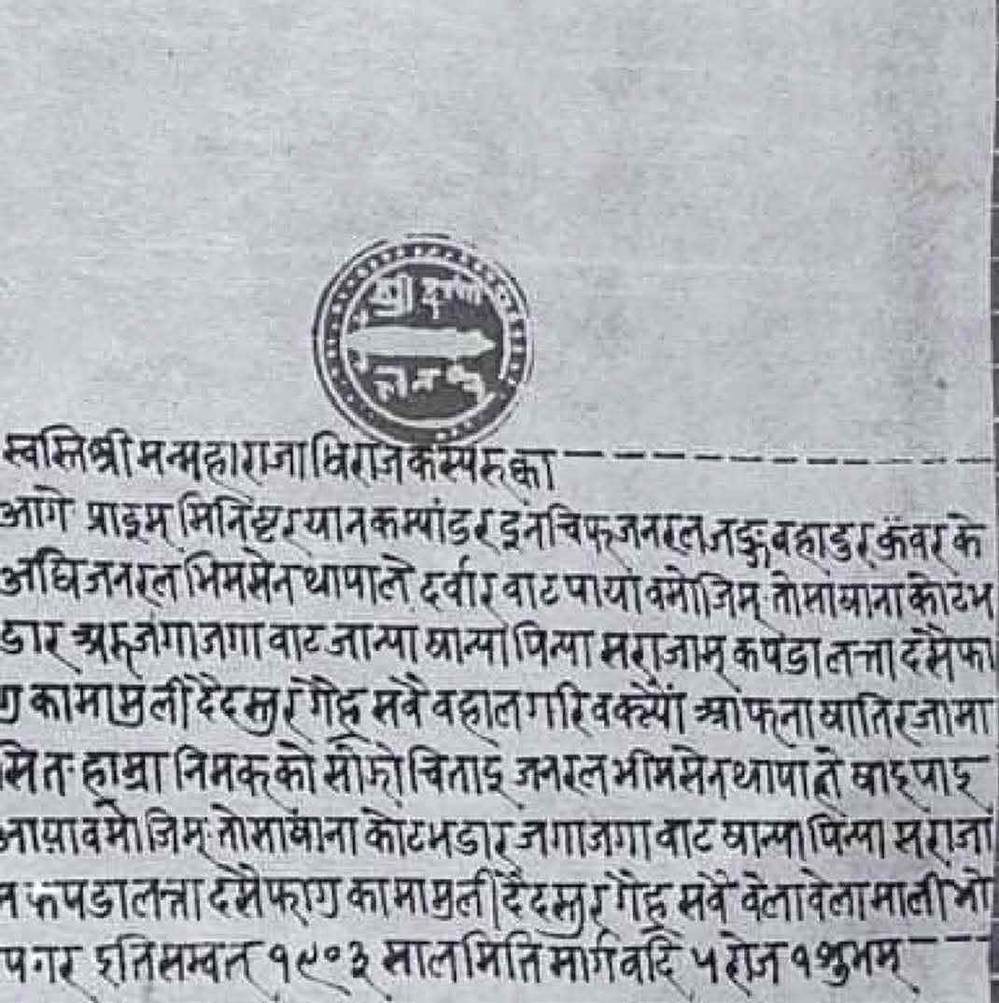 On Sunday, 5th November 1903, King Rajendra issued a notice regarding the salary and benefits that Jung Bahadur would receive as Prime Minister and Chief of Army Staff, stating, 'General Bhimsen Thapa has come to the palace, as per the rules, to the Kotbhadar, Jagajagavat, Shanyapinya Sarajam, cloth, rags, Dashain Phagu, small things, and other things, and you should enjoy them at any time.' Earlier, Bhimsen Thapa's headman's salary was Rs. 6,401. BS. In 1871, four thousand were added to make it 10,401 (Dineshraj Pant, 'Purnima' Purnima No. 77-Asoj 2047:23).
Sarvesarva Jung Bahadur not only appointed his brothers, sons, and nephews to important positions, but also imposed a universal rule and determined the order of their roles. He had complete control over the state treasury. Historian Mahesh Chandra Regmi, in 'Regmi Research Series' Year 8 Issue 1 (December 1976:16), has brought to light the salary scale that Jung Bahadur, his brothers, and sons received around 1910. At that time, he received a salary of Rs. 83,620. His brother Commander in Chief Bam Bahadur's salary was Rs. 32,613. Among his minor sons, seven-year-old Colonel Bhimjung received a salary of 8,567 rupees, six-year-old Colonel Jagatjung received 16,712 rupees, four-year-old Colonel Jitjung received 9,000 rupees, and two-year-old Captain Babarjung received 5,001 rupees. Jung Bahadur's queens were called 'ministers'. The salaries received in the name of the minor sons were deposited in the private treasury with the seal of those ministers (Chittaranjan Nepali, 'Jung Bahadur's Story' – 2070: 255–56).
A web of espionage
If Vijayraj Pandey and Susare Putali Maiya had not spied inside the royal palace and supported him, Jung Bahadur would not have reached the top of the kingdom, and he could have been killed in the process. When the information about the conspiracy to kill him was brought to the warehouse and killed, it all came to light when Putali Maiya reached Vijayraj and reached Jung Bahadur (Rana, 2070:43). Later, he made Vijayraj the royal guru. He and his brother Tirtharaj's descendants continued to act as royal gurus as long as the monarchy existed in Nepal. Jung Bahadur made Putali Maiya his queen. After returning from a visit to Britain, Jung Bahadur's life was saved when his female brother Bam Bahadur promptly leaked the information that his own male brother Badrinar Singh was planning to betray him (Jabara, 2065:84). According to Rana................. (2074:85), when Queen Rajyalakshmi was exiled, Jung Bahadur sent his trusted employees Karbir Khatri, Hemdal, Khadga Bahadur Rana and Siddhiman Singh to protect King Rajendra, who was following her to Kashi. They used to send information about every movement of King Rajendra to Jung Bahadur. He did not allow any rebellion against him to succeed.
Things to remember
 Even though Jung Bahadur was the Prime Minister of Nepal during the military rebellion in India, he led a Nepali military team to suppress the rebellion there. The British were pleased with him. As a reward, Nepal got back Banke, Bardiya, Kailali and Kanchanpur out of the territories lost in the Sugauli Treaty. Jung Bahadur contributed to the codification of Nepal's laws and the promulgation of the Muluki Ain. The credit for Nepal winning the war with the vote also goes to Jung Bahadur. When you read 'Preparation for the Vote War in Nepal' (2036) written by Mohan Prasad Khanal, you will know how meticulously Jung Bahadur worked for that war.
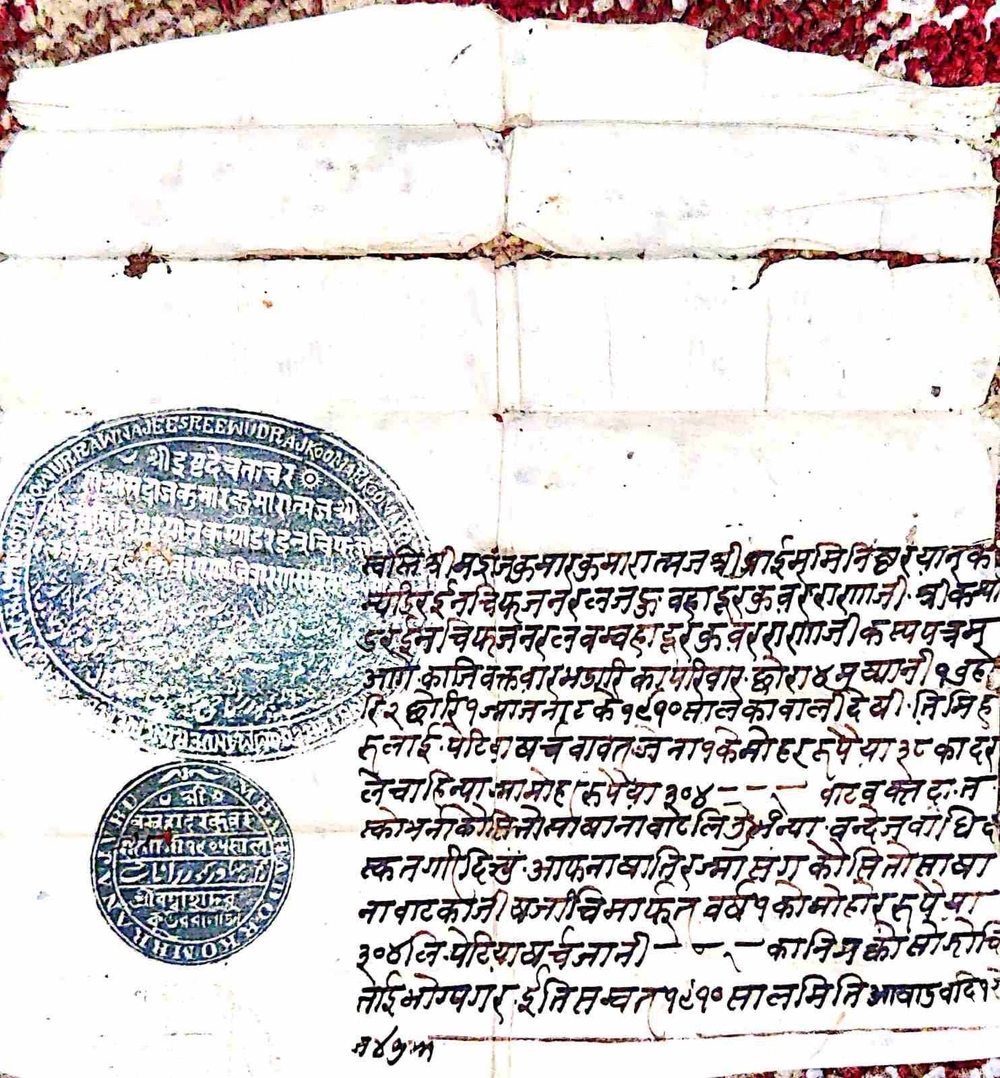
By marrying Hiranyagarbha Kumari, the sister of Prime Minister Fateh Jung Shah, who lost his life in the Kot Parva, Jung Bahadur set an example that an enemy once is not an enemy forever. He also returned all the confiscated property of his brother-in-law Guru Prasad Shah, who had repeatedly conspired to kill him, and gave him the rank of colonel. Among those killed in the Kot Parva was Qazi Bakhtawar Singh Bhandari. This writer has received a letter from the Kausitoshakhana stating that the deceased Bhandari's wife, son, daughter and daughter-in-law were given relief at the rate of Rs. 38 per person on Wednesday, Asar 1, 1910. Despite his many forgettable deeds, Jung Bahadur is remembered for these deeds.