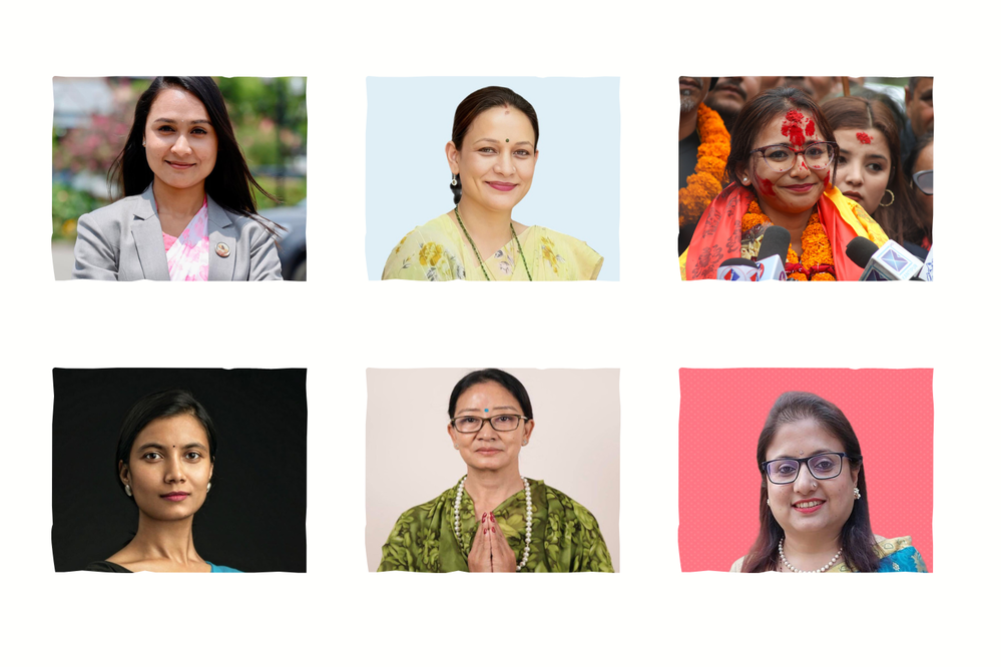
How will these women, who have proven themselves in different professions, present themselves in Parliament? What will their parliamentary journey be like? Will they fulfill their promises or not?
We use Google Cloud Translation Services. Google requires we provide the following disclaimer relating to use of this service:
This service may contain translations powered by Google. Google disclaims all warranties related to the translations, expressed or implied, including any warranties of accuracy, reliability, and any implied warranties of merchantability, fitness for a particular purpose, and noninfringement.
Some entered politics while doing business, some through social service. Some chose politics to correct the anomalies they saw while doing journalism, while some felt the responsibility to build the country while making spices. In any case, this election to the House of Representatives made women candidates with different professions and perspectives victorious.
Bhandari (Karki), who defeated her opponent by a wide margin of 36,310 votes, is also not from a political background. Niti, who has been taking care of her grandfather's shop, has been active in business for about 20 years. She is not only a restaurant entrepreneur, but also a spice entrepreneur. She makes 'recipe sets' of spices for various restaurants. She also makes 'recipe sets' for spices 'dishes' and Niti, who has made 'recipe sets' for spices, does business with cardamom. She says that she has experienced the problems of farmers from the policy level in her long journey in business, so she entered politics to solve them. She knows that once she reaches the policy-making stage, the problems that farmers have been facing can be solved.
‘I saw many legal hurdles while doing business. We cannot fulfill many legal criteria. Even though we have products, we do not get a good market because of legal hurdles,’ said Nitima, ‘All this work is directly related to farmers. In my area, Sarlahi-1, 99 percent of the people here are farmers. The problem there is price and market management. That is why I came into politics to see if my expertise can be returned to this society.’
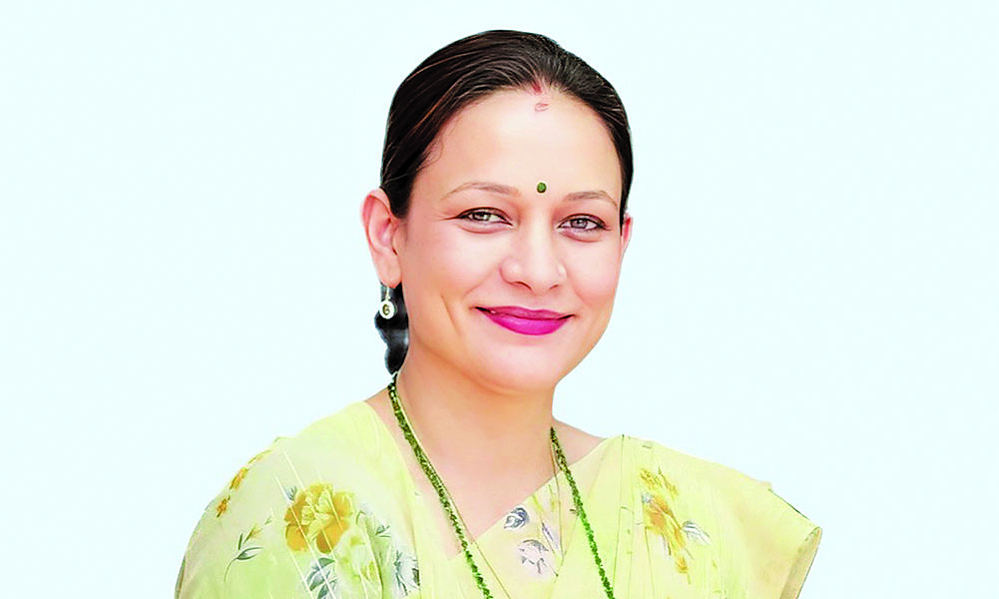
While in business, Nitima not only experienced the problems of production and market management closely, but also observed how foreign products entering the country try to displace local products. Therefore, Nitima wants to connect technology with agriculture. And while importing from outside, Nepali money going abroad needs to be stopped in the country. ‘Sarlahi-1 is the place where the largest number of tomatoes are produced in Nepal.’ But there is a border nearby, foreign tomatoes come from there. And our farmers do not get a good price. From ketchup to various tomato pulps needed by restaurants, we import them from abroad. If we connect our production with industries that can produce such materials, the problem there will be solved,’ said Nitima.
Nitima, who studied at Gyanodaya School, did her IA from Padmakanya. After completing a one-year B.Tech from World Street College in Houston, UK, she did a diploma in computers from Vision College. After reaching the UK, Nitima got the opportunity to see and understand the ‘franchise model’. After returning from the UK, her grandfather’s grandfather practiced ‘franchise’ after 5-7 years of preparation.
‘Our experience abroad has taught us how to start a franchise model here,’ said Nitima, ‘My grandfather’s Sekuwa became the first restaurant in Nepal to sell franchises abroad. We are also the first to open an outlet in the US. When I first saw the idea of a franchise, I was surprised how there were so many outlets. But later I understood, and after coming to Nepal, I practiced it.’
Komal Gyawali, who went into politics through business, has a similar experience to Nitima. Komal says that while doing business, she saw the problems of farmers, workers, and local society up close and personal, and that she turned to politics to raise their problems in the parliament and solve them.
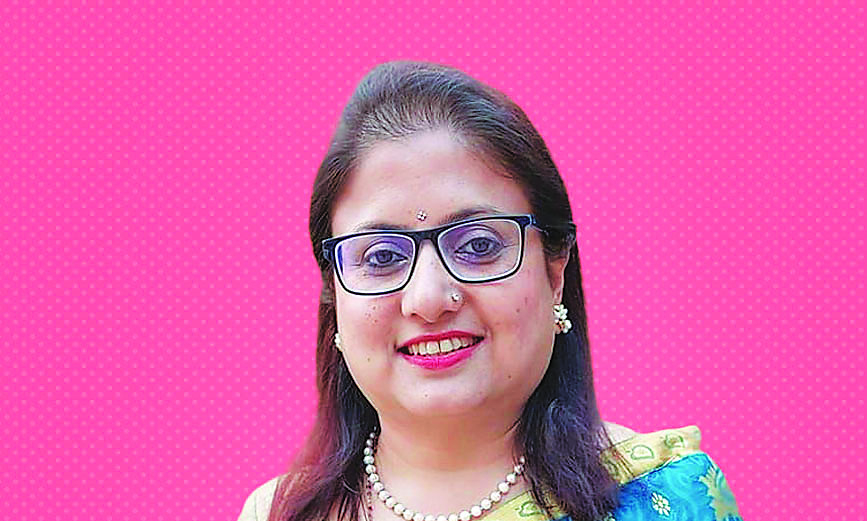
‘Business connected me to society, but it became clear that many of the problems were policy- and structural-related.’ Such problems cannot be solved through individual efforts alone, for that, state policies and laws are needed,' Komal said, 'That is why the belief that we can find a solution by raising these problems through the parliament brought me into politics. My aim is not just to do politics, but to try to solve the problems I have seen and experienced in a policy-based manner.'
Komal has not only seen the problems of caste division and landlessness in the Tikapur region, she has experienced them herself. Knowing that these problems have a deep impact on society, Komal will raise these issues in parliament. She believes that employment can be created by connecting the Tharu community and agriculture. Komal says, 'The life and culture of the Tharu community are deeply connected to agriculture. Therefore, employment can be created by connecting agriculture, local traditions and tourism.' Her aim is to make local crops and dishes a 'brand', connect traditional farming and culture with agri-tourism, and attract youth towards modern agriculture and entrepreneurship. She is confident that connecting agriculture and culture not only provides employment but also preserves identity.
Komal started her agricultural machinery and seed business in 2078. In the beginning, she worked on a small scale to provide necessary seeds and equipment to farmers. Gradually, she came closer to the farmers and understood their real problems. She also has experience in how to increase production and make agriculture more systematic. 'My main role in this journey was to provide farmers with improved seeds, modern agricultural machinery and technical information. I have experience that this has helped increase production and make agriculture a little more systematic,' said Komal.
She wants to use this experience from her business journey in the parliament. 'While doing business, I have seen both practical problems and solutions up close. Therefore, after reaching parliament, I want to use that experience in policymaking,' said Komal, who won from Kailali-1. 'I will work to make farmer-friendly policies, improve agricultural technology and market systems, and enact laws that encourage small entrepreneurs.' What business has taught me is that policies should be practical, not limited to paper. My efforts in parliament will be in that direction.'
Nisha Dangi, who was elected to the federal parliament through the proportional quota (Khas-Arya group) from the Rashtriya Swayamsevak Sangh (RSS) in the 2079 general election, earned the recognition of being the youngest 'youngest MP' in the federal parliament. This time, Nisha, who started her second parliamentary journey by winning directly from Jhapa-1, was a journalist by profession before entering full-time politics.
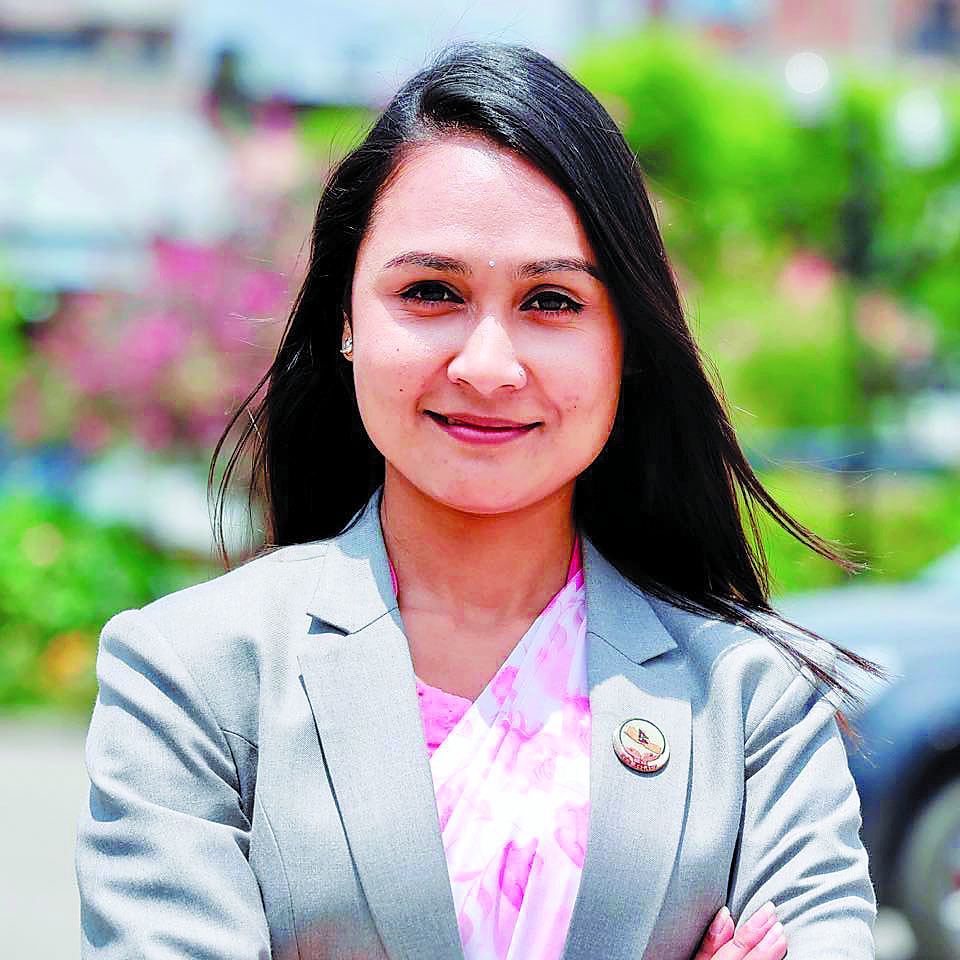
29-year-old Dangi began to understand politics when she completed her master's degree in journalism from Tribhuvan University. It's not that she wasn't interested in politics before that. But journalism made her understand politics even more. When Nisha started her master's degree, 'Health Television' had just opened. From there, Nisha took up journalism.
While doing journalism during Covid, she saw firsthand the condition of the common people amidst the inconsistencies in the health sector. When she saw that those in the health sector did not have a specific purpose to solve this problem, she felt that these problems could be solved only after entering politics. However, even then, Dangi had already made a firm decision to enter politics.
After television, she did journalism on the online portal 'Dr. Sap.com' to practice writing. At that time, while collecting news from autism, cancer 'survivors' and kidney patients, she met families waiting for death due to lack of money. The question arose in her mind, 'Why can't the state get everyone treated?' The people are forced to die because they don't have money?'
Dangi started politics with the aim of making the state responsible in this sector, understanding the pain that the poor people are experiencing in terms of health. 'The state should be able to treat the poor people.' I have seen families raise their hands because they could not treat a 14/15-year-old child. And I wondered why the state could not do anything about health, why it could not,' Nisha says.
Even while working on 'Doctor Sap', Dangi had not yet decided to enter politics. She had come to know that the National Independent Party was being formed. However, at that time, she was in the race to get a government job. She had filled the form for the Nepal Television and National News Committee exams. However, the exams were postponed for a year.
While she was preparing for public service, the country's elections began. Even when she got the opportunity to become a central member of the Rashtriya Swayamsevak Sangh, she kept saying, 'I will get a government job'. 'I was interested in politics. But my family also wanted me to get a government job,' says Dangi. But at that time, she thought of supporting the Rashtriya Swayamsevak Sangh (RSS) in the elections, and looked for candidates – looking for a new face who would formulate the policies she wanted. She looked for a proportional female face, but did not see anyone who was satisfactory. Then, without informing anyone, she filled out the application for the candidate herself.
‘There must be others like me who are educated, interested in politics, who are looking for women leaders, who are waiting like that and no one else has come.’ So I filled out the application myself. She thought it would be easier to attract other women after I left. I got good votes in the primary election, that’s how I came into politics,’ Dangi recounted her political journey.
While reaching out to the public in this election, Dangi encountered a lot of resentment. She experienced it even more when those who campaigned for other parties voted for her. ‘I heard a lot of people saying, “We are trapped in a trap, this time we need you,” says Dangi. During the election period, Nisha also came across patriarchal ideas.
Nisha’s five years of journalism experience have taught her that we must fight for health. Meanwhile, her work in the infrastructure sector has given her the passion to focus on that as well. ‘I can play an effective role in these areas,’ says Dangi, ‘I will work 100 percent to end the system of getting good education only if you have money. If you have money, you can get good treatment, but if you don’t have money, you have to end the compulsion to die.’
In politics, Komal and Nisha are not the only ones. Most of the women who will be directly elected in this election are from different professions. Bina Gurung, who won as a Rashtriya Swayamsevak Sangh candidate from Kaski-3, also took the path of politics through social service. The 53-year-old Gurung, who defeated her rival Manoj Gurung of the Nepali Congress by a margin of 24,970 votes, is from Pokhara. She is the founding president of Sanjeevani Didi Bahini Sangh Nepal.
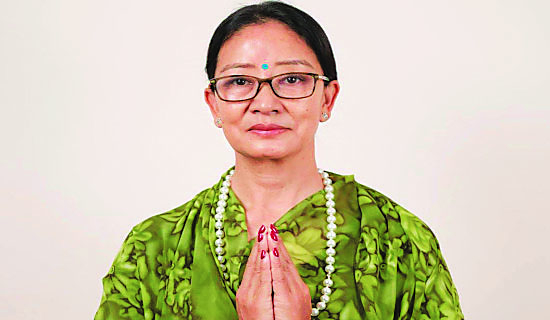
Gurung is the former president of the Lions Club of Pokhara Sirjana Chautari, who has been working for women's unity and empowerment for years. Social service is not Gurung's identity. She is also a member of the Panchase Cable Car Board of Directors. She chose the path of politics to empower women socially and economically. She has to raise various issues and problems of women in the parliament in a policy-based manner. She has to serve the people.
Doctor Toshima Karki also chose politics from a different profession. Toshima, who defeated Ramkaji Maharjan of the Nepali Congress with 43,096 votes, has a Master's degree in Medicine in General Surgery. She passed SLC from Shahid Dharmabhakta Secondary School and 12th from Modern Indian School in Chobhar and did her MBBS from KIST Medical College, Lalitpur.
Toshima has a Masters in Medical Education from Kathmandu University and also worked at Patan Hospital for some time. She has been raising her voice against the irregularities and anomalies in medical colleges since 071/72. She was also active in the campaign of medical education reform activist Dr. Govinda KC. She was elected to the House of Representatives from Lalitpur-3 in 079 and became the Minister of State for Health and Population in the Pushpa Kamal Dahal-led government. This is her second parliamentary journey.
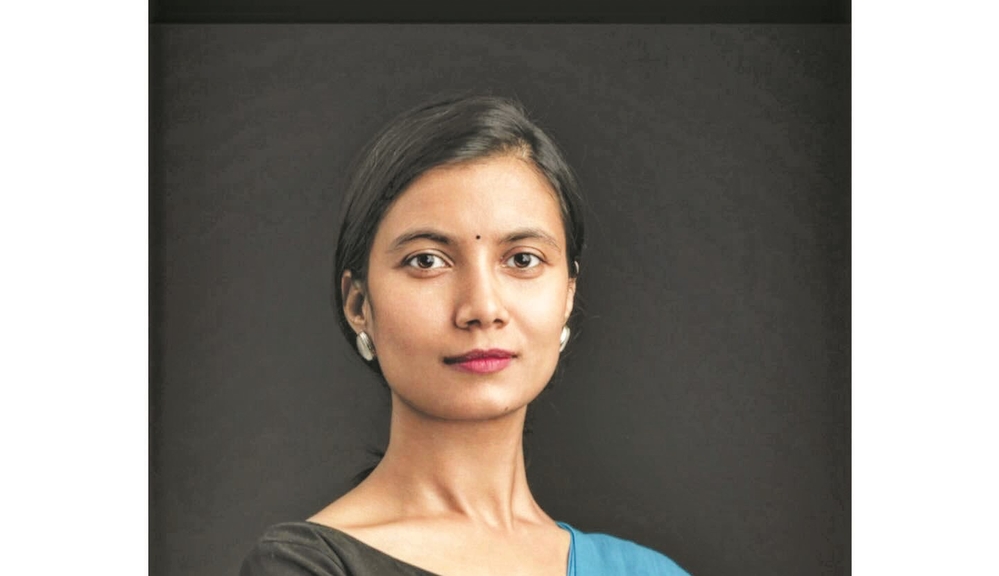
Sovita Gautam is also on her second parliamentary journey. Sovita, who won in Chitwan-3 by defeating NCP candidate Renu Dahal by a margin of 38,662 votes, is a lawyer by profession. कानुनमा स्नातक उत्तीर्ण सोवितालाई लाग्छ, कुनै व्यक्तिको राजनीतिमा प्रवेश गर्ने विषय उक्त व्यक्तिलाई राजनीतिमा रुचि छ कि छैन भन्ने कुराले निर्धारण गर्छ ।
जुन बेला उनले रास्वपा प्रवेश गरिन्, उनी राष्ट्रिय राजनीतिमा निकै चासो राख्थिन् । राजनीतिमा केही हुँदा सामाजिक सञ्जालतिर आफ्नो विचार राखिहाल्थिन् । पुरानो दलको राजनीतिक संरचनाभित्र कहिल्यै आफूलाई राखिनन् । कुनै दलसँग जोडिएर विद्यार्थी राजनीति गरिनन् । पुरानो दलको संरचनाभित्र पसेर कहिल्यै पनि आफ्नो आवाज निर्णायक बिन्दुसम्म पुर्याउन सकिन्छ भन्ने आँट उनमा आएन ।
रास्वपा पार्टी स्थापनाकालदेखि जोडिएकी उनी राष्ट्रिय राजनीतिलाई सही दिशामा डोर्याउनुपर्छ भनेर पहिल्यैदेखि प्रस्ट थिइन् । ‘दल निर्माण गरेर नेपालमा राजनीतिक यात्रा आरम्भ गर्दै राष्ट्रिय राजनीतिलाई हामीले डोर्याउनुपर्छ भनेर प्रस्ट भएरै हामी आएका हौं,’ उनले भनिन् ।
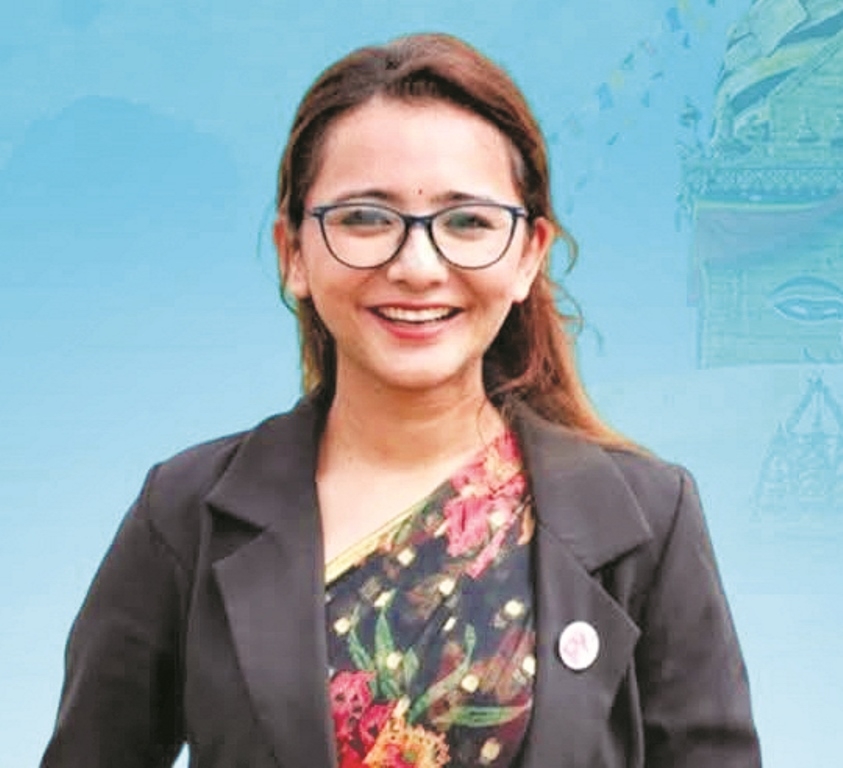
कानुन पृष्ठभूमिबाट राजनीतिमा आएकाहरूले त्यहाँ राम्रै उपस्थिति जनाएको देखेर पनि सोवितालाई राजनीतिमा आउन प्रेरणा मिल्यो । ‘मेरो शिक्षा पनि राष्ट्रिय राजनीतिमै चासो राख्ने किसिमको भएकाले म राजनीतिमा आएँ,’ सोविताले भनिन् । सन् २०१९ मा स्नातक सकेर सोविताले बारको लाइसेन्स लिइन् ।
कानुन अध्ययन गरिरहँदा सोविता नेपाल टेलिभिजनमा कार्यक्रम प्रस्तोता थिइन् । सँगसँगै उनी वकालतमा पनि उत्तिकै सक्रिय थिइन् । लाइसेन्स लिनेबित्तिकै मुद्दामामिला हेरिन् । तर बीचमा कोभिड भइदियो । ‘नेपाल हेल्थ काउन्सिल’मा कानुनी सहायक भएर काम गरेकी सोवितालाई यस्तै कामले नीतिगत क्षेत्रसँग जोडिदियो । ‘मुद्दा मामिला गर्दा पनि मानिसका समस्या थाहा हुँदै गयो । कानुनका समस्या पनि थाहा हुँदै गयो । अनि यहाँ परिवर्तन गर्नुछ भन्ने सचेतना भयो । राजनीतिमा मेरो त्यो अनुभव त प्रयोगमा आउने नै भयो,’ सोविताले भनिन् ।
जेहोस्, यस पटकको निर्वाचनमा जनताले फरक पेसा, फरक आवाज, उद्देश्य र अठोट अनि नयाँ प्रतिज्ञासहितका महिला उम्मेदवारलाई विश्वास गरिदिएका छन् । फरक पेसामा आफूलाई सावित गरिसकेका यी महिलाले संसद्मा आफूलाई कसरी उभ्याउलान् ? उनीहरूको संसदीय यात्रा कस्तो होला ? उनीहरूले आफ्ना वाचा पूरा गर्लान् कि नगर्लान् ? मूल्यांकनको जिम्मा जनतालाई ।