By adding digital, television, film and stage, it is estimated that the economy of comedy sector of Nepal has reached about 3 billion rupees annually.
We use Google Cloud Translation Services. Google requires we provide the following disclaimer relating to use of this service:
This service may contain translations powered by Google. Google disclaims all warranties related to the translations, expressed or implied, including any warranties of accuracy, reliability, and any implied warranties of merchantability, fitness for a particular purpose, and noninfringement.
What should comedy be? Bhairav Aryal, the pinnacle of satirical writing, has said, 'The goal of today's humorist should be to raise satire from the light level of farce to carry and nourish serious and profound feelings of life and the world.' But, looking at Nepali humor, a serious question arises - why are we still stuck in the tradition of making fun of those who are at the bottom of the society? Look at television serials, movies, Gaijatre Farhasan and comedy-shows - 'jokes' based on marginalized communities, linguistic accents or lifestyles are mainstream. The real purpose of satire is to question the ruling and powerful, not to mock the weak and disadvantaged. What should be the path of humor today?
000
theater, radio, tele-serials, movies, reality shows, advertising market and corporate house programs are now in the mood of laughter. Comedies and comedians are everywhere. 'Comedy content' has been sold on platforms ranging from television to YouTube and TikTok. Comedians from neighboring countries are coming to Nepal and performing. While the audience wants to laugh, the art industry has marketed it well. In recent years, this type of entertainment sector seems to be becoming financially tight.
However, how much is the market for humor in Nepal now or what is its commercial share in the total entertainment sector? It is not easy to give a definite answer to these questions. Because the data of this area has not been studied in one place. However, experts in this field estimate that the income from digital platforms, advertising market, ticket sales of stage shows, and the 'collection' of comedy films can reach 2 billion to 3 billion rupees annually. Comedian Bikki Agarwal, who is also the director of the television program 'Comedy Darbar', says, 'It is not that there is no money in this sector, but after voting in the elections, the voters themselves do not know when the results will come, when the salary will be received, there is no fixed date.'
The new generation is moving forward with freshness from the farce of the annual cow procession to the daily 'stand-up comedy'. Ayush Shrestha, a famous comedian of the new generation, says that the main income from stand-up comes from ticket sales, corporate shows and sponsorships. He said that various initiatives like 'Pass the Mic' are being implemented in this area, starting from the opening of 'Happy Club' for comedians only, so that only female comedians and female audience can attend. Three 'open mic' and one regular 'comedy show' are being held in Kathmandu valley every week. Aayush himself also conducts three one-hour solo programs in a week. Such solo performances were earlier limited to singing or 'TED Talks'. It is still a tradition to insert comedians in the middle of concerts. Aayush says that many new artists are coming through
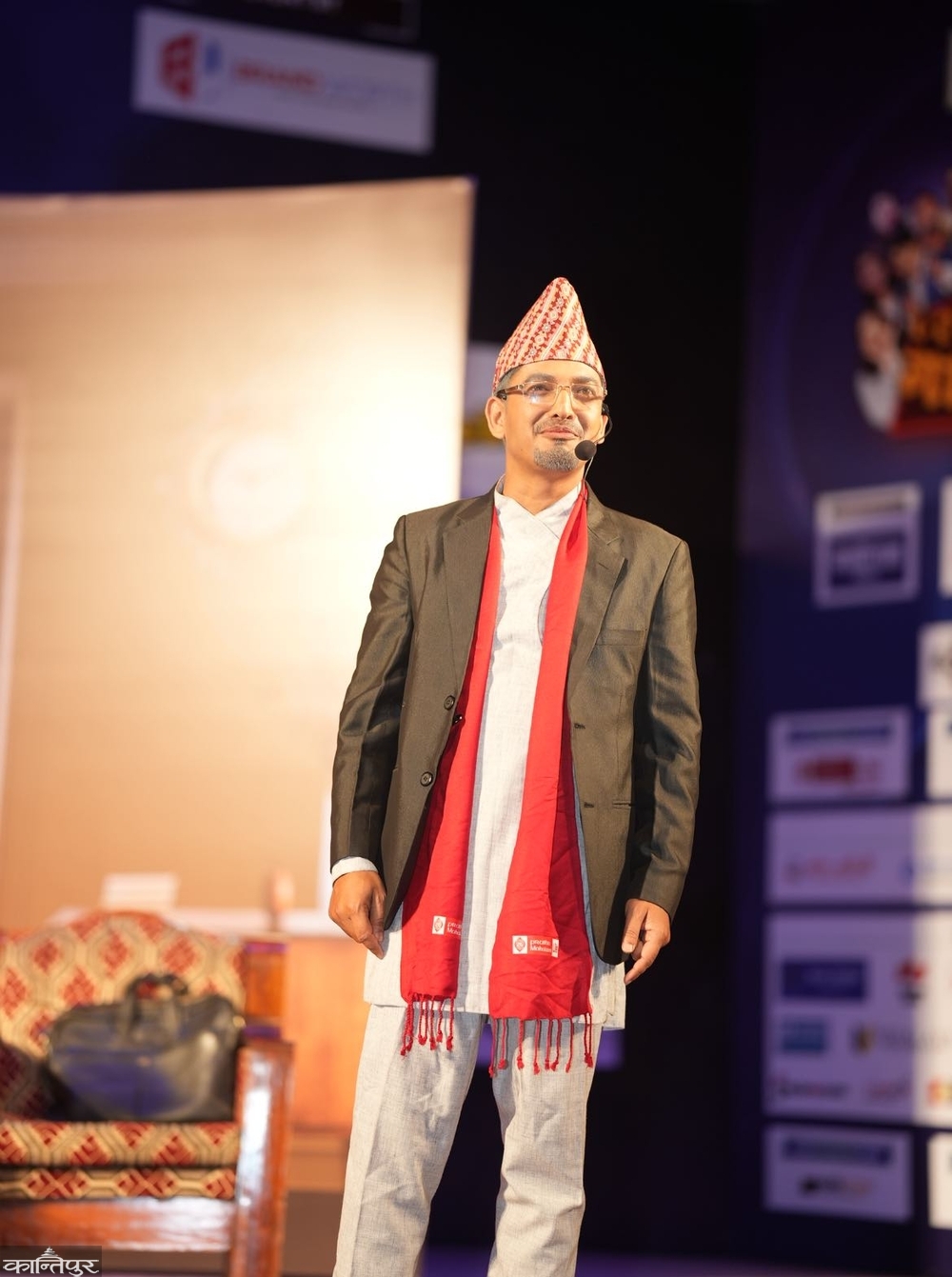
'open mic'. It's a show where anyone can go on stage and tell the audience the funny things they've prepared. It is like an open stage where new artists can perform. Open mics are organized in various restaurants, theaters and learning centers in Kathmandu Valley. According to Ayush, there are currently 25/30 active stand-up comedians in Kathmandu. New generation comics like Apurva Kshitij Singh, BT Kancha, Elanjung Thapa, Yojana Magar, Rajina, Shraddha Prasai are active. "The average salary per program is 1,500 to 3,000 rupees," he said. The highest I got was Rs 2 lakh from a corporate show.'
Ayush remembers that 2400 tickets were sold in one day at the show of Abhishek Upamanyu, a famous young comedian of India, last year. After the audience left, he had to perform the program in two parts at Pragya Pratishthan. At that time the price of tickets was between 2000 to 3000 rupees. Aayush said that the advance ticket sales had to be stopped due to high demand. "Nepali artists are not given this kind of respect and trust," he said, "Maybe we have not matured or our art style has yet to be refined." However, we will be refined with the support of the audience. Viewers are trying to come only after we are refined. Nepali stand-up comedy is moving forward in this contradiction.'
According to Sita Newpane, who is popular among the limited number of female comedians who can be counted on the fingers, the economic status of an artist in the comedy field is directly related to their popularity. This area is very good for artists who get regular stage shows, especially international shows. She has been involved in this genre full-time for the last 4 and a half years and does an average of three to four shows a month. She said that she is earning a good living through character acting in live shows, commercials and movies. Currently she is also involved in writing a script for a comedy movie. She said that doing a stage show earns up to 50/60 thousand rupees from one show. "Depending on how much your content can be sold, it depends on how long you stay in this field," she says, "comedy audiences are fair, they support those who do well."
digital market With the advent of
digital platform, Nepali humor has spread new wings. It is estimated that 'monetized' channels on YouTube earn between $0.25 and $1 per thousand views. There are also millions of monthly earners with millions of views. Actors earn extra income from 'influencer marketing' and 'branding' on social networks. Artist Jeetu Nepal understands that there is a flood of humor in the digital medium these days. If he can create 'content' that is timely and according to the interest of the audience, he will get a good profit from it.
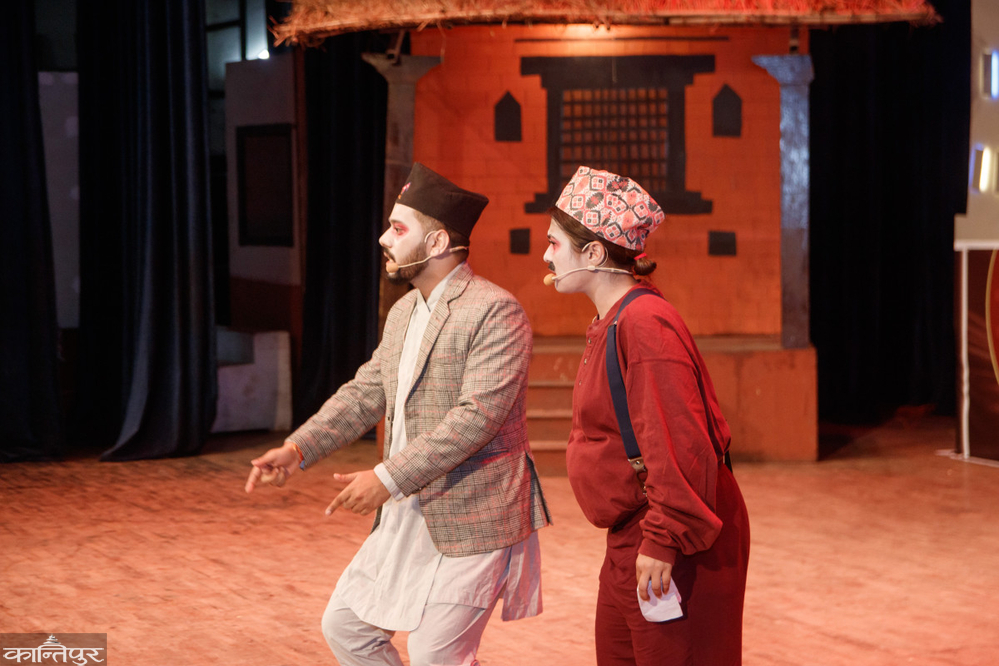
On YouTube, channels like Nep-Gazam, Gajurial Channel, Laugh and Clap, Happy Club Nepal have put up humorous videos, 'trending memes', 'skits' and 'content' based on social satire. Comedian Lekhmani Trital's comedy 'Vid-2, Ramesh Uncle's Son Special', which was uploaded 6 years ago on Nep-Gazam, has 2.1 million views, while Comedian Sita Neupane's 'Jai Nari' has 19 million views. Nepal's trending YouTube channels like OSR Reality, Media Hub, on the other hand present comedy teleserials and reality shows. Comedy Darbar Season 2's 'Sakkigo Ni Special' video has 1.5 million views so far on OSR. Since YouTube distributes income based on the amount received per thousand views, it can be estimated that OSR probably earned between Rs 50,000 and Rs 2,68,000.
The commercial foundation of comedy
The credit of establishing the commercial foundation of comedy genre in Nepal goes to Harivansh Acharya and Madankrishna Shrestha 'Mah' couple. They did not limit this genre to theater but expanded it to radio, television, cassette player, CD, VCD and film. Film director and entertainment analyst Dipendra Lama says that Mah has taken this forward by making a comedy show on Nepal Television 35 years ago. "Mah Jodi's programs such as Lalpurja, Lakshmi, 15 Gatha, Banpale, Sur-Besur, Aama, Hari Bahadur-Madan Bahadur became very popular," he says, "They also converted and sold the stage performances during Gaijatra in audio cassettes." The commercial base of humor is from there.'
Harivansh also remembers that when he entered the art field, comedy genre had not become professional. According to him, at that time it was customary to give boxes, tea, cigarettes and sweets for performing comedy. He believes that they have commercialized it and now many people are dependent on this sector. Harivansh also jokingly says that he has added all his assets like houses, cars and vehicles. "The wealth that was added at that time has become valuable now, due to the increase in prices, the wealth of lakhs has become millions," he says, "comedy has made us travel half the world, others can make money by traveling, we have earned money on the contrary". He was optimistic that the new generation, who are proficient in different languages, accustomed to technology and updated with the news of the country and abroad, will now expand humor to the international market. The generation after
Mah, emerged from teleserials. In the 2060s and 2070s, when the Internet was not widely available, comedy shows on television were widely popular. Dozens of programs including 'Hijoaazka Kura', 'Twakk-Tukk', 'Tito Satya', 'Meri Bassai', 'Jire Khursani', 'Hatterika' ran for hundreds of episodes. Mary Bassai is still appearing on television. Dipashree Niroula, who has made comical dramas like 'Ram Vilas and Dhaniyan' on radio, Bitter Truth and now one hit film after another in the comedy genre, has now started saying that the days of satire have come. "The field of comedy has become strong now, it has taken a lot of leaps," she says, "Earlier, comedians were given small roles in films, now we are in the lead roles." This is the time for laughter.' Somprasad Dhital, who has spent three decades in the media hub and now joins Prime Television, remembers how the moments were when
comedy series were popular, where viewers would wait at the bar to watch 'Tito Satya' or 'Meri Bassai'. He said that it would be difficult to find a place to place advertisements during the broadcasting of these programs on Nepal Television. "We used to sell advertisements worth 7-8 lakh rupees in a week," he said. According to a study conducted at that time, it was estimated that serials like 'Meri Bassai' and 'Tito Satya' were watched by 50/60 lakh viewers. As there was no other option for entertainment, there was a time when TV was the only source of entertainment.'
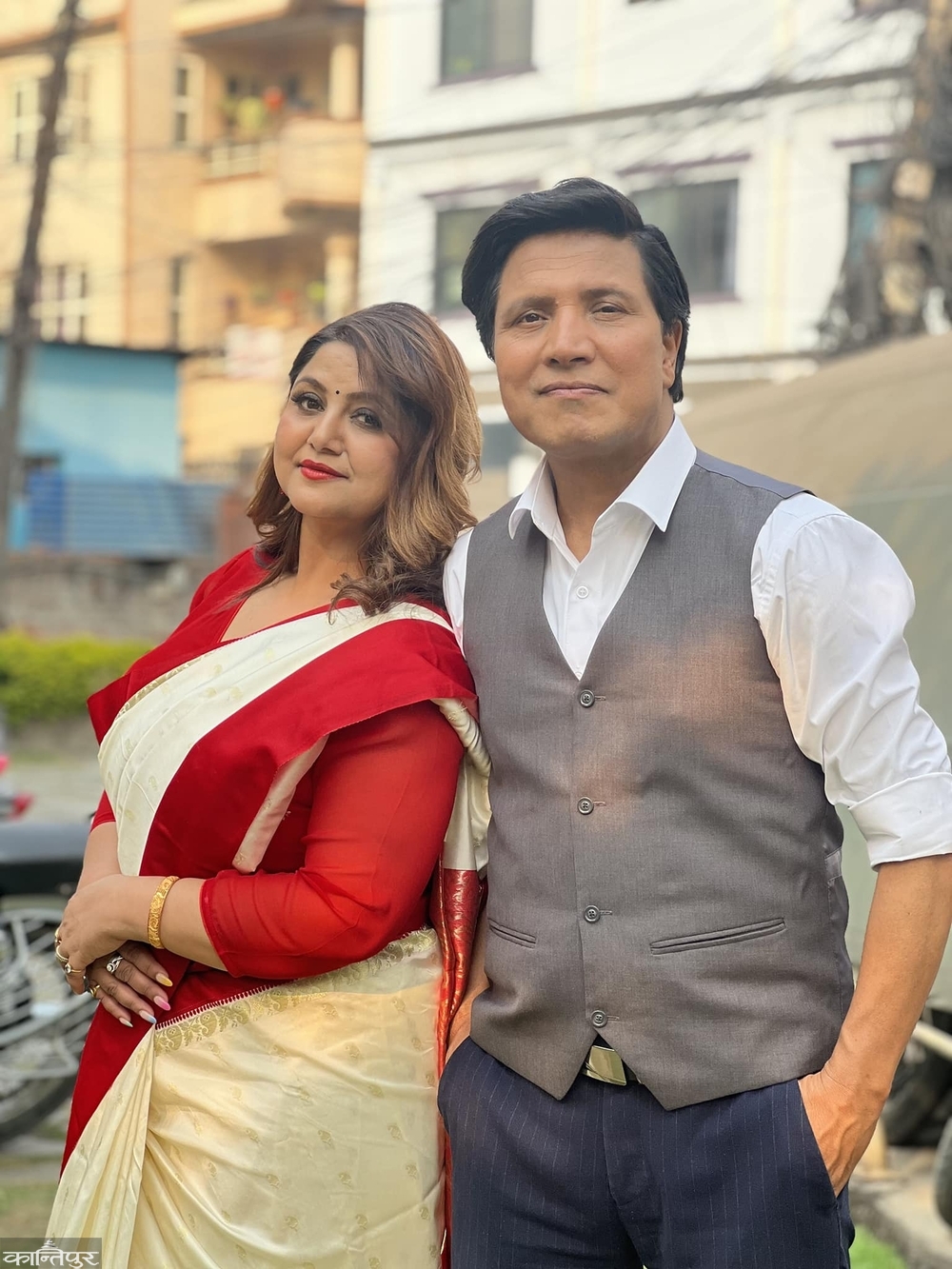
At that time, comedy programs and artists were like a magnet that attracted people. The incident of artist Sitaram Kattel Dhurmas having to return to Dhangadhi without a program after the crowd stopped him is still fresh. "It was around 2062/63, it was announced that a program would be held in Dhangadhi, and when we arrived, the audience had gathered around 100,000," he says. He said that the reduction in advertising and sponsorship and the non-functioning of industrial factories have had an impact. "This market is fertile for hard work and creativity," he said.
Comedian Bikki Aggarwal is happy that his profession is being accepted from house to house. "Earlier, whoever dreamed of becoming a hero, now there are many who say, 'I also want to become a comedian,'" Bikki says, "It is difficult to do in any field in Nepal, but it is not because of lack of money, it is because of lack of financial discipline. The money that should come after four episodes on television will not come even after 13 episodes. If you had financial discipline, you could have lived very lavishly.''His 'Comedy Darbar' gets an average of 3 million views in three days. He advises the team not to do a stage show with a salary of less than 40,000.
Jeetu Nepal points out that sometimes the dark shadow of financial challenges appears in this bright market. "It's okay to go on stage and sing 20-year-old songs, but comedy has to be new every time, otherwise no one will laugh," he says. Arriving late, 'hustle and bustle' is the norm. Some people believe that activities that discourage comedians and bring lawsuits risk killing the enthusiasm of the new generation. Harivansh suggests that the new generation should not insult or offend in the name of roast. However, despite all these challenges, comedy films are among the top grossers at the box office. Comedy
in
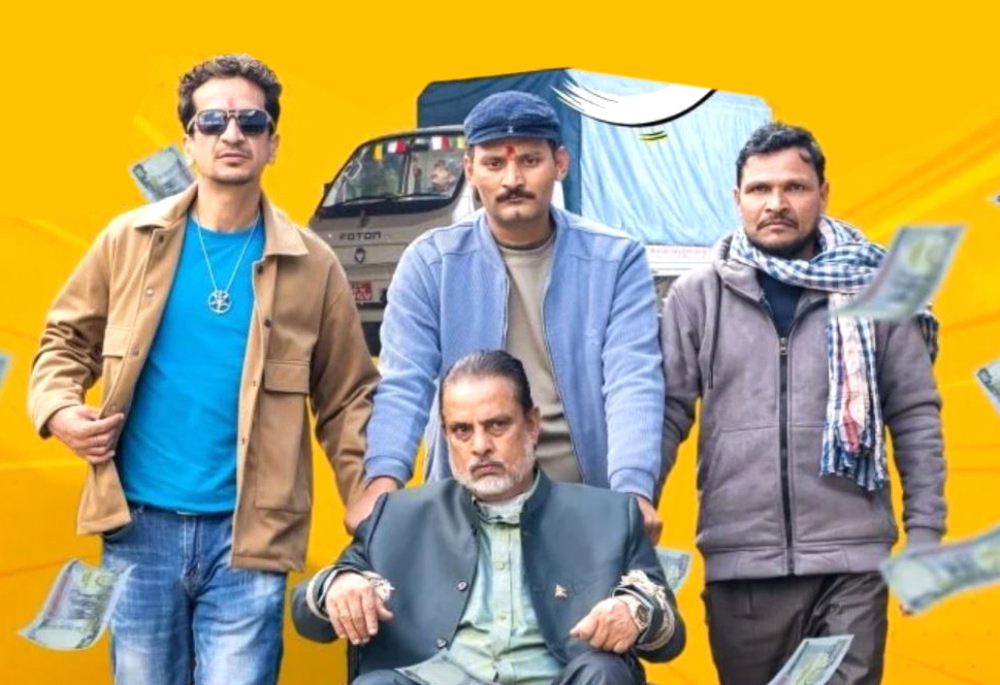
film Comedy genre has dominated the Nepali film industry in the last decade. The films made by Deepak-Deepa alone have grossed more than 100 crores. 'Chh Ekan Chh', 'Wada No 6', 'Chhakkapanja 1 to 5' and 'Chh Maya Chhapakkai' all went to profit. They have also opened a movie hall in this area. Films of this genre like 'Kabaddi', 'Satrugate', 'Jatra', 'Jatrai Jatra', 'Ghampani', 'Pashupati Prasad', 'Mahajatra', 'Loot' have set their own records. Many were 'trend-setters'.
The effect of comedy is also strong in the television reality shows that have started in the last few years. Recently, the winner of Comedy Champion season 3 won an EV car worth Rs 39 lakh. "The sponsoring market has become such that the winner of the comedy champion gets a car," analyst Lama says, "It is time to win a car not only by singing, but by 'stand-up'."
Although the figures are approximate, one thing is clear, now Nepal's comedy sector is a huge economy. This is the market market of Rs 2-3 billion in the connection, stage, film and television added. The time that he has humbly biblical, now in the time of humans, the market, market analysts, entertainment sector is the opinion. The audience still looks eager to delete the thirst for the laugh and Taktram's' algoria's' algoria 'of Taktra. & Nbsp;
is not in one area in India like in India, in India. Have assessments. However, in 2022, the overall media and entertainment market in India is estimated that about 30 billion was worth Rs. 260 million. The overall entertainment market has shown 10 & NBSP; to 15 percent, and NBSP, various studies have been humble. The OTT Platform, Amazon Prime, Disgus Plus Hotstar, investing in the Special Shows, such as Amazon Prime, Deposne Plus Hotstar. Patient Commergent, such as Jakir Kapil Sharma, is said to take up to Rs 5 million for the minimum of Rs 5 million for and Nbsp;. & Nbsp;



