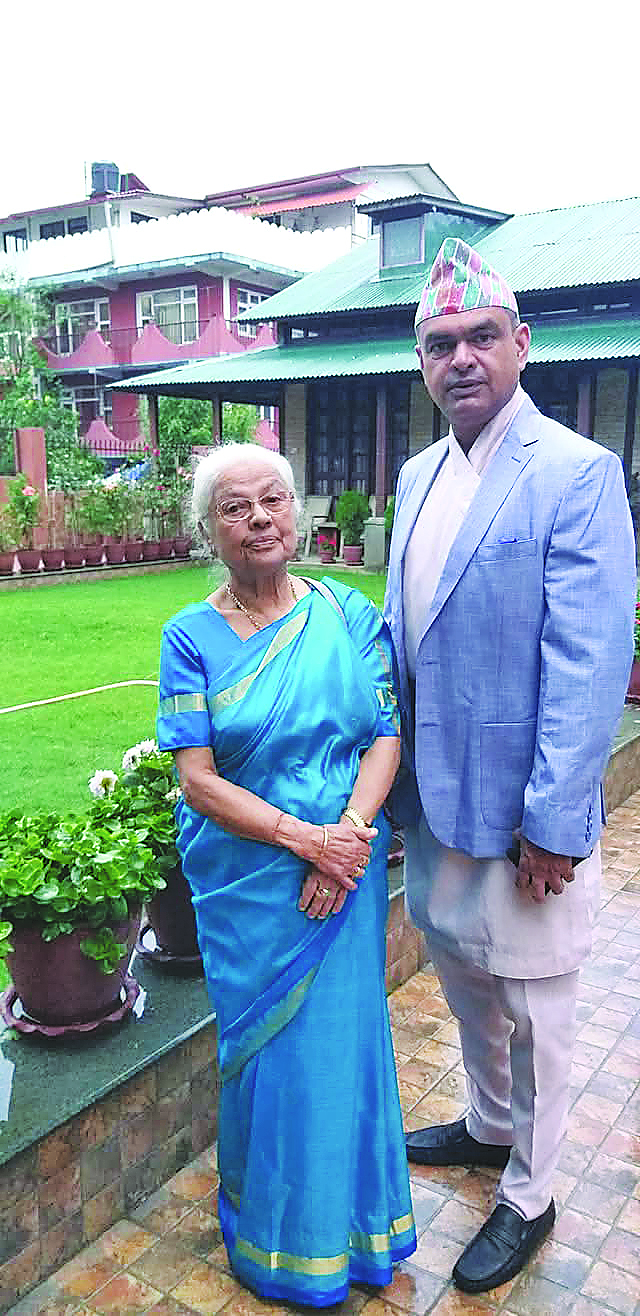
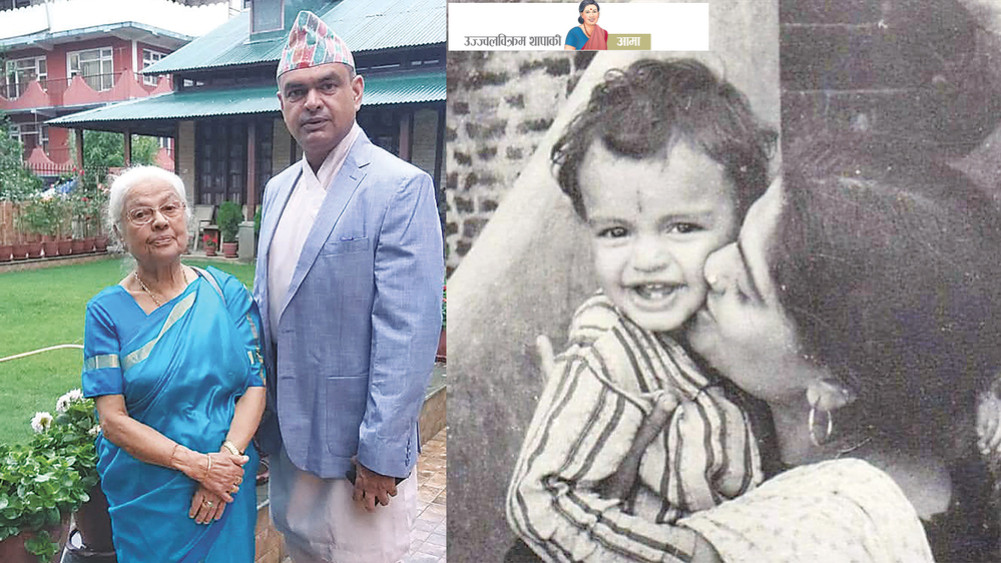
Just as those who are burned by fire and acid cannot forget their wounds, they cannot forget Ujjwal who walked to apply ointment to those wounds. Where did this heart come from within the bright, compassionate city in the shrinking city? He can say straight away without thinking long - definitely from his mother!
We use Google Cloud Translation Services. Google requires we provide the following disclaimer relating to use of this service:
This service may contain translations powered by Google. Google disclaims all warranties related to the translations, expressed or implied, including any warranties of accuracy, reliability, and any implied warranties of merchantability, fitness for a particular purpose, and noninfringement.
They try to become a salve in the lives of those suffering from heartburn. That salve can be of support, help and love. Ujjwalvikram Thapa, who spends most of his routine in the hospital, has remained in the eyes of many.
Just as those who are burned by fire and acid cannot forget their wounds, they cannot forget Ujjwal who walked to apply ointment to those wounds. Where did this heart come from within a bright 56-year-old full of compassion in a city with shrinking emotions? Sitting in a cafe in Baneshwar, he says, "Of course, from my mother!"
87-year-old Urmila Thapa's compassion flowed to her children as well. Ujjwal keeps crying through the window of the memory of the comfort given by his mother to the women who came home with a sad face at that time. She used to say, 'If you can't help with anything, listen to her for 10 minutes, your heart will be lightened.' Even while talking to us, Ujjwal's phone did not stop ringing. He would pick up every call and then try his best. After treating a child from Kalikot who had lost both hands due to burns, he had come to talk after shopping. Ujjwal, who had taken a break from human service, shared some regrets during the conversation, "I forgot how many people I saved by going to the burning zone. But a dead person has not forgotten a single thing.' He kept thinking, 'If I could have tried harder, I would have lived!'
Ujjwal has many times seen mothers who came to the hospital crying and mothers who came back laughing. I have seen how many mothers have lost their laughter and come back. In those faces he sees his mothers. Ujjwal's life has two mothers right. Urmila's mother and Sita's mother. Urmila gave birth. The responsibility of bringing up was carried by the grandmother Sita Dhital. "It would be unfair if I don't take both names together when I say mother," he says. Two years before Ujjwal was born, Sita had moved into the house with her little daughter in Kamalpokhari. Ujjwal never asked how she had arrived.
From the day Sita's mother came, the kitchen of the house was in her charge. "I don't miss Urmila's mother's food, but I do miss Sita's," says Ujjwal. Ujjwal got equal love from both mothers, and received equal beatings from both mothers. At first, the birth mother seemed to be Sita's mother. Later I came to know,' recalls Ujjwal. Only mother Sita knew which child liked what. Ujjwal was very fond of curd and milk. Mother used to separate it even if it was hidden for her. Even now, Sita's mother tries to give the money that she has carefully kept in her bag.
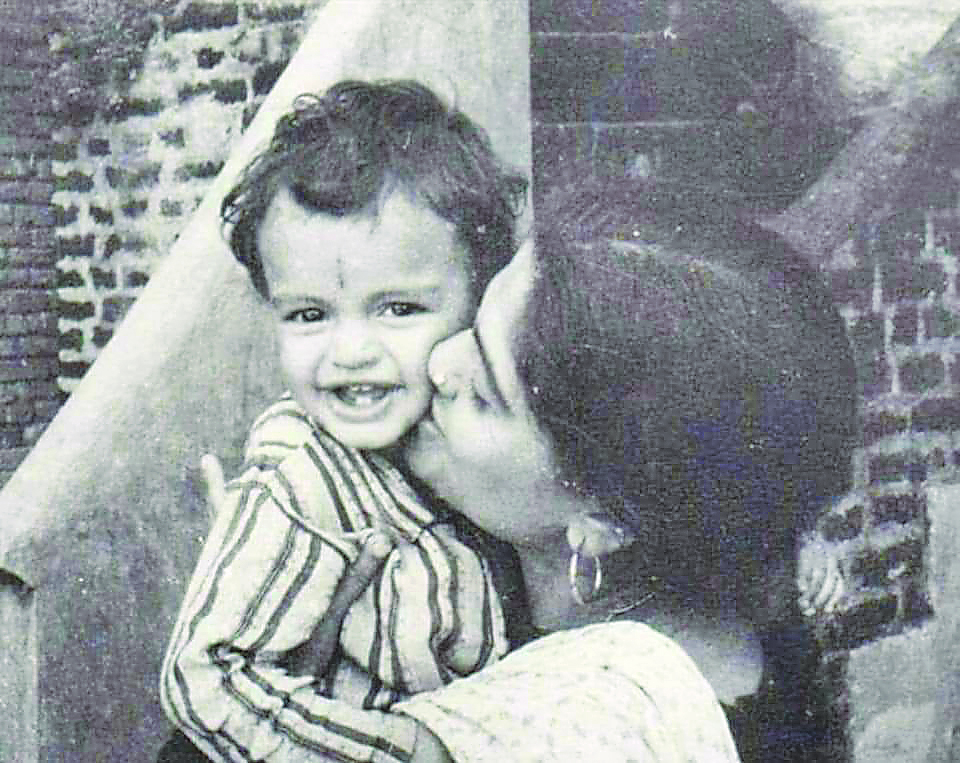 Mother Sita also lived for 87 years. Even now, she does not count only her daughter Bhagwati among her children. Along with Ujjwal, his brother and two sisters are also included in the list of his children. Urmila and Sita have been together for 60 years. They never felt distant from each other, fought with each other, and loved each other. "Even today, only one TV channel and teleserial is their choice," says Ujjwal.
Children are never too big for mothers. And, in their worry, the children are always hungry. Even after reaching this age, the only thing that is asked in the beginning is, 'Eat food?' Urmila's father had a saree business. Born in a professional family, Urmila never felt material deprivation. But his discipline and simplicity never wavered. As Ujjwal remembers his mother, the image of Urmila with the same white hair, worn slippers and cotton saree comes to Ujjwal's mind. There were many cloth shops in the city.
But mother never bought clothes and wore them. Because she used to sew the clothes for the family herself. "If you look at all the photos of my childhood, you will either get stuck or check," says Ujjwal. Even now, the sewing machine is sitting in Urmila's bedroom. Ujjwal thinks that her mother's qualities are also transferred to her clothes. "Even now I don't like any clothes and expensive things," he says. Mother used to sing, play harmonium and tablas. Even now there are plenty of books and cassettes sitting on my mother's shelf.
Ujjwal feels that something is still rattling in her mother's heart. At that time, some of my mother's friends, who graduated in science, retired as secretaries of the government of Nepal, and some became doctors. Even though he was interested in studying medicine at that time, Ujjwal's father Mohanvikram stopped it after marriage. Ujjwal used to hear his mother complain to Ba from time to time, "Because of this, I could not become a doctor." Perhaps due to the influence of the male-dominated society, Ba used to say jokingly, 'Even if you were a doctor, what would be better than this lifestyle?' Even now, my mother finds the copies of her college studies bright. When he turns it over, he sees, "Looking at the diagram of biology, it is much better than ours." The letters are also equally beautiful.'
Urmila never made her children focus on exam marks. Instead, she always appreciated their interests and desires. Bako also agreed with his mother. Mohanvikram, who completed his B.Sc. from Tri-Chandra, studied forestry at Dehradun College. He was the Chief Conservator in the Forest Department before his retirement. He invested his retired life in business. Ba also used to say like his mother, 'One day the degree you earn will be pasted on the wall. The rest should pay attention to their behavior and manners. That is the only thing that will be sold later.' At the age of 10, his mother took him to study in Nainital, India. There should have been a hostel. But where could he be alone without his mother! I ran away from the boarding school for 6 days and walked looking for my mother, I found Dhan. When I didn't agree, my mother brought me back home," Ujjwal remembers his bright childhood days. What mother would want to see her child away from her! However, they did not hesitate to invest in their children's studies for a golden future. He was again taken to the hostel. Even till he reached 7th standard, Ujjwal used to cry every day thinking of his mother. He graduated in electronic communication in formal studies.
Ujjwal's childhood memories of Kathmandu and childhood scenes are still fresh in his memory. They had 13 acres of land in Kamalpokhari. There were three houses. Before he was born, Ba bought a 90 cc motorcycle. He had heard that when he was born, he took his mother to the maternity hospital on the same motorcycle. That motorcycle is still there. A battered old motorcycle brings back memories of those days.
When I remember the life I lived in Kathmandu at that time, I feel like, 'That was a rural life.' The moments of running and cycling in the fields of Kathmandu are still vivid in my memory. Mohanvikram had a special love among the people of Sindhuli as he was an ancestral land of Sindh. "Out of our three houses, two were for people coming to Kathmandu from Sindhuli," recalls Ujjwal. At that time, Kathmandu was strange for those coming from the village to the city. Some came from Sindhuli for treatment, some came to study. Mohanvikram's doors were always open to those who came to work.
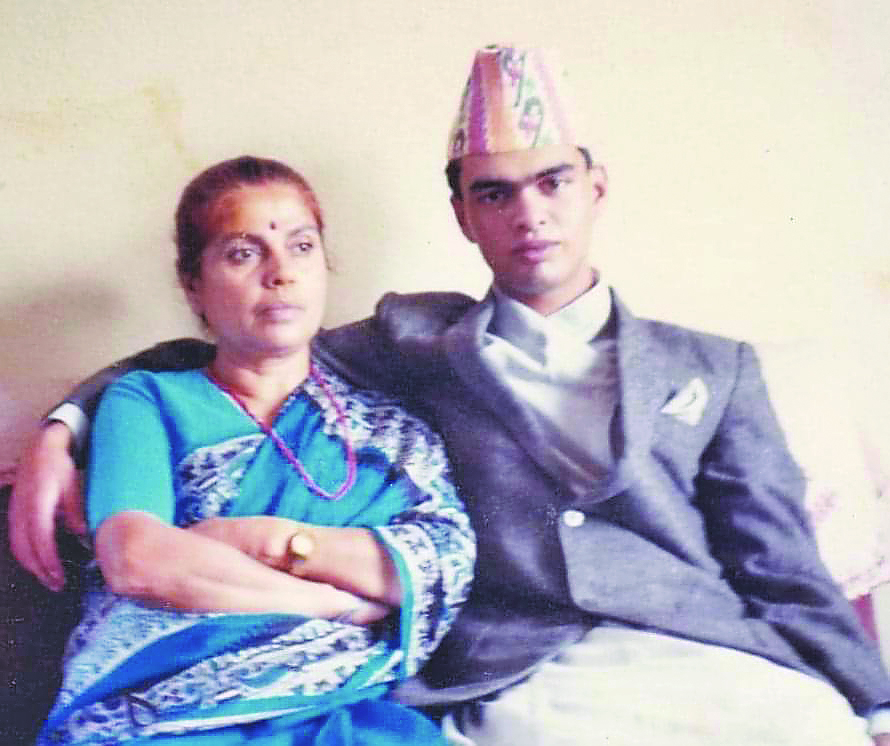 Ba's love for the people of Sindh also moved Ujjwal. He used to teach English for free when he came home after his studies. Bala used to order those who came there to help him as much as possible. Ujjwal Dattachitta used to do it. He had developed a sense of community service in him since his childhood. Even now, mother says, 'That is your habit since childhood.' He used to take out handfuls of money from his father's coat and sit on the road and distribute it to the poor. On the other hand, he was also impressed by the love and harmony shown by his mother to the women from Sindhuli. Now that he is around the hospital, he feels that the times have changed, but the sorrows have not changed. "Human suffering will not change even in five decades," he shares his feeling. He hears the same sorrows in the hospital even now, as was the case in the women's village yesterday.
The mother did not suffer but understood the pain. She empathized with the plight of rural women. Maybe because of that influence, a simple person always lived inside the mother. Urmila carried the same handbag for 15 years. Ujjwal also remembers the familiar smell that always follows a son. Urmila used to keep betel nuts inside a black basket. And, she used to put rajnigandha inside the betel nut.
Now Urmila has left Rajnigandha. But as soon as that smell comes, Ujjwal remembers his mother. Once he was inside a flying ship, while sitting on a seat, he suddenly felt a craving for Rajnigandha, he remembered his mother. He got up and went to the Indian citizen and asked, "Have you eaten Rajnigandha?" The Indian citizen said "Yes". He asked for two pieces of rajnigandha and crushed it in his mouth and sat on the seat. Not only Rajnigandha, but also the fragrance of mother's ghee was very dear to him.
Ujjwalka passed away 12 years ago. After my father passed away, my mother was in pain for a few years. Slowly the mother got herself into a rhythm. Urmila has a schedule. Out of concern for her health, she does not change her schedule even when Dacrot suggests it. ``You have to walk barefoot while doing puja, you have to take a bath with cold water,'' says Ujjwal about his mother's schedule, which does not change. Seeing his mother wake up at four o'clock in the morning, Ujjwal kept saying, 'Why did you have to get up so early and worship? Don't sleep.' In response, Ujjwal gets scolded by his mother. Ujjwal laughs, "Mom scolds me in the same way, be it when she is young or when she is older."
Ujjwal's nature is mixed with both father and mother. His works are seen in that nature now. Like a father and a mother, he admonishes everyone, 'What can you do?' In a society that makes the weak even weaker, he wants to light the lamp in the depressed hearts. They want to cool down not only the burnt body, but also the mind. Perhaps, mother Urmila is also happy with this action of her son.