Tourism is not just a means of entertainment or adventure travel for Nepal, it has become one of the backbones of the national economy.
We use Google Cloud Translation Services. Google requires we provide the following disclaimer relating to use of this service:
This service may contain translations powered by Google. Google disclaims all warranties related to the translations, expressed or implied, including any warranties of accuracy, reliability, and any implied warranties of merchantability, fitness for a particular purpose, and noninfringement.
Nepal is not just a simple destination on the world tourism map, but a profound confluence of civilization, nature, and human aspirations. Mountains, rivers, valleys, forests, biodiversity, multicultural society, and spiritual traditions have given Nepal a unique identity worldwide.
Tourism is not just a means of entertainment or adventure travel for Nepal, it has become one of the backbones of the national economy . Despite past ups and downs, political changes, natural disasters and global pandemics, Nepal's tourism sector has remained resilient and continues to move forward, which is a sufficient basis for optimism for the future .
Looking at the historical development of world tourism, the tradition of linking travel with knowledge, trade and cultural exchange is visible since the Middle Ages . Travelers like Marco Polo, who traveled from Asia to Europe, taught the world to familiarize themselves with new geography and culture . Later, Thomas Cook developed the concept of organized tour packages, ticketing, etc., and laid the foundation for the modern tourism industry in the traditional travel style . In parallel with this global trend, Nepal has also gradually become the center of attention of international travelers .
Despite past ups and downs, political changes, natural disasters, and global pandemics, Nepal's tourism sector has remained resilient and continues to grow, which is reason enough to be optimistic about the future. The seeds of modern tourism in Nepal seem to have been planted since the beginning of the 20th century . In 1950, the French climber Maurice Nepal became a global phenomenon after Herzog and Louis Lassanall made the first ascent of Annapurna. In 1953, when Tenzing Norgay Sherpa and Edmund Hillary first set foot on the summit of Mount Everest, Nepal became a symbol of adventure tourism. Since then, the rest of the world outside Nepal has come to know Nepal as a center for mountaineering, trekking, and spiritual journeys.
Before the advent of democracy (1990), Nepal's tourism was structurally limited. International arrivals were mainly through Tribhuvan International Airport. Road access to destinations other than Kathmandu and Pokhara was poor. There were fewer than five hundred registered hotels across the country. Of these, less than 10 were luxury hotels. The guide, porter, and lodge system was informal. Tourists at that time stayed for a long time, but their daily expenses were low. Nepal was known as a destination with high experiential value but low income.
After the political changes of 1990, Nepal's tourism sector underwent a qualitative turn. Market liberalization, entry of the private sector, and opening of the door to foreign investment laid the foundation for developing tourism as a strategic national industry. The domestic air network expanded, regular flights to trekking centers began, road access improved, and the number of hotels and travel agencies increased rapidly.

In a country with about 450 hotels in 1990, by 2026, more than 4,000 tourist-level and above hotels were operating. Trekking agencies have increased from 50 to more than 1,600, while tour operators have increased to more than 2,000. Direct and indirect employment in the tourism sector is estimated to have increased from about 100,000 to about 1 million.
Looking at the trend of tourist arrivals, it is estimated that Nepal will welcome around 1.16 million international tourists in 2025, up from around 2.5 million in 1990. In 2000, the number increased to 400,000, 600,000 in 2010, 1.197 million in 2019, and around 1.16 million in 2025. In the long term, the tourism sector has proven its ability to recover despite serious challenges such as conflict, earthquakes, and COVID-19.
There has also been a significant increase in tourism income. Analyzing both formal and informal data, Nepal's tourism income was projected to be around 15 billion Nepali rupees in the mid-1990s. In 2023, at the current exchange rate, the tourism sector is projected to earn more than 85 billion Nepali rupees. Thus, tourism is directly and indirectly contributing around 7-8 percent of Nepal's gross domestic product.
Another great strength of Nepal is adventure tourism. Currently, more than 400 mountains in Nepal are open for climbing. Ancillary services such as mountaineering permit fees, guide services, equipment rental, insurance, helicopter rescue create high value . Trekking, rafting, paragliding, bungee jumping and mountain biking are attracting the younger generation .
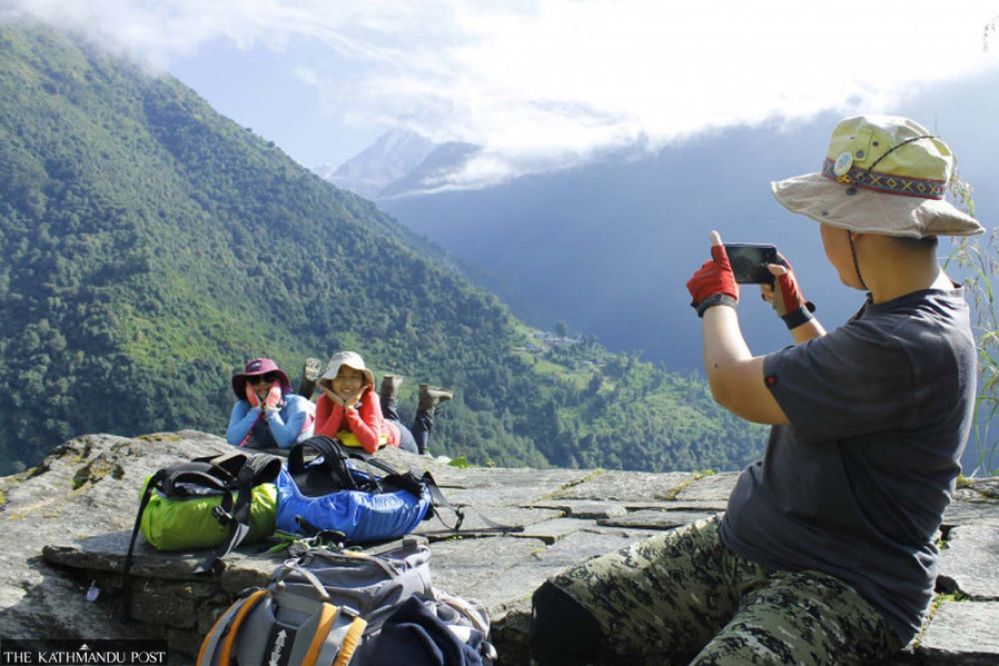
Nepal is developing as a multi-faceted destination today . Along with adventure tourism, there is great potential in cultural tourism, wellness and meditation retreats, luxury resorts, destination weddings, eco-tourism and community-based homestay tourism . Such segments can generate more income with less environmental pressure . Which is important for sustainable tourism development .
Domestic tourism has also increased significantly in recent years . As Nepalese citizens tend to travel within the country on their own, hotels, restaurants, transport and local businesses have found a continuous source of income . This has helped reduce seasonal fluctuations and revitalize small destinations .
Private sector investment in the hotel industry is estimated to have reached over Rs 2 trillion. Star-rated and non-star hotels, resorts, lodges and homestays are continuously increasing. The total hotel capacity is capable of supporting at least 2.5-3 million tourists annually, but the utilization rate is still low. This means that there is still great potential for market expansion and improvement of air connectivity.
The challenges in Nepal's tourism are clear. Problems such as political instability, lack of policy continuity, delays in infrastructure construction, seasonal occupancy, the effects of climate change and the exodus of skilled manpower are hindering the full potential of tourism. But if the long-term vision and public-private partnership are strengthened, the solution is not difficult.
Looking ahead, Nepal has set a target of attracting 1.6 million tourists annually by 2030 and 5 million by the end of the decade. This goal is possible, if air connectivity is expanded from Pokhara and Bhairahawa, destinations are diversified, digital marketing is strengthened and sustainability is placed at the center of development. The priority now is not only to increase the number of tourists, but also to increase the average expenditure received from each tourist.
Nepal having three international airports is a great achievement in itself, but its real benefits will be realized only when those airports are operated strategically. The main objective of the Nepal Government in partnership with the private sector to establish the Nepal Tourism Board is to make Nepal's tourism planned, modern and internationally competitive. The role of the Board should not be limited to just producing promotional materials, but rather it should be established as the overall tourism brand manager of Nepal. Today's global tourism market is becoming more experience-centric than destination-centric. Therefore, the Board should brand Nepal as a destination of multi-dimensional experiences, not just a country of mountains.
The first priority for this should be digital marketing. Nepal should be brought to the modern traveler’s attention using data-driven digital campaigns, social media influencer partnerships, virtual reality and 360-degree destination presentations in major source markets around the world.
Second, product-based promotion is essential. Different brand messages should be developed for adventure tourism, wellness, luxury, cultural, community-based and eco-tourism. Third, international travel fairs, roadshows and joint promotional programs with airlines should be conducted in collaboration with the private sector.
Along with promotion, the Nepal Tourism Board should also play an active role in destination development. By identifying new destinations, coordinating with local governments, developing service quality standards, tourist safety protocols and sustainability indicators, the board can ensure the long-term health of tourism. In this way, the effective role of the board can become the central foundation for Nepal’s tourism growth.
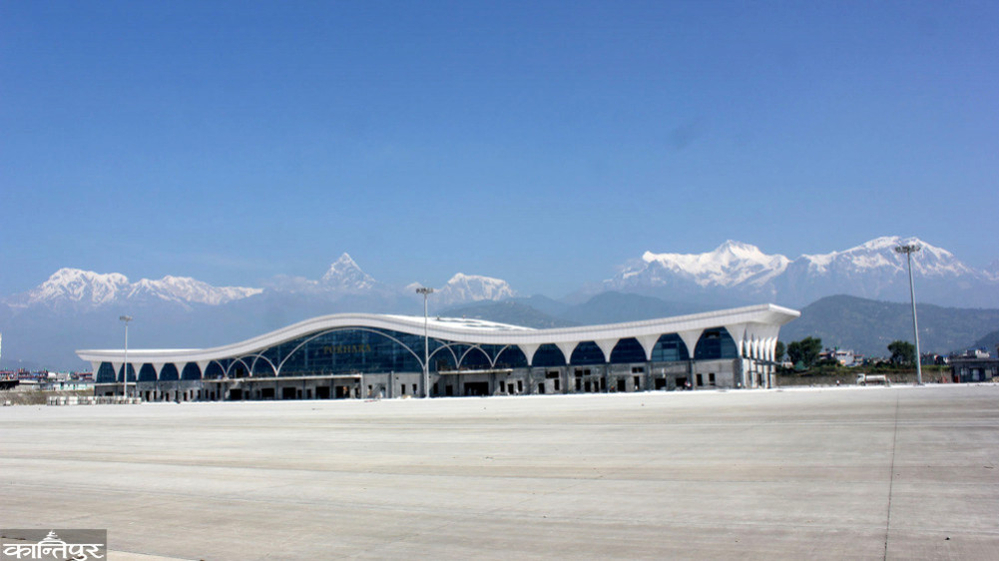
Nepal having three international airports is a great achievement in itself, but its real benefits will only be realized when these airports are operated strategically. First, a clear policy is needed to connect all three airports to different markets and destinations. Pokhara and Bhairahawa should be developed as regional hubs by gradually decentralizing the Kathmandu-centric flight structure. These airports can play a major role if direct flights to cities in China, India, Southeast Asia, and the Middle East can be increased.
Second, an incentive package is needed to attract airlines. Measures such as landing fee discounts, fuel price concessions, and joint marketing programs can bring in new international airlines. Third, the infrastructure around the airports - roads, hotels, transportation, information centers - should be developed in a coordinated manner so that tourists can easily reach their destinations.
Fourth, all three airports should be linked to tourism products. Pokhara Airport can be developed as a gateway for adventure and nature tourism, Bhairahawa as a gateway for religious and cultural tourism, and Kathmandu as a mixed international hub. This will balance the tourist flow and enable equitable distribution of investment in the hotel and service sectors.
In this way, if the strong role of the Nepal Tourism Board and the strategic operation of all three international airports move forward together, Nepal's tourism can take a qualitative leap. This will significantly increase not only the number of tourists, but also the per-tourist income, employment, and the contribution of tourism to the overall economy.
Nepal's tourism sector stands on a strong foundation based on historical heritage, natural heritage, and cultural diversity. Tourism, which was confined to the frontiers of adventure in the past, has today become a strategic national industry. If the right policies, infrastructure, human resource development, and sustainable practices are combined, Nepal's tourism will shine brighter in the future and Nepal will become one of the leading destinations not only in Asia but also in the world.

