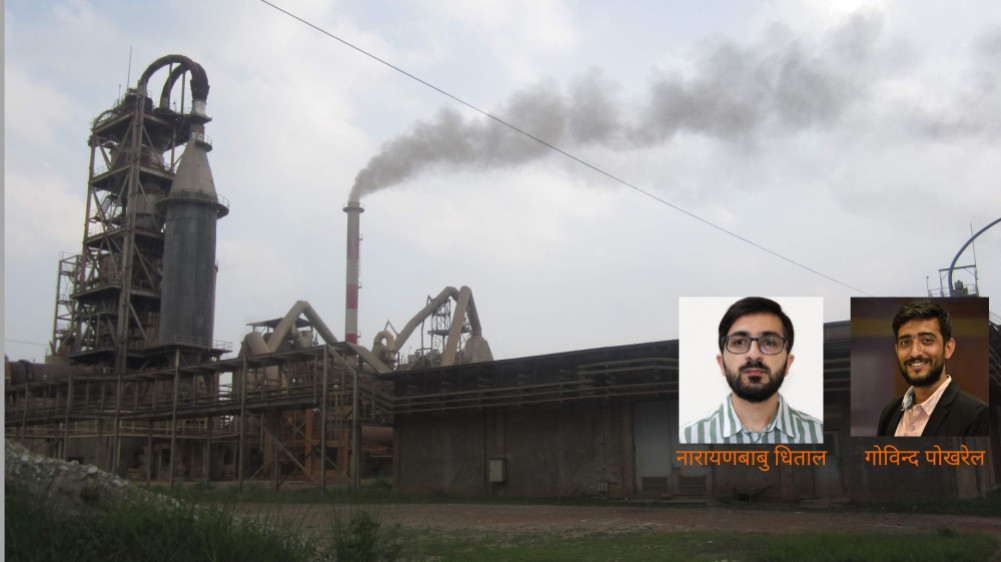
Most of the population of Nepal is forced to breathe unhealthy air.
We use Google Cloud Translation Services. Google requires we provide the following disclaimer relating to use of this service:
This service may contain translations powered by Google. Google disclaims all warranties related to the translations, expressed or implied, including any warranties of accuracy, reliability, and any implied warranties of merchantability, fitness for a particular purpose, and noninfringement.
December 5, 1952. The atmosphere of the city of London was suddenly covered with a thick frost. Not only did the city become so polluted that it was difficult to walk, vehicles stopped. The railway was closed. Londoners suffocated due to difficulty in breathing. This process continued for almost five days.
This event became so terrible that about 4 to 12 thousand Londoners died of starvation . Due to polluted air, not only human health but also animals were affected .
From this event named 'The Great Smog of London', the world community got to see and experience the extreme form of air pollution directly. Due to this incident, many people suffered from respiratory diseases mainly due to the toxic particles and smoke released from the burning of fossil fuels including coal. Learning from this incident, Britain introduced a special law on clean air in 1956.
In the 20th century, the air pollution problem experienced by Western countries due to the excessive use of fossil fuels has started to be seen in Asian countries today. Since the beginning of the 21st century, Southeast and South Asian countries started to suffer from this problem.
For example, in 2006, in a high air pollution incident known as the Asian flu, countries including Indonesia, Malaysia, Singapore, and Thailand were affected If . Similarly, in the last few decades, South Asian countries like Nepal, India, Pakistan, Bangladesh have been affected by high air pollution.
According to a recent report published by the 'Global Warden of Diseases', it seems that air pollution is the cause of about 12 percent of human deaths worldwide. This situation is even more serious in Nepal, where about 18 percent of human deaths are due to air pollution alone. 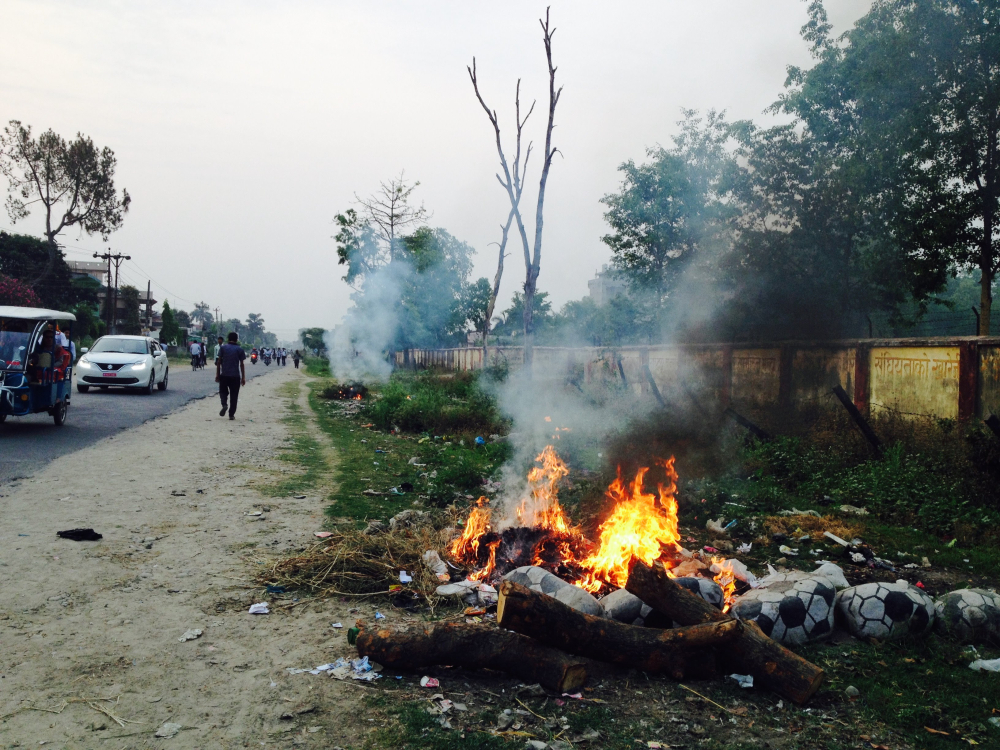 Garbage being burned openly
Due to the serious impact of air pollution on human health, there is a wide debate on this issue in Nepal. In South Asia, before the onset of monsoon, forest fires and open burning of agricultural organic matter during the dry season increase air pollution. But soon after the rain starts, the air quality improves and the issue of air pollution also gets solved.
Nepalese people breathe contaminated air all year round
Although the air quality of Kathmandu valley will improve somewhat with the onset of monsoon, the pollution level is much higher than the standard of the World Health Organization (WHO). According to the standard, the annual average amount of particles with a diameter of 2.5 microns or smaller (PM 2.5) in the air should be 5 micrograms per cubic meter or less. PM 2.5 are microscopic particles floating in the air that can reach the lungs during inhalation. These particles are emitted from fossil fuels, wood burning and agriculture.
In the report published by the Department of Environment in 2023 on air pollution, it is mentioned that the air quality in Kathmandu Valley and Terai areas deteriorates significantly during winter and dry season. In the report, the annual average amount of PM-2.5 in 2021 was measured from 17 to 70 micrograms per cubic meter in Kanchanpur, Dhangadhi, Rara, Nepalgunj, Dang, Pokhara, Kathmandu Valley, Simra, Janakpur, Biratnagar, Dhankuta and Damak. . This is 3 and a half to 14 times more than the standard of WHO. 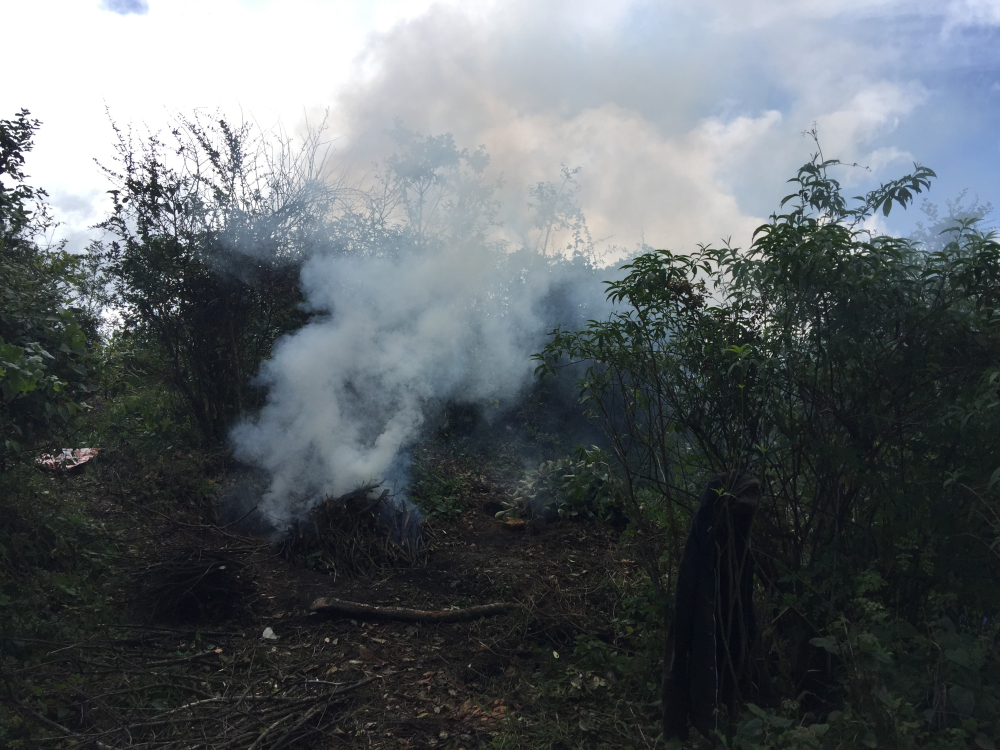 Open combustion of organic matter for charcoal production in a forest area of Chandragiri
The data mentioned here is a report issued by the department based on the year 2021. That year, the entire country was in a state of lockdown due to the Covid-19 epidemic. It can be easily assumed that the air quality may have been worse in normal years without lockdown . If this data is considered as the overall picture of Nepal's air quality, then one hundred percent of the country's population is forced to breathe unhealthy air.
On the other hand, although the amount of 9 types of main pollutants are regulated in the national air quality standards of Nepal, in the currently operating air quality measurement centers, only some of them, especially PM (particulate matter) are being measured.
Many of the regulated gaseous pollutants such as nitrogen dioxide, sulfur dioxide, carbon monoxide, benzene, ozone, etc. have not yet been measured at many centers. Therefore, the assessment of the air pollution situation in Nepal is mostly based on the amount of PM. Therefore, apart from PM, it seems necessary to measure gaseous pollutants as well.
Analyzing the data of PM2.5 in various South Asian cities except Nepal, it has been found that the annual average amount of 2021 is 98 in Dhaka, 99 in New Delhi and 52 micrograms per cubic meter in Islamabad. From this data, it is clear that the air pollution situation is alarming not only in Nepal but also in other South Asian countries.
In Nepal, not only during the dry season, but also during other months, the air quality is often unhealthy, and since the last few decades, it has been a major public health and environmental problem, and the occurrence of severe pollution episodes (severe pollution episodes) every year requires an in-depth analysis and solid analysis of this challenge. Indicates that action is required .
Air pollution is considered a silent cause of death. But in the context of Nepal, the risk of air pollution is very high.
According to the report of Global Burden of Diseases, in 2021 alone, nearly 48,500 people died prematurely due to air pollution in Nepal. This number of premature deaths due to air pollution in 2021 is more than three times the total number of deaths due to the Covid-19 epidemic in Nepal so far.
However, where premature death is concerned, numbers should remain secondary. However, if we compare the number of premature deaths (mortality burden) and the duration of the risk factor (persistence), air pollution in Nepal can be considered as a public health risk factor that is several times greater than the Covid-19 epidemic.
Improving air quality is possible
In Nepal, household fuel use, industrial factories and vehicles, open burning of agricultural organic matter, forest fires, burning of solid waste etc. are the main sources of air pollution. But there is no adequate and up-to-date data on how much pollutants are emitted from these areas. Therefore, it is imperative to establish a complete and up-to-date emission inventory system to identify, regulate and control the major sources of air pollution in Nepal.
In addition to this, studies have confirmed that the pollutants coming from other South Asian countries, including India, have a significant impact on Nepal's air quality . However, there is no data available on how much impact cross-border pollution sources have on Nepal as a whole.
Air pollution is a global and decades-old environmental problem. Therefore, many technologies and policies related to air pollution control have been studied, researched and used all over the world. Using technical and policy instruments, many developed nations of the world have significantly improved air quality.
China, a country that has been struggling with severe air pollution for about a decade, managed to reduce the annual average amount of PM-2.5 in its main cities by more than 30 percent in a short period of five years between 2013 and 2017. 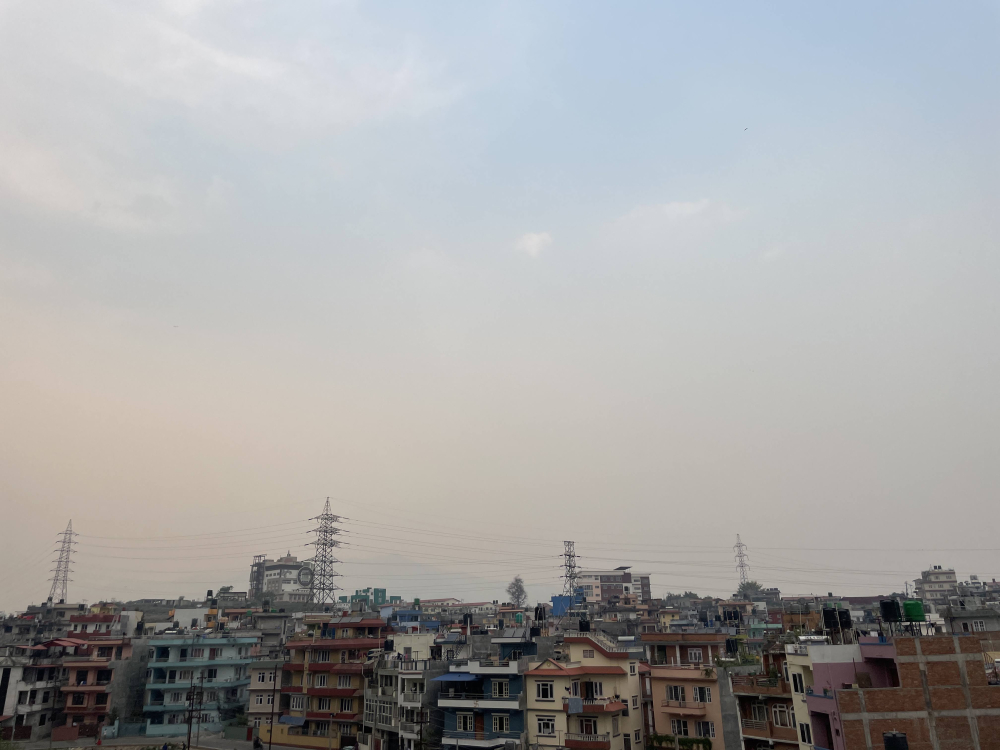 Kathmandu's atmosphere covered with thick fog during high pollution
A developing country like Nepal has an opportunity to take science, technology and policy learning from successful countries like China to solve this problem. Many developed countries of the world adopted the mineral fuel-based development path in the 20th century, which had to spend a lot of energy and time to improve the environmental problems including air pollution. It is necessary to formulate and implement .
Cayenne Air pollution and greenhouse gas emission sources are the same. Both of these problems are closely related to global climate change. Therefore, if efforts related to air pollution and greenhouse gas emission control are carried forward through an integrated plan, it will be easier to achieve the goals in both areas both economically and technically .
And finally, since air pollution itself is a multifaceted problem, it is almost impossible to completely solve this problem by the Department of Environment, the main government agency that is currently working on it. Therefore, the role of all the concerned bodies remains for the creation and implementation of action plans related to air pollution control . For this, a special technical work group (task force) can be formed by including subject experts, scientists, policy makers and other partners to create a long-term plan.
Air pollution is not the only problem of Nepal. This is a common environmental challenge in the South Asian region that has been growing continuously for years. The entire South Asia region is known as one of the world's hotspots in terms of air pollution. Therefore, due to the geographical location of Nepal, efforts within the country alone are insufficient to control air pollution here. For this, international cooperation with neighboring countries like India, Pakistan etc. is equally important.
(Dhital is an associate professor of environmental science at Tribhuvan University and Pokharel is an environmentalist.)