In Surkhet, Dailekh, Jajarkot and Achham, 2158 people in 40 groups are involved in collecting lokta, from whom they buy lokta at the rate of Rs 120 to 150 per kg.
We use Google Cloud Translation Services. Google requires we provide the following disclaimer relating to use of this service:
This service may contain translations powered by Google. Google disclaims all warranties related to the translations, expressed or implied, including any warranties of accuracy, reliability, and any implied warranties of merchantability, fitness for a particular purpose, and noninfringement.
It is around 2010. I saw people going to South Korea lining up to fill out language test forms. At that time I had completed my graduation, I was running an educational institute in Surkhet. I had already made a passport to study in UK. I was also attracted by the employment in Korea. Learned Korean for a month. I passed the language test.
It is around 2010. I saw people going to South Korea lining up to fill out language test forms. At that time I had completed my graduation, I was running an educational institute in Surkhet. I had already made a passport to study in UK. I was also attracted by the employment in Korea. Learned Korean for a month. I passed the language test. I went to Korea in 2011 after signing a contract with my employer. I got a job in the furniture industry, but due to the problem of wood dust, I could not continue. After changing the company, I got involved in the job of putting jalap (color) on bags.
was our middle company, where there were 20 workers including 7 Nepalis. There is a policy that foreign workers like us can work only in small and medium industries in Korea. There is no opportunity for foreign workers in big companies. Only Korean is preferred.
In Nepal, there was a habit of working with bribes. Even working in agriculture is only 5-6 hours a day. In Korea, you had to work 12 hours a day. Korea is a country built by everyone's hard work. Sahoo also used to hang out with us. Work started from 9 am. Lunch time was between 12 and 1 o'clock. After that, you have to constantly stand up and work. There was no rest except drinking coffee and water. It had to be done for 12 months excluding local holidays and festivals. I used to get a monthly salary of Rs 1 lakh in the beginning. By the time he returned to Nepal, it had reached 3 lakh.
I returned to my country in 2016 after 4 years and 10 months for the first time. To go for the second time one has to pass Computer Base Test (CBT) again. My friend was preparing to go to Korea again. After passing CBT and getting to the stage of medical examination, I changed my mind - how long will I go to Korea and work? Now do business here. Starting a
business requires money, guts, ideas and the right time. Money was saved by buying houses and land. Now is the right time to invest and establish. Some of my friends were living in Surkhet after closing their garment business. I dared to run the garment industry itself. I bought it for 8 lakh rupees. Because if there was more money, it could be increased. He also had experience working in the garment industry in Korea. There were 5 electric machines and 6 manual machines.
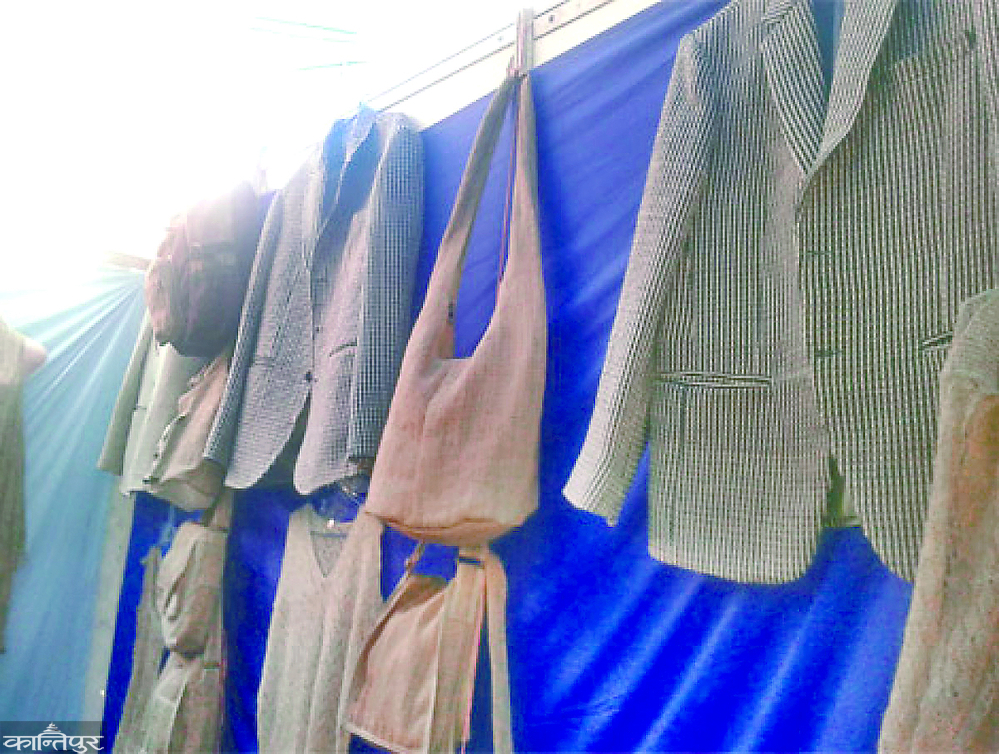 lost in the opening stages. Because the production price is higher and the selling price is kept lower. Only later came to know about it. Don't give up. Move forward. I increased my investment in garments. Especially started making school uniforms. Now I have 15 electric machines. From sewing to packing, there are 16 workers. We are making clothes for 150 schools in Surkhet, Dailekh, Jajarkot, Acham, Mugu and Humla. More than 100 sets are produced daily.
When covid came, it gave me another opportunity. A group of doctors from Surkhet came and said, 'We save the patients of Covid. You had to protect us.'' PPA was lacking at that time. I didn't have quality material to make PPA. However, there was a cloth that was waterproof and windproof. I gave it the form of PPA. The doctor's answer was, "Rather than going to war without a weapon, at least you can fight something with a stick."
This work expanded my contacts to government employees, local public representatives. After that, government jobs started coming. I started giving them the bags and clothes they needed. After the Karnali state government's policy of giving priority to goods made from local raw materials, I became more comfortable. He introduced a policy of purchasing materials made from local raw materials even though they cost up to 20 percent more than foreign ones. This policy will greatly contribute to the development of industries operating from local raw materials.
The most common herbs and food grains in Karnali are Gedaguri and Allo. There is a big willow forest on the hill side. It grows best in sunny places. Plant up to two meters. Its lifespan is one year. Allo, which is found in abundance in the forest, is being wasted. I think only 10 to 20 percent of what is in the wild has been used. Not all people know about it. It is produced only in certain seasons. It should be collected by October to January. He planned to operate a garment industry based on Allo and thought that Allo of Karnali can be recognized as a brand. And established - Karnali Fiber Industries.
First I was making bags and coats by bringing allo cloth produced in Sankhuwasabha. I am insisting that allo from Karnali should be collected and made into cloth. I have planned to collect 50,000 kilos of allo lokta this season. 12,000 kilos of people have already arrived. Its size is large. Weight is reduced. Even a few fill the car. That is why it was brought from the forests of Surkhet, Dailekh, Jajarkot and Achham. I have created a local consumer group to collect this.
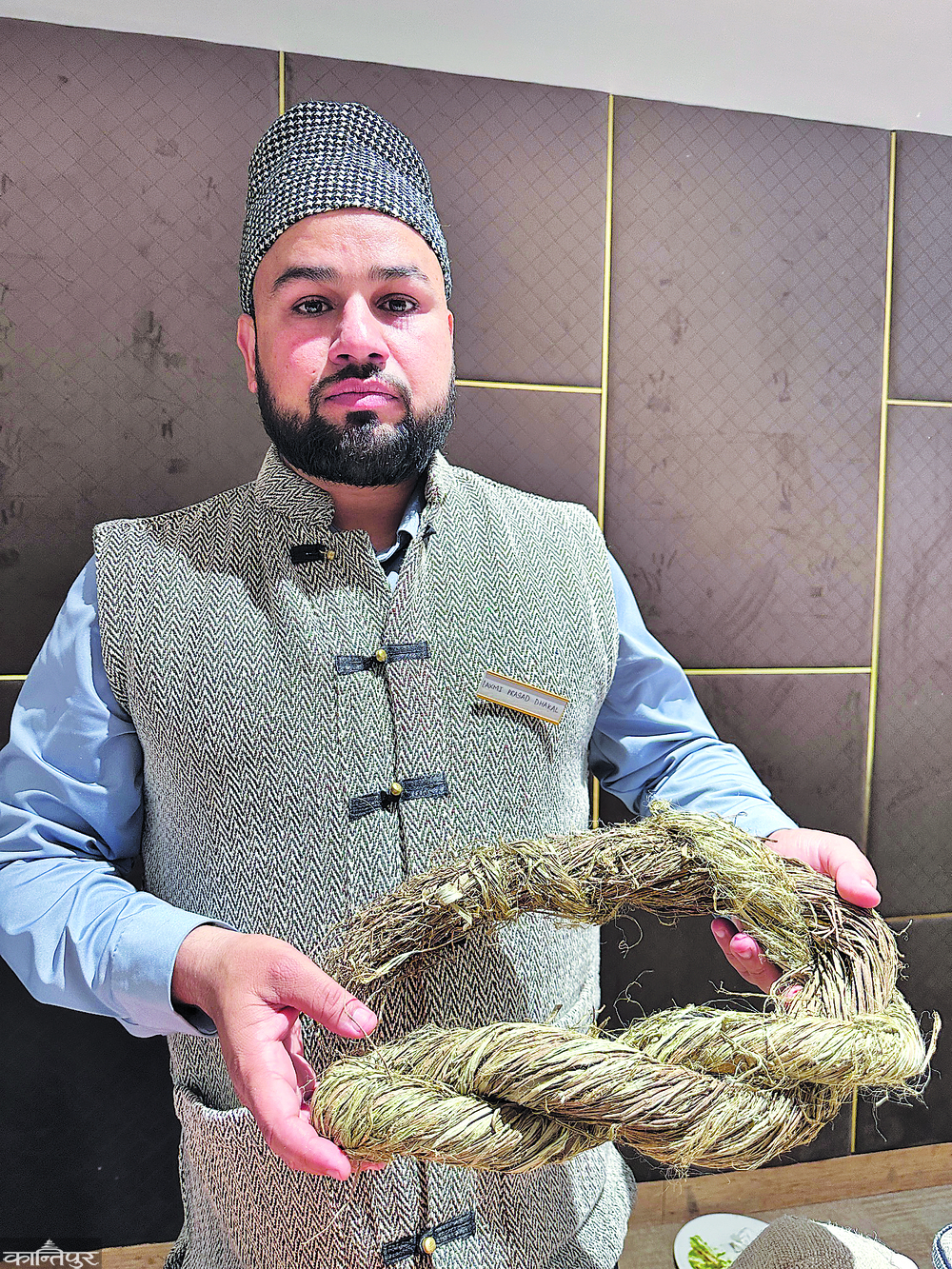 There are 40 groups of local 2158 consumers. One has 50 people in the group. I am collecting from 50 percent of that. I have made a deal with them. They are procured from them at the rate of Rs 120 to 150 per kg. Allo cannot be collected without the permission of the Forest Division office. Depending on the location, the spare parts cost is 3 to 7 rupees. I have paid all the expenses involved in this.
At Birendra Nagar in Surkhet, collection and processing are being done at separate places. It was making bags and hats. The more cotton yarn we have, the more cloth we get. This leads to the production of bags, hats and coats, from tailor-made garments. The fabric is also expensive as it takes a lot of time and expense from its collection to processing. Its fabric is up to 1500 per metre. Its investment is long-term. Not of a nature to take immediate advantage. The benefits of this business extend to the community. Now we have to expand ourselves showing Allo's market.
Allo's use of clothing helps reduce business losses. In Korea too, domestic production and the use of raw materials are highly prioritized. There Foreign workers and people with low income will only use imported goods. Locally produced goods are more expensive than imported ones. I see the preference of middle and high income earners to consume locally produced meat, rice and clothes.
Karnali government is trying to create a sustainable industry based on local resources. There are 89 municipalities in Karnali province. They have a convention every year. At least 7,000 bags are needed only for the municipal program. This way, even if you only buy a bag, all the money here goes out. A local trader earns only 200 rupees by selling one bag. However, 95 percent of the money earned by the merchants and community of Karnali when purchasing the bag of aloe made by us. Farmers, workers and traders earn.
Now it is reasonable to give money to the unemployed rather than giving them allowances. In Korea, small businessmen protest when the government raises wages. At that time, the Korean government gave the increased money to small businesses. It also ensured that workers received fixed wages, and small traders survived. We should have a policy of supporting small investment enterprises rather than big industries.
In the workplace in Korea, most Koreans associate with those who have returned from working in countries including Saudi Arabia, Sri Lanka and Europe. To promote them, the state gave them funds to do their own business. There are few big industries and many small industries. Opening more small industries than large industries also creates employment. Investment does not require large capital. Like them, the number of people using the skills, capital and technology learned in foreign employment is increasing.
This is a great opportunity for Nepal. You don't always have to stay abroad for employment. I see that they are excited to return to their own country and do business. A little facilitation is enough for this. The business that started with 8 lakh has reached 1 crore. It will be added every year. I'm not disappointed. I am excited. Looking forward to more. Doing a
venture is not a random investment. I learned to do business at a loss in the beginning. Now, the government should make a suitable advice and suggestion body to those who start the enterprise at the very beginning. People from abroad know nothing about entrepreneurship. Where to register the company? What happens when registering at the company office? What about domestic registration? Don't know how to close. Entrepreneurs need a body to explain the step-by-step process. A fund should be created to give minimum compensation even if it is a loss and has to be closed tomorrow.

