This is not just an election result, but a sign of a profound change in psychology and political culture in Nepali society.
We use Google Cloud Translation Services. Google requires we provide the following disclaimer relating to use of this service:
This service may contain translations powered by Google. Google disclaims all warranties related to the translations, expressed or implied, including any warranties of accuracy, reliability, and any implied warranties of merchantability, fitness for a particular purpose, and noninfringement.
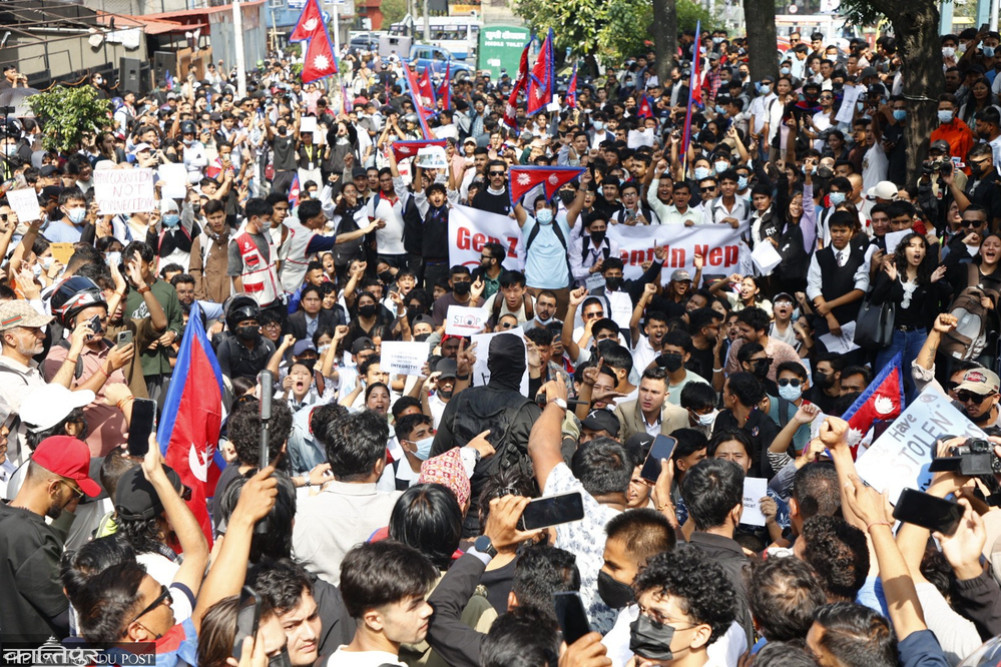
I myself am a youth who was on the 'frontline' of the Gen-G movement on 23 and 24 Bhadra. When the Gen-G protesters broke the barricade in front of the Everest Hotel and moved forward, I was in the forefront carrying that banner.
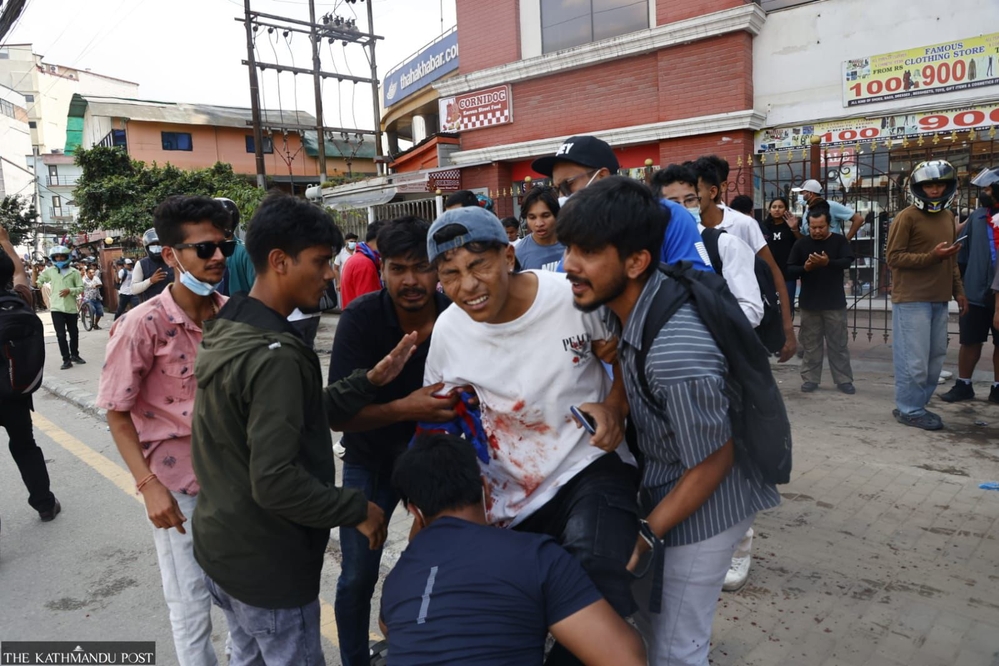
Even after reaching the gate of the Parliament building, I repeatedly tried to remind my friends that this was a peaceful movement and that we should not throw stones at the police. Even when the police were about to open fire, I had folded my hands and urged them to be restrained. I worked to rescue many friends like me, and even now, when I remember that day, I get goosebumps.
At that time, our first demand was good governance and lifting the ban on social media. However, looking back now, that movement developed a style of questioning. It also made the new generation aware of politics. Now, the new generation is also questioning the steps of Sushila Karki, who became the Prime Minister on the proposal of Gen-G. They are seeking accountability for the secretariat and every action she takes. Which was not possible in traditional parties before.
A day before the 21 Falgun election, a Japanese television station asked me, ‘What will be the outcome of this year’s election?’ That question contained the doubt that only elections can address the Gen-G movement. But, I had said at that time – the anger of 23 Bhadra will be expressed tomorrow (21 Falgun). Looking back now, what I said turned out to be true.
The anger among the people really remained. People had kept that anger in their hearts. What was the mindset of most ordinary citizens, ‘What would have happened if my child had been in that place?’ This question shook them from within. So the election results also reflected that feeling.
I myself am a 'survivor' of that time. When I talk to others, they are supporters of UML, Congress or other parties, but they used to say that they did not like that violence, that injustice. The current election results have shown this change not only among the youth, but also among the elderly.
Balendra Shah, the former mayor of Kathmandu, won in Jhapa by a huge margin. Balendra Shah's victory in his own district by a huge margin over the UML chairman and leader of the then oppressive government shows how our political culture is changing. And, the work of bringing about that change was done by the Gen-G movement.
This is not just an election result, it is a sign of a deep change in psychology and political culture in Nepali society. I myself stayed in Jhapa for some time during the election and saw the atmosphere there closely. Previously, there was a leader, and whoever he asked to vote for was the responsibility of a group. One person would make decisions, and the workers would follow. But now the situation has changed. Now every citizen has started using their own discretion. This change is not small, it is a big leap in political consciousness.
The people approved the movement on 21 Falgun. It was established that this election is not like the previous elections. The National Independent Party (RIP), which Balendra joined, has now won almost a two-thirds majority. Now the question arises, will the Gen-G movement fulfill what it has asked for after this level of victory? Balendra has shown us an example in Kathmandu Metropolitan City.
He has shown how much power the local level has, how much improvement one person can make if they want to. Good governance is not just a slogan, it is something that can be put into practice. They have proven that corruption can be reduced by introducing a digital system, organizing departmental work, and monitoring. That is why people say, Balendra can now implement this model across the country. That is what we expect from Balendra.
The demands of our movement were not very complex either. We were looking for good governance, an end to corruption, employment in the country, and freedom of expression. Balendra, who will now lead the government, should always keep that in mind.
We, the Gen-G, will also always keep nagging him for that. I myself was involved in writing many slogans during the Gen-G movement. I had sent some friends that the government to be formed should take into account the slogans we expressed that day every day. The slogans that day were not just words, but the feelings of the entire Gen-G.
No one should forget one thing that this movement is not about forming a party. This system is for reform. If the old parties do not understand this message, they have no future. But if they do self-criticism and reform, then the next election is coming. The people can give them another chance, but the condition is the same - nepotism, favoritism, and money-grabbing must be abandoned.
Ultimately, what this election means is that the people have changed. Now they are not following orders, but using their conscience. Now they are not looking for slogans, but for results. Now they are not looking for fear, but for thinking. And, if the government of tomorrow fails in its responsibilities, they will immediately raise questions and if they follow the old style, they will give a strong answer again in the next election.