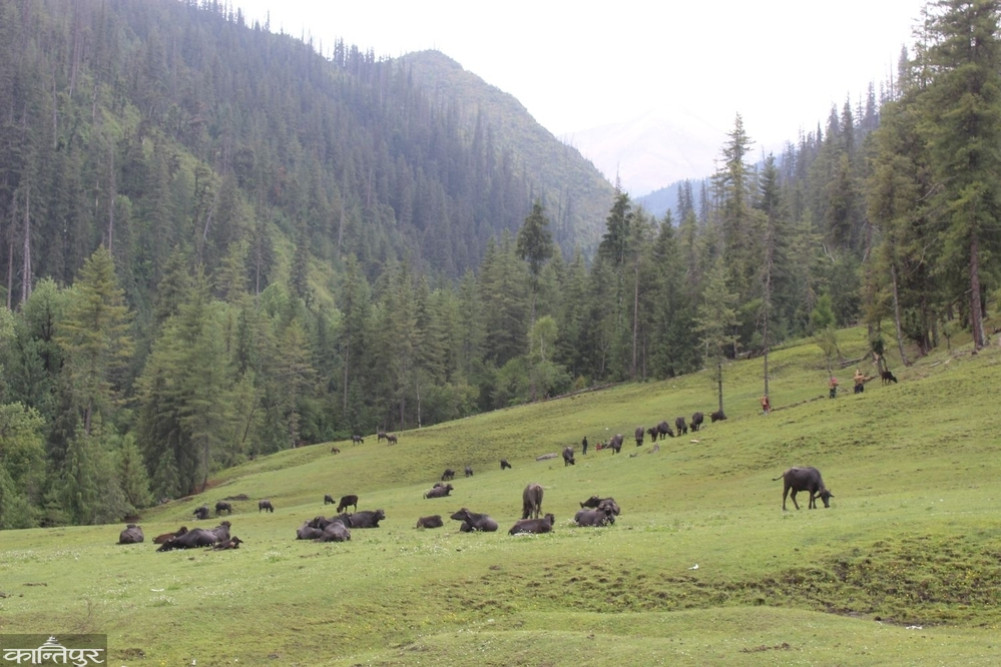
The pastures, once bustling with livestock and the hustle and bustle of villagers, are now deserted, giving the older generation a glimpse of the joyous life of their childhood.
We use Google Cloud Translation Services. Google requires we provide the following disclaimer relating to use of this service:
This service may contain translations powered by Google. Google disclaims all warranties related to the translations, expressed or implied, including any warranties of accuracy, reliability, and any implied warranties of merchantability, fitness for a particular purpose, and noninfringement.
This fragment of the Deuda song sung by the shepherds of Bajhang depicts the story of the buffaloes that went to pasture in the morning and did not return to the pasture until the sun set. From Baisakh to Bhadau, the shepherds used to make the wilderness hum with similar songs, telling about happiness and sorrow. Along with the cold wind, the jingling of bells hung around the necks of the buffaloes in the pastures and forests made the atmosphere of the pastures musical. Greenery, colorful flowers and the chirping of birds created a different atmosphere in the pastures.
Buffaloes, horses, cattle and sheep were seen grazing all over the pastures of Lekali Kharka located in Jayaprithi Municipality-1 of Bajhang. When the cattle were grazing, the pasture would be festive with the shepherds' loud voices. Until a decade and a half ago, the excitement that everyone would see when they reached the pasture of Budhasim is now only in memory.
Pimika Chahure Singh of Bajhang still remembers drinking freshly milked milk in the pasture. 'I don't remember how old I was, it feels like now that my father poured hot milk into a bowl,' he recalled. Chahure, who reached the pasture as a child, and the bond between the pasture and the pasture have not broken until the latter half of his life. Even now, he has two buffaloes and three padapadis to milk. Waking up early in the morning, milking the buffaloes, heating the milk in an iron pot (a pot) and then feeding and caring for the animals is his daily routine. He used to spend his days cutting grass for his buffaloes and weaving straw hats in the afternoon, but now he has stopped enjoying the pasture as much. ‘The atmosphere is bleak and deserted because fewer people come to the pasture,’ he said. ‘These days, there are no people in the village either. It is not as fun as it used to be.’
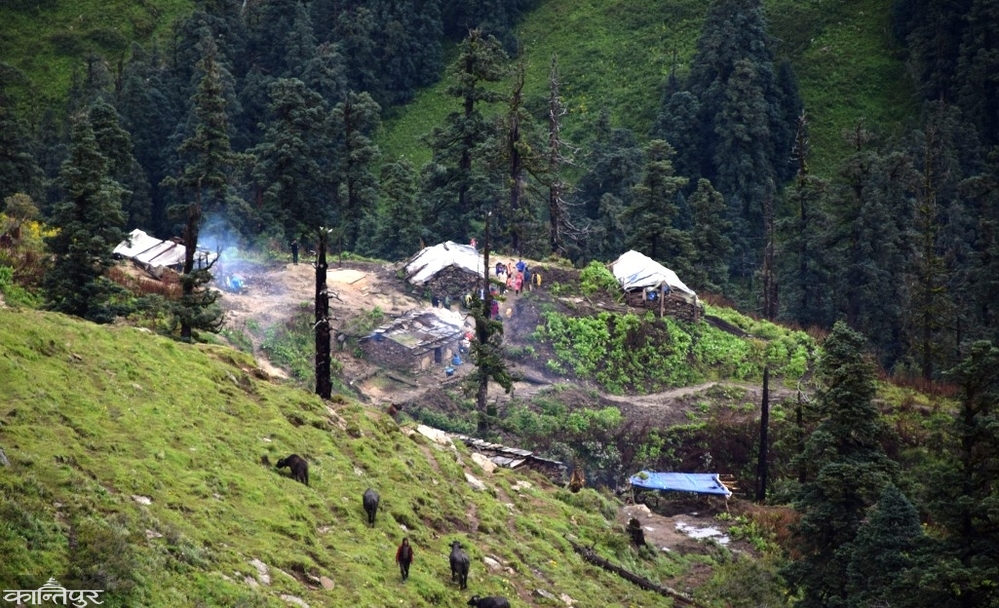
Until a few years ago, villagers used to bring their livestock and make pastures in places like Chaudyan, Dad, Saunakot, and Lavabanna around them. There were hundreds of people and buffaloes. ‘Earlier, the entire village used to be here during the rainy season,’ he said. ‘Now there are no people in the village. Even those who do not raise buffaloes.’ He said that now there are barely five pastures.
The situation is similar in Lekali pastures in other municipalities of the district. Twenty years ago, 50 out of 60 families in Bhinmad, Mashta Rural Municipality, raised buffaloes. ‘It was customary to move the buffaloes to the pasture after the sun had set. On that day, we would cook sweets, eat snacks and take everyone to the pasture,’ said a local Jog Kathayat. ‘There was a festive atmosphere when we went to the pasture.’ The Khuityada pasture was about two hours away from the village. According to him, there are now more than a hundred families in the village. Of them, only one or two are engaged in animal husbandry. ‘The pasture has become barren,’ he said. ‘The forest has grown in the Khuityada, which used to be full of pastures and is bustling, and it is scary to go alone.’
The pastures of neighboring Bajura have also started to become deserted. Until a few years ago, the pastures of Sotapatan, Ghodapatan, and Bhitichhirna, which are located around Badimali's Patan, were full of buffaloes. Those who live in the pastures are worried that the number of buffaloes in those places is now decreasing dramatically. 'We didn't live in the village during the rains.' said 70-year-old Gajendra Thapa of Martadi, who has built a pasture in Bhitichhirna Patan. 'The pastures started to become deserted because people stopped raising livestock.' According to him, earlier there were 6-700 buffaloes in the pastures. It was difficult to find a place to build a pasture. 'Now, what is the use of the pastures?' he said.
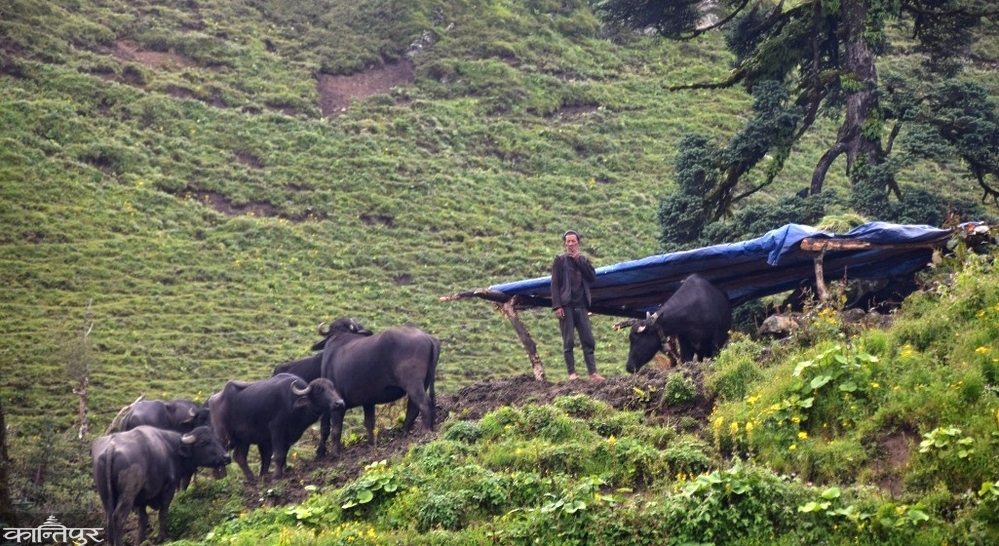
He said that most of his friends who used to hang out in the pastures have already gone to the 'other world' and even those who are alive are stuck in the village because they are unable to move. He said that the tradition of grazing has come to an end after buffalo farming was stopped. ‘The Goths cannot survive without buffaloes, some die, some become old and become grateful,’ he said, ‘Today’s children find it abominable to touch buffaloes.’ According to an old man, there were more than a hundred grazing fields in the Vitichirna Patan until a decade and a half ago. The fields were full of buffaloes. There were herds of shepherds transporting mohi and samal to the lake and aul along the way. The grazing fields around Ghodapatan, Sotapatan, Phulchadhauna Patan, and Budhimai’s place used to be lush. ‘Now there are only six grazing fields,’ said 69-year-old Khante Thapa of Martadi, ‘If we die, our children will not raise buffaloes.’ We are the last generation to live in the pasture.'
Recalling raising 14 milk buffaloes 8 years ago, local Nar Thapa said that the excitement of moving to the pasture is unforgettable. 'We would start packing up the goods to take to the pasture in Baisakh,' he said. 'Tobacco, sheepskin for bedding, madani for making mohi, and samlatumal would be ready.' After setting up a hut and carrying food, people from all over the village would reach the pasture in a single day.' He said that returning from the pasture was also fun.
While living in the pasture, people also make straw goods such as doko, namlo, and bhakari and collect herbs. Wild greens, vegetables, and pure goras produced in the lake are brought to the village. ‘The Kharka tradition is not limited to buffalo rearing but is a part of the culture here,’ said Binod Thapa of Masta Rural Municipality, ‘The loss of Kharka also means the loss of the culture of the Lek-Aul. But who will protect it?’ There are separate Kharka making lakes in Bajhang, including Khaptad Channa, Masta, Talkot, Thalara, Jayaprithi Municipality.
In Bajura, locals say that the number of Kharka is decreasing every year in places such as Lauri Binai of Triveni Municipality, Binnu Pani, Chankheli, Chhaprepatan of Budhinanda, Dhanbhadar, Sintowa of Jagannath, Porkhe, Swami Kartik Khapar, Jiu Lekhmadu of Budhiganga, Khaptad of Chheded and Bhaitan of Gaumul Rural Municipality. "The younger generation has lost interest in animal husbandry and fewer buffaloes are being raised and milk is being sold in the market," says Karna Khadka, an employee of the Veterinary Hospital and Animal Service Expert Center in Bajhang.
Sirjaman Pun, 81, of Maikot, Putha Uttarganga-1, Rukum East, has fond memories of going to the Lekali Kharka with a herd of buffaloes. He last went to Khanikharka 10-12 years ago. After that, he stayed in Maikot even though he wanted to go to the Kharka. However, he keeps wandering the lakes and crossing the rivers and streams with the waves of memories. 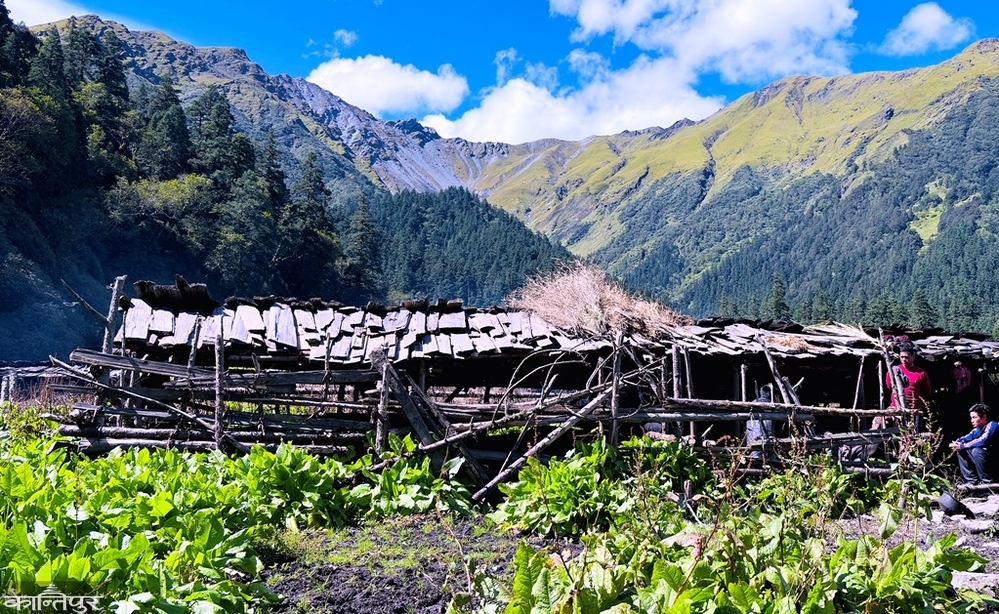
According to him, it was a tradition to go up to the lake with a herd of four-legged animals after the onset of Baisakh and descend to the valley in Asoj. Time has not been the same. The Lekali Kharka, which used to be lush during the rainy season, is not as lively as it was then. ‘The barns started to empty 10-12 years ago,’ he said, ‘How will it be now?’ He said that he was the last person in his family to go to Kharka. He said that his children and grandchildren did not bother to climb the mountain after him.
66-year-old Raprasad Pun from Maikot said that the practice of going to the shepherd has decreased in the past decade. He said that people like him, who have been going to the shepherd since childhood, have also stopped going. ‘The passion for it has even decreased in the last generation,’ he said. Earlier, it was the practice of taking livestock from most households here to the shepherd.
He said that it has decreased in the past decade. According to him, sheep herders used to go from Maikot to places like Purbang, Majila, Kundala, Pupal, Puthawan and others, and cattle were taken to places like Khanigoth, Hikharka and Tyagam from April to September. Ad Pun, 57, who climbed the lake from Maikot, said that it used to be a chore to climb the lake. ‘Earlier, it was more fun in Kharka than in the village during the rainy season,’ he said, ‘This is where you would meet your neighbors and friends.’ Now, the lake has become lonely and deserted.’
He said that there was a shortage of people coming to the lake as people started moving to the cities in search of comfort and convenience. Earlier, the movement of livestock was widespread, so the roads in the lake were clear. Even the rivers and streams were suitable for living. ‘Now people have stopped coming and the forest has grown in the pastures,’ he said, ‘It has become a compulsion rather than a desire to graze and move animals.’
Sagar Sunar, 41, of Puthauttarganga-5 Hukam, says that the new generation has not been attracted to the lake valley because there has been no change in the daily life of the herdsmen. He says that the government should pay attention to the health and safety of the herdsmen. ‘We spend the rainy season in Thakur’s pasture in the Dhorpatan area,’ he said, ‘I watch the lives of my friends who have gone to different countries and abroad on various pretexts, and then I feel sad after this.’
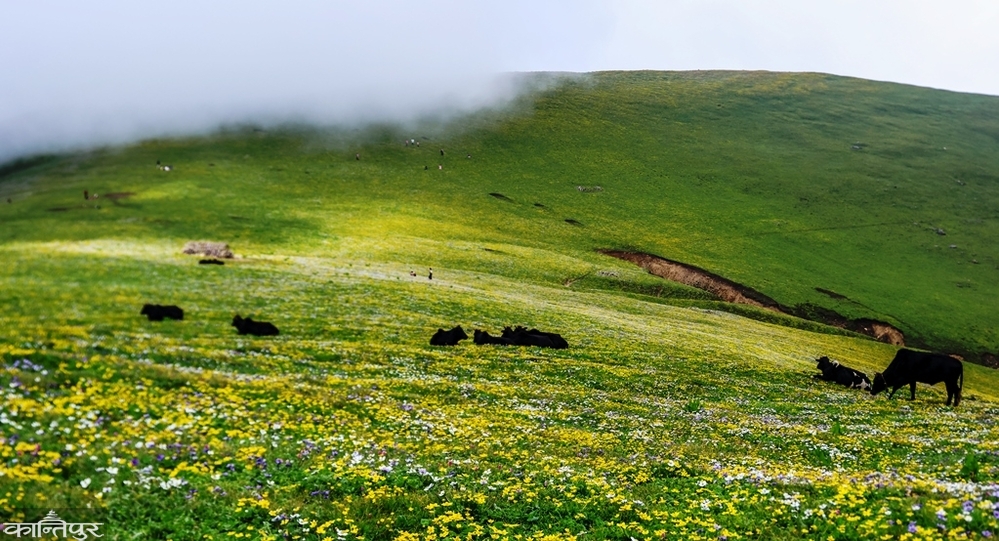
Most of the villages in Rukum East have their own lake pastures. Where they have a custom of taking their livestock to feed their stomachs with grass, especially during the rainy season. Shyamalal Magar of Bhume-3 Morbang says that while living in the lake, he learned various original skills and social customs while watching the animals and living with his family.
He vividly remembers that life in the lake, when people from all over the village gathered in the same pasture and talked about happiness and sorrow, and many of them had their hands full. ‘From the time we opened our eyes in the morning until we went to bed, there would be some kind of conversation, and other work would be done while grazing the animals.’ Some would weave doko and namlo, some would make dhaula (damlo) to tie cows and buffaloes,’ he says. ‘While living in the lake during the rainy season, such goods would meet the needs of the place. When we went to the village in Asoj, we would bring doko and besi. Now, what about the lake, what about the valley? It started to be like saying, "What is the name of the cowherd?"
Rukum East journalist and writer Subindra Kumar Pun says that the reason for the decrease in the number of shepherds in Lekali Kharka is also related to cash income. He says that the culture of Lekali Kharka has declined due to the changing thinking and needs of the current time and generation, while the safety of livestock and simple daily life were the basis of life.
Communication has made it easier to move to Kharka
Hasta Bahadur Bohora of Barekot-9 Limsa, Jajarkot, used to send letters to his home from Kharka until five years ago. Nowadays, he gets information about the happiness and sorrow of the family over the phone. He says that Kharka is also becoming modern now. For the past 10 years, he has been going to Guthichaur Patan in Jumla with buffaloes. He has 5 buffaloes. He is forced to bring cattle to the pasture because there is no grass in the village.
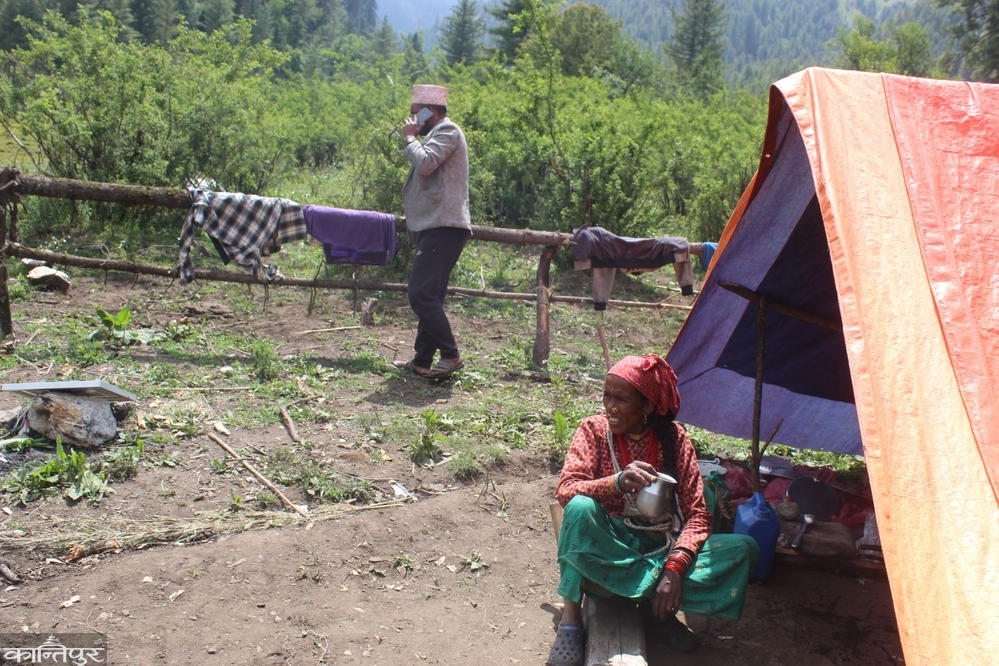
He left home on Jestha 22 with his buffalo and reached Guthichaur in 11 days. ‘Earlier, we would meet our family only after three months,’ he said, ‘now, we talk every day because of the telephone.’ Tourists also keep coming to his buffalo shed in Guthichaur, which is visited by domestic and foreign tourists. Milk, curd and ghee are also sold. Currently, the herdsmen who have reached the pasture return home only during Dashain-Tihar. Bir Bahadur Budha of Barekot-6 talks to his family members on video calls every day. Telecom has added a tower in Guthichaur. ‘Five years ago, it was difficult to understand the situation,’ he said. ‘If something happened, news would reach us late, but now we can communicate directly through video calls.’
Having reached Patan with six buffaloes, he says that he enjoys the pasture. Earlier, it was customary to bring grain from home. We had to buy grain grown around Guthichaur and grind it at the mill. ‘Earlier, we suffered to the point of suffering,’ he said. ‘Now, it is comfortable.’ Now, he brings a tent from home. He spends three months in a tent after collecting wood in Patan. Now, tourists are arriving in vehicles in the pasture. They go to the pasture and buy milk, curd and ghee. Some even enjoy eating with the shepherds in the pasture. Tourists are enjoying the pastures as they pass through Patan in Guthichaur to Dolpa.
Shepherds are also making TikToks and videos and sending them to relatives and posting them on social media. They observe local, national and international economic, social and political activities from Kharka. It is customary to take cattle and sheep to Patan in Guthichaur, Khali, Chere, Patarasi in Jumla at this time. There is a lot of shepherds in Patan now. Raj Bahadur Mahat, President of Civil Society Jumla, said that it is necessary to protect the valuable herbs and grazing areas around Kharka. He said that animal husbandry is booming in the Himalayan region.
He said that it is necessary to research and formulate a strategy on how to protect the pastures and make them productive and profitable. The pastures in the high Himalayan and hilly regions of the country are not just grasslands, but also vibrant social systems linked to culture, tradition and the environment, said Gyanendra Budhthapa, head of the Veterinary Hospital and Animal Services Office. The office has arranged allowances for more than 50 sheep and goat farmers. He said that they are planning to attract farmers to animal husbandry from pasture management.
Chhiringtasi Tamang, 67, of Chhayal, Mugamkarmarong-9, Mugu, spent nearly 8 months in Patan, including Thulokoiki, Rimarkhola, and Tanke. When he reached Patan with 100 sheep and cattle, he took with him a month's supply of rice. ‘रासन सिद्धिए छोराबुहारीले ल्याइदिन्छन्,’ उनले भने, ‘पाटनमा भेडा र चौरी चराउँदा चराउँदै बुढेशकाल लाग्यो ।’
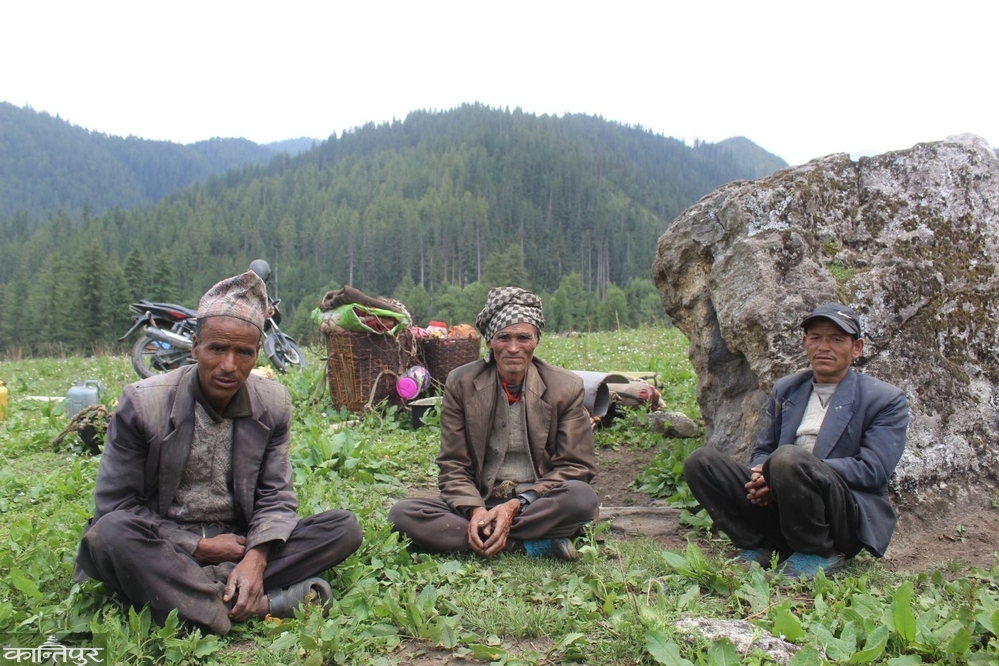
४० वर्षको उमेरबाट पाटन आउन थालेका उनका अनुसार हिउँ पर्दा दुई र बर्खामा दुई महिना मात्र गोठाला गाउँमा बस्छन् । पुस–माघको हिउँ बिलाउनासाथ फागुन पहिलो सातातिर पाटन उक्लिने गर्छन् । अनि असार लागेपछि गाउँ झरेर भदौमा फेरि पाटनै पुग्छन् । पाटनमा उपलब्ध घाँसपातले बारेर टहरो बनाएका छन् । भेडा र चौरी रेखदेखका लागि ५ वटा कुकुर पालेका छन् । दुईवटा घोडा पनि साथैमा लैजाने गरेका छन् । ‘पाटनमा यताउता गर्न र सामान बोक्न घोडा चाहिन्छ,’ उनले भने, ‘भेडा–च्याङ्ग्रालाई वन्यजन्तुले आक्रमण गर्न खोजे कुकुरले धपाउँछ ।’ भेडा–च्याङ्ग्राको ऊनबाट विभिन्न सामग्री उत्पादन गर्छन् ।
गुच्छीच्याउ, भोल्ते, पाँचऔले, जटामसीलगायत जडीबुटी संकलन गर्छन् । उनले संकलन गरेका जडीबुटी छोराहरु पासाङ र सोनामले जिल्लाबाहिर पठाउने गरेका छन् । दसैं–तिहारका बेला भेडा र चौरी सुर्खेतसम्म पठाउने गरेका छन् । पाटनमा पनि वर्षा सुरु भएको छैन । त्यसैले अर्को बेंसी झर्ने तयारीमा छन् । समुद्र सतहदेखि झण्डै ४ हजार ५ सय मिटर उचाइका पाटनमा छाइल, चित्तै, माग्री, मह, दाउरालगायत गाउँका झण्डै दुई सय गोठाला भेडा र चौरी लिएर जाने गरेका छन् । त्यहाँ प्रतिपरिवार ५० देखि २ सयसम्म पशुचौपाया पाल्ने गरिएको छ । परिवारका एक जनाको काम नै पाटन भएको दाउरागाउँका कार्माटसिल लामाले बताए । ‘प्रायः घरमूली पाटनतिर जान्छन्,’ उनले भने, ‘परिवारका अरु सदस्यले खाद्यान्न जोहो गर्ने, जडीबुटी टिप्ने, मजदुरी गर्ने र खेती गर्छौं ।’
उनका बाबु ६६ वर्षीय सिजमग्याम्पो लामा अहिले पनि पाटनमै छन् । ५० भेडा र ४० च्याङ्ग्रा पालेका उनी वर्षा सुरु नभएकाले पाटनमै बसेका हुन् । ‘औंल झर्दा घाँस नपाइने भएकाले ठूलो झरी नपर्दासम्म गोठाला गाउँ आउँदैनन्,’ उनले भने, ‘गोठाला झर्दा भेडा–च्याङ्ग्राको आवाजले गाउँ रमाइलो हुन्छ ।’ उनका अनुसार एउटा भेडा–च्याङ्ग्रा २० देखि ३० हजार रुपैयाँमा बिक्री हुन्छ । जडीबुटीबाट सबैजसो परिवारले २ लाखदेखि ४ लाख रुपैयाँसम्म कमाइ गर्छन् । त्यसैबाट वर्षभरिको खर्चको जोहो हुने उनको भनाइ छ ।
मुगमकार्मारोङ गाउँपालिका अध्यक्ष छिरिङक्याप्ने लामाका अनुसार १ हजार ३ सय ७२ घरधुरी रहेको पालिकाका अधिकांश घरमा भेडा–च्याङ्ग्रा पालिन्छ । ‘अत्यधिक चिसो हुने भएकाले स्थानीय उत्पादनले यहाँ कसैलाई पनि खान पुग्दैन,’ उनले भने, ‘स्थानीयको आयस्रोतको मुख्य आधार नै जडिबुटीखेती र भेडा–च्याङ्ग्रापालन हो ।’
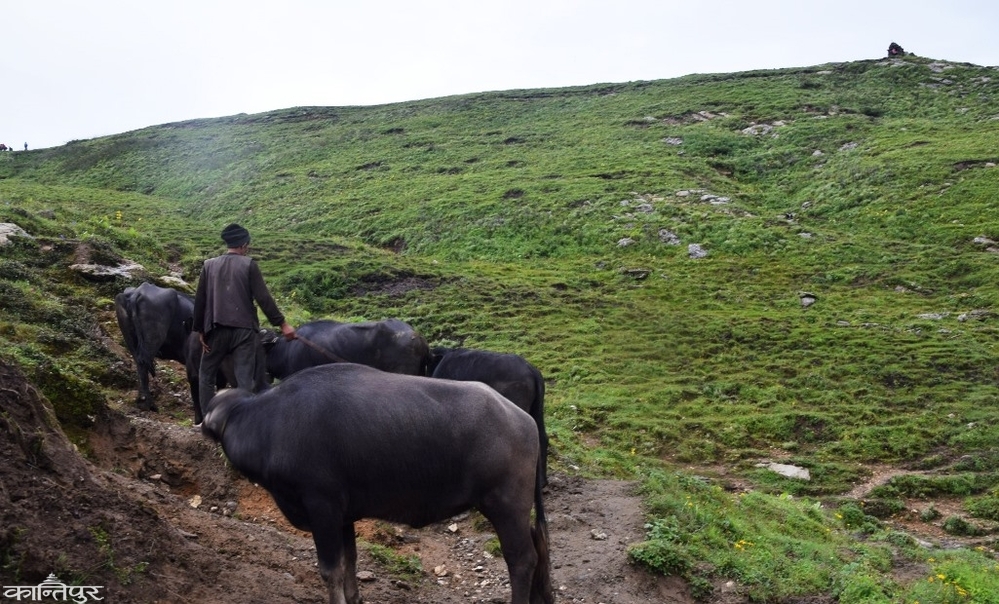
हुम्लाको नाम्खा गाउँपालिकाका अधिकांश गाउँमा भेडा र च्याङ्ग्रा पालन हुन्छ । नाम्खा–६ का रिमीडोसा तामाङले पालिकामा ५० देखि एक सय भेडा नपाल्ने घर नै नभएको बताए । ‘बढी भेडा भएकाहरु त २/३ जनासम्म पाटनमै बस्छन्,’ उनले भने, ‘पाटनमा पाइने चुन, बुकी, खिरौलालगायत घाँस चौरीका लागि पोषिलो मानिन्छ, पाटनमा चरेर मोटाएका चौरीलाई गाउँमा अन्न ओसार्न, दूध र मासुका लागि प्रयोग गर्छौं ।’ स्थानीय बजारमा बयस्क चौरी २० हजारदेखि ४० हजार रुपैयाँसम्ममा बिक्री हुने गरेका छन् ।
पछिल्लो समय सामुदायिक वनले चरन शुल्कवापत मासिक ५ सयदेखि २ हजार रुपैयाँ अशुल्छन् । जाजरकोटको कुशे गाउँपालिका–८ जिन्तालाका पदमबहादुर सिंहले एक साताअघि भेडीगोठ औंल सारिसके । उनका छिमेकी दुर्गबहादुर रोकाय र दीर्घ रोकायलगायतले पनि पाटनबाट गोठ औंल झारेका छन् । वर्षायाम सुरु सुरु हुन थालेपछि कुशे, चाखुरे, भैरीलगायत पाटनबाट बेंसीतिर भेडीगोठ झार्ने क्रम सुरु भएको हो ।
जाजरकोटको कुशे, बारेकोट र जुनीचाँदे गाउँपालिकाका किसान भेडापालनका लागि वर्षेनि विभिन्न पाटनमा पुग्ने गरेका छन् । औंल झर्दा उनीहरुलाई भेडाको चरिचरनमा समस्या भएको छ । कुशे गाउँपालिकामा मात्रै झण्डै १ सय ५० किसानले भेडीगोठ औंल झारेका छन् । सिंह १ सय ५०, दुर्गबहादुर १ सय ७० र दीर्घबहादुर २ सय भेडाका साथ गाउँ झरेका हुन् । उनीहरुले बर्षेनि भेडा बिक्रीबाट २ लाखदेखि ५ लाख रुपैयाँसम्म आम्दानी गर्ने गरेको जानकारी दिए ।
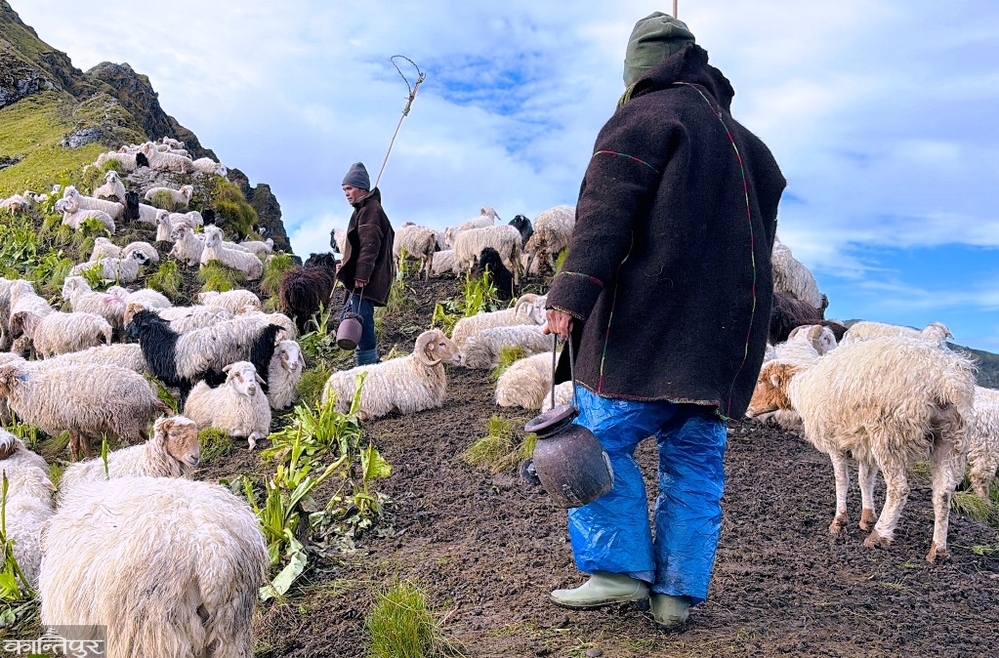
सिंहका अनुसार भेडाको चरिचरनका लागि ४ हजार मिटर माथिका उचाइका लेक उत्तम मानिन्छ । भेडाका लागि मसिनो खर, पात पतिंगर र हरियो झारपात उत्तम मानिन्छ । ‘पाटन नलगे भेडा हुर्काउनै गाह्रो हुन्छ, भेडासँगै हामी पनि ७/८ महिना पाटन बस्छौं,’ उनले भने, ‘कतिपय चाडबाड त हामी भेडासँगै मनाउँछौं ।’ एक दशक अघिसम्म जुम्लाको गुठीचौर, गर्ज्याङकोट, टोप्ला, डुर्गी, ताम्तीलगायत ठाउँका बासिन्दा पनि जाजरकोटका पाटनमा भेडा चराउन आउँथे । ‘उतिबेला औलका खुला चौर, जंगल र बाँझो पाखोमा भेडाका बथानै बथान हुन्थ्ये,’ उनले भने, ‘अहिले घाँस पनि पहिलाजसरी उम्रिन छोड्यो, केही पाटनमा त बस्ती नै बसिसके ।’
उनका अनुसार केही वर्षयता भेडाको माग सहरी क्षेत्रमा बढिरहेको छ । प्रतिभेडा २० देखि ३० हजार रुपैयाँमा बिक्री हुने उनले जानकारी दिए । भेडाको मासु र उनबाट बन्ने कम्मल तथा राडीपाखीलगायतको माग बढेपछि कुशेका अधिकांश किसानले भेडापालन व्यवसाय अझै नछोडेको पशु प्राविधिक गोविन्दबहादुर सिंहले बताए ।