The commission has recommended banning NGOs from certain areas, citing the risk of adverse impacts on national security and national interests.
We use Google Cloud Translation Services. Google requires we provide the following disclaimer relating to use of this service:
This service may contain translations powered by Google. Google disclaims all warranties related to the translations, expressed or implied, including any warranties of accuracy, reliability, and any implied warranties of merchantability, fitness for a particular purpose, and noninfringement.
The commission formed to investigate the incidents of the Gen-G protests on 23 and 24 Bhadra has recommended prohibiting financial and technical assistance from NGOs in 7 different areas.
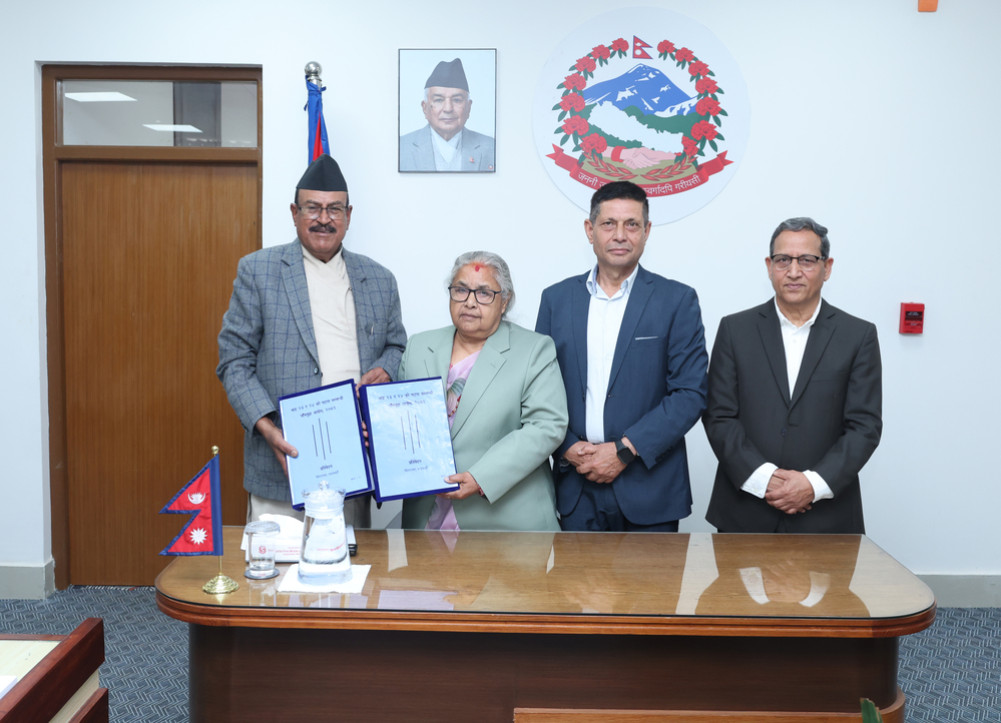
The report submitted to the government by the commission formed under the leadership of former Justice Gauri Bahadur Karki has recommended that NGOs should not be involved in any activities ranging from running political campaigns to interfering in policy-making.
The commission has recommended prohibiting financial and technical assistance from NGOs to NGOs in matters such as international borders and border-territories, national identity systems, hydropower corridors, sensitive infrastructure/structures, security agencies, immigration, information related to labor matters, and conflict/security mapping.
It has been suggested to make legal provisions prohibiting NGOs from running political campaigns, directly interfering in policy-making, influencing elections, security mechanisms, transferring secret data, activities against the state, and spreading misleading and false information. It has also been said that the system of not allowing NGOs to enter only through the single-door system should be strictly implemented.
‘Non-governmental organizations should work as a support role for the government and the private sector in matters that the government has not been able to reach and that the government has not specified as its duty, but in recent times, NGOs have been trying to run the government in parallel, dominating national policies, and the employees and coordinators working in such organizations are under political and government leadership, which has created a gap in the transparency and effectiveness of such organizations,’ the commission’s report says. ‘To make governance, development, and service delivery in Nepal effective, the main objective should not be to eliminate NGOs, but to make them operate in a manner that is consistent with the national interest. When the nation is strong, external influence naturally decreases.’
The commission has also suggested developing a separate licensing system for NGOs that advocate and those that provide services. The commission believes that if this policy is implemented, political influence or policy-directing activities in the name of service delivery can be controlled.’
There were allegations of NGOs investing in the Gen-G movement, infiltration, etc. . Keeping this in mind, the commission also studied the current situation of NGOs in Nepal and their activities . After the same study, the commission pointed out the risk of adversely affecting national security and national interest and said that NGOs should be banned in certain areas .