As the war between the US, Israel, and Iran drags on, concerns are growing among Nepalis working in West Asia, while young people who were ready to go to the Gulf countries are also being held back.
We use Google Cloud Translation Services. Google requires we provide the following disclaimer relating to use of this service:
This service may contain translations powered by Google. Google disclaims all warranties related to the translations, expressed or implied, including any warranties of accuracy, reliability, and any implied warranties of merchantability, fitness for a particular purpose, and noninfringement.
Devendra Kumar Shrestha, 38, of Puranagaun, Manthali-9, Ramechhap, was working at a five-star hotel in Jumeirah Village Circle in Dubai. He used to earn more than 80,000 rupees per month. But when the war between the US-Israel and Iran started, Iran started firing missiles and drones at Dubai as well. Hearing this news, his family members also started worrying. On the 12th day after the war started, Devendra returned home after taking leave.
Devendra himself was not attacked in Dubai, but he experienced the explosions shaking the area where he lived as if an earthquake had struck. But he says that the situation in Dubai is not as bad as the rumors of insecurity that have been spread on social media. ‘Misleading videos have been spread on social media. Families of Nepalis working in the Gulf are scared after watching fake videos. When I was there, the reality was not that scary,’ he said.
Devendra’s wife Kalpana said that after hearing the news of the war, she could not sleep well until her husband returned to the village. ‘We used to hear about the war on the radio, Facebook and TikTok. I was only worried about my husband. We are relieved that he has returned after we strengthened him,’ she said, ‘The earnings were good, but we do not want to send him abroad again until the situation normalizes.’
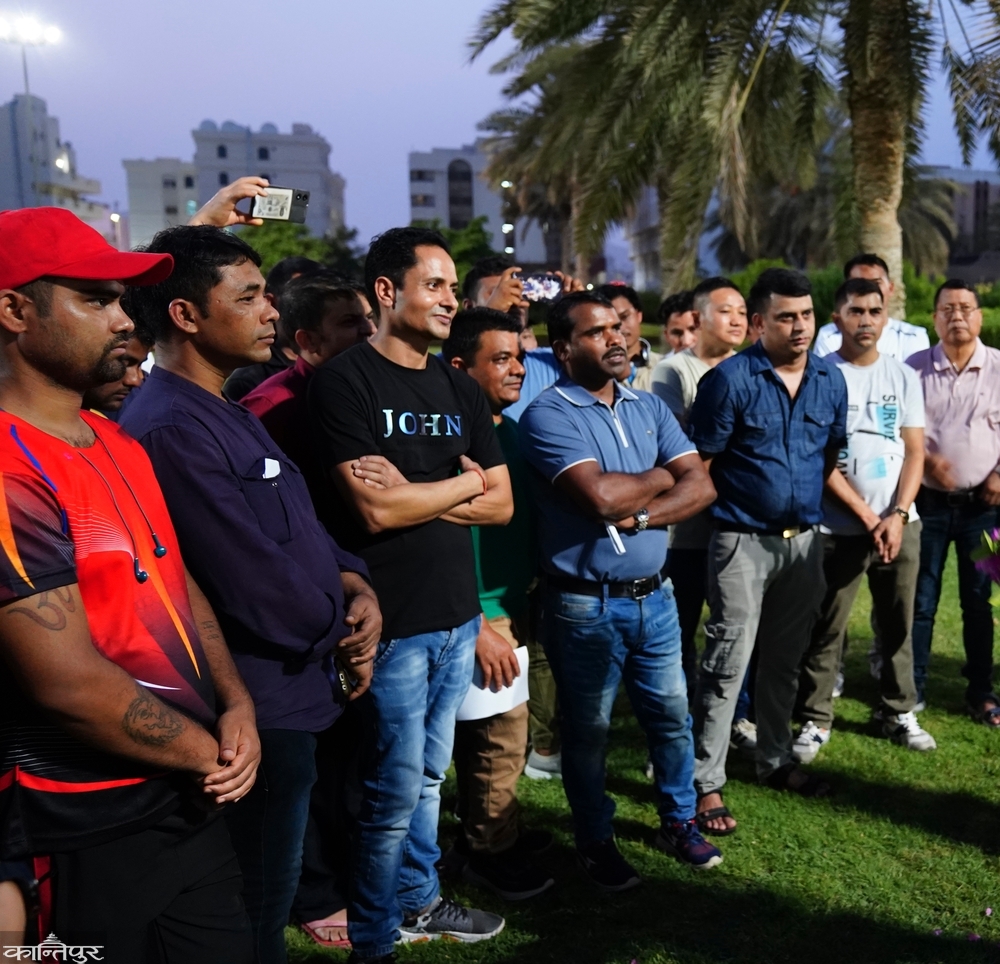
Devendra has taken leave until 7th Baisakh. But he is confused whether to go to Dubai again or not. He is in regular contact with his friends in Dubai. His younger brother is in Dubai. ‘Friends have said that hotel rooms are becoming vacant and there are signs of a slowdown in business,’ said Devendra, ‘I am getting advice not to return immediately.’
29-year-old Gyanukumar Shrestha of Puranagaun, Manthali-9, is in Dubai. Working in a five-star hotel, he earns around Rs 200,000 per month. But the war has started to affect Dubai's tourism sector. The number of customers coming to the hotel is decreasing. Gyanu is currently on regular leave from his current company. 'Hotels are mostly closed, people are not coming to eat. I have also been sitting without work for 15 days,' he said. 'You can hear the sound of explosions from time to time outside, but the situation here is not that scary.'
Even though 20 to 25 missiles are being fired at Dubai every day, Gyanu informed that life has not been affected much. 'The missiles explode overhead, there is no direct risk. The government sends alerts on mobile phones for security,' he said. 'Once, a bomb fragment fell near the hotel.' However, he said that the psychological impact of insecurity has badly affected the tourism sector. There are problems in operating large hotels due to the lack of tourists.
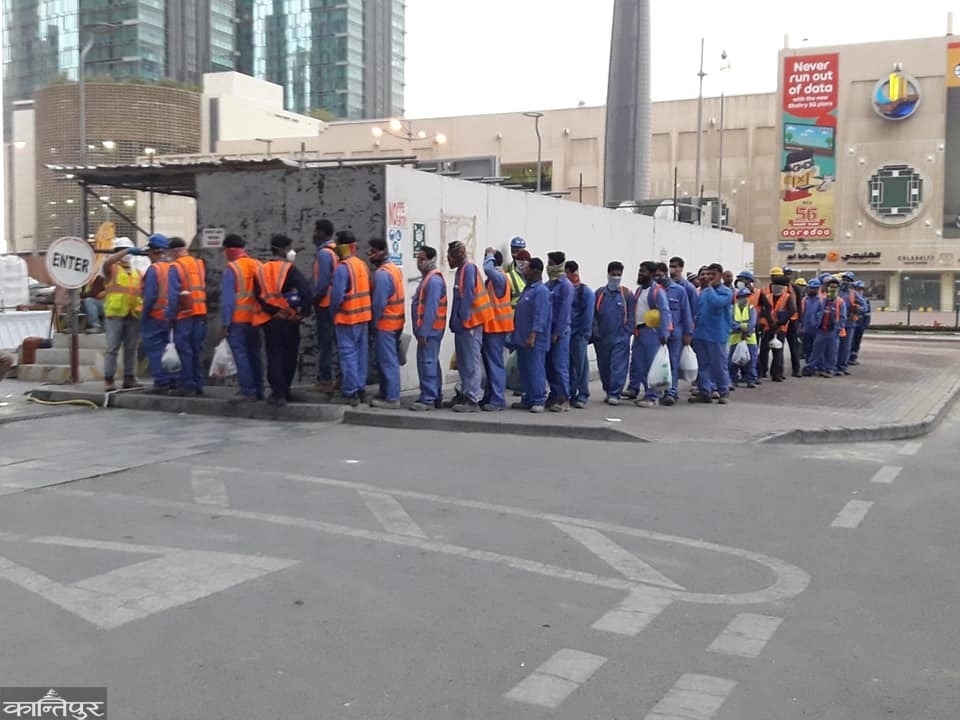
The temporary closure of the hotel where Gyanu works has affected the employment of about 500 employees. ‘The company pays regular vacation pay, but there is no income for the rest of the time,’ he said, ‘I don’t know when the situation will return to normal.’ He said that he will return home if this situation seems to last much longer. ‘The exaggerated videos spread on social media are causing tension at home,’ he said, ‘My parents are asking me to come home. I am also thinking of returning home for a while due to family concerns.’
According to Gyanu, attacks are less frequent in Dubai than in other cities because there is no American military camp. ‘Iran is attacking wherever there is an American camp,’ he said, ‘Although the war has affected the tourism sector, other areas are operating normally.’ Iran is retaliating after the US-Israeli attack on Iran on February 28 (Falgun 16). Iran is firing missiles and drones at countries including the UAE, Qatar. As the war drags on, the families of Nepalis working in West Asia are worried. Young people who were ready to go to the Gulf countries on leave and with new work permits have also been stopped due to the war.
Krishna Bahadur Saru Magar, 34, of Gulariya-3, Bardiya, had returned nine months ago after spending two years in Saudi Arabia. After working hard for two years in foreign employment and not earning well, he planned to go to Dubai. For this, he took a loan of two lakh rupees from the cooperative. All the procedures including work permit, medical, and visa had been completed. All that was left to do was get a ticket to fly. His departure for Dubai has become uncertain due to the war. ‘I was preparing to fly immediately after the election. When I contacted the Kathmandu Manpower, they still said that I would not be able to go. I am currently stuck at home due to the tension in the Gulf countries,’ said Krishna. Sahanur Alam Sai of Gulariya-12, Uchwalalpur, who was preparing to go to Saudi Arabia, has also been forced to stay at home. ‘I returned home three months ago after spending three years in Malaysia,’ he said. ‘It has been a month since I passed the interview to go to Saudi. But the visa was delayed due to the war going on there, so I am at home.'
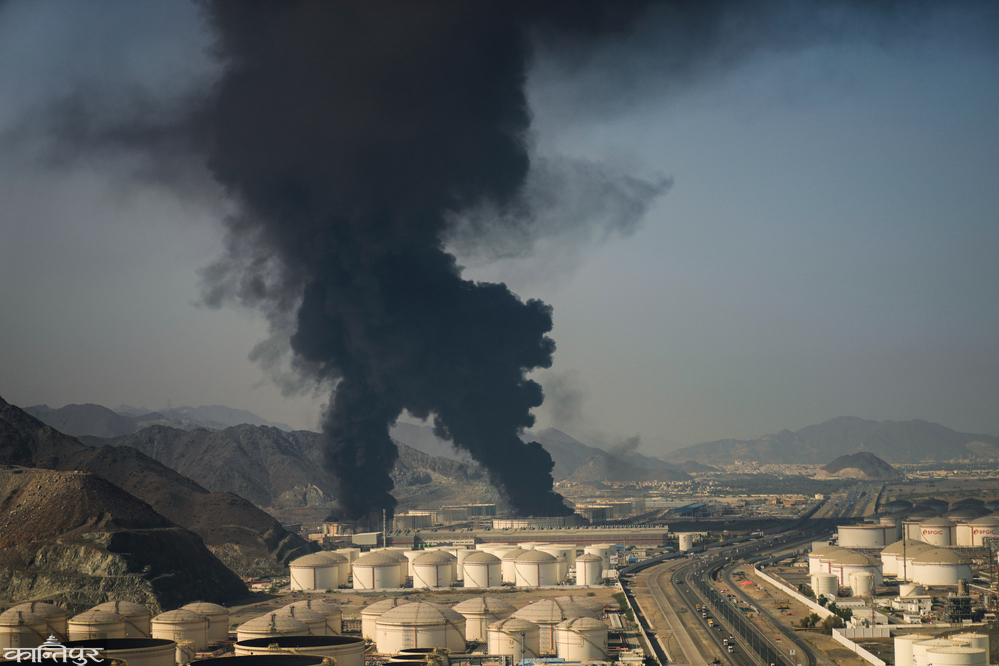
Jhakendra Gharti of Badigad-7, Baglung, had been working in Saudi Arabia for two years. The situation there was good until he returned home on a two-month leave in the last week of last December. Now, the conflict between the US, Israel and Iran has affected his job. He had a ticket to return to Saudi Arabia on 29 Falgun. But the plane did not take off. He returned home from Kathmandu. While there is uncertainty about flying abroad, he has started worrying about how to pay off his debt. Om Bahadur Gharti, a neighbor of Jhakendra, is also in trouble. He had come on leave and was planning to return in the last week of Falgun. 'I have not studied, I used to work as a laborer in Saudi Arabia,' he said, 'There is nothing here, I cannot find work.' He had gone to Saudi Arabia two years ago after agriculture could not meet his household expenses. He said that he was still forced to work to pay for the debt he incurred while going to Saudi Arabia and his household expenses.
Even as the war in West Asia rages, the queue for passports has not left the District Administration Office, Baglung. But most of the youth are worried about what will happen next, said Janak Gaire, information and consultant at the Immigration Resource Center of the Administration Office. ‘Most of the youth ask whether they can go to the Gulf country when they come to get their passports,’ he said, ‘We don’t know that either, but we have been suggesting to wait for some time and go only when the situation is comfortable.’
‘I am inside a secure building, but my mind is insecure’: Deepraj Dhungana, working in Dubai
Right now I have a screenshot in my hand, on which it is written, ‘Public Safety Alert’. As soon as this warning sounds on the mobile screen, the atmosphere of Dubai’s ‘Expo 2020 DIP One Area’ suddenly comes to a standstill. It feels as if the vehicles running on the road outside have stopped and my heart beats as fast as it reaches Mangalsen in Achham.

It has been three years since I started making coffee here. The smell of coffee coming out of the machine used to be sweet. But now, the smell of coffee has disappeared due to the fear of which missile will fall at any given time. The loud noise made by the missile defense system outside when disposing of some items does not let me sleep at night. When I close my eyes, the faces of my parents and relatives in Achham come to mind. Since hearing the news of the attack on Terminal-2 of Dubai International Airport, I and my Nepali friends who are with me have been in fear. Many companies have asked their friends to stay indoors on unpaid leave. The government here says - 'Stay away from windows and doors, go inside a safe building.' I am inside a safe building, but my mind is unsafe.
My mother's eyes were swollen when we talked on a video call the other day. It was when someone posted a video of a missile exploding on Facebook. After seeing that, the mother feels, ‘My son is unsafe.’ The mother cries on the phone, ‘Father, you will earn money later, you stay safe, and return home.’ I remind my mother that I am safe, but deep down I know that no one can say what will happen suddenly. The pain of losing my younger brother three years ago has not left our family yet. My sister is serving the country in the Nepali Army. I am the eldest son of the family, I came here as the trust of the family. But now I feel, will this Gulf war destroy our trust?
There is no way to stay safe, nor is there a ship to return home. I feel like the Nepal government should have coordinated something for us. But so far, no one has come to ask. We are witnessing a war here that is not ours, but its wrath is burning us. All I can say for now is that missiles are flying in the sky here, but my attention is on that quiet courtyard in Achham, where my mother is waiting for a call from me, holding her mobile phone.



