The report concludes, ”After the death of a woman who went abroad for employment through informal means, the family has to face social stigma, humiliation and ostracism.”
We use Google Cloud Translation Services. Google requires we provide the following disclaimer relating to use of this service:
This service may contain translations powered by Google. Google disclaims all warranties related to the translations, expressed or implied, including any warranties of accuracy, reliability, and any implied warranties of merchantability, fitness for a particular purpose, and noninfringement.
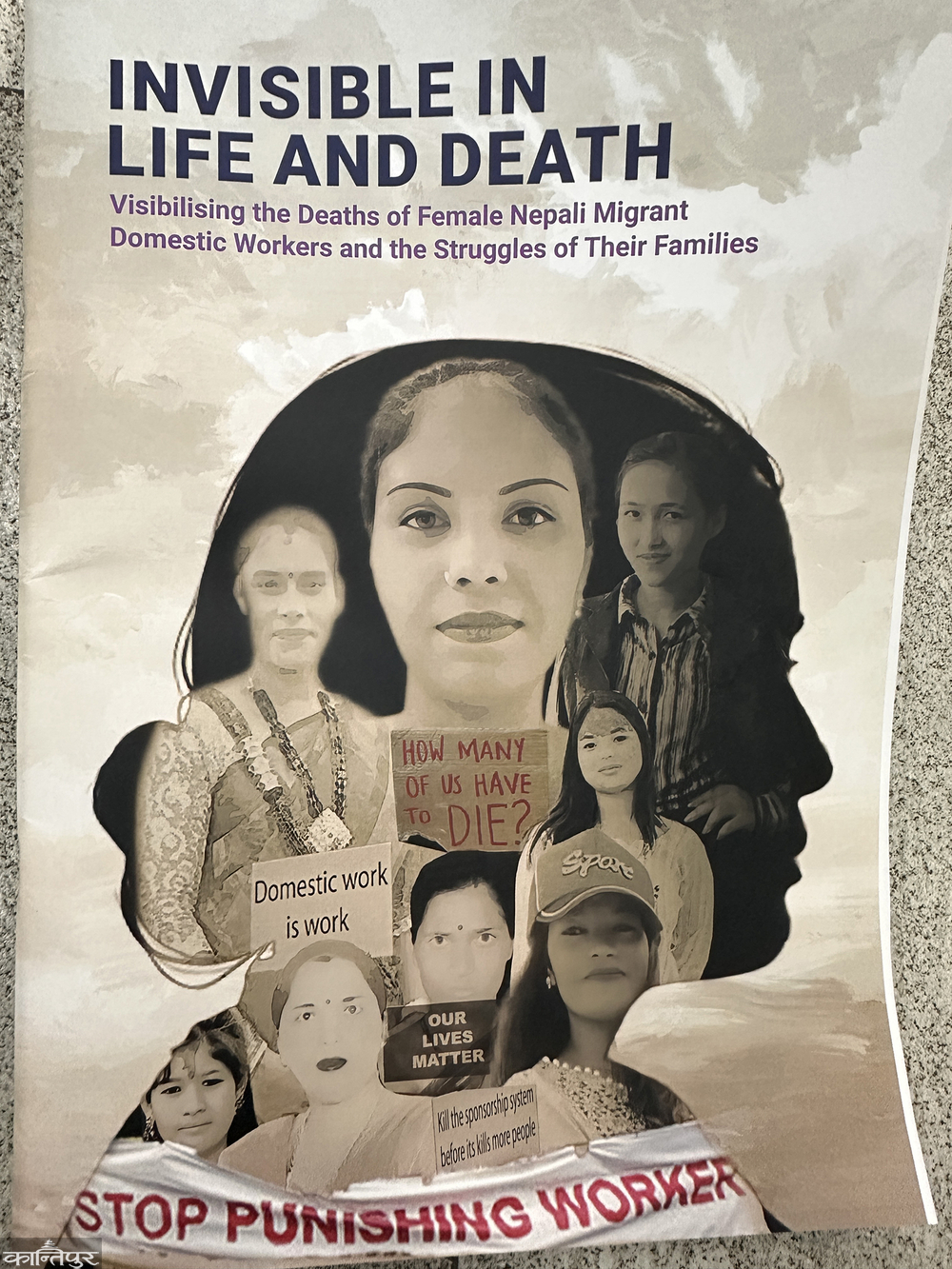
The ban on domestic labor in the Gulf region has pushed Nepali women workers into dangerous paths, making not only labor but also death invisible, a report has been released on Monday.
The Women's Rehabilitation Center (OREC) and Brunel University London in joint collaboration published a research report on "Invisible in Life and Death: The Death of Nepali Migrant Domestic Workers and their Families' Struggle" and concluded that the state has made women's labor invisible. Oreck and Brunel University have researched and prepared a report with the families of 17 housewives who died in the Gulf.
Working women are contributing to the state through labor and income. But after their death, the state leaves without responsibility. How fair and responsible can such a state system be?," Brunel University teacher Dr. publishing the report. Ayushman Bhagat said, "The Nepali state will benefit financially from women's labor Even so, the presence of the state in their deaths seems weak.
After the death of a woman who left without a work permit, the process of bringing the body home is slow, complicated and very expensive, he said.
The
report He said that it shows that a serious review of the role of the state, gender equality and social justice is necessary. “Families of deceased female migrant workers, especially elderly parents and children, are affected by serious mental health problems. Families face acute financial stress. The conclusion of the report is, "After the death of a woman who went to work abroad through informal means, the family has to face social stigma, humiliation and ostracism."

report, despite the limited assistance provided by the Nepali Embassy, there is no true investigation regarding the suspicious death. In most cases, the cause of death is concluded as suicide or natural death. which the victims and affected families have rejected,' he said, 'they are deprived of justice and services in the post-death process, which exposes the fundamental weakness of the immigration system.'
The
report states that the policy of restricting immigration for domestic labor in the name of security has become a means of imposing control over women's lives, labor, and freedom. Following the instructions of the parliamentary committee, the government has been banning women from doing domestic work since Chait 20, 2073. Since then, almost two lakh workers have reached.
This report suggests the need to reverse restrictions on domestic labor and create safe, legal and accessible migration routes for all women.
All female workers working abroad must be registered at the Nepali embassy and protection should be ensured. Arrangements should be made to extend access to insurance, relief and compensation to the families of all deceased workers. The government will have to carry out the process of bringing dead bodies systematically under its own leadership. The process of getting compensation at the local level should be made simple, transparent and fast," the report recommends, "necessary manpower and resources should be added to the Nepalese embassies abroad. In every death, a double post-mortem must be conducted, and a 'Migrant Death Review Board' and a legal aid room should be established.



