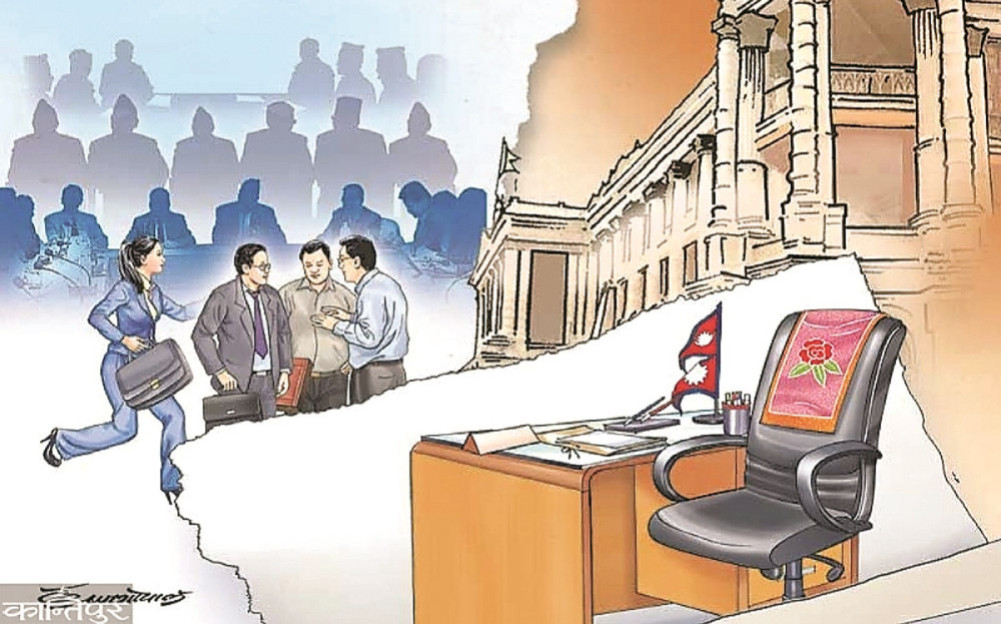
Doorstep of the top leader to stop the proposal not to get constitutional, diplomatic and political appointment for two years after retirement
We use Google Cloud Translation Services. Google requires we provide the following disclaimer relating to use of this service:
This service may contain translations powered by Google. Google disclaims all warranties related to the translations, expressed or implied, including any warranties of accuracy, reliability, and any implied warranties of merchantability, fitness for a particular purpose, and noninfringement.
A bill with a two-year 'cooling period' provision to end the trend of appointing to various government positions including the Constitutional Commission by adjusting the political 'setting' since being in office has been unanimously passed by the State System and Good Governance Committee of the House of Representatives on 2nd of June.
However, the Chief Secretary and Secretary are visiting the leader's house to stop the 'cooling period' arrangement that has been passed by the parliamentary committee.
Under the leadership of Chief Secretary Ek Narayan Aryal, the incumbent secretaries met Prime Minister KP Sharma Oli at Singha Darbar and Congress President Sher Bahadur Deuba at Budhanilkanth and are continuously pressuring them to remove the provision. But the parliamentarians of the ruling and opposition parties are in favor of implementing the system of 'cooling period' to remove the administrative and political uncertainty.
The secretaries are dissatisfied with the 'cooling period' of not getting constitutional, diplomatic and political appointments for two years after retiring from a high position in the civil service. The chief secretary and secretaries met Prime Minister Oli at the office of the Prime Minister and Council of Ministers after the meeting of the 'Republic Day Main Ceremony Committee'.
According to a secretary, the secretaries had 'pressured' the Prime Minister to give instructions to the parliamentarians on issues such as 'cooling period', raising the retirement age from 58 to 60. The secretaries reached Budanilkanth to meet Deuba on the same issue on Tuesday morning.
After being pressured by the staff, the Congress Chairman Deuba also got information about the readiness to take the report of the bill to the House through Committee Chairman Ramhari Khatiwada. Sources said that Deuba gave an 'order' to Committee Chairman Khatiwada not to make an immediate decision.
According to the committee secretariat, the parliamentarians were preparing to sign the final draft of the bill on Monday evening. Federal Affairs and General Administration Minister Rajkumar Gupta, Education Science and Technology Minister Raghuji Pant, Committee Chairman Khatiwada and MPs gathered on behalf of the government.
But the chief secretary and secretaries told Oli and Deuba to stop signing immediately, says an MP. The report was prepared by the Joint Secretary of the Committee Secretariat, Ministry of Law and Ministry of General Administration. Ministers, Speakers and MPs had gathered for signing, but what happened later was not signed,' says the MP.
The Chief Secretary is also an advisor to the Prime Minister. He is in daily discussions with the Prime Minister. In the Council of Ministers, it is the responsibility of the Chief Secretary to advance the proposal and write the decision in every decision, so his relationship is from the Prime Minister to the Minister. Every minister looks for a suitable secretary in the ministry to take decisions according to their interests. The chief secretary and secretaries are at odds with the political leadership as the
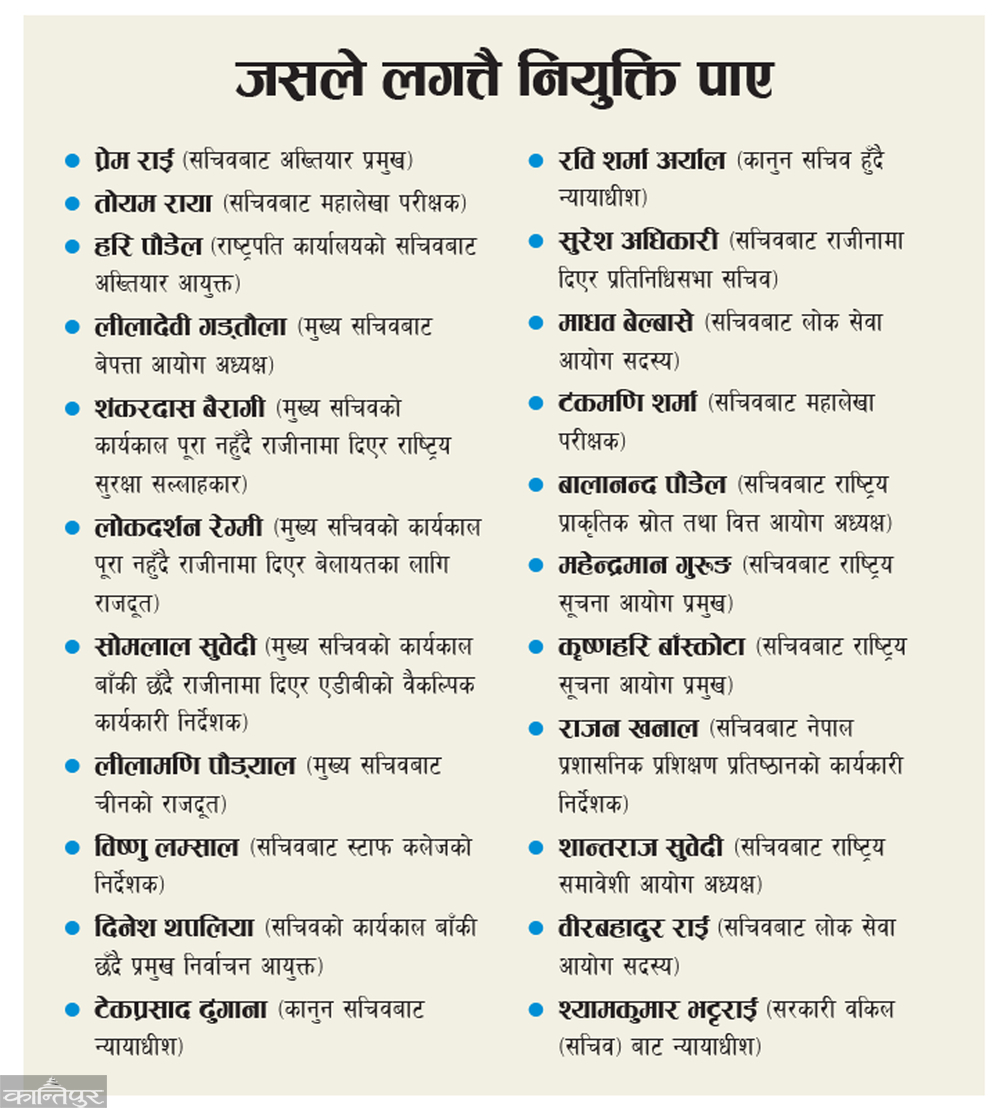
continues. The 'setting' with the political leadership starts from there. Lokdarshan Regmi became the British Ambassador two years before his tenure as Chief Secretary ended. Regmi, who was the ambassador of Britain for the first time on 5 Jan 077, is the ambassador of America for the second time. Both of these appointments of Regmi took place during the government led by Prime Minister Oli.
Somlal Subedi is another former chief secretary who left the highest post of chief secretary in the civil sector, which is considered a permanent government. He did not even show the ethics of resigning while taking the appointment. Subedi was appointed as the Alternate Executive Director of the Asian Development Bank (ADB), creating an additional post for himself while still Chief Secretary.
At that time, he was widely criticized for taking ADB's job without resigning because of the desire to increase his pension. Subedi, who became the chief secretary in July 072, had a three-year tenure till July 20, 075. But he had reached the ADB headquarters in the Philippines a year ago, holding the position of Chief Secretary in reserve (additional) since 1 July 074. Khatiwada, chairman of the
committee, has been making public statements to the extent that he will not sign the report if the two-year 'cooling period' is not provided. "It is not possible to remove a matter that has been passed by the parliamentary committee just because the employee threatened," he says.
Senior advocate Tikaram Bhattarai says that the bill that has been passed by the parliamentary committee cannot be reversed. "Once the parliamentary committee has decided, the issue cannot be reversed, it must come back to the committee," he says, "now it cannot be used except by submitting it to the full house of the parliament, if it is touched/used, it will be an abuse of authority, it is also against parliamentary dignity." He said that
administrators threatening political parties and 'bargaining' has come into public discussion and this is very objectionable. 'This shows how chaotic and loose our bureaucracy is,' says Bhattarai, 'If the bureaucracy is not disciplined, the system itself will be questioned.' Eleven years ago, the committee formed under the leadership of former administrator Kashiraj Dahal submitted a report to the government with the suggestion that there should be a 'cooling period' of at least two years.
Dahal says that a 'cooling period' is also necessary for contact and severance of relations with political power and such a practice is in vogue at the international level.
'Professionalism cannot increase in the administrative sector if the contact and relationship with political power is not broken,' he says, 'Employees have the opinion that the growth and development of qualified and capable people should be continued. But due to the fact that employees lose their professionalism when they are more close to the political leadership, there is a practice of cooling period at the international level as well.'
Secretaries argue that there is a constitutional provision that 50% of the appointments in Public Service Commission should be from employees, so it cannot be stopped elsewhere. "The state has invested crores of rupees for the growth and development of the employees throughout their life. We cannot introduce a cooling period to prevent that efficiency and qualification. If it is introduced, the constitution should be amended or the law regarding the appointment of constitutional officers should be introduced," says a secretary. We are saying this by meeting the honorable sir and other leaders every day.'
Senior advocate Bhattarai says, 'Without a cooling period, the authority and the Election Commission have become a club of ex-administrators. He says that since the appointment was in office, he was in alliance with the political power and when he reached the constitutional commissions, he did not bring a case against the appointee and was unable to make a decision.
After the divorce with the executive, there is a possibility that the conflict of interest will be reduced. After the divorce, there is no need to run to political parties and leaders to see if another appointment will be made,' he says, 'Creative and qualified people have the possibility of entering the constitutional body.'
Chief Secretary Aryal is trying to extend the tenure and then keep open the way for constitutional or diplomatic appointments. According to the MPs, he is insisting that the Civil Code does not become an obstacle. If the civil service bill is passed before the end of this fiscal year and approved by the president, his tenure will be extended by one year as currently provided in the bill. But if the bill is approved only after the start of the financial year 082/83, Aryal will have to go on compulsory leave next November.
The provision of the bill to raise the retirement age from 58 to 60 years will be applicable only from the financial year after the bill has been approved. However, according to the law ministry, the chief secretary and secretaries are putting pressure on the law ministry to amend the provision passed on May 2 and write a provision that will come into effect 35 days after the law is ratified.
'Only civil servants are insulted by the cooling period'
Eknarayan Aryal, Chief Secretary
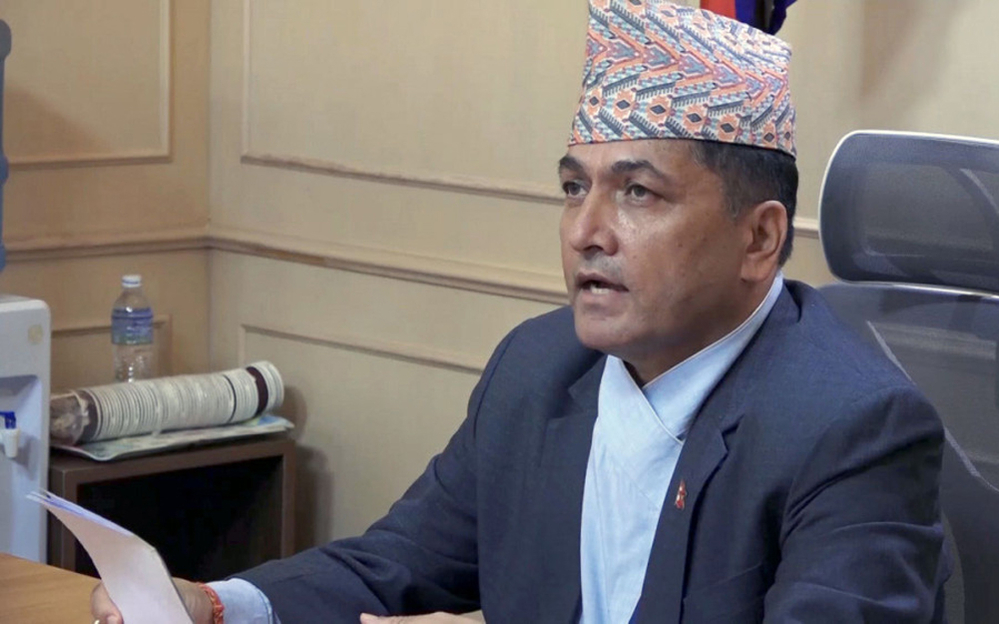 Why are the secretaries, including you, unhappy about keeping a two-year 'cooling period' in the Federal Civil Service Act?
Firstly, parliamentarians have the right to make decisions about bills in parliament. In some cases, staff can provide advice. Employees have no other role in making laws. Many of the secretaries and joint secretaries have expressed some dissatisfaction regarding the 'cooling period'. I also think that their dissatisfaction is justified. There is no need to have any personal 'reservation' in that. The main thing is that while making the law, it should apply equally to all, not just one part of the state. The employees have felt insulted when they tried to limit the 'cooling period' only to civil servants.
The main reason for expressing dissatisfaction is not getting an appointment immediately after leaving the job?
The secretaries have raised the question of how an employee who is good for 30 years on the job will be bad after retirement. Their voice that this cannot be done constitutionally can be said to be justified. It has been said that discrimination will be born when a law is made that does not require a two-year 'cooling period' for others to be appointed to constitutional bodies, but applies only to civil servants. As a parent of a civil service employee, I have to listen to some issues. But the parliament will make the law. That's not even a matter of our jurisdiction, until the request is made.
Did the secretaries meet the Prime Minister and the Congress President and say that they will resign collectively if the provision of two-year accrual period is not removed?
I have learned that the secretaries met the Prime Minister and the Congress President and kept their word. It is also natural for them to complain about their concerns. But I don't know about collective resignation. No one has personally come and said it on impulse but has heard it. Again, the employee cannot do such a thing. It is the responsibility of the employees to follow the laws that the Parliament makes.
How can the questions raised by the secretaries regarding the 'cooling period' be addressed?
It is not that there should not be a 'cooling period', it is more dissatisfaction that only civil servants are banned. A person working in government service is not ineligible for government service. Aren't constitutional commissions and ambassadors government services? Everyone had to be treated equally. Our point is why ban only civil servants. If the
is to be kept, it is better to have a provision of 'cooling period' not in the Civil Service Act, but in the Act on Appointment of Constitutional Officers. Doing so does not violate the right to equality. The constitution also mentions that the services of retired employees will be utilized. In the draft of the bill, we have put a provision that after the retirement of government employees, they will not be able to take appointments in projects, projects, donor agencies, private firms, etc. for one year.