We use Google Cloud Translation Services. Google requires we provide the following disclaimer relating to use of this service:
This service may contain translations powered by Google. Google disclaims all warranties related to the translations, expressed or implied, including any warranties of accuracy, reliability, and any implied warranties of merchantability, fitness for a particular purpose, and noninfringement.
The government has agreed to keep a 2-year cooling period in the Federal Civil Service Bill to prevent high-level civil service employees from entering diplomatic, political, constitutional, etc. positions after retirement.
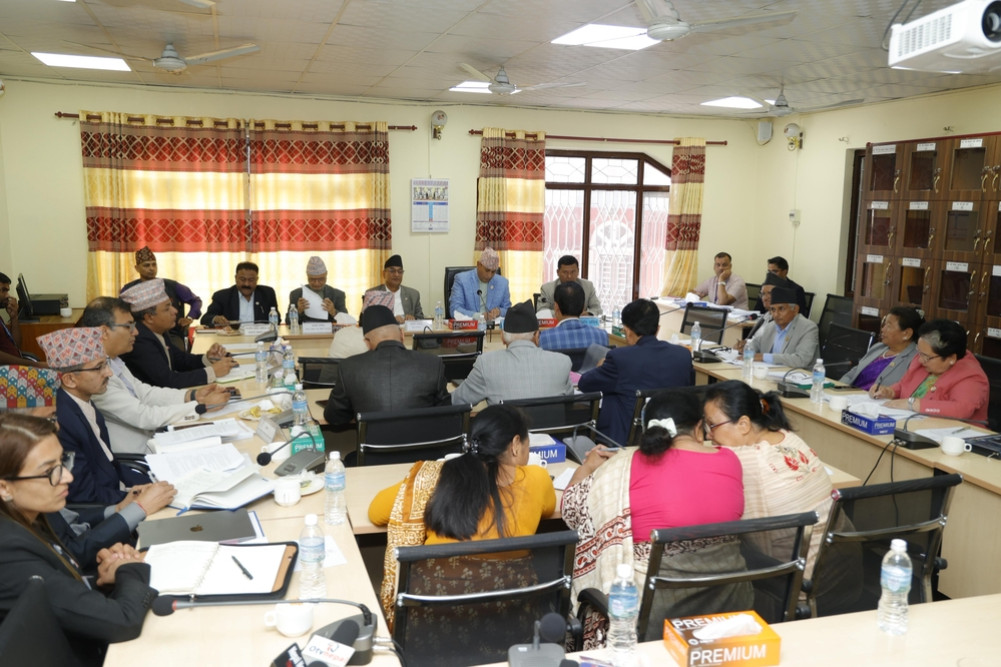
On behalf of the government, Home Minister Ramesh Akhtar said in the meeting of the State Order and Good Governance Committee under the House of Representatives that he is ready to keep the cooling period of 2 years in the civil service. Let's make the cooling period 2 years, not more than that. If it is done for more than 2 years, there may be a shortage of manpower,' he said.
The Home Minister said that the government is ready to keep a cooling period of 2 years so that the federal civil service bill can be agreed upon in the parliamentary committee.
There was a dispute between the MPs of the ruling party on how long the 'cooling period' should be kept, while the MPs of the opposition party had written different opinions on the report of the sub-committee formed by the State Affairs Committee. Political parties such as Maoist, RASWP, RPPA, United Socialists and others have written different opinions, saying that the cooling period will be 2 years . The MPs of the Congress were also maintaining the stance of keeping the cooling period for 2 years, while the MPs and ministers of the UML were of the stance of keeping it for a maximum of 1 year . At the beginning of the
bill, under the pressure of the Chief Secretary, Law Secretary and the Law Secretary working in the Prime Minister's Office, there was a provision that there would be no 'cooling period' to become a judge and ambassador. The committee also backed down after criticism that the system would discriminate against employees. But when the chief secretary and secretaries were putting pressure on not keeping the 'cooling period', one party of the ruling party was in favor of keeping the cooling period only for 1 year, while the other party was in the position of keeping it for 2 years.
There was a controversy among the MPs of the ruling party saying that the cooling period is not kept according to the interests of the high-ranking employees or that they are going to keep it for a short time. The arrangement of 'cooling period' was proposed in point number 41 of the report submitted earlier to the
committee. The parliamentarians wanted to keep the system of not getting appointment in constitutional, diplomatic and political positions for a certain period after retiring from the high position of the federal civil service. Regarding the 'cooling period', it was written in the final draft report of the committee, "Civil servants or employees who have retired from other government services will not be appointed to any constitutional or government post without completing a period of one year from the date of retirement."