We use Google Cloud Translation Services. Google requires we provide the following disclaimer relating to use of this service:
This service may contain translations powered by Google. Google disclaims all warranties related to the translations, expressed or implied, including any warranties of accuracy, reliability, and any implied warranties of merchantability, fitness for a particular purpose, and noninfringement.
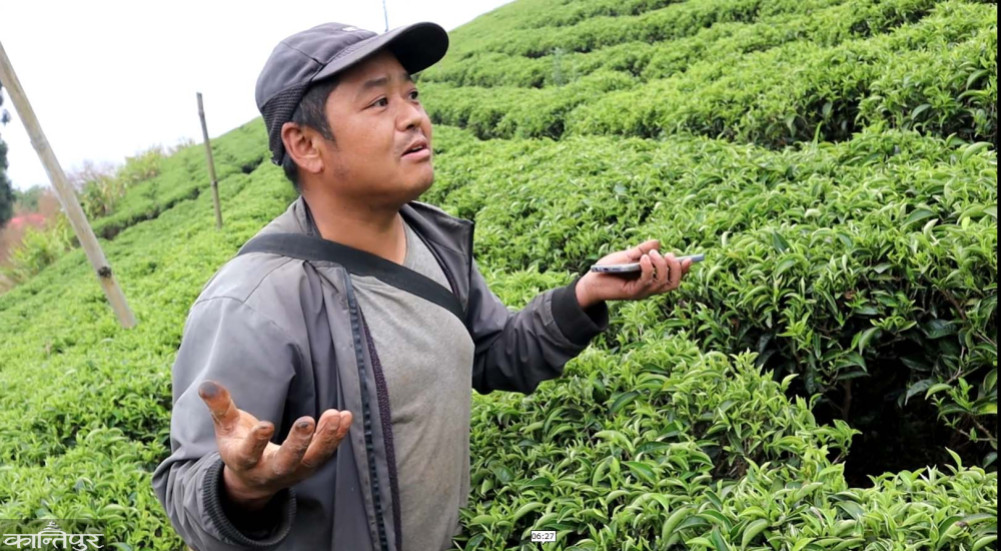
Jayakumar Rai (JK) of Ilam-4 Jasbire spends 12 hours in the tea garden. Tall, with a smiling face and a smile, he returned from staying in the UAE for seven years during his employment. Lately, he is busy picking tea pods and tending the garden near Jasbire market. JK, who enjoys tea farming, is not only diligent in his business, but equally knowledgeable about its market and technology.
I was an office boy in Dubai (UAE). He said, "I have planted tea on 40 acres of land, and the family members take care of it, pick it and sell it." He has also reared cattle to fertilize the tea plantations. According to him, he earns well by selling milk.
JK has planted tea on 40 acres of land. From that 25 percent, they make black leaf, green leaf and hand leaf and sell it. They sell 75 percent unprocessed (green leaf only) to a nearby Jasbire tea processing company. "I sell handmade leaves, green gold and black gold for up to 2,000 rupees per kg," he says. He does not use pesticides or chemical fertilizers in his garden.
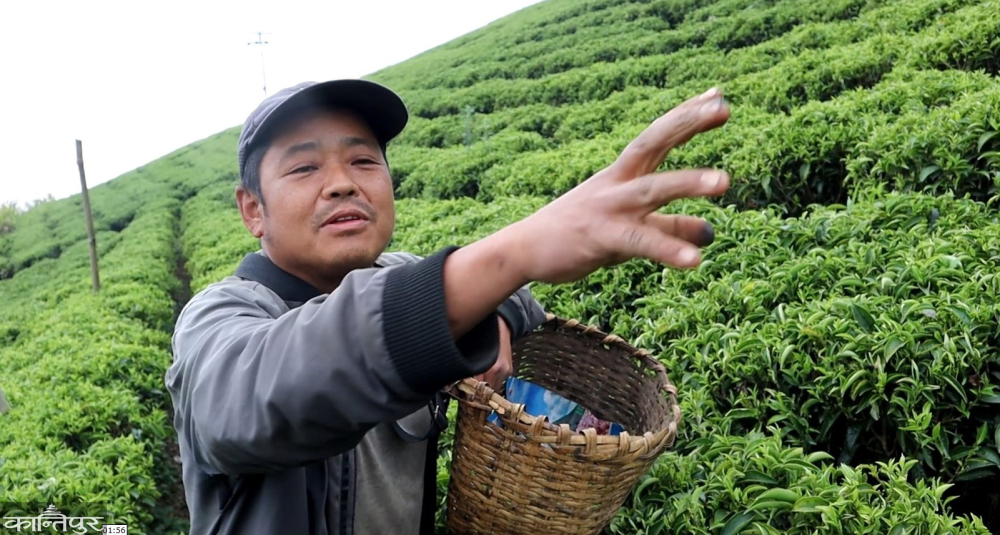 There is a cow firm at the top of the tea plantation. Cow dung is washed away from the farm. Wheat is collected and sprayed for disease diagnosis. In his experience, the use of chemical fertilizers and pesticides slows the growth of butane. The production is also good. The organic tea produced here goes to countries like Japan, Germany, Denmark and Bahrain. The quality of all food items, including tea, used in most foreign countries is tested. "If chemical fertilizers and pesticides are used, they will not be sold abroad, tea leaves produced in their own country are rarely used in Nepal," he said.
JK has also acclimated his wife Manmaya to the tea garden. The dhaki used for picking tea, Doko weaves himself. They tend the cattle all morning. Tea beans are picked in the afternoon. They pick choya in their spare time. They apply manure and have fun in the tea garden. "If you work hard, you don't have to go abroad to earn," he said.
According to JK, the majority of Nepalese still use CTC tea bought from the market. He says that only a few consumers use Nepali hand leaves and orthodox tea. "If only Nepalis are taught to drink native tea, not only will their health be better, but it will also help in the promotion of local production," he said. He said that although the government had planned to promote tea and coffee through various means, it was not enough. "Farmers need policy support rather than distribution, even now Nepali tea is not being exported to India," JK added.