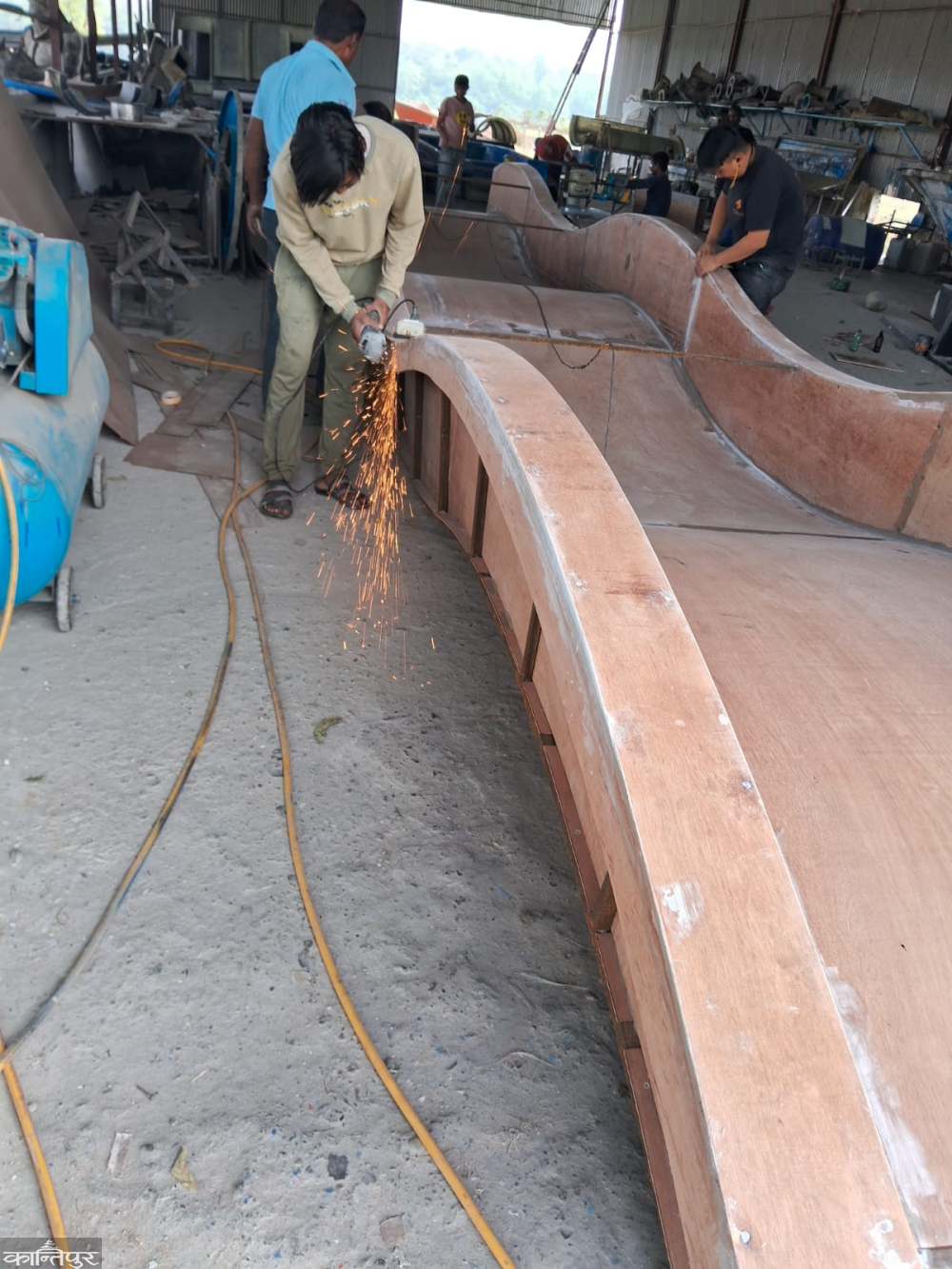
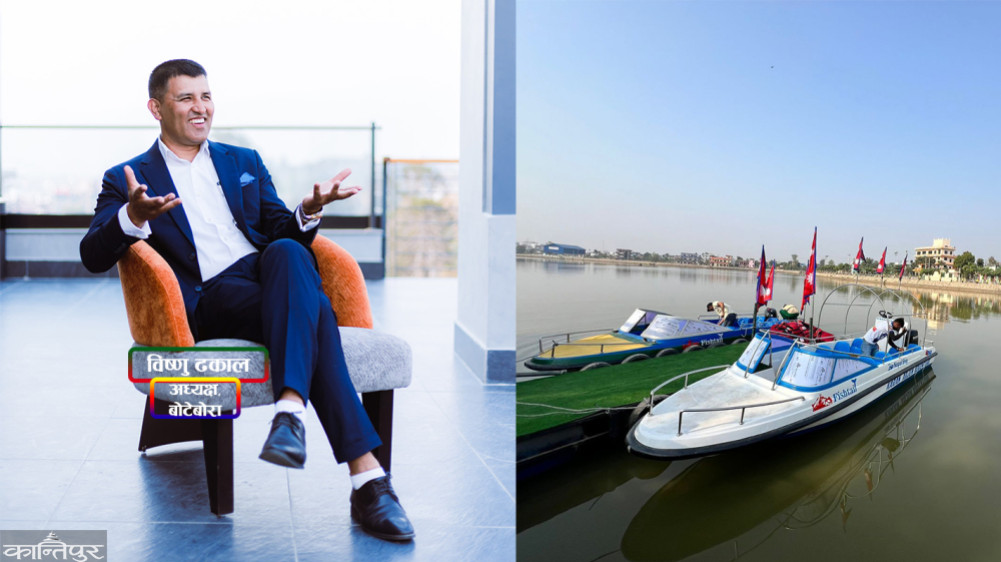
Nepal Ship and Boat Building Company of Bishnu Bahadur Dhakal of Lamjung is currently producing motorboats in the country. The plants built by the company are currently running in Koshi, Narayani and Karnali rivers, Kulekhani and Marsyangdi reservoirs, Bharat and Bulbul lakes as well as the water park in Nepalgunj.
We use Google Cloud Translation Services. Google requires we provide the following disclaimer relating to use of this service:
This service may contain translations powered by Google. Google disclaims all warranties related to the translations, expressed or implied, including any warranties of accuracy, reliability, and any implied warranties of merchantability, fitness for a particular purpose, and noninfringement.
Once upon a time, an advertisement used to play on Nepali television, 'We protect the earth, water, land and sky.' These words of an advertisement of an insurance company stuck in the immature mind of Bishnu Bahadur Dhakal of Lamjung. After listening to the ad, he was shocked to see how one company could do all these things.
Dhakal, who has been active in the field of information technology for about a decade and a half, has been active in business based on 'Jal' for the last one decade. Dhakal, who was born in Sailitar in Lamjung, spent his childhood not only watching the kalkal water flowing in Chepe river and Marsyangdi river, but also playing with the same water. Perhaps not forgetting the proximity to that water, Dhakal has recently ventured into business related to water from the field of information technology.
is currently active in the campaign of producing Dhakal motorboats and increasing tourism activities by operating motorboats in various rivers and reservoirs of the country. But he complains that the government has not facilitated the necessary for that. "My wish is for the government to make a law, because of the lack of law, there is a problem with its operation and production," he said After becoming Tagaro, he joined Saraswati Campus in Thamel, Dhakal. Uncle Mohan Dhakal was in the business of making 'commercial kitchens' so there was no trouble in finding a job to earn money. In his uncle's company, he initially worked as a load and unloader. The main job was to unload the goods from the vehicle and arrange them in the store. I had no other skills," said Dhakal, "but today I have achieved as much as I can. All this is from the work at that time.' Therefore, Dhakal argues that any person should start the first job of life only with a lot of thought.
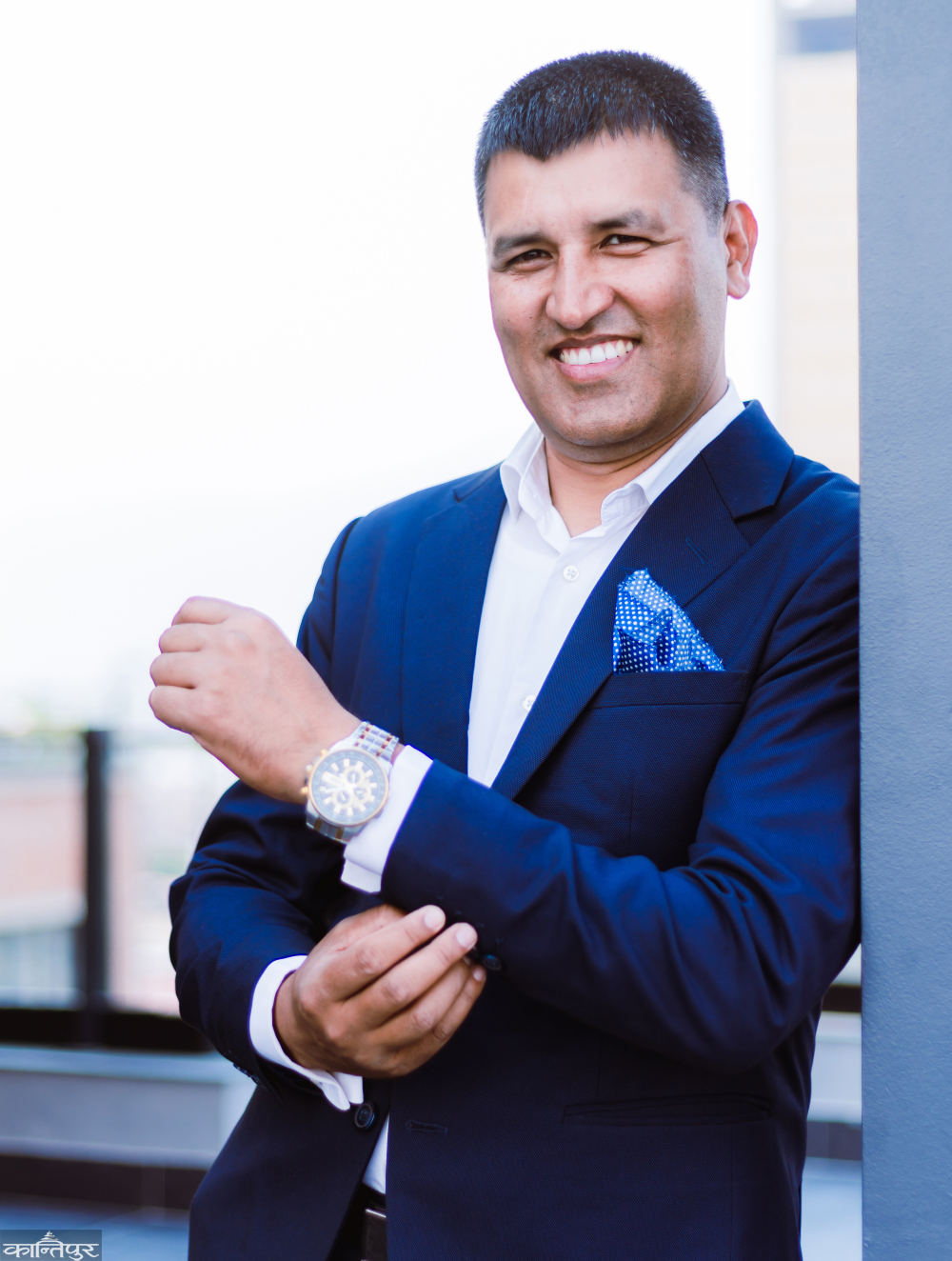 Dhakal became a chief accountant after becoming a storekeeper in his uncle's company and then started his own business. He joined the computer business after the sweets shop he opened in Balaju with an investment of 40 lakh rupees went under. After completing his BSc IT through distance education from Sikkim Manipal University, he established a company called Decade International. It was very difficult at first. There was very little need to create a website. In such a situation, I used the corporate relationship made through Vishal Kitchen and got the job of making some company's website,' he said, 'It made it easy to speed up the business.'' Currently, his company Decade International is the official partner of Japan's marine company Suzuki in Nepal. His Nepal Ship and Boat Building Company is commercially producing and operating motorboats in Nepal. At first, plant sales were very slow. But after the then Prime Minister Oli announced that he would run a boat, his business also flourished. "A lot of plants were sold that year," he said. A
 bot operator is colloquially known as a 'bote'. Dhakal wanted to name the company only 'Bote'. But the company registrar's office did not agree and added the word 'sack' after it. He took this word from the beautiful beach sack in France. The company has been making plants at its factory in Gandakot, Nawalparasi. There is a mechanical engineer and a mechanical engineer as well as other workers. Who can make up to 10 plants in a week. "If a law is made in this regard, plant production and operations will also increase," he said. At present, most of the plants in Nepal are designed to run in one and a half to two kilometers.
For this, the company has reached different countries and conducted research. "Although we prepared for production since 2014, we were able to start it only at the end of 2017, but at first we noticed the problem of plants made of fiver sinking in water," he said. According to Dhakal, since there is muddy water mixed with light sand in Nepal, plants should be made accordingly.
There are currently three types of bots operating in Nepal. First, inbot. Which is hidden inside the engine. It is suitable for cruising. Second, the outboat. Outboards have engines outboard. It is considered suitable for tourists. Third, the jet boat. It is connected to a jet engine. According to Dhakal, 'Botebora' has been building plants as per requirement. The plant is designed based on the operating location, depth, conditions and requirements. The Suzuki engine used by the company is one of the most used in the world. The engine has a warranty of 300 hours or two years.
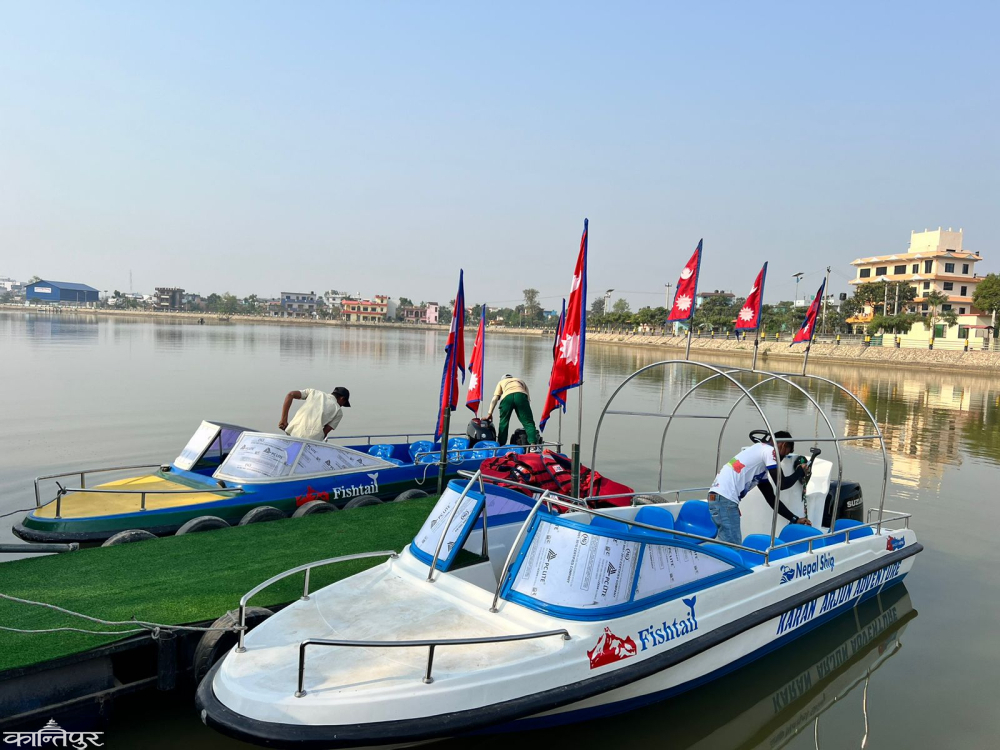
 The cost of building a boat also varies depending on the engine used and the seating capacity. But currently, it takes about 20 lakh rupees to build a plant of Fistel brand, which is used more in Nepal. It uses a 60 HP Suzuki engine and has a seating capacity of 11 including a captain and 10 passengers. The Dhaka company has given a warranty of two years on the engine and 10 years on the body on this type of plant. The plants built by the company are running in different locations. They are running as a means of transport in Koshi. Similarly, Narayani and Karnali rivers, Kulekhani and Marsyangdi reservoirs, Bulbul and Bharat lakes as well as the water park in Nepalgunj are being operated targeting tourists.
Dhakal said that he brings experts from Japan, Korea, and the Philippines every year to test whether the plants made by his company are in accordance with international standards. Dhakal says that since there is no law regarding death in Nepal, it is not easy to operate the plant. "If the law is not made, it is not easy to operate, the government has also lost revenue," he said.
In addition, he said that because of the law, the plant cannot be registered and insurance cannot be done. According to Dhakal, this business operates under the standards of the International Maritime Organization (IMO) just as airlines operate under the rules of ICAO. If this kind of law is made in Nepal, Nepali citizens can easily work on cruises by obtaining seamen's books.