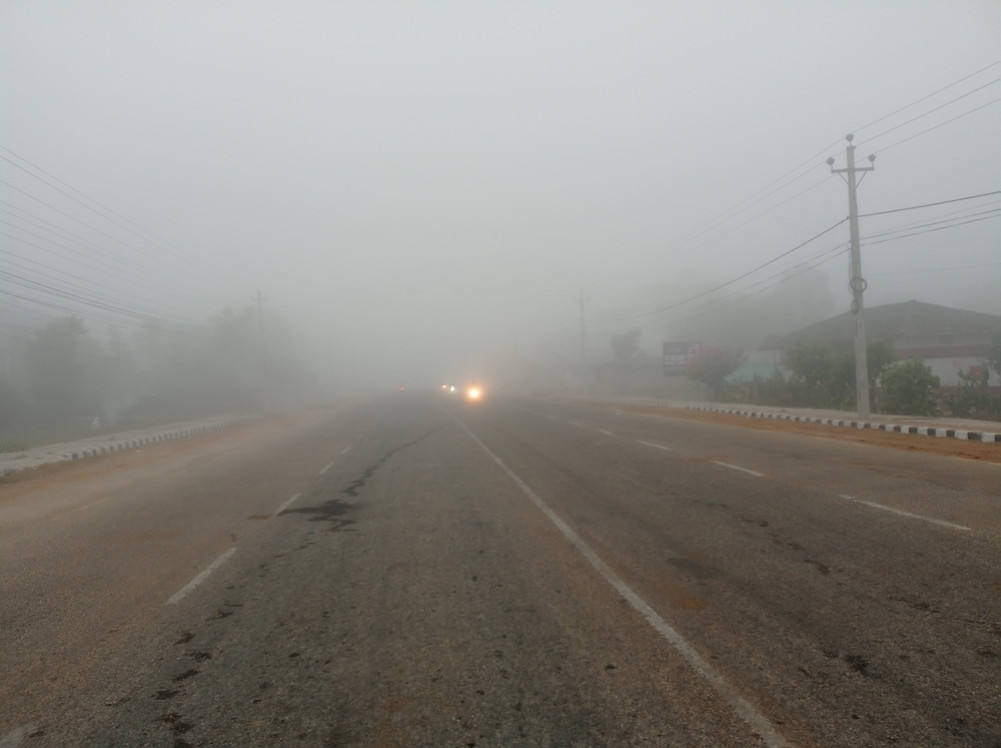
The fog and cold winds have made life difficult for the poor, Dalits, and backward communities of Madhesh. Transportation, trade, and agriculture have been affected.
We use Google Cloud Translation Services. Google requires we provide the following disclaimer relating to use of this service:
This service may contain translations powered by Google. Google disclaims all warranties related to the translations, expressed or implied, including any warranties of accuracy, reliability, and any implied warranties of merchantability, fitness for a particular purpose, and noninfringement.
Life here, which used to be normal with bright sunshine throughout Mangsir, has been affected by the increasing cold since the beginning of Poush.
Poor settlements have been more affected by the sudden increase in cold with the onset of the monsoon. With the onset of the monsoon, the southern part of the district has been covered with thick fog from morning to noon and cold winds have started blowing, which has increased the hardships of the poor settlements.
'Since last Wednesday, there has been a thick fog from noon to noon, and the continuous cold winds have prevented us from going out to work,' says Israful Rain, a 30-year-old youth from Matihani-8 in the far southeastern part of the district, 'This has made life difficult.'
Although the fog has increased with the onset of the monsoon in the southern part of the district, this trend has increased in the far northern part since last Friday. Bardibas, Gaushala, Aurahi and Bhangaha municipalities had been enjoying bright sunshine until last Thursday.
'The weather was so good till Thursday, then on Friday it suddenly got covered with thick fog, since then the cold has increased a lot,' says 70-year-old Laxmi Prasad Kushwaha of Gaushala-10 Batauwa settlement, 'This increasing cold has made it seem like it won't last much longer.' He says that even though the fog cleared after noon, the cold has not been able to do any work because the sun has not shone and the cold wind has been blowing all day.
The poor settlements have been severely affected by this increasing cold. Currently, the settlements of the most backward poor castes including Musahar, Dom, Halkhor, and Mestar have only ragged clothes, plastic and 'ghur' thrown on the streets. 'There is no wood (firewood) anywhere, no one comes back to look, what should we do?' "We have to endure the winter by warming ourselves with the smoke of this ghur," said Hemani Sada Musahar of Musahari Tole in Bhangaha-4, Ramnagar.
The fog that started in the morning has started affecting road transport and air transport services. Due to the thick fog, most of the air services before noon are being affected. The Janakpur Airport Office has stated that the morning service is being stopped as the fog cannot clear properly by noon, causing problems in landing the aircraft.
Drivers say that public road transport vehicles in the early morning hours have to stop at places as the fog cannot clear. The cold wind blowing along with the thick fog has made the morning and evening cold.
As the cold has increased significantly, farming and closed business activities have come to a standstill. After noon, The sun that appears to be shining dimly and the cold wind continues to blow, making it difficult to go outside. This has led to a halt in the market, says Ajay Sah, a trader at Gaushala-5 Gaushala Bazaar.
Farmers say that due to the sudden change in weather, they have not been able to start not only their business but also their regular farming work since morning. With such a cold wave in the middle of the month, the elderly here are wondering what their future will be like. Haji Bihari Ansari, 85, who lives in Sitapur Bazaar, Bhangaha-5, says, "It has become impossible to even get up and sit down due to the cold, and there is a lot of suffering."
The poor and Dalit settlements of this area are more at risk due to the increasing cold. Daily wage earners are less likely to go to work in the morning.
As the cold weather increases, it has become difficult to care for the elderly, pregnant women, and small children. Due to the lack of nutritious fresh food, warm clothes, and cleanliness around the house, the slums seem to be more affected by the increasing cold weather.