Japanese architect Prof. Kenzo Tange had prepared the Lumbini Development Master Plan in 1978. The master plan, which he prepared after spending 6 years, was approved by the then Lumbini Development Committee in 1978 and its implementation began, but the master plan has not been completed yet.
We use Google Cloud Translation Services. Google requires we provide the following disclaimer relating to use of this service:
This service may contain translations powered by Google. Google disclaims all warranties related to the translations, expressed or implied, including any warranties of accuracy, reliability, and any implied warranties of merchantability, fitness for a particular purpose, and noninfringement.
बुद्ध दर्शन आजको जटिल, तीव्र र अस्थिर विश्वमा झन् प्रासंगिक हुँदै गएको छ । प्रविधिको तीव्र विकास, उपभोक्तावाद, मानसिक तनाव, युद्ध, वातावरणीय संकट र मानवीय मूल्यहरूको ह्रासबीच बुद्धका शिक्षाहरूले आजको मानवतालाई दिशानिर्देश गर्ने क्षमता राख्छन् । आजको सन्दर्भमा बुद्धको महिमाबारे कोसेलीले तयार पारेकाे विशेष प्याकेज।
There is a Nepali proverb that even a river returns in 12 years. However, the Lumbini Development Master Plan, which was started to make Lumbini a source of peace and a spiritual destination for the world in 17 years, has not been completed even after 48 years.
World-renowned Japanese architect Prof. Kenzo Tange had prepared the Lumbini Development Master Plan in 1978 to create an environment where people can enjoy the sanctity of Lumbini and make it a center of faith. The master plan, which he prepared and gave after 6 years, was approved by the then Lumbini Development Committee in 1978 and started its implementation. However, the master plan has not been completed yet. The city has now added to the world's attraction by working according to the master plan prepared by Tange for the city of Singapore.
The traditional commitment to complete the master plan comes with the change of government, minister and Lumbini Development Fund leadership. But even after more than 4 and a half decades, it has not been completed. The fund officials and employees are tired of talking about the master plan. Despite national and international commitments, the work has not been done accordingly.
The master plan is being affected by problems with laws, rules, regulations, extreme politics, and the four officials working at their own pace. Despite the lack of resources, the master plan has not been completed. To complete the master plan after much effort and initiative, the Ministry of Finance had ensured a resource of Rs. 7 billion on 14 Baisakh 2078 at the initiative of the then Finance Minister Bishnu Poudel.
Although it was said that an international contract would be awarded, the then Vice-Chairman Avadhesh Kumar Tripathi (Bhikshu Metteya) and Project Manager E. Saroj Bhattarai manipulated and selected Nepali construction entrepreneurs and got the work done. After that, the Ministry of Finance also delayed providing the amount that had been guaranteed. The work of the master plan, which was started with a maximum of 3 years, 2080, has not been completed yet.
The fund awarded a contract worth Rs 3.6 billion 97 million in the first phase of 2078 to complete the master plan. However, the entire amount has not been paid by the Ministry of Finance. A budget of Rs 419 million has been sent in the current fiscal year to pay for the contract. However, the fund's accounting officer Bhim Basnet said that there is still a shortfall of Rs 60 million in the allocated budget for the current fiscal year to pay for the contract. The contract agreement for the second phase of the master plan worth Rs 2.89 billion 90 million was signed two months ago to complete the master plan. However, he said that the work order could not be given because the finance ministry had decided to release the budget.
What work has been done?
Fund member secretary Deepak Shrestha said that 88 percent more work has been done as per the master plan. Appointed by the Sushila Karki government in December last year, he said that most of the work of the master plan will be completed if the work of the second phase of the contract is started. In 2077, the then Fund Member Secretary Sanuraja Shakya claimed that 84 percent of the work had been completed. Only 4 percent of the work was done in 6 years. That is why there is no scientific basis for how much work has been completed.
‘The boss who comes, he explains it in his own way. There is no basis to say that this is all there is until an independent expert studies it,’ said Lumbini expert Prahlad Yadav, ‘without it, it is just airy talk.’ Buddha’s philosophy is reflected in every subject designed by Tange. A glimpse of peace is visible. Many do not understand, but when you delve deeper, you get lost in the proximity of peace.
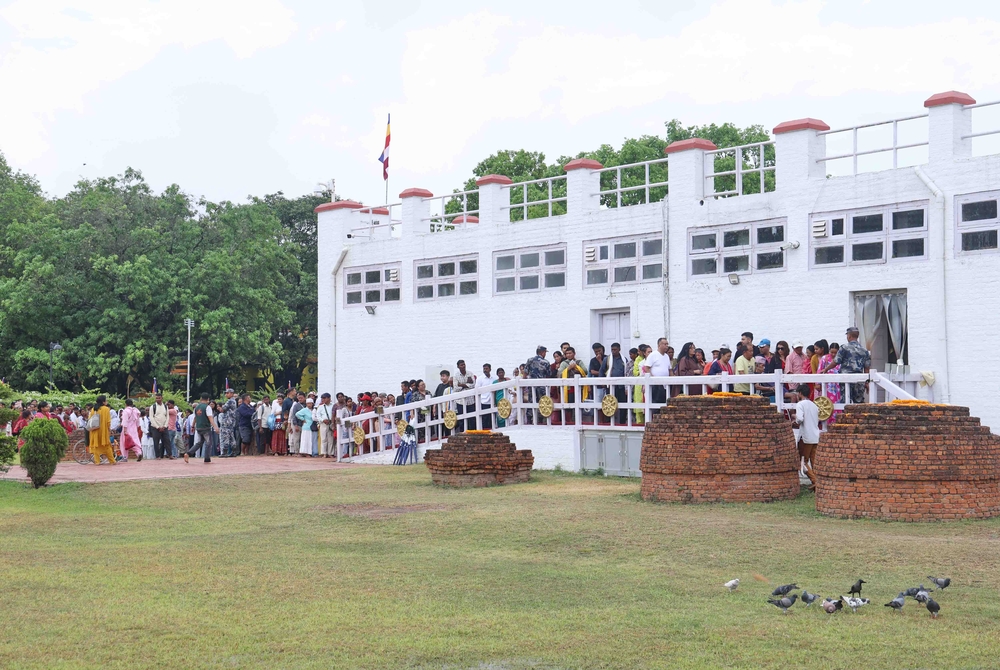
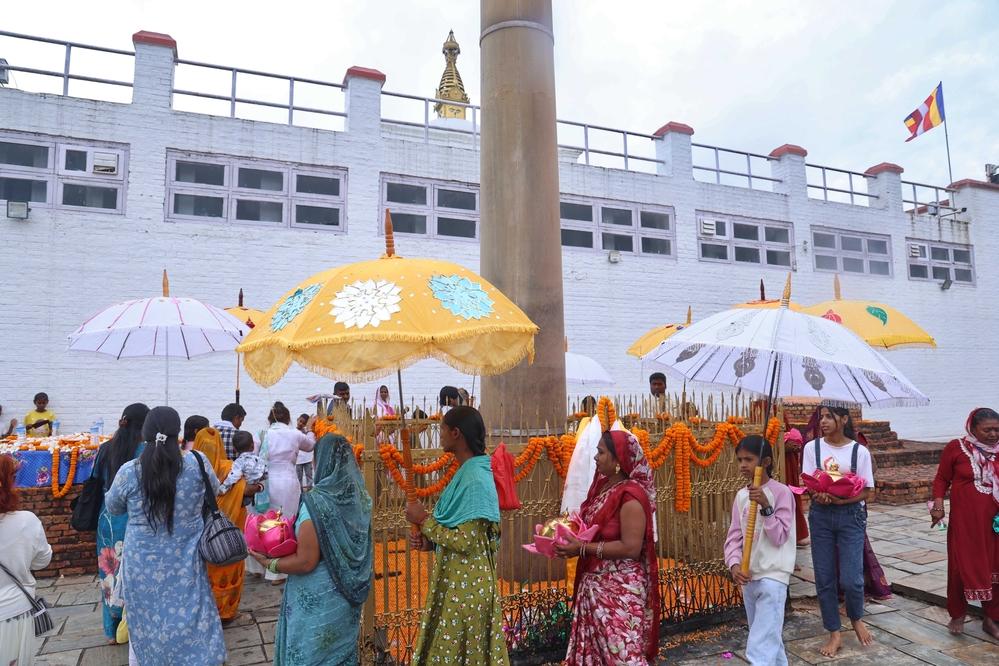
As mentioned in the master plan, the landscaping of the sacred garden, the central canal, the symbolic pavilion, the North and South Ponds have been constructed. The sacred garden is the most important area of Lumbini. It is located in the southernmost part of the master plan. There is the Mayadevi Temple and the Ashoka Pillar here. Similarly, there are brick structures from the Ashoka period and the pre-Maurya period, brick mounds dating back to the Buddha period, cultural elements and ruins of ancient Buddhist monasteries. As per the master plan, the construction of 4 ponds, 80 square meters of greenery around the world heritage site and some small places has been completed. Staff accommodation has been built.
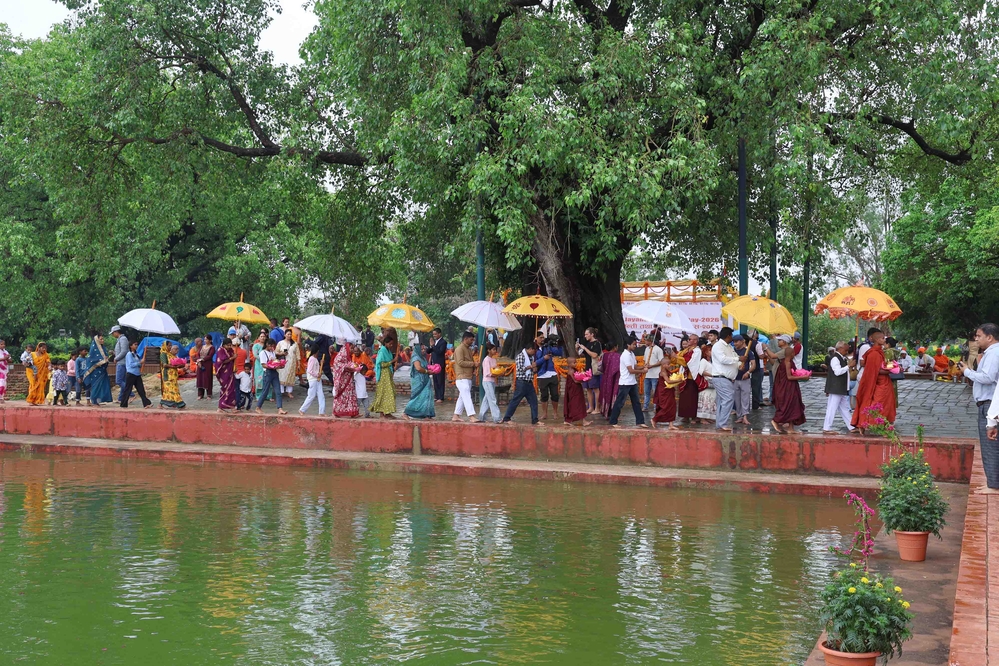
There is an international Buddhist monastery area between the sacred garden and the new Lumbini village. The world's smallest Buddhist world is visible here. To the east of the central canal are monasteries of the Theravada sect and to the west are monasteries of the Mahayana sect. To the east are monasteries of Sri Lanka, Myanmar, Thailand, Cambodia and other countries. To the west are monasteries of China, Singapore, Japan, Korea, France, Germany, Vietnam, Canada and other countries. The monasteries, temples and monasteries of Lumbini have become a small world of diverse Buddhist culture. That is, it is a mini Buddhist world. The architecture and art style of the temples, monasteries and monasteries here are equally attractive. The traditions and styles imprinted there make everyone excited and thrilled.
How did the work of making a master plan come about?
The Secretary-General of the United Nations, Uthant, was very sad after visiting Lumbini. A Buddhist, he became emotional and worried about the condition of Lumbini, which had given a message of peace to the world on April 23, 1967. After seeing it neglected and dilapidated due to lack of development and infrastructure, he was eager to do something and the master plan was made, said Gyanin Rai, senior director and spokesperson of the trust.
After reaching the capital Kathmandu from Lumbini, he proposed to the then King Mahendra for the development of Lumbini. After the king accepted the proposal, Uthant went to America and had a lot of discussions. The next year, he received a mission with experts to Lumbini. Under the leadership of the UN, experts in tourism, road and groundwater projects came from UNDP. Then a UNESCO team also arrived.
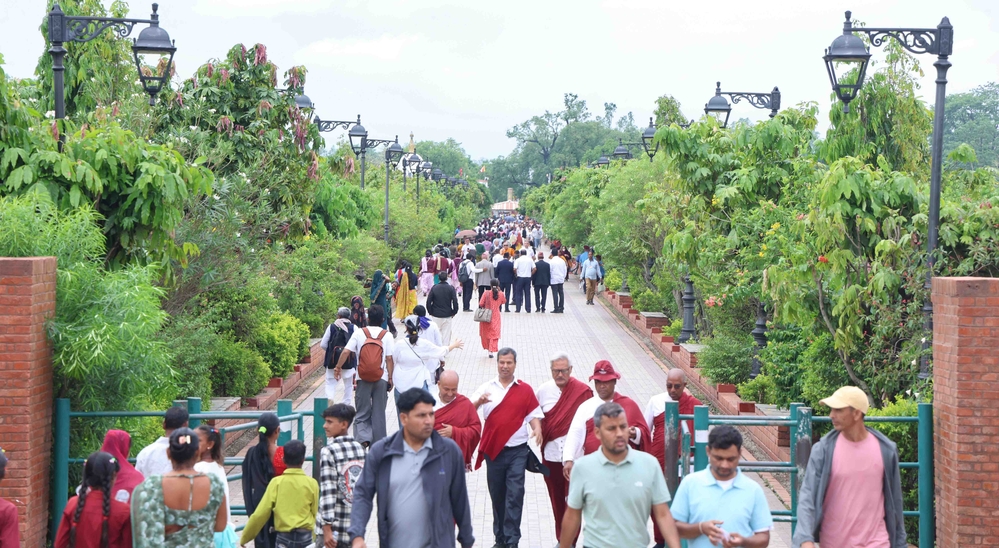
Both the UN development and conservation teams worked. Then, based on the reports given by the UNDP Resident Representative in Kathmandu, Y.J. Zeure and both missions, Senior Director Rai said that the appeal to the world community for the development of Lumbini at the UN Annual General Meeting was a great achievement. Then, the Lumbini International Cooperation Committee was formed under the UN.
Initially, 13 countries including Nepal, Afghanistan, Cambodia, India, Indonesia, Japan, Laos, Malaysia, Myanmar, Pakistan, Singapore, Sri Lanka and Thailand became members. Later, three more countries, South Korea, Bangladesh and Bhutan, were added to the committee. Thus, the committee was formed in 1970, consisting of 16 countries. After the committee was formed, Uthant called the world's best Kenzo Tange and requested him to prepare a master plan.
In 1972, Tange was given the responsibility of preparing a master plan for Lumbini. That same year, a team including Tange came to Lumbini and surveyed it on an elephant. In 1978, Tange submitted the final document of the master plan to the UN. After that, the Nepal government accepted it and started implementing it in 1978. The first phase of work was planned to be completed in 1985 and the second phase in 1995, but it has not been completed yet. Tange himself prepared the plans for the Hiroshima Peace Memorial Park and the city of Nairobi, the capital of Kenya. Which are famous in the world.
What work remains to be done?
Tange's master plan is divided into 3 areas. There are the sacred gardens, the international Buddhist monastery area and the new Lumbini village. A lot of work is left in the new Lumbini village. The auditorium hall that can accommodate 420 people has not been built yet. Six large two-story round buildings have not been built.
The management of the Harhewa River flowing through the master plan area is still pending. A first aid center and souvenir shop have not been built. A bus park, high school, and restaurant have not been built. A place for pilgrims to sit and meditate at night has not been built. The work of managing waste generated within the master plan area has not been completed. The construction and distribution of water towers is still pending.
The Colonnade site that shows the architectural beauty of Lumbini has been built, but it has not been operational. The Hokke, Kasai, and Sri Lankan Pilgrims Hotels within the master plan have been built to support pilgrims. Work on blacktop roads and service roads is underway. Sewerage and electrification works are also underway. The master plan covers an area of one mile east-west by three square miles north-south. The master plan covers an area of 1,055 bighas, or 770 hectares.
Why was the master plan not completed?
There is intense political interference. Unprofessional and immature managerial leadership comes. There is a tendency to work for one's own interests rather than for Lumbini. 'The hustle and bustle of the Panchayat period has not left,' said former member of the Provincial Assembly Fakhruddin Khan. 'During the Panchayat period, the king was the protector, now the Prime Minister is the protector. Employees are appointed with the change of the Tourism Minister. New officials come to the fund with each government. With the arrival of a new vice-chairman and secretary in the fund, an employee recruitment center is established. Employees are recruited without studying the organizational structure.’
Khan said that the fund is now burdened with unnecessary employees. ‘The work is not transparent and of good quality,’ Khan said, ‘I am tired of conducting public audits of the work done by the fund. The fund does not count local people’s representatives. Being accountable to the general public is a distant thing.’
Local Arjun Kurmi accused the fund of working in a selfish manner. ‘Now it is necessary for the new government to rein in the fund,’ he said, ‘It is getting a bad name because of a limited number of people.’ Lumbini Hotel Association President Leelamani Sharma said that the fund is not listening to anyone rather than cooperating and supporting the locals.
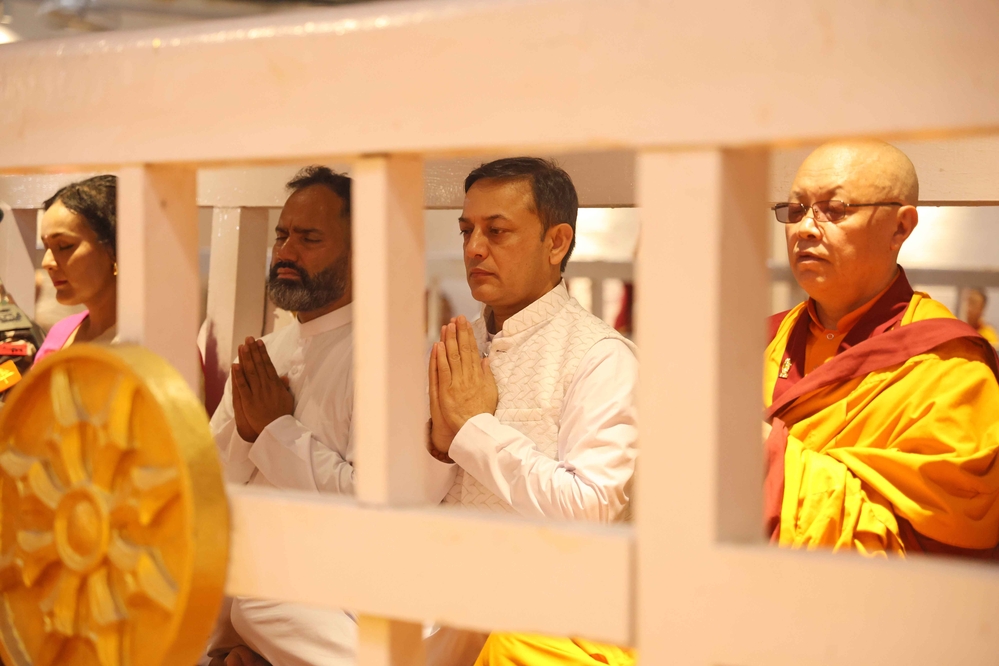
Activities against Buddhist teachings are also taking place in the place where Buddha was born. Fake tickets are being sold. Despite tight security, unauthorized items are being stolen from the Mayadevi temple. Under the influence, structures have been built against the master plan. Nepalis are also charged a fee to enter the temple. No one is prosecuted. The officials of the Development Fund change from government to government. There is financial manipulation to become officials. The master plan has been directly affected by that manipulation.
There have been excessive movements and conflicts in the land of peace. This is diminishing the dignity and glory of Lumbini. ‘It is wrong to make Lumbini a political arena,’ said Bhikkhu Maitri Mahasthaveer, former president of the Buddhist Federation. ‘It cannot develop until it is free from politics.’
Buddha had told his disciple, ‘Once in my life, I must visit the place where I was born, attained enlightenment, first promoted the Dharma Chakra and completed the Great Reconstruction.’ If that is not enough, I will go to Lumbini, the place where I was born.'' Bhikkhu Siribazir, an associate professor at Lumbini Buddhist University, said that it is very worrying to see such an important place being neglected.
Although the fund does not have its own resources, it can raise as much support as it can if it shows diligence and honesty. But Siribazir says that the problem is due to greed. Since 2071/72, the government has not been able to effectively allocate the budget to Lumbini since it declared it a national pride project.

